The story
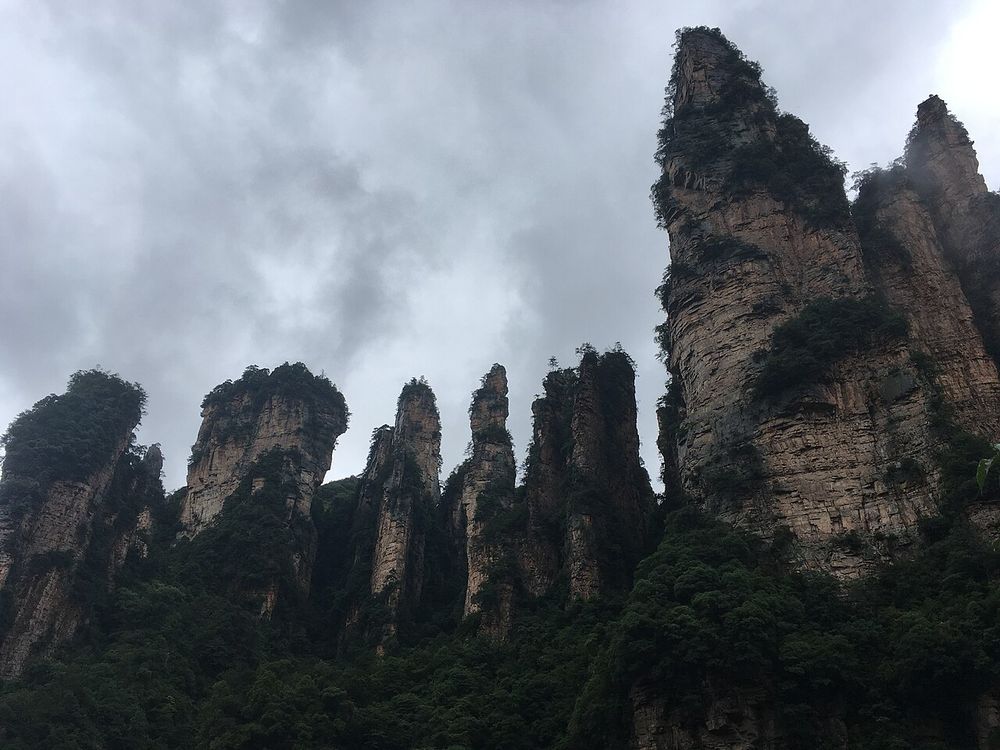
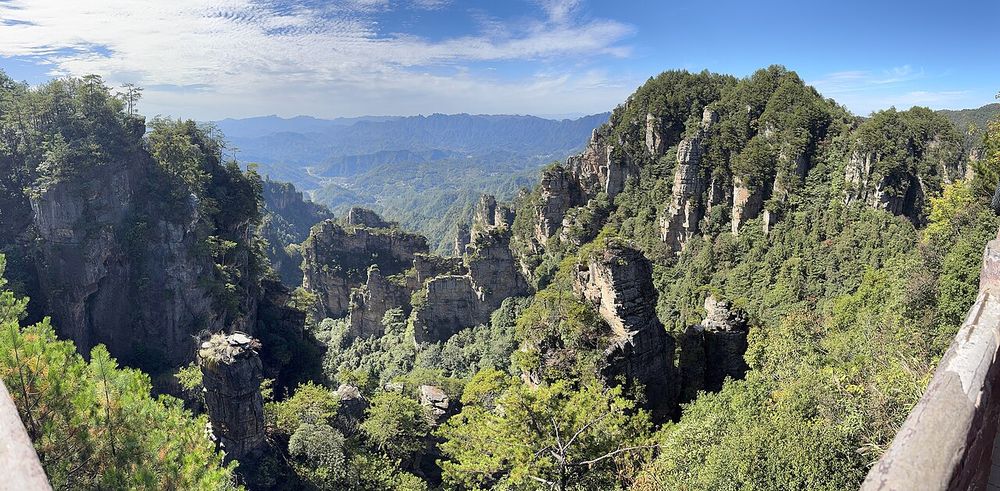
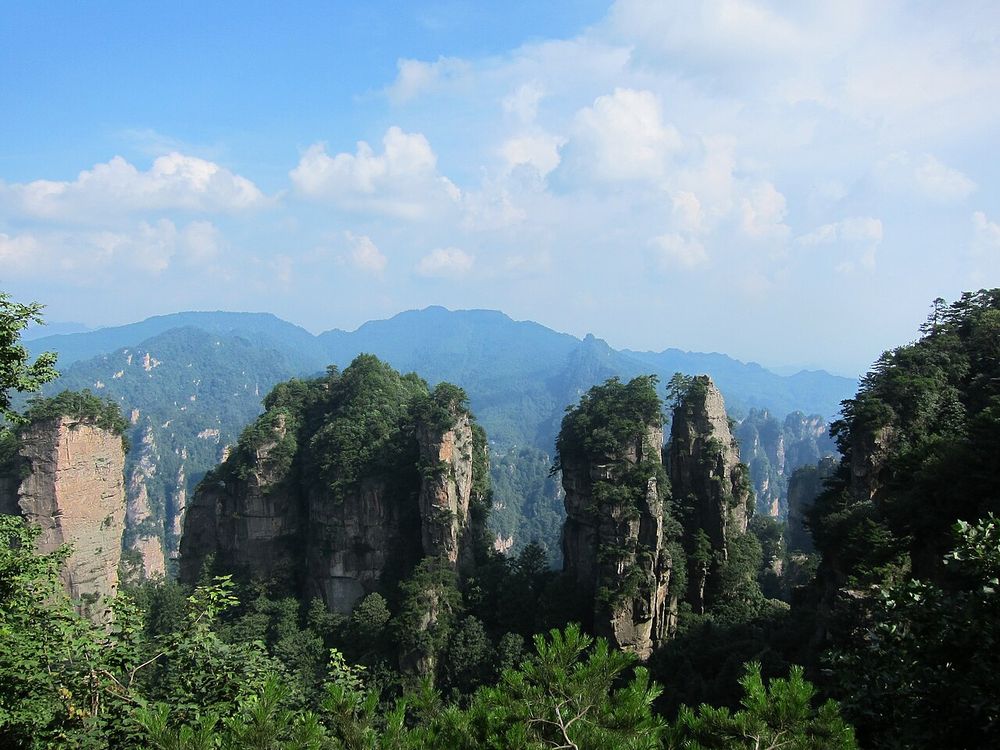
In front of you stand more than three thousand stone pillars, many of them over 200 metres high. The rock began as sand on a seashore 380 million years ago and was pressed into quartz sandstone. Later the land rose and cracked, rain ran down the cracks and cut deeper year by year, and what was left standing is these columns.
Geologists have given this kind of landscape a name of its own: Zhangjiajie landform.
What is here
Wulingyuan is not one viewpoint but several areas of peaks joined by park buses, and one ticket, valid four days, covers them all. What costs extra is every ride up or down: the lift, the cable cars and the little train. Tianmen Mountain, which many visitors expect to find here, is a different park in the city, an hour away.
| Part | Ticket |
|---|---|
| Golden Whip Stream, the walk along the valley floor | Included |
| Yuanjiajie: the "Hallelujah" column and the First Bridge under Heaven | Included |
| The Bailong Elevator up to Yuanjiajie | Extra, about 65 yuan each way |
| Tianzi Mountain | Included. Cable car extra, about 72 yuan |
| Yangjiajie and its "Natural Great Wall" | Included. Cable car extra, about 76 yuan |
| Huangshizhai, the plateau in the picture at the top of this page | Included. Cable car extra |
| The Ten-Mile Gallery | Included. Little train extra, about 38 yuan |
| Tianmen Mountain and its Heaven's Gate | Not part of Wulingyuan. A separate park with its own ticket |
| The Grand Canyon glass bridge; Huanglong Cave | Separate sites, separate tickets |
If you have one minute
At the Yuanjiajie viewing platform
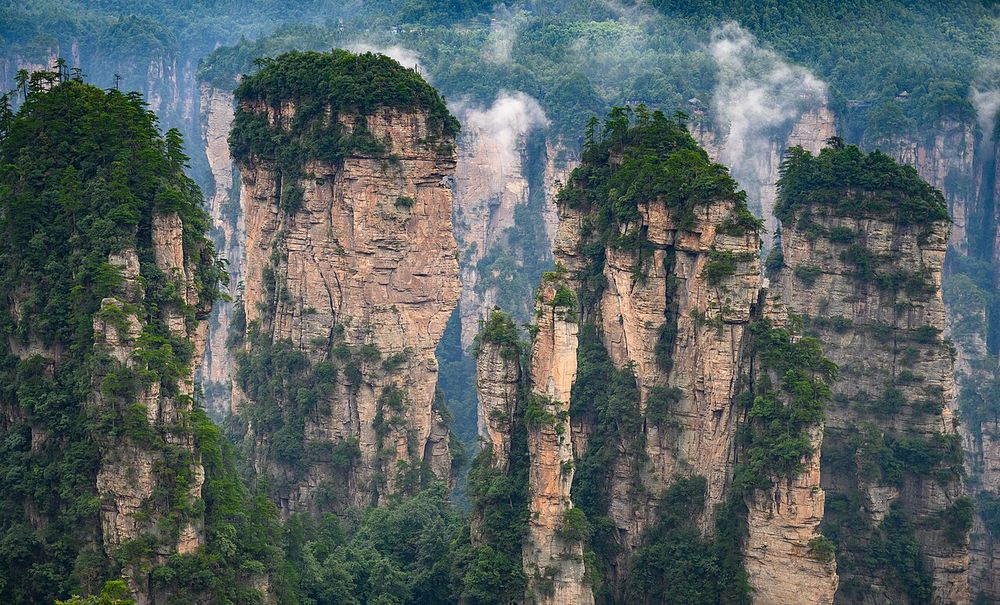
Look for the level lines. Every pillar is banded with nearly horizontal stripes. Each stripe is a layer of sand laid down on that ancient shore.
Look for the upright cracks. Between the pillars run vertical joints. Water works down them, blocks break away, and a flat-topped mountain slowly becomes a wall of rock and then a forest of separate peaks.
At the south end of Yuanjiajie one pillar about 150 metres high stands by itself. It was called the Southern Sky Column. In 2010, after the film Avatar, it was renamed Avatar Hallelujah Mountain.
How do trees grow on top? There is a little soil up there, and pines push their roots into the cracks. The forest that covers these hills was planted by forestry workers, generation after generation, from 1958.
The people of this place
Zhangjiajie is a homeland of the Tujia, one of China's larger minority peoples. They call themselves Bizika. In the villages you may see wooden houses raised on stilts against a slope, and at festivals a circle dance with swinging arms, the hand-waving dance.
Hospitality here often comes in a bowl. If you are offered rice wine at a door or a table, a small sip is polite even if you do not drink.
People who stood here
For most of history almost nobody came. The first famous visitor arrived with a sketchbook.
- Wu Guanzhong, one of China's best-known modern painters, about 1979He came to sketch when this was a state forest farm with no visitors. Picture him on a ledge like this one with his paper on his knees. His paintings and an essay he wrote told the country the place existed.
Go deeper: six stops, from the valley floor to how the place was found
1. Golden Whip Stream: the pillars from below
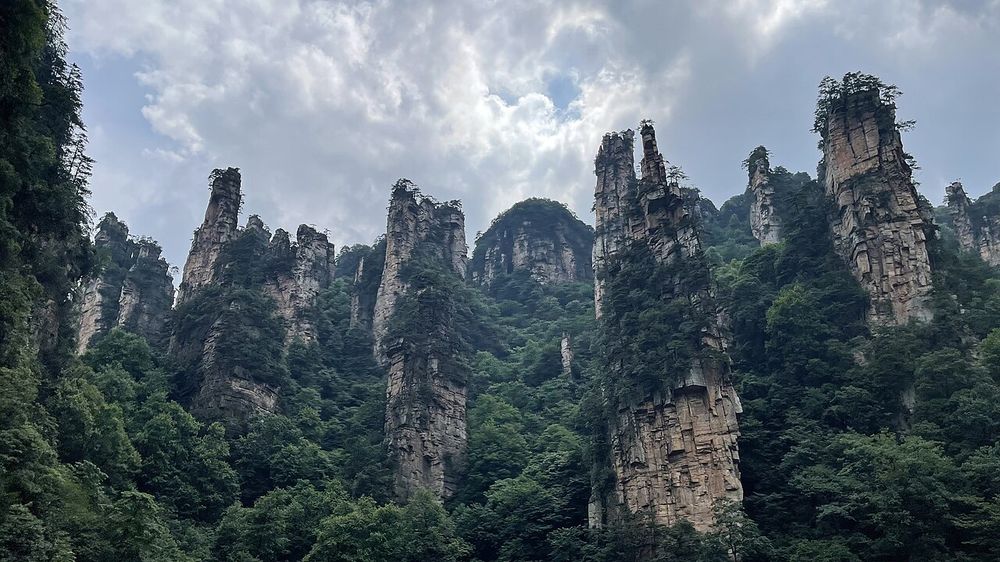
A level path follows the stream along the bottom of the gorge. It is the easiest walk in the park and good with children. Four streams meet at a place called Water Winding Round Four Gates.
Look up at the columns on both sides, then down at the water by your feet. Water like this took millions of years to cut the mountain open.
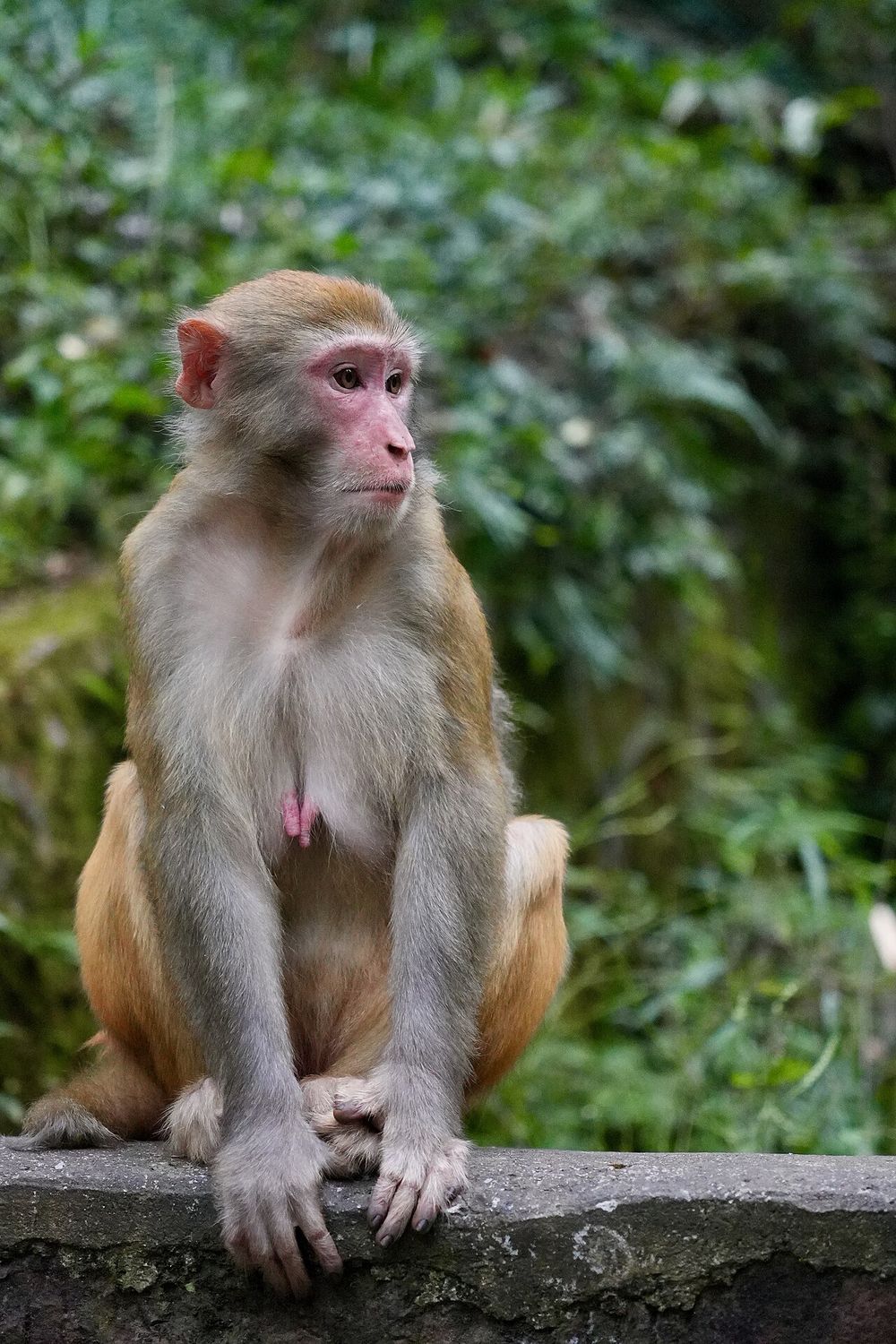
Monkeys live along the stream. Do not feed them, and keep food and plastic bags out of sight.
2. How the pillars were made: five chapters
The geopark tells it in five steps. One: about 380 million years ago, in the middle Devonian, rivers carried sand to a coast, and it was pressed into quartz sandstone. Two: the sea drew back, the sandstone weathered, and an iron-red crust formed on top, the "iron cap".
Three: the sea returned in the Permian and Triassic and laid down limestone, the rock of the caves nearby. Four: about 200 million years ago the land rose again, and it has gone on rising. Five: running water deepened the vertical cracks, blocks fell away, and the forest of peaks was left.
The definition: tall, straight-edged stone columns formed from nearly level Devonian quartz sandstone by running water, collapse under gravity and weathering.
3. The Bailong Elevator: a lift people still argue about
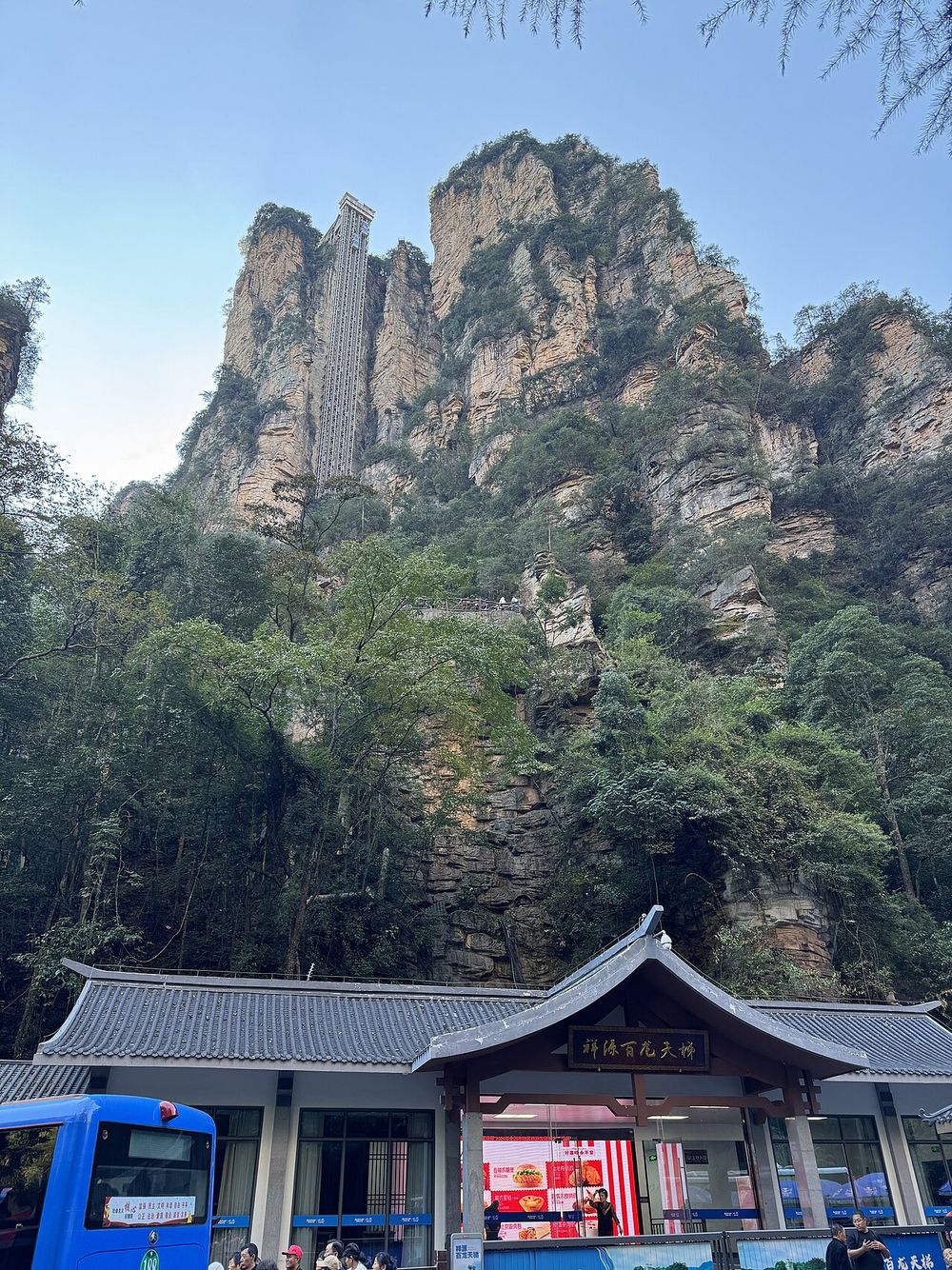
The lift climbs 326 metres up a cliff. The lower 154 metres run in a shaft inside the rock and the upper 172 metres on a steel frame on the cliff face. In 2015 Guinness World Records named it the tallest outdoor lift in the world. A climb that took two or three hours on foot takes about a minute and a half.
In 1998 UNESCO criticised the amount of building inside the World Heritage site, and the local government spent heavily on demolition. The lift was finished in 2002, then stopped for about ten months, and reopened in August 2003. Supporters say it solved the problem of moving visitors. Opponents say it spoils a natural landscape.
A question to talk over: if you ran the park, would you take it down?
4. Yuanjiajie and the First Bridge under Heaven
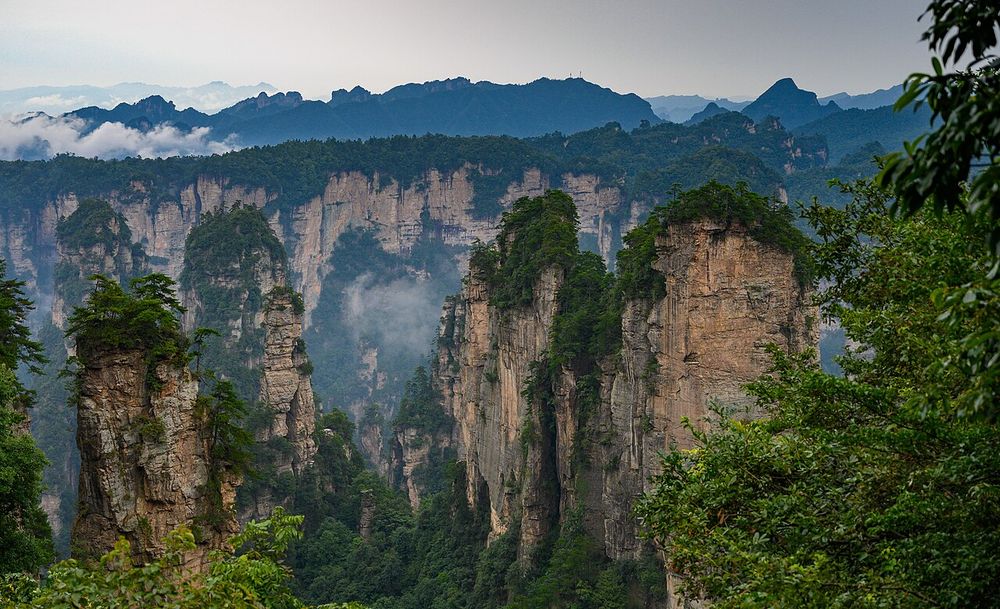
Yuanjiajie is the classic place to look down on the forest of pillars, and the home of the "Hallelujah" column.
The First Bridge under Heaven is a natural span of rock between two peaks. The two ends were once one mass of stone. The middle was weaker, weathered and fell away, and left a great hole with a bridge over it.
5. Tianzi Mountain: above the clouds
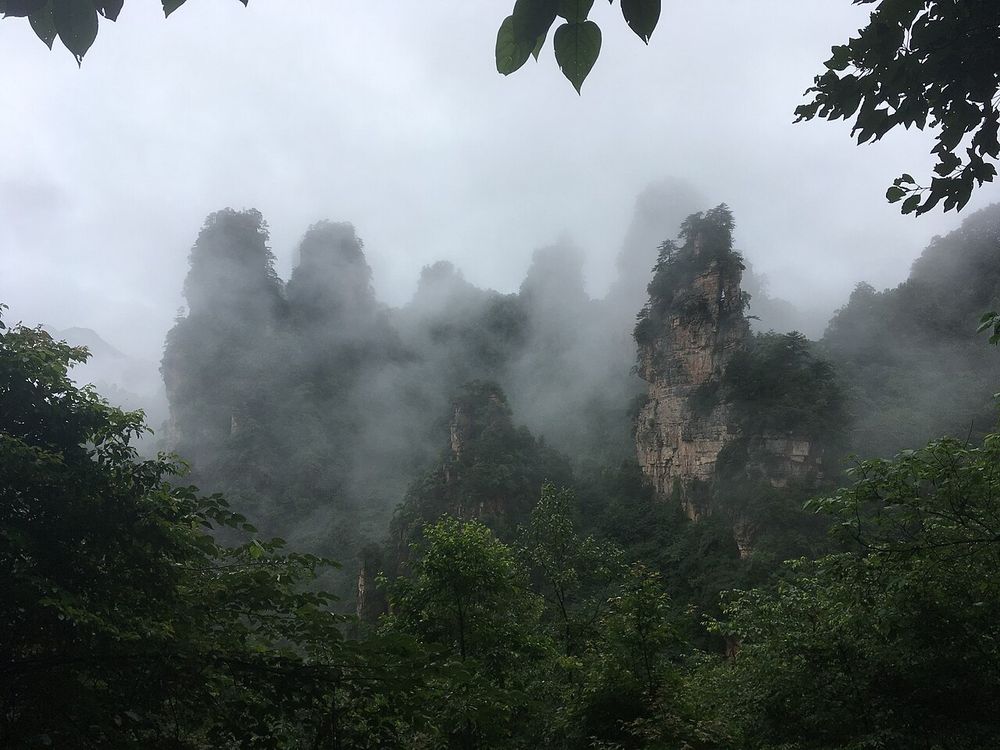
Tianzi Mountain is higher and more open than Yuanjiajie, and cloud often drifts between the peaks below you.
On top is a park named after He Long, one of the marshals of the People's Republic, who was born in Sangzhi county near here.
6. A forest farm and a painter: how the place was found
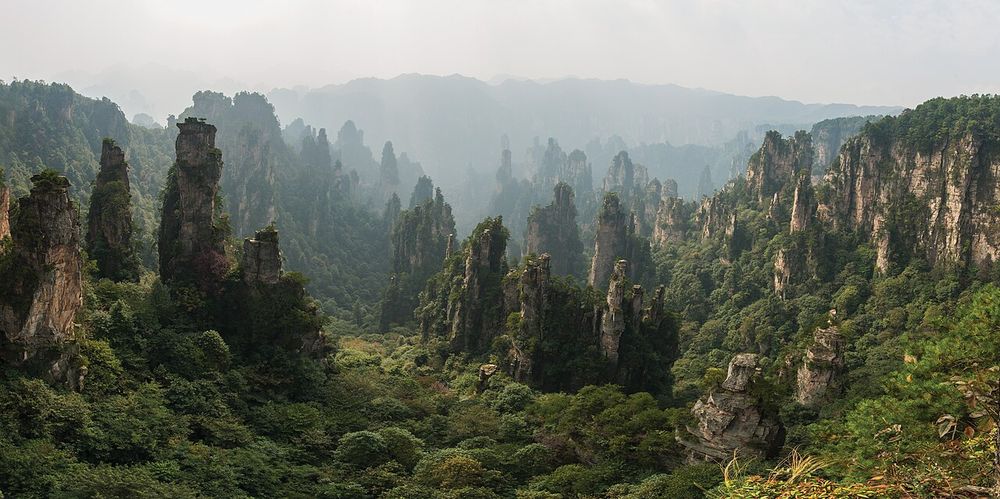
From 1958 to 1982 the workers of the Zhangjiajie state forest farm planted trees on bare hills. By the early 1980s more than 95 per cent of the land was under forest.
About 1979 the painter Wu Guanzhong came to sketch, newspapers began to write about it, and visitors followed. In 1982 it became China's first national forest park. People here say: we used to grow timber, now we grow scenery.
Avatar, and the same rock elsewhere
Which mountains were the model for the floating peaks in Avatar (2009)? At a press event in Beijing the director James Cameron named Huangshan. Geologists and the city of Zhangjiajie answered that the shapes on screen look far more like these sandstone columns. When the Southern Sky Column was renamed in 2010 there was plenty of protest online.
Huangshan also has stone columns, but they are granite and were made in a different way. Bryce Canyon in Utah is another forest of pillars, in softer rock.
Zhangjiajie is one of the Chinese places best known in South Korea. Families often bring their parents here as a gift, and you will hear a good deal of Korean on the paths.