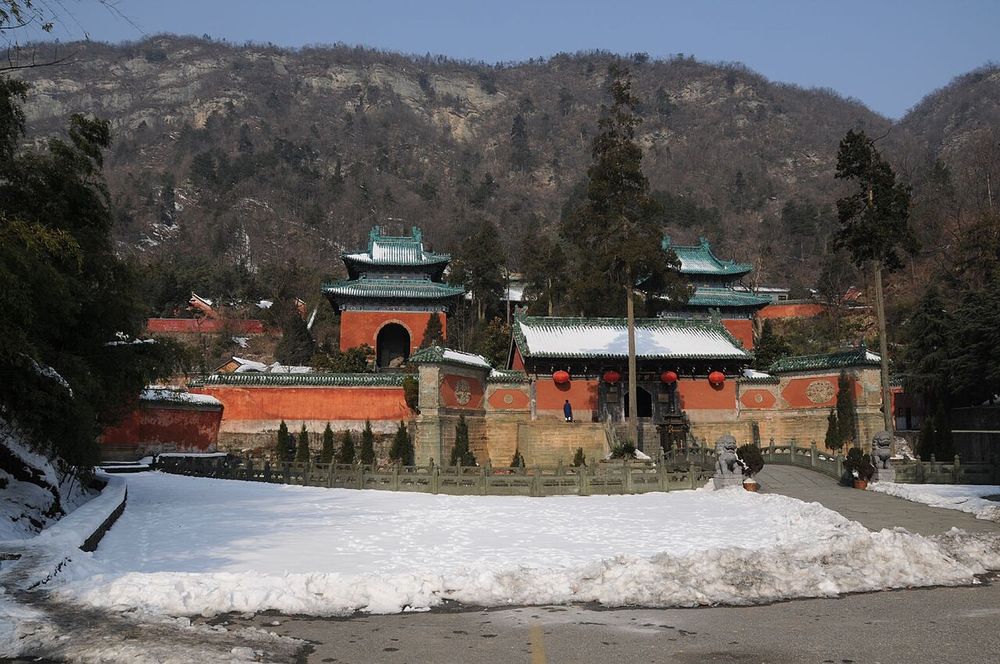
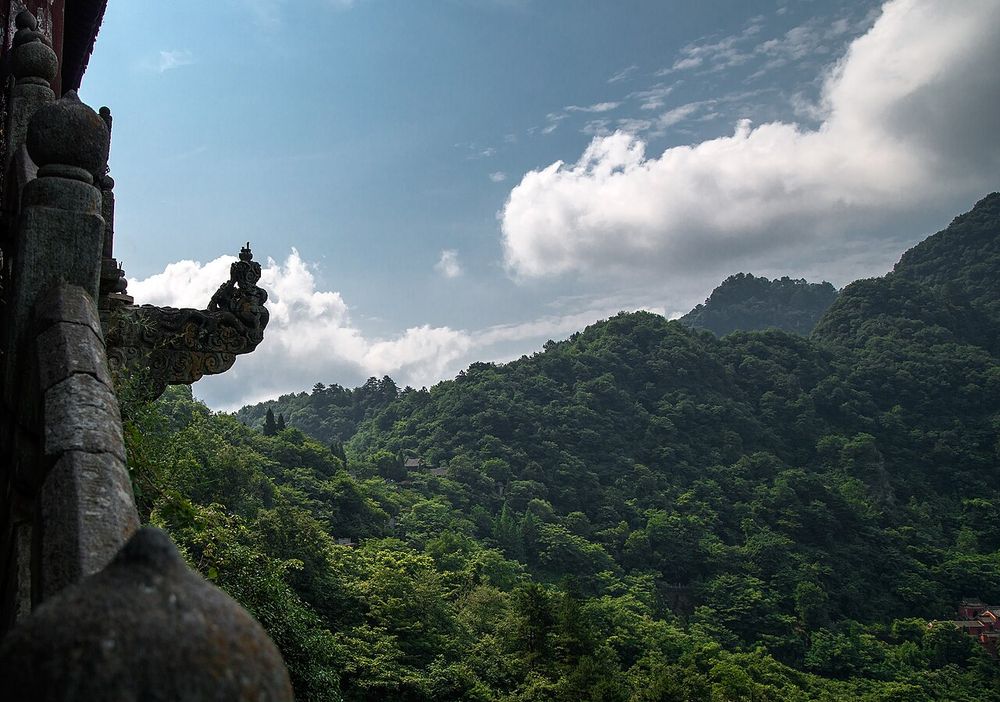
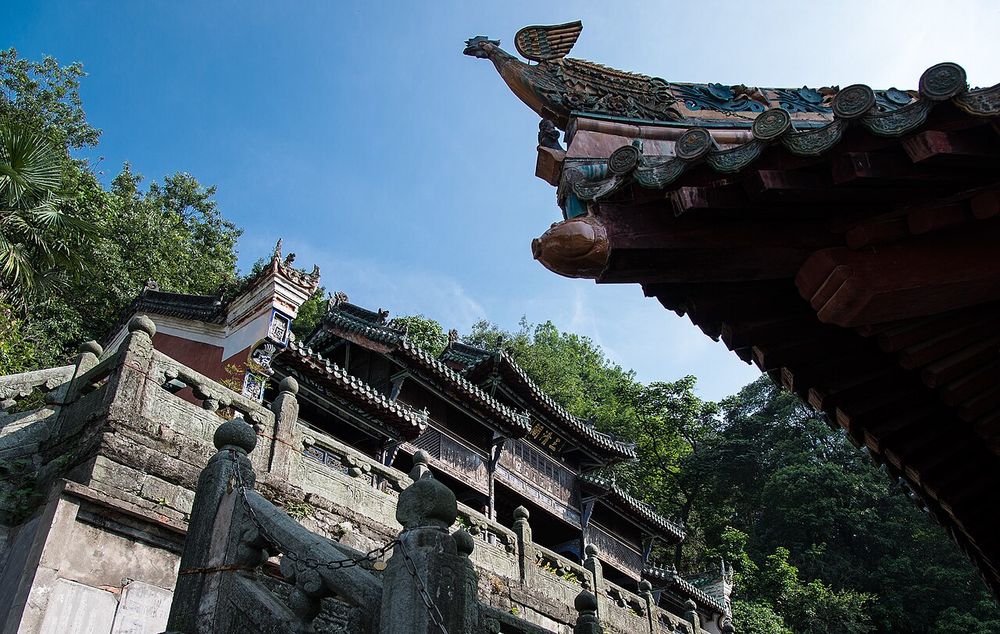
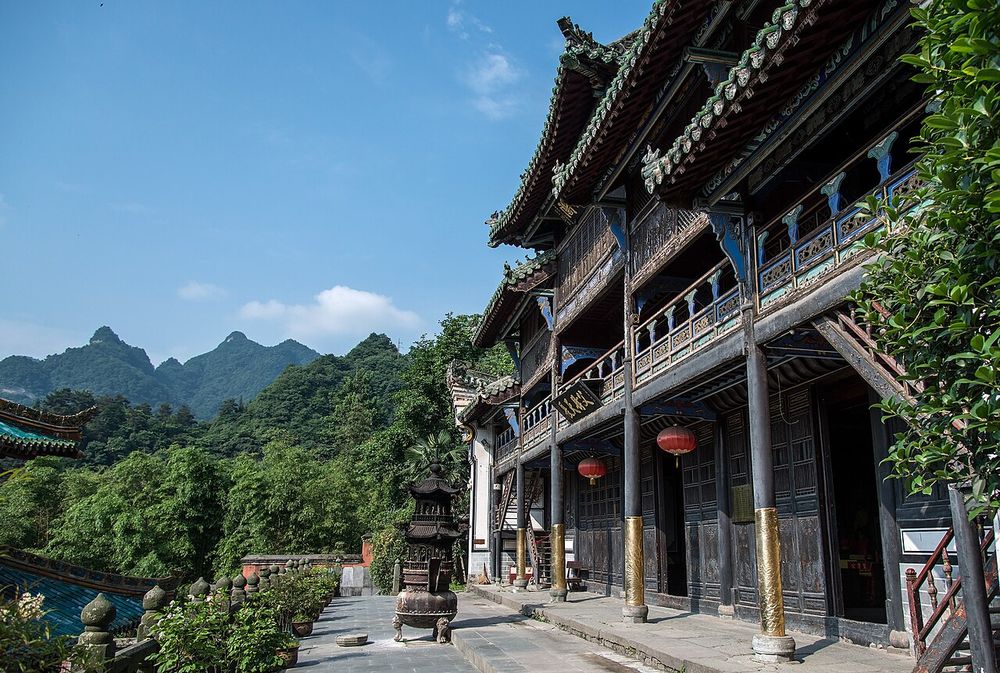
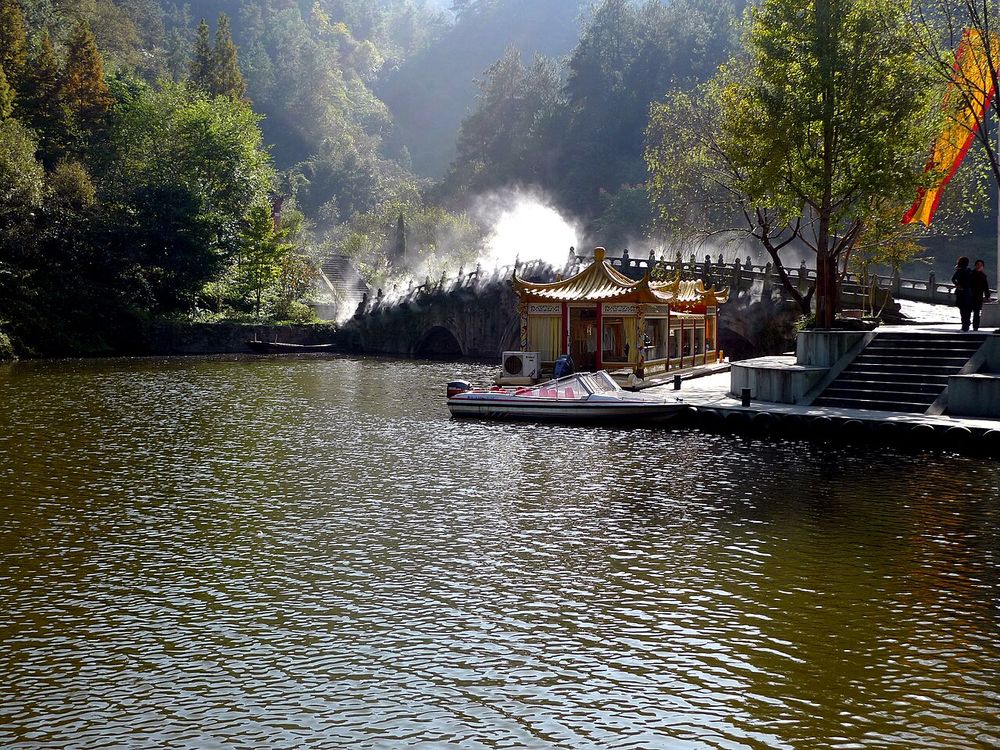
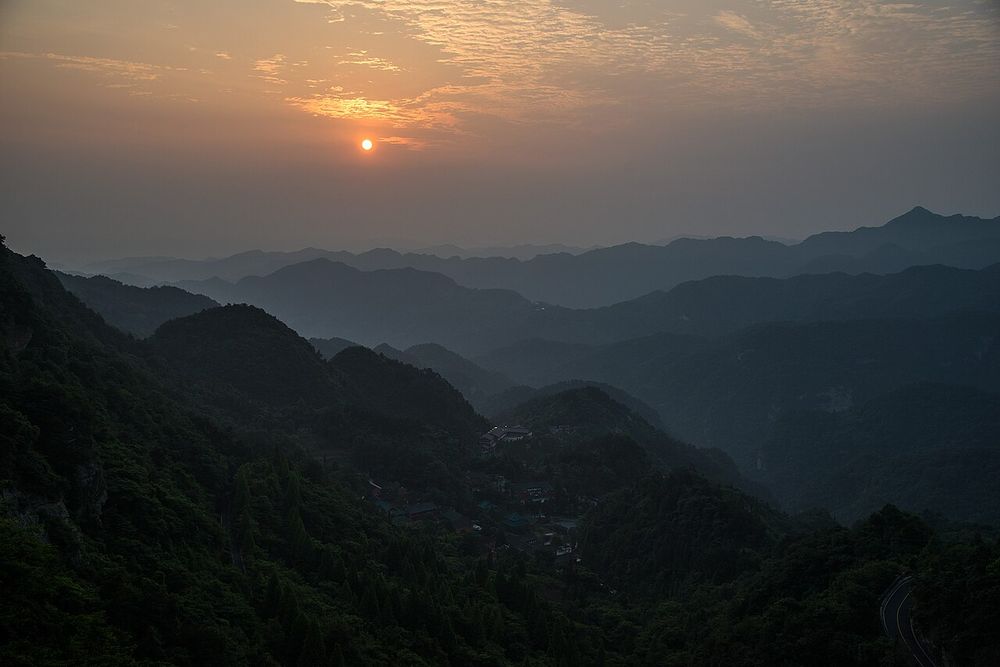
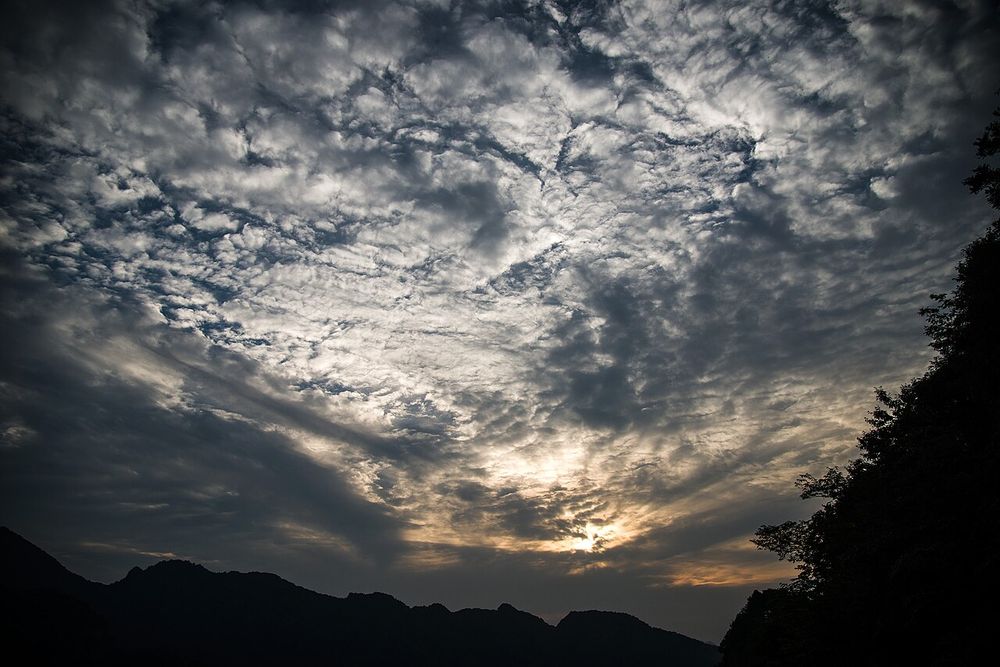
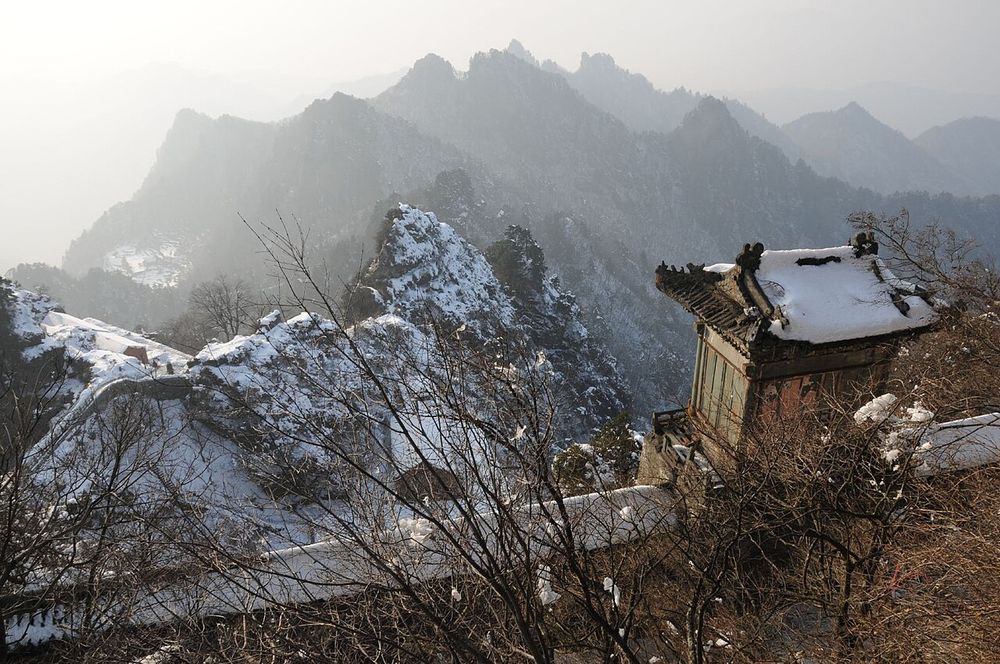
A whole mountain laid out by one emperor: palaces from the foot to the summit, and on the top a hall cast entirely in bronze. World Heritage since 1994.
Photo: liuzr99, CC BY-SA 2.0, Wikimedia Commons
The story
You are on a mountain that one emperor planned from bottom to top. Between 1412 and about 1424 the Yongle Emperor, the same man who built the Forbidden City in Beijing, had palaces and temples built here along a single pilgrim road, 1,600 metres up to the summit.
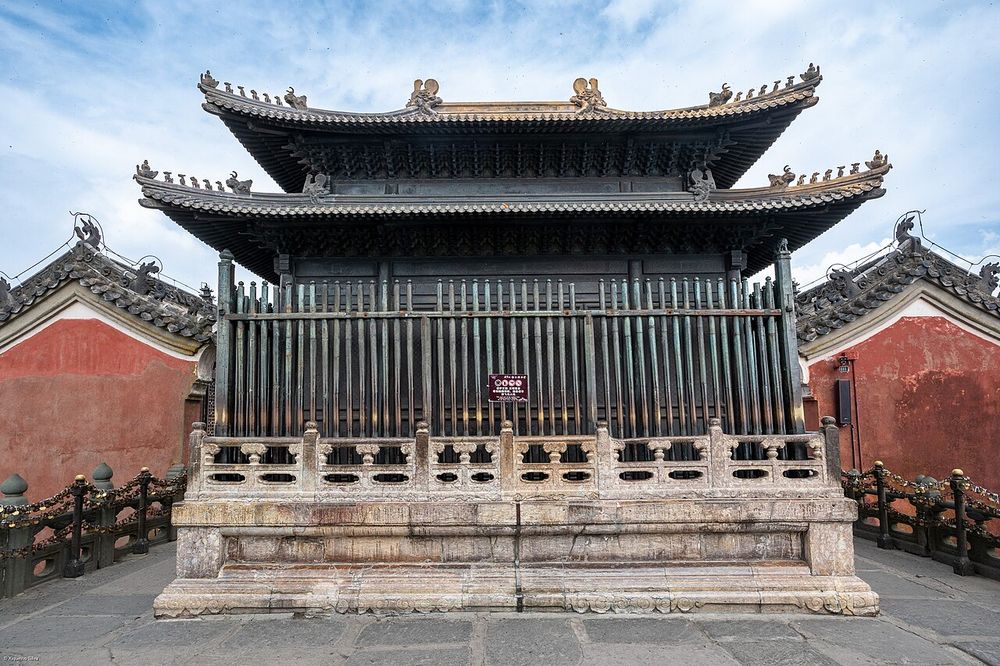
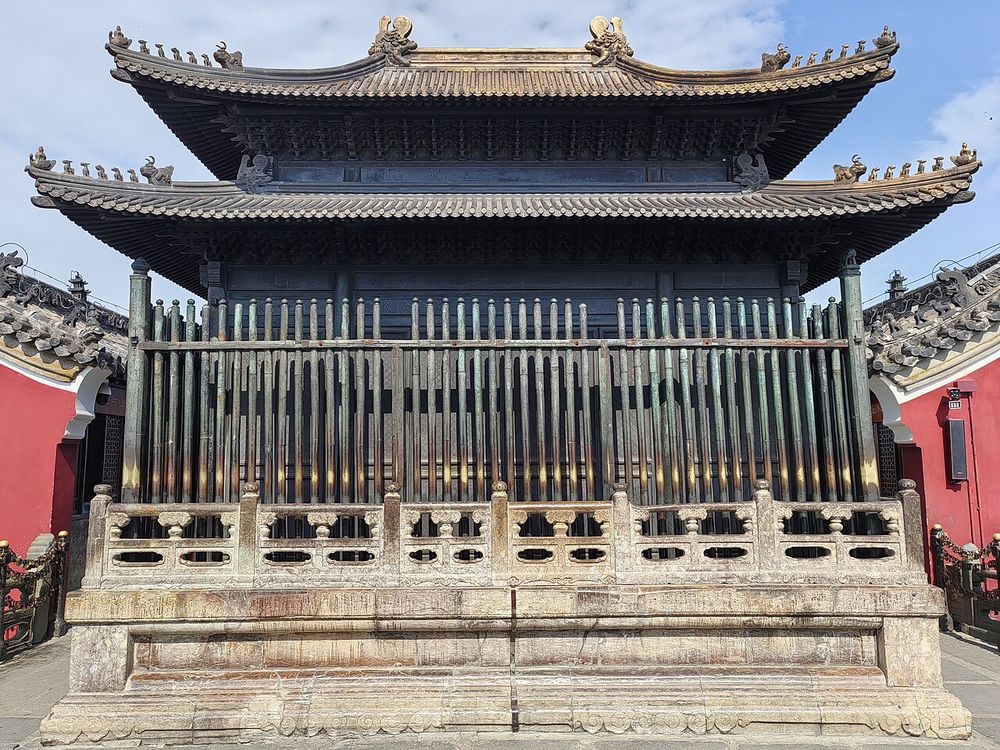
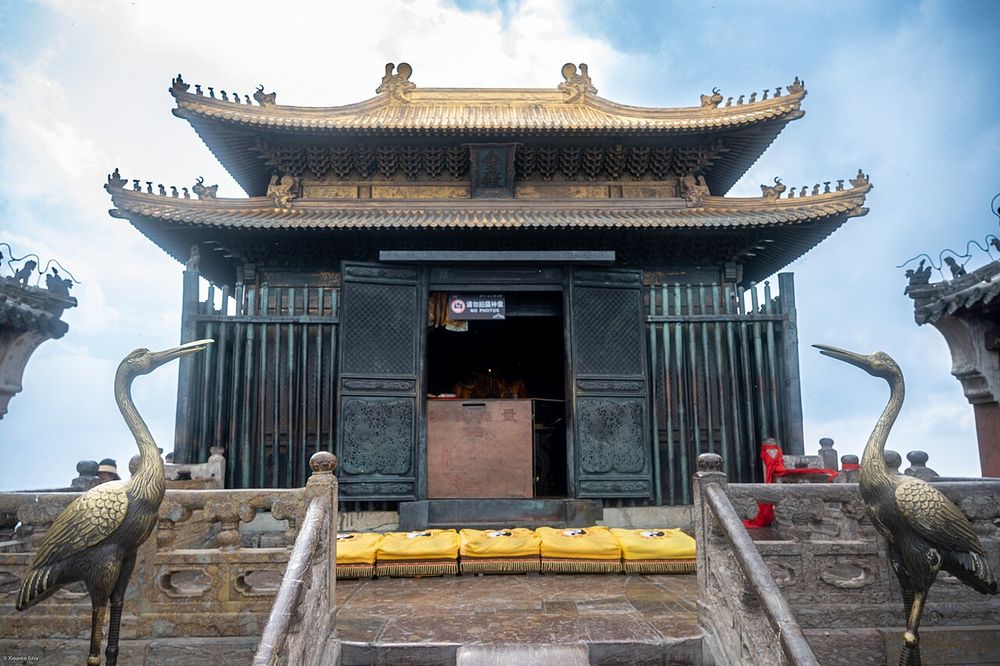
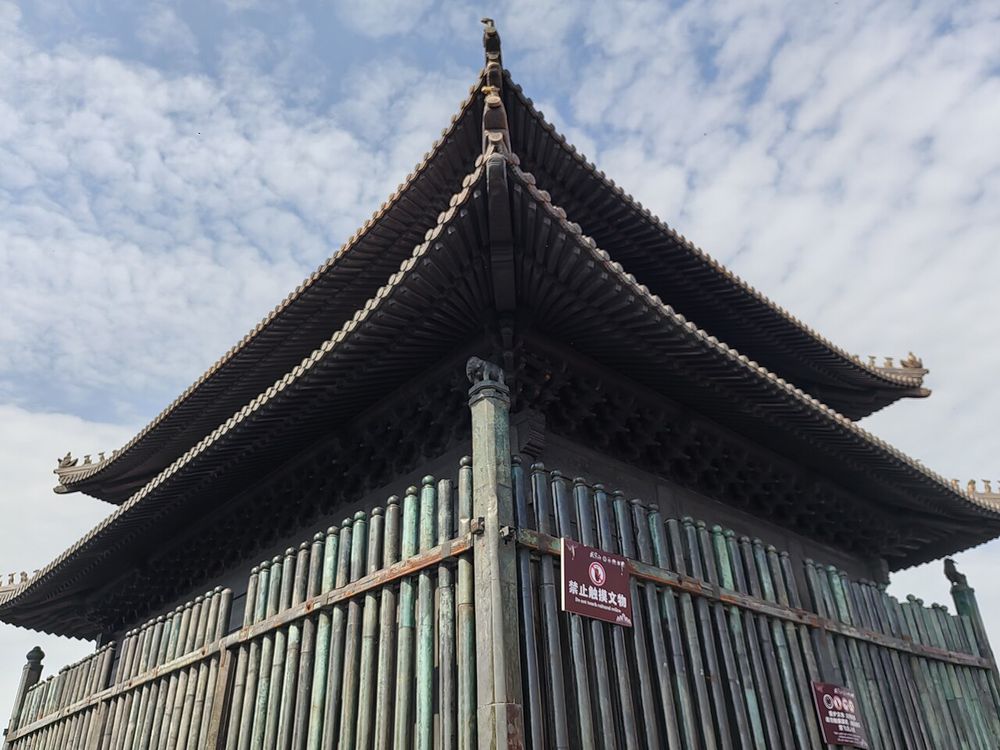
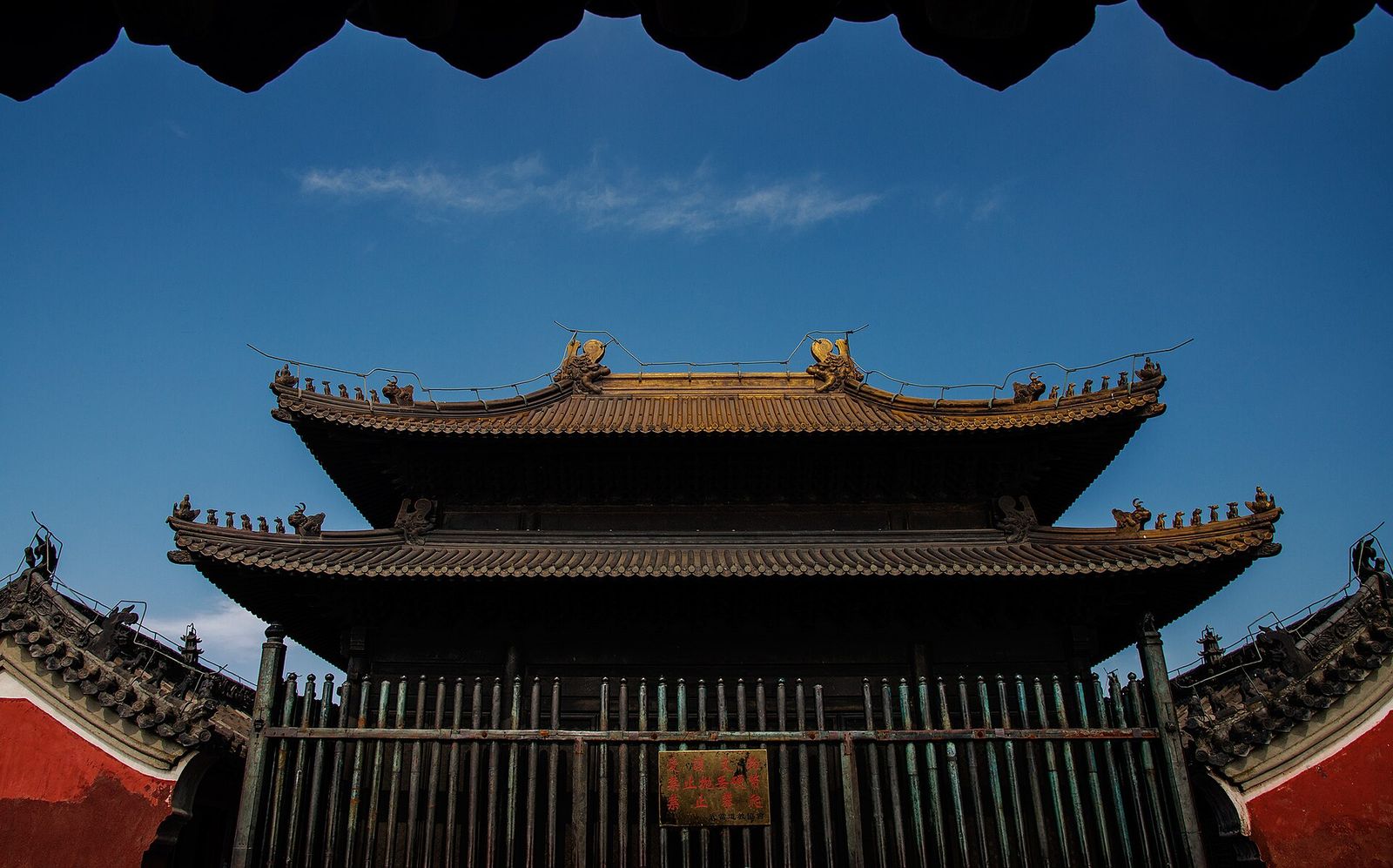
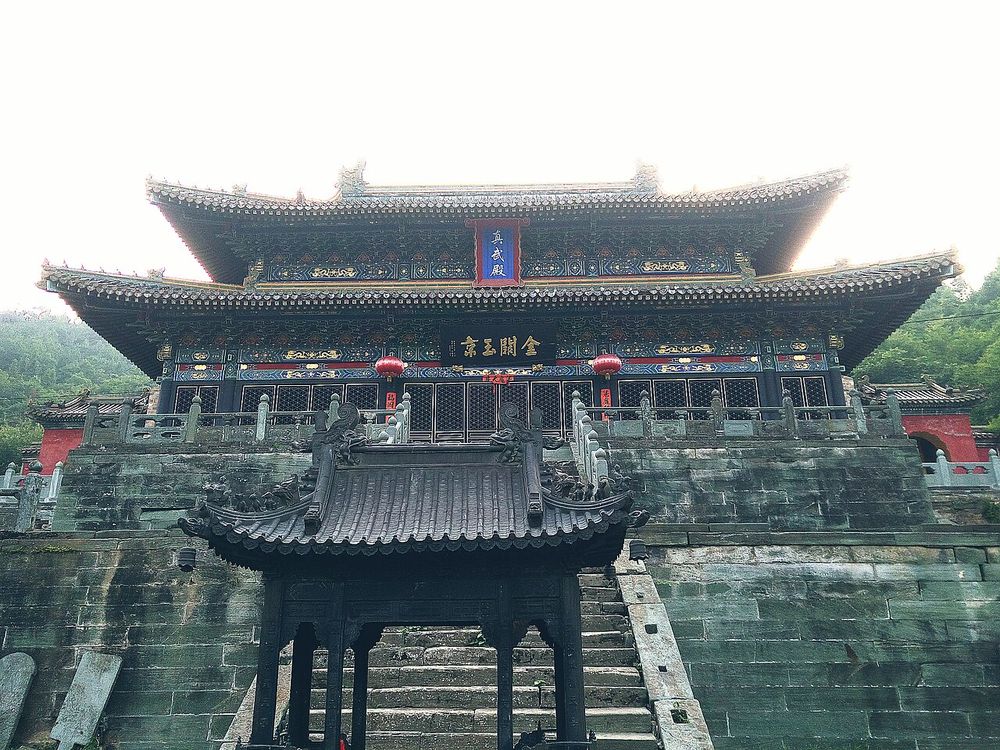
On the summit stands the Golden Hall. Its columns, brackets, roof and doors are all cast bronze, gilded. It was cast in pieces in 1416, carried here by boat, and put together on the peak.
What is here
The World Heritage site is not one building. It is a chain of palaces and temples from the town at the foot to the summit. One ticket lets you into the mountain and onto its buses. Two places inside sell a small ticket of their own, and the cable car is extra. Three old sites lie outside the ticket gate, in and near the town.
A long way from the main road; ask before setting out
If you have one minute
In front of the Golden Hall
The Golden Hall on the summit, cast in bronze in 1416xiquinhosilva, CC BY 2.0
The Yongle Emperor took the throne from his nephew by war. He said that Zhenwu, the god of the north, had protected him. Wudang was Zhenwu's mountain, so the court built here for more than ten years. People said: in the north he built the Forbidden City, in the south he built Wudang.
He never came. The emperor who paid for all of this ruled for twenty-two years and did not once climb the mountain.
Just below the summit there is an older bronze hall, cast in 1307 under the Yuan (1271–1368). It may be the first bronze hall ever made in China. It stood on the peak until the bigger one took its place.
At the foot of the mountain the old and the new meet. Yuzhen Palace, six hundred years old, was raised fifteen metres so that a reservoir could rise. Part of the water people drink in Beijing today starts from that reservoir.
People who stood here
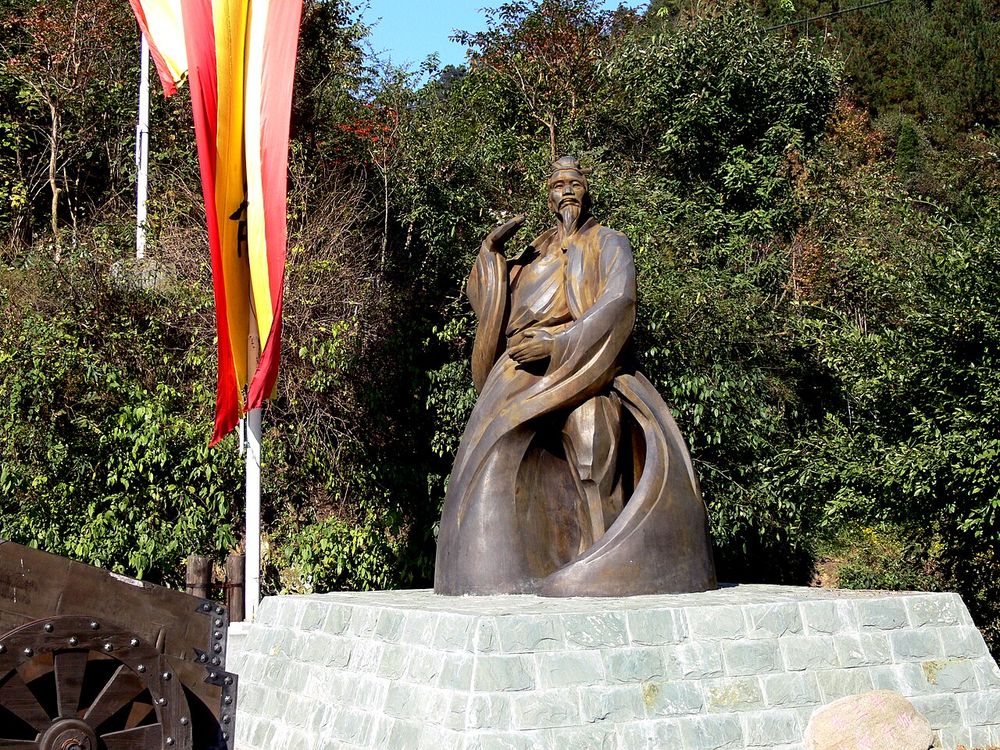
Zhang Sanfeng (Daoist hermit; in legend the founder of tai chi)Scholars have found a Daoist of this name in a household register of 1370, with his age, his looks and a note that he practised on this mountain. Two emperors sent men to find him. Neither succeeded. He may have walked the path you are on, and stepped off it when he heard them coming.
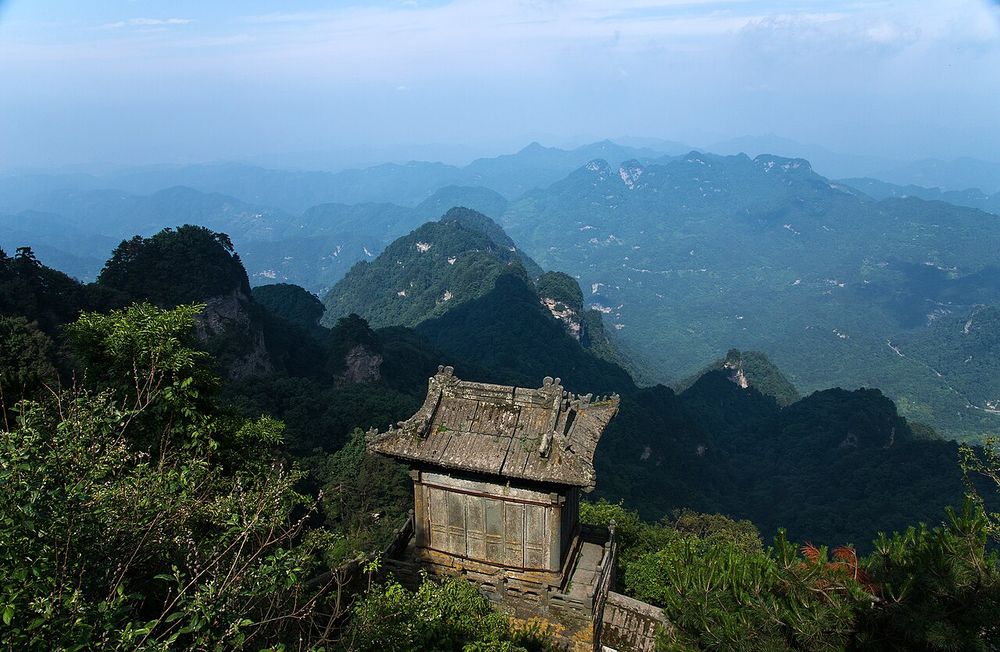
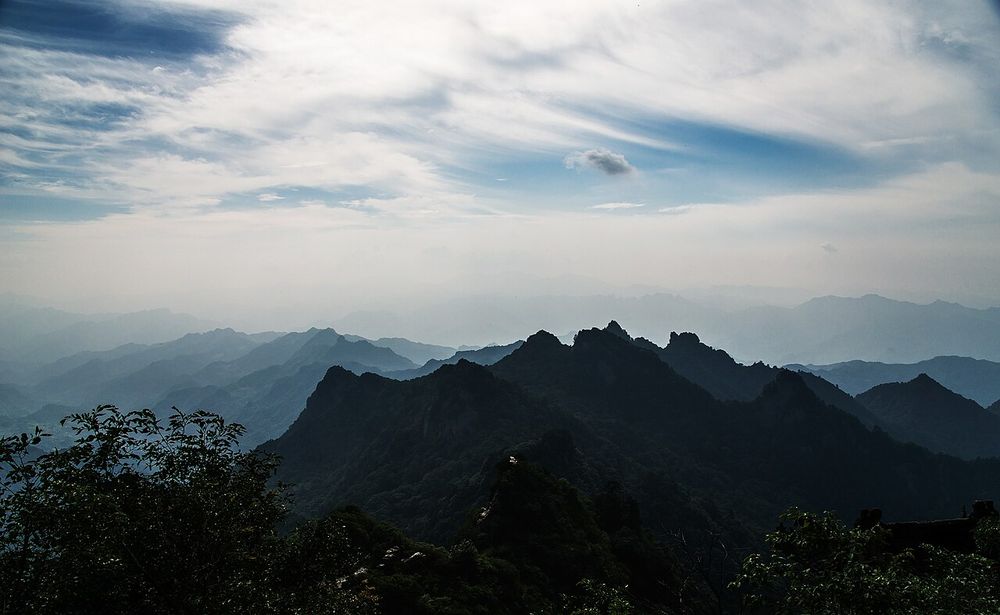
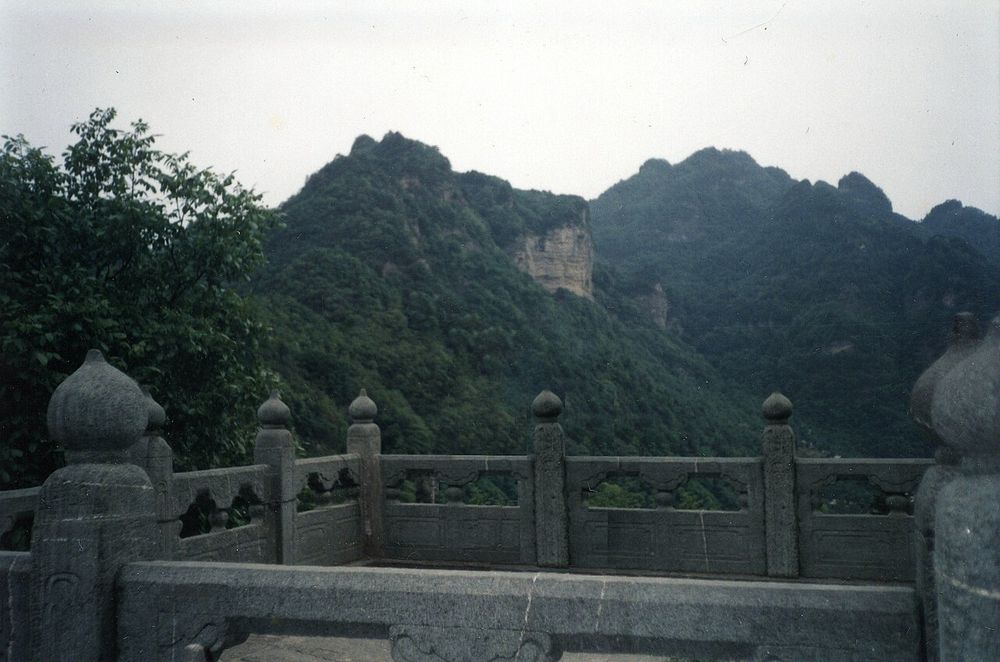
Xu Xiake (China's great travel writer of the Ming (1368–1644))He climbed Wudang in 1623 and wrote it up in his diary. He may have stood at this railing on the summit, out of breath like you, looking down at the same ring of lower peaks that seem to bow toward this one.
Go deeper: up the sacred way from the foot to the summit, nine stops
The palaces are strung along one road, the sacred way. The higher you go, the closer you are meant to be to heaven. Buses and a cable car now do most of the climbing. Allow two days for everything.
1. Xuanyue Gate: the front door of the mountain
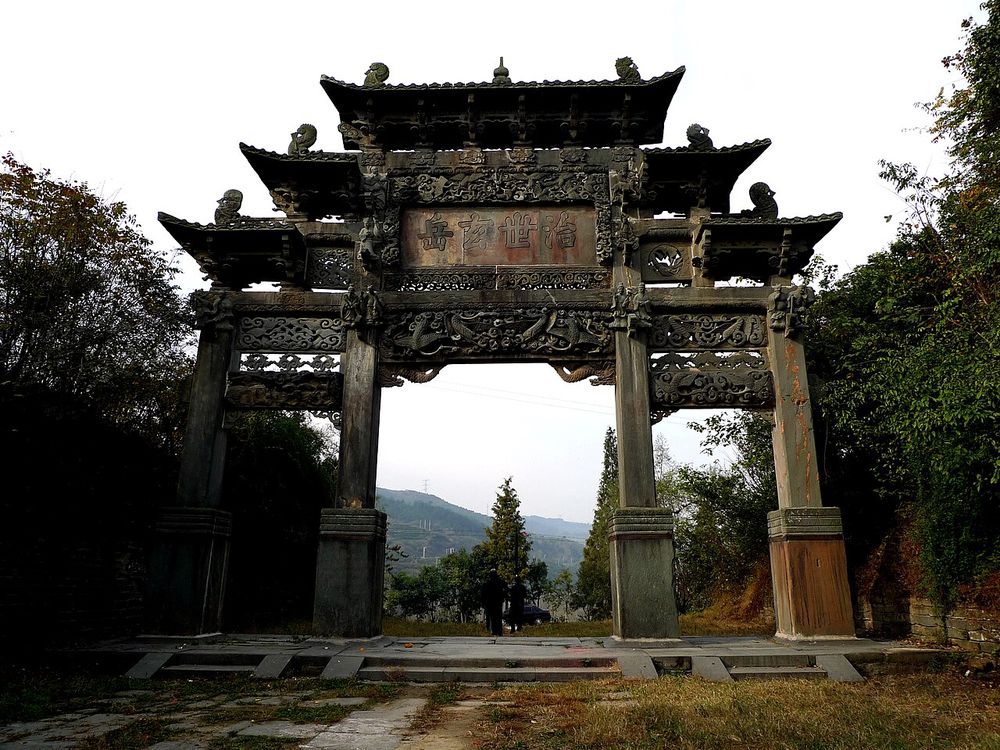
Xuanyue Gate, the stone archway of 1552 at the foot of the mountainGisling, CC BY 3.0
A stone archway of 1552, about twelve metres high, carved all over with cranes, clouds and immortals. The four characters on it read "Zhi Shi Xuan Yue". The Jiajing Emperor of the Ming had given Wudang the title Xuanyue, the Dark Peak, and it is often said that this ranked it above the Five Great Mountains of China.
From here on, pilgrims were on imperial ground. The old road began in the town of Junzhou, which now lies under the reservoir, and ran some 70 kilometres to the summit.
2. Yuzhen Palace: the palace that grew fifteen metres
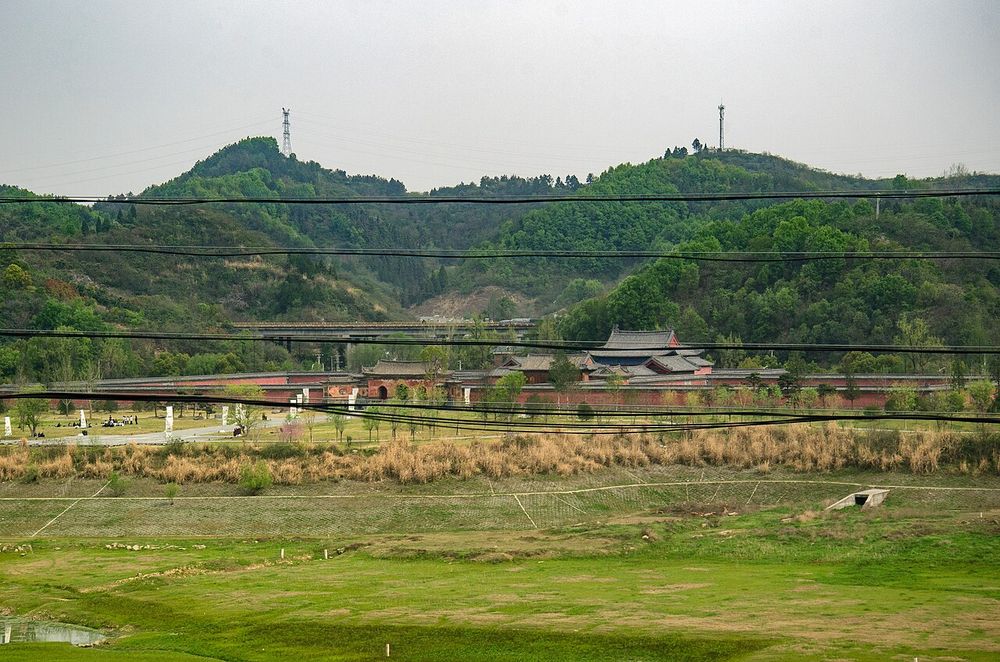
Yuzhen Palace on its raised ground, seen from the railway in 2025Saigyouji-Noriko, CC BY-SA 4.0
In 1412 the Yongle Emperor ordered this palace built for Zhang Sanfeng, a wandering Daoist whom his men could not find. An emperor building a palace for a commoner priest is rare in Chinese history.
Then came the water. The Danjiangkou dam was raised for the South-to-North Water Diversion Project, and the top level of the reservoir went from 157 to 170 metres. The palace stood at about 165 metres. It would have drowned.
Engineers weighed three plans: move it, wall it off, or lift it where it stood. They chose the third. From 2012 the main gate and the east and west gates were jacked up, about 0.3 centimetres a minute, until they stood 15 metres higher. The other buildings were taken down and put back on the raised ground.
Not everyone was impressed. The work cost about 200 million yuan, and only three gates were truly lifted in place. UNESCO also noted that it had not been given the plans before work began. A fire in 2003 had already destroyed the main hall.
3. Yuxu Palace: once the biggest
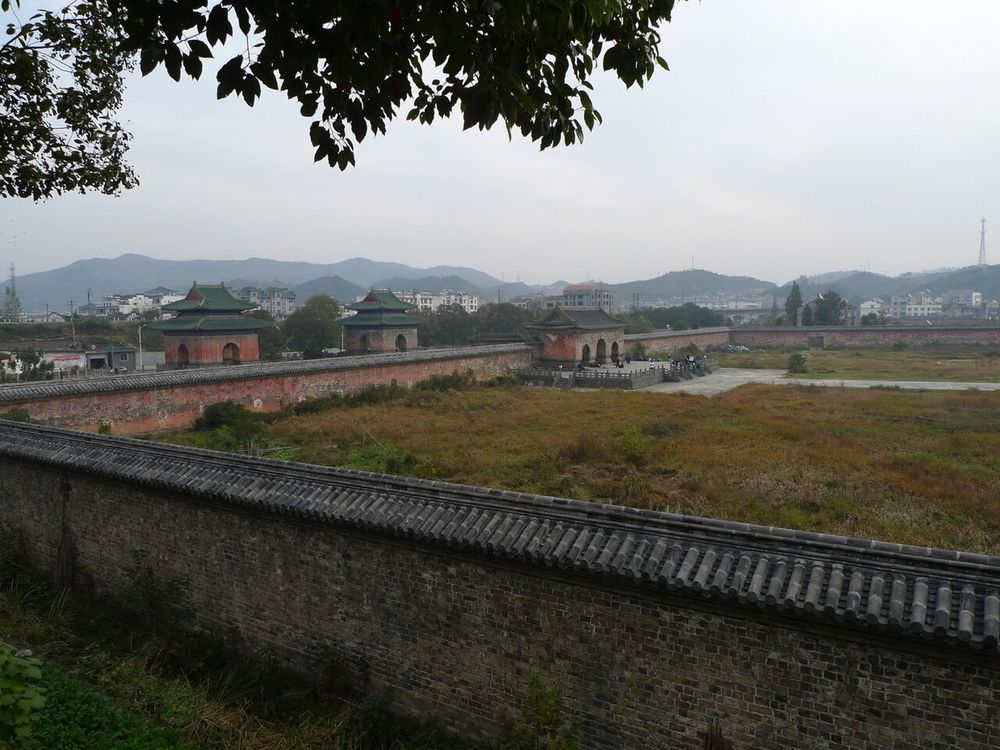
The site of Yuxu Palace in 2009Gisling, CC BY-SA 3.0
This was the largest palace on the mountain, a walled city inside a walled city. Most of it burned in the Qianlong reign of the Qing (1644–1912). What survived were the walls, the foundations, and four stone tortoises carrying giant stelae in their pavilions.
Some halls have been rebuilt in recent years. As you walk, ask of each building: six hundred years old, or twenty?
4. Purple Heaven Palace: the best preserved
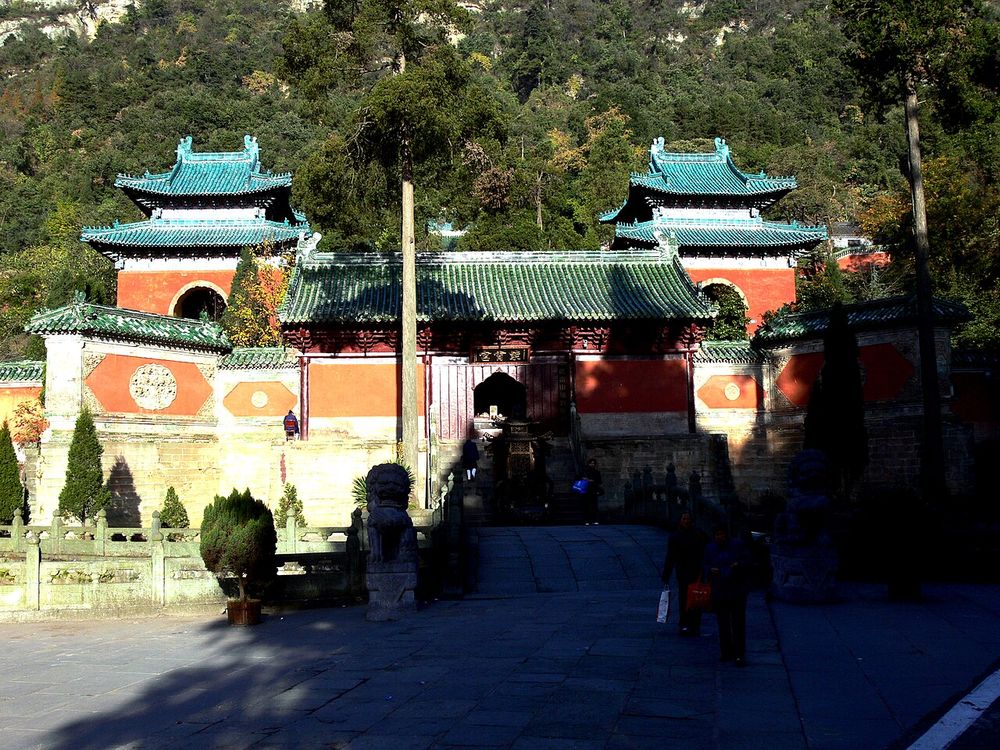
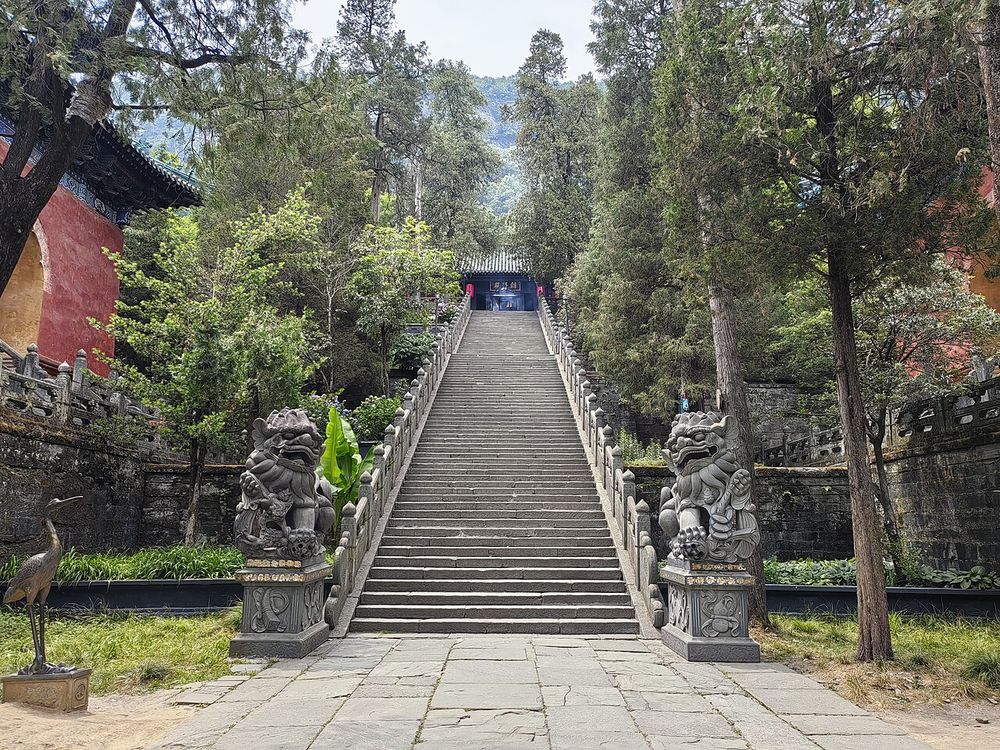
Purple Heaven Palace climbs the slope terrace by terraceliuzr99, CC BY-SA 2.0
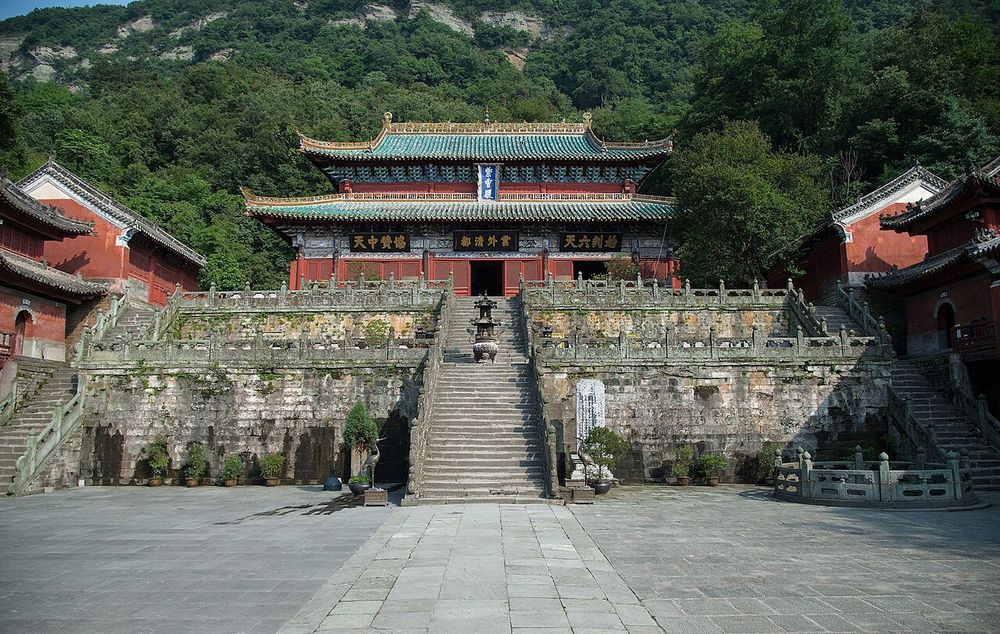
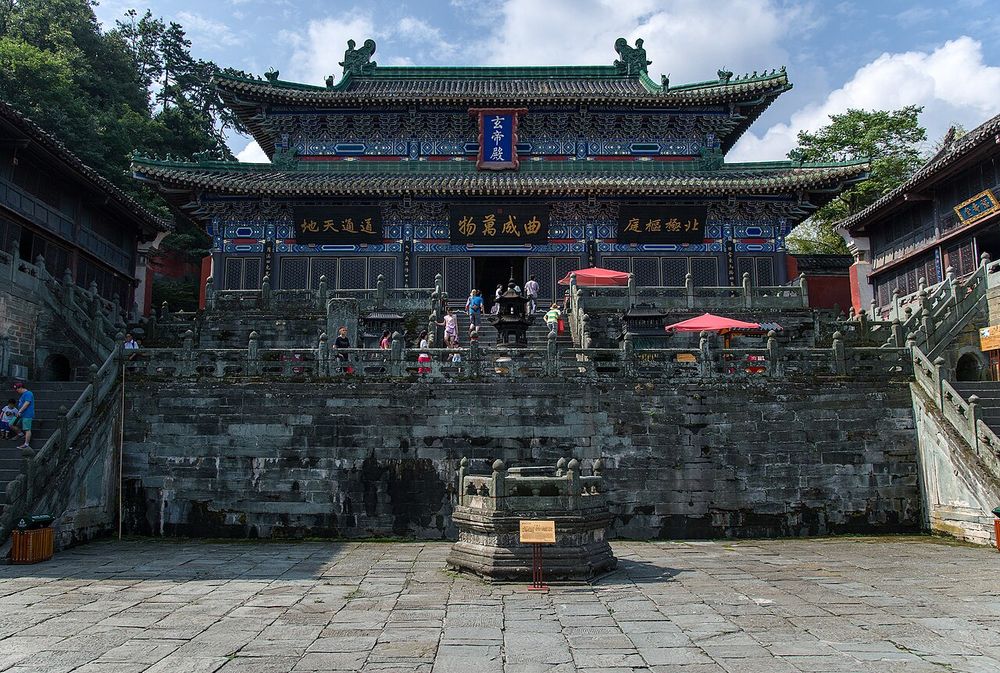
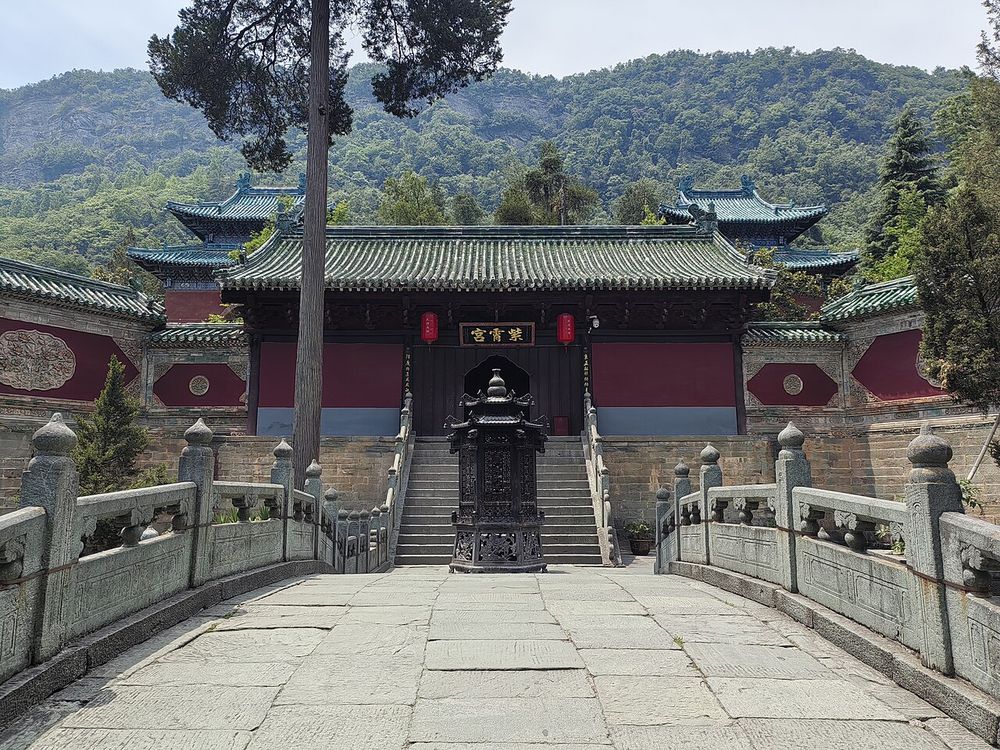
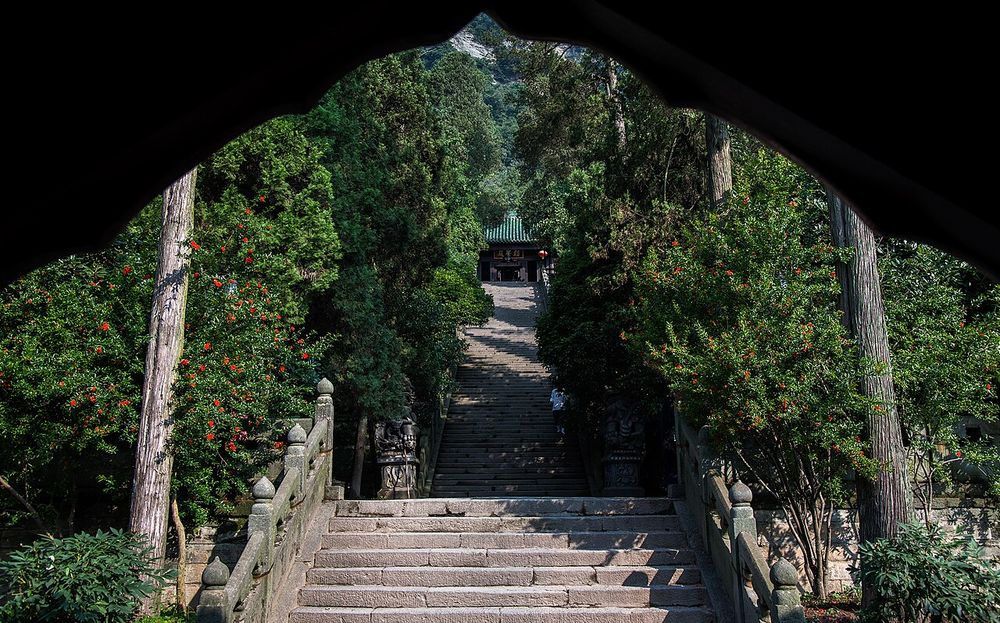
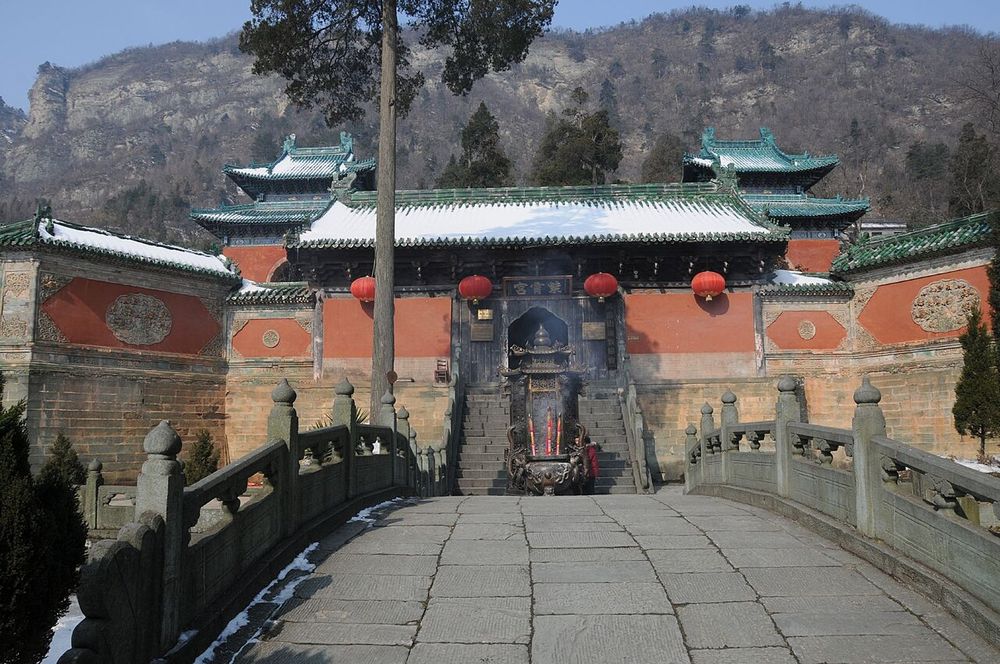
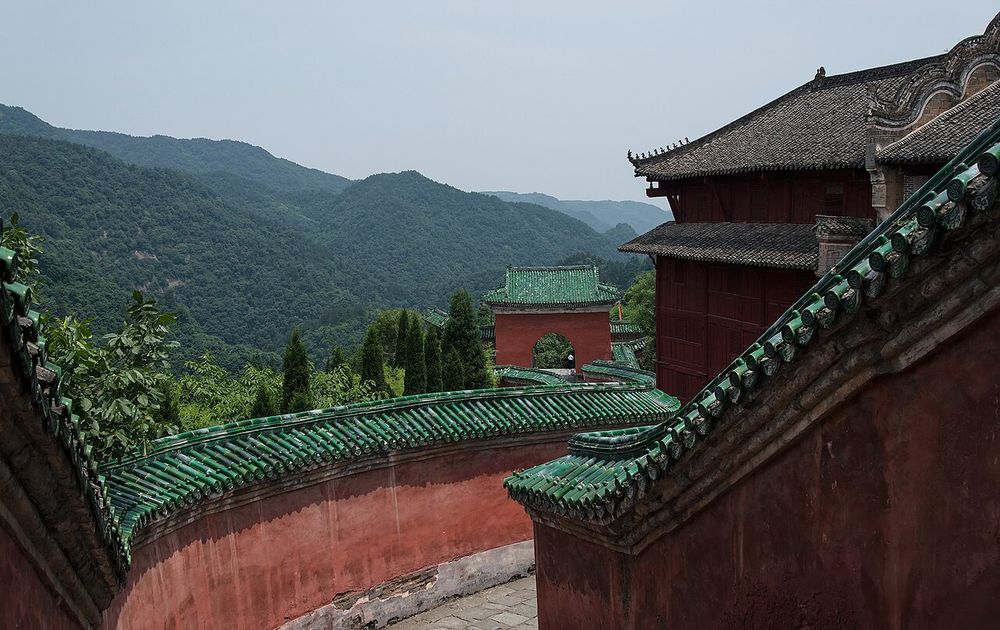
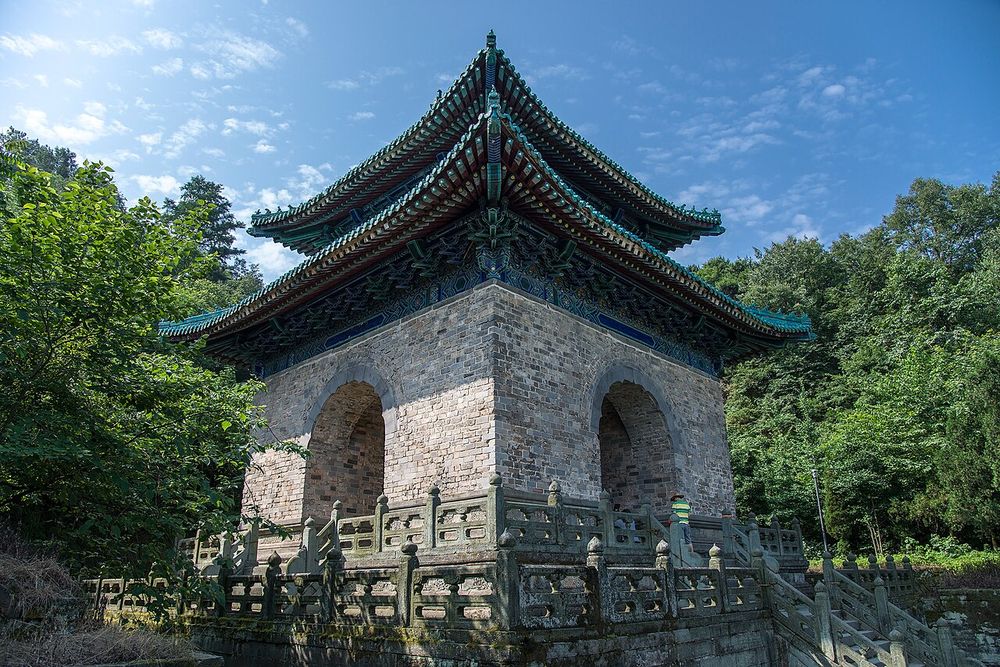
Zixiao, Purple Heaven Palace, sits halfway up, with its back against Zhanqi Peak. It climbs in terraces. From the gate to the great hall you go up flight after flight of steps, and at each level the buildings grow taller.
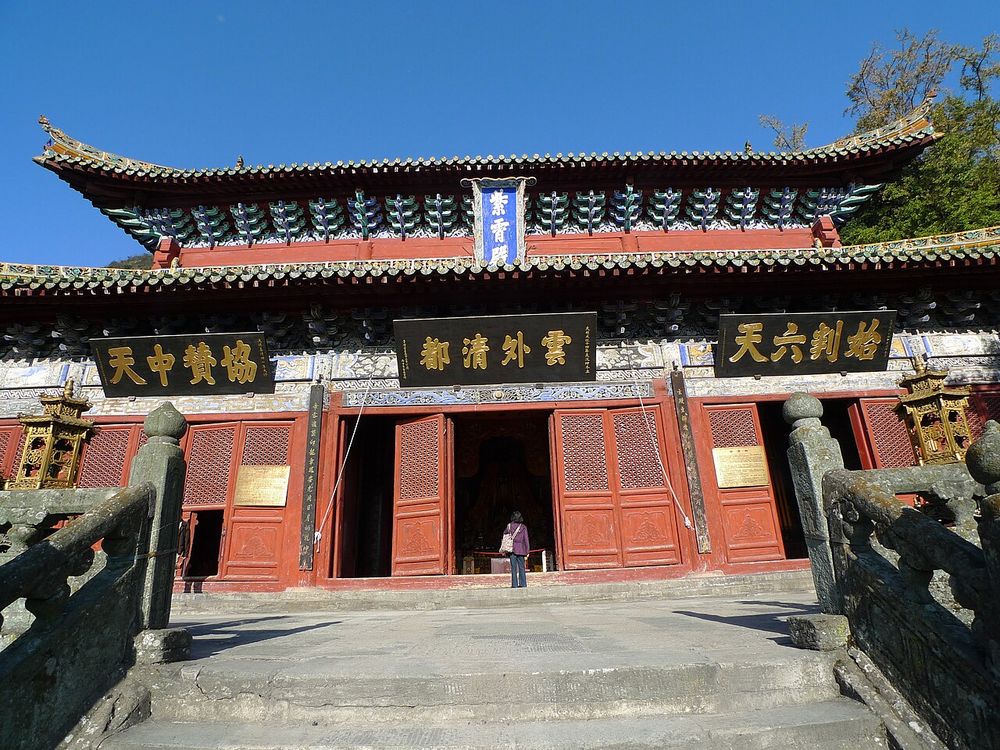
Zixiao Hall on its three-tiered stone platformliuzr99, CC BY-SA 2.0
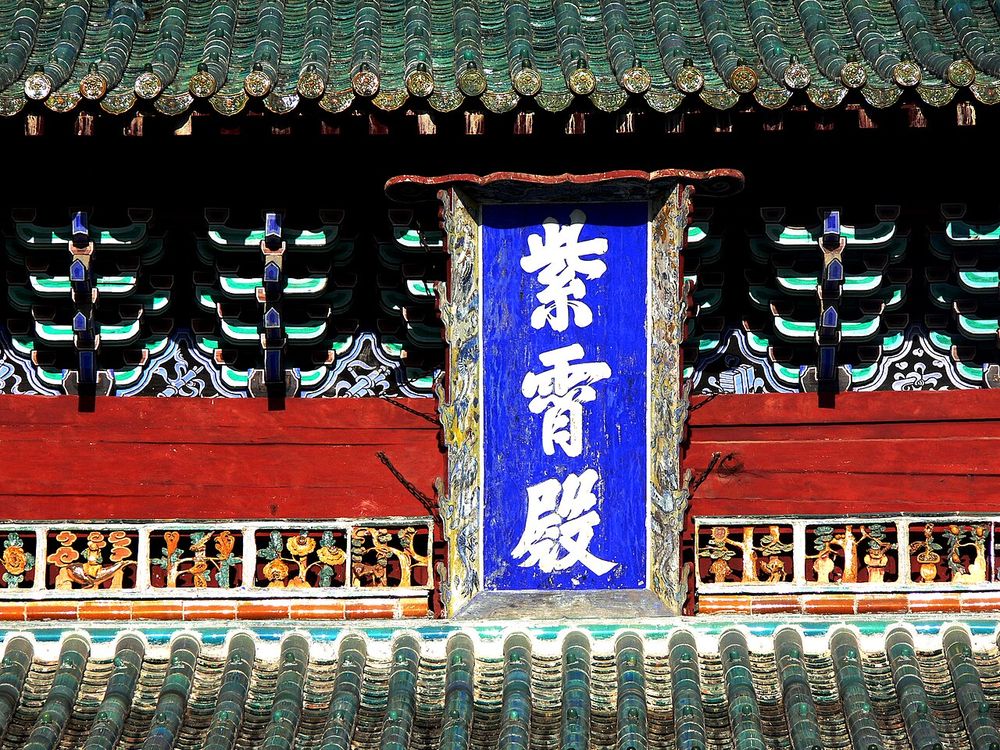
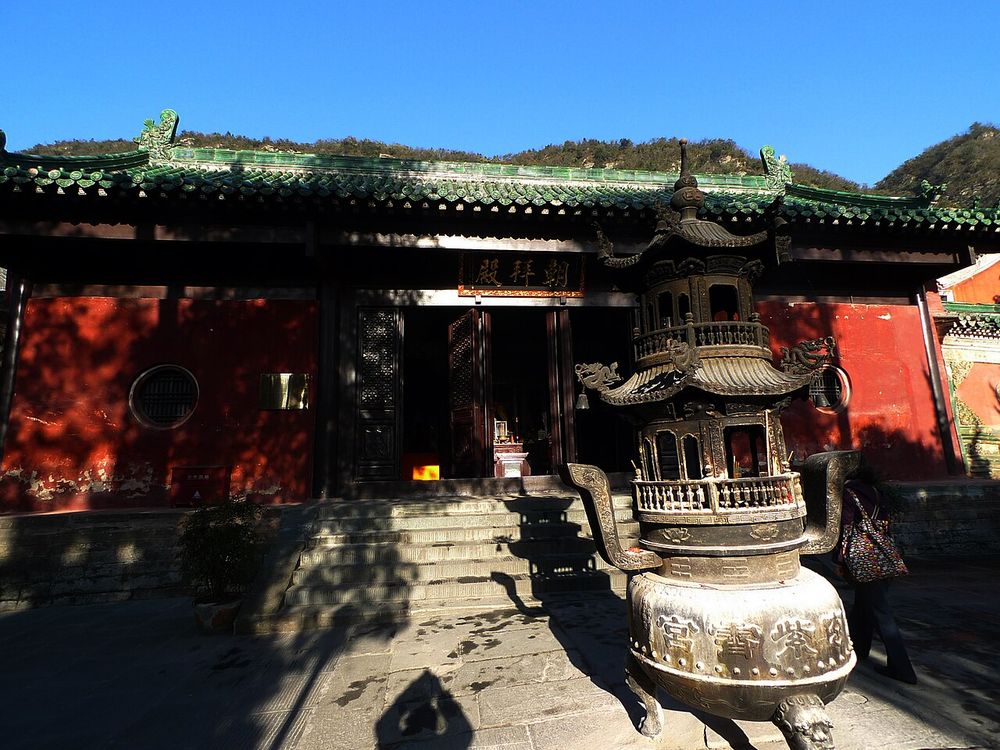
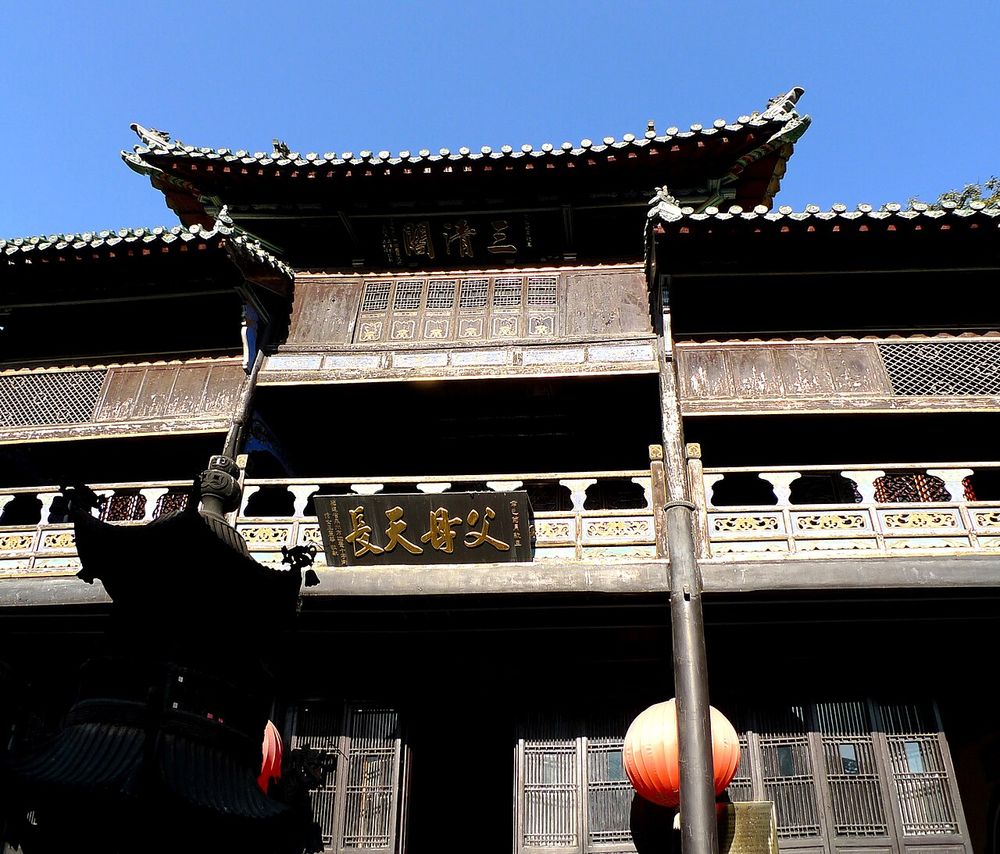
The great hall, Zixiao Hall, stands on a stone platform of three tiers. Inside sits Zhenwu. Behind it is the Parents' Hall, for Zhenwu's father and mother.
This is still a working monastery and the seat of the Wudang Daoist Association. Priests live here. If you come early or late in the day you may hear the morning or evening service, with its own music.
5. South Cliff Palace: a stone hall in a precipice
South Cliff Palace, built into the rock faceGisling, CC BY-SA 3.0
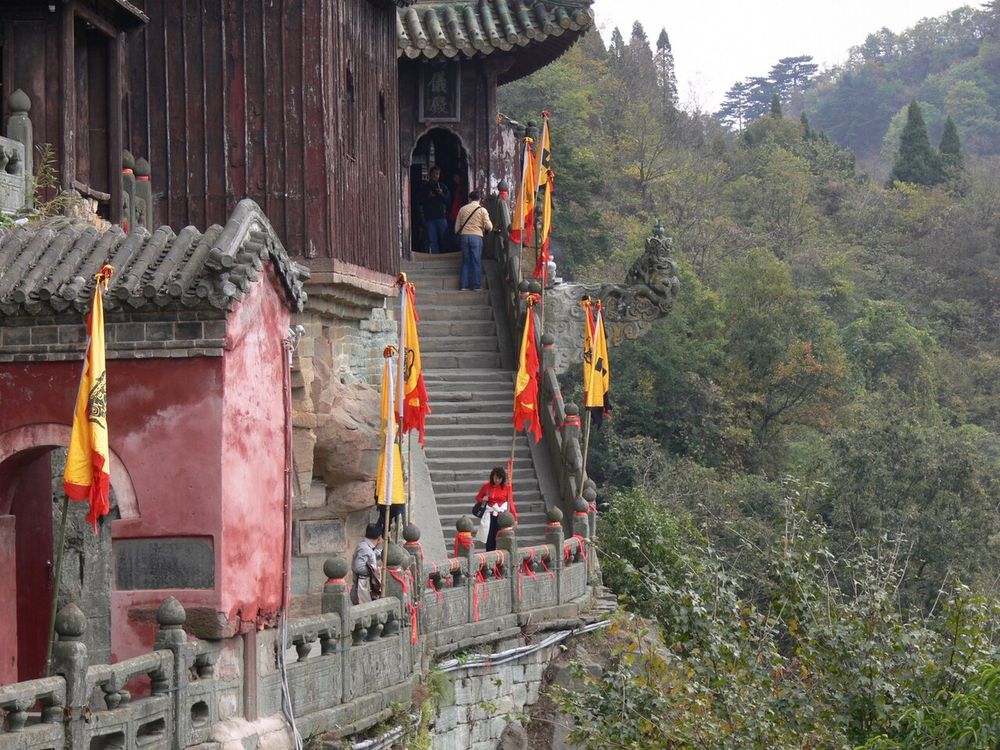
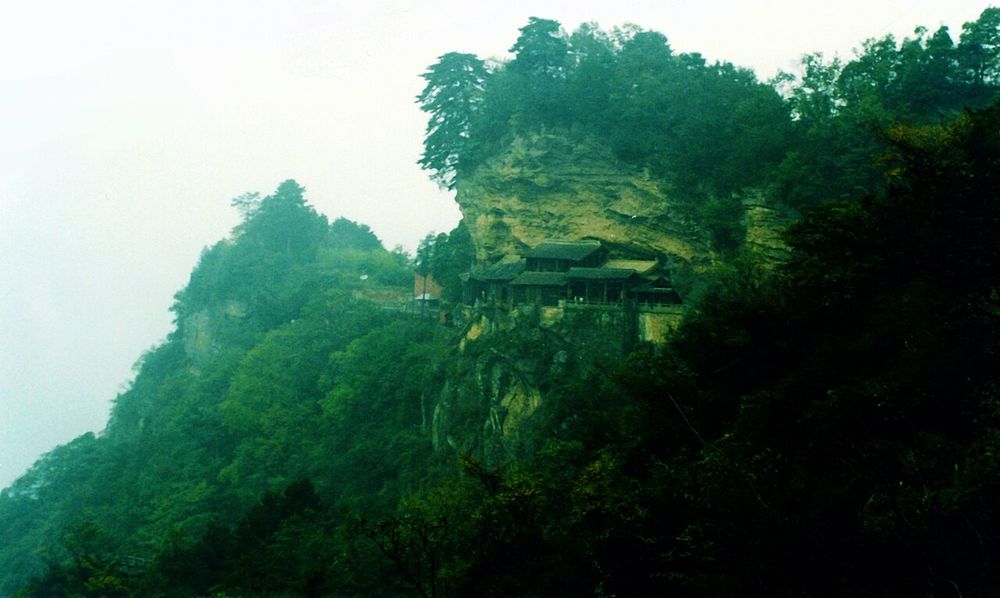
First built under the Yuan, enlarged in 1412. The whole group is set into a cliff. There is no room for a straight central axis, so the halls follow the rock, one after another along the ledge.
The hall called Tianyi Zhenqing Palace looks like timber and is not. Its beams, columns, doors and windows were all cut from grey stone and fitted together with joints, as a carpenter would.
The Dragon Head Incense: a carved beam over the drop, with a censer at its tipGisling, CC BY-SA 3.0
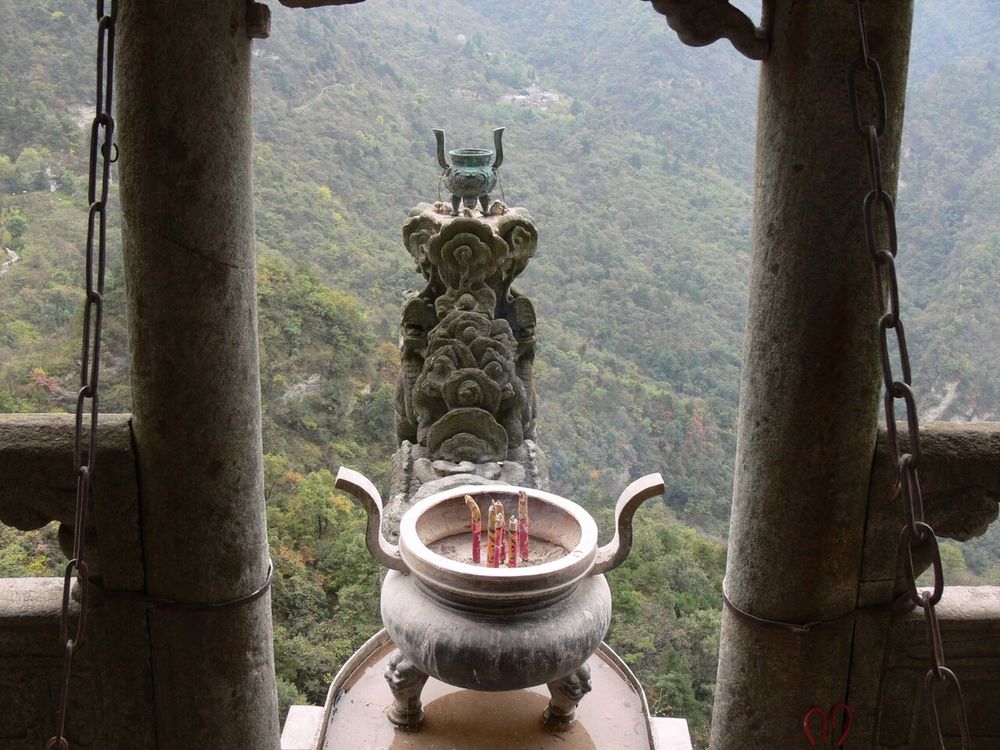
The Dragon Head Incense is a carved stone beam that sticks out from the cliff for about 2.9 metres. It is only some 30 centimetres wide. On the dragon's head sits a censer. Pilgrims used to crawl out over the drop to light incense there, and some fell. It has long been forbidden.
6. The Purple Gold City and the Golden Hall: a palace in the sky
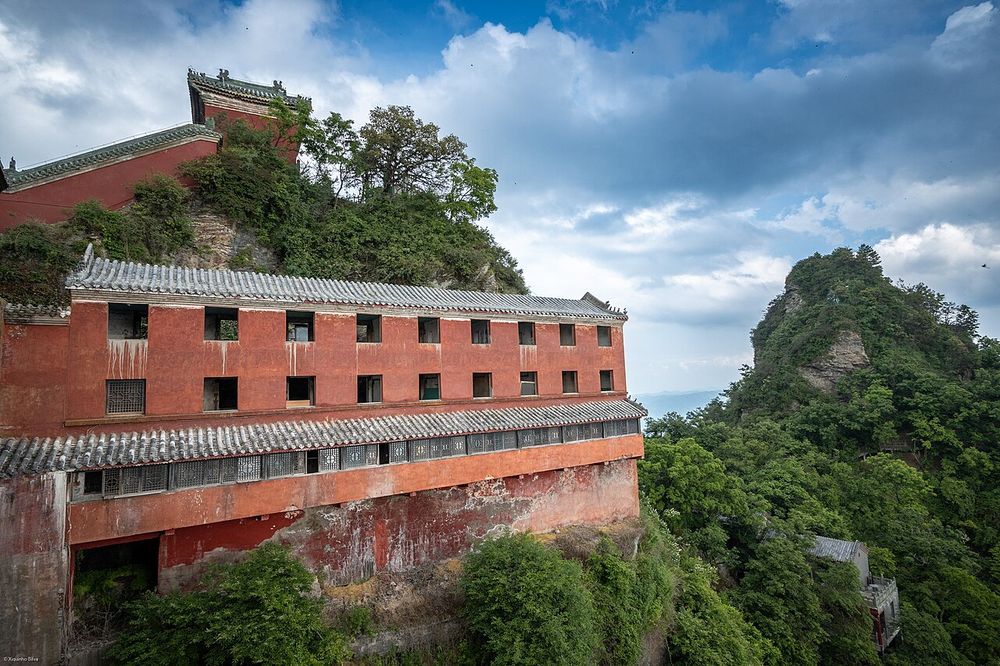
Taihe Palace: red walls stacked against the rock under the summitxiquinhosilva, CC BY 2.0
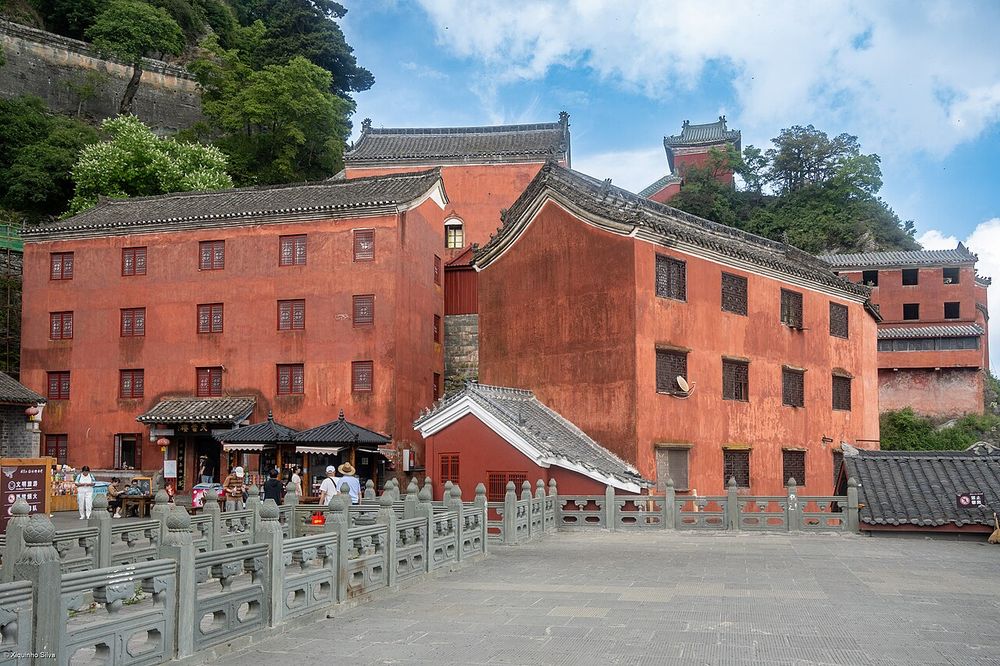
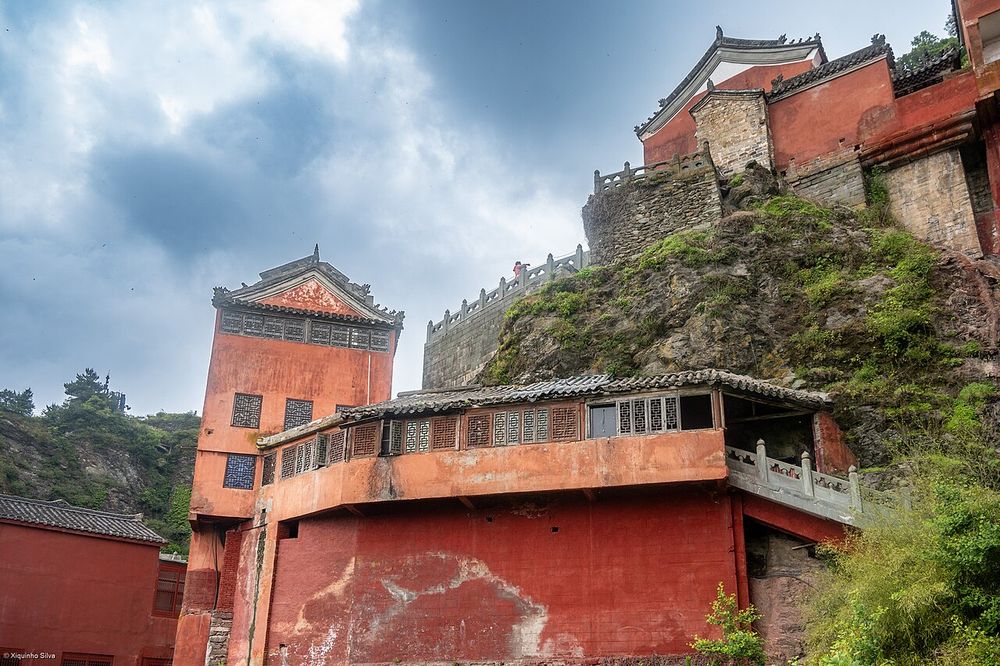
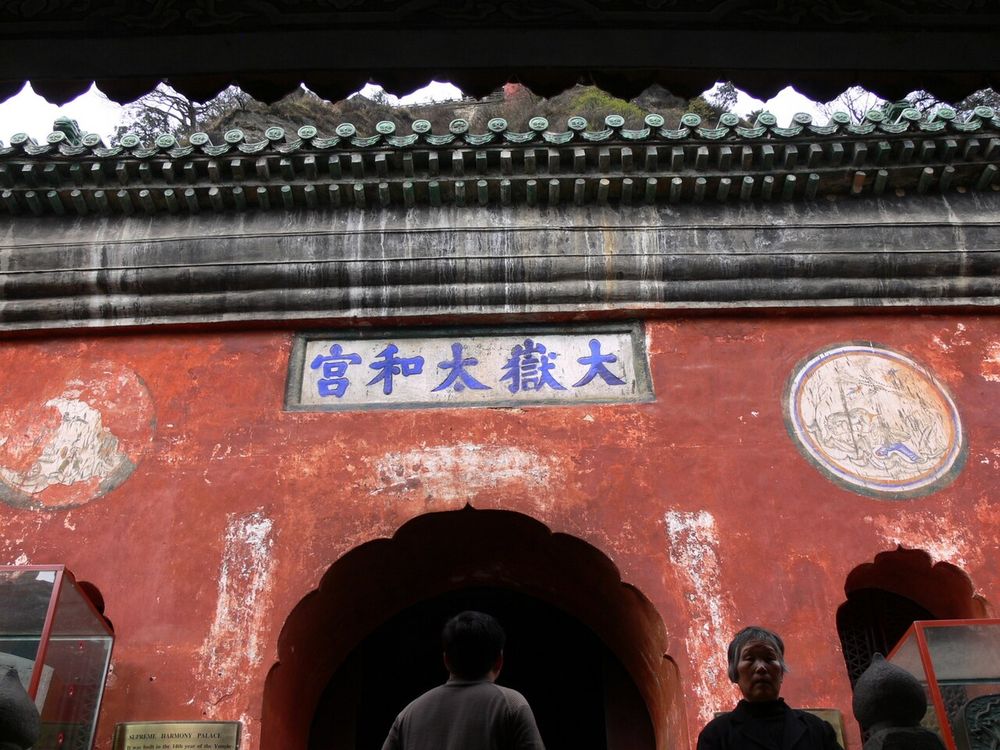
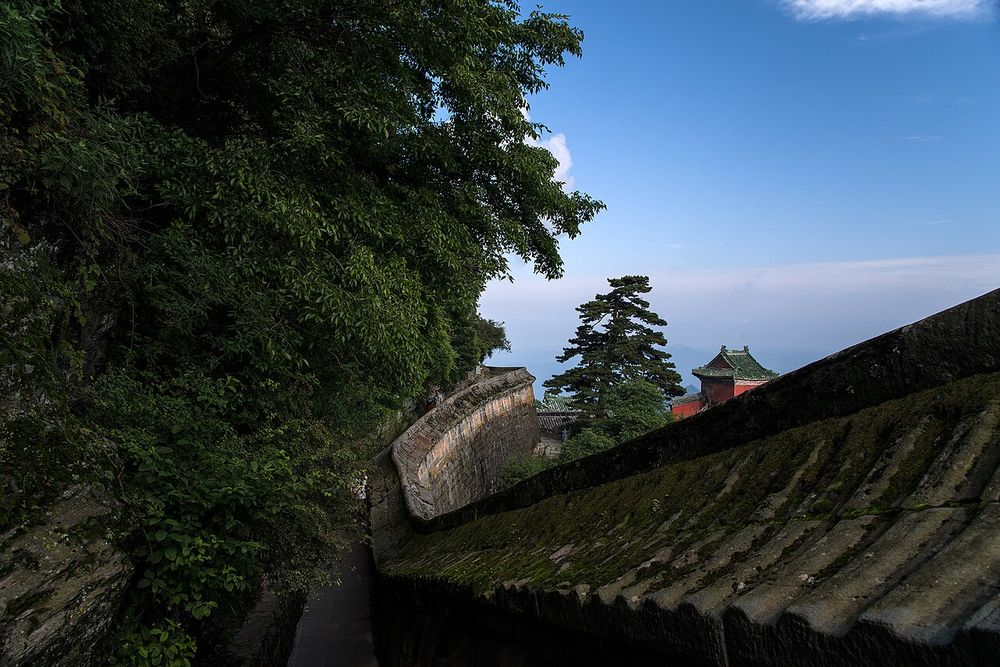
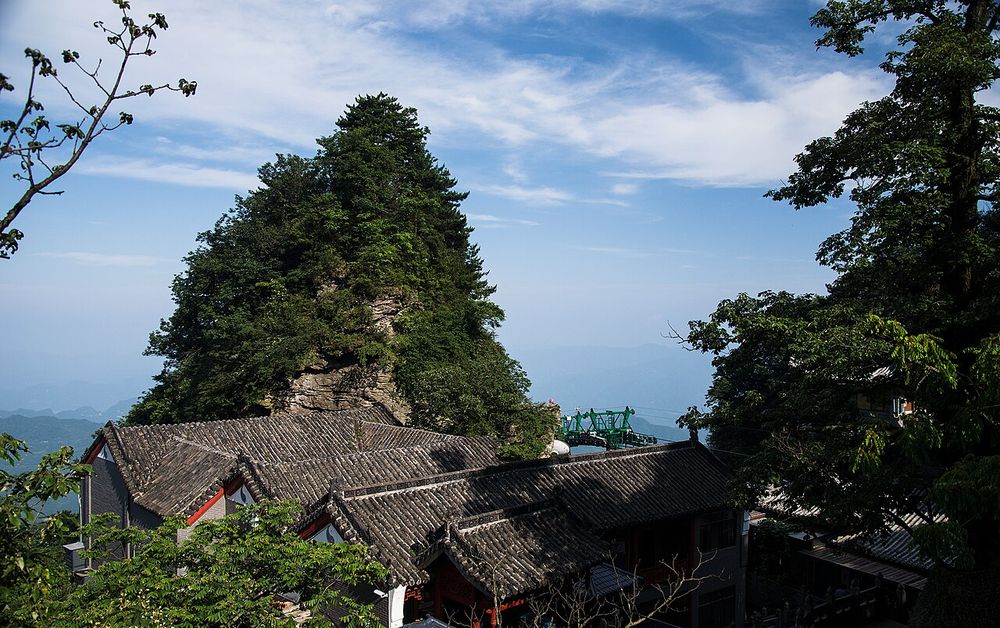
Under the last climb you pass Taihe Palace, red walls stacked against the rock. Then a stone wall rings the top of Tianzhu Peak. It is called the Purple Gold City. With the hall inside it, the summit was made into a palace in heaven, the mountain's answer to the Purple Forbidden City in Beijing.
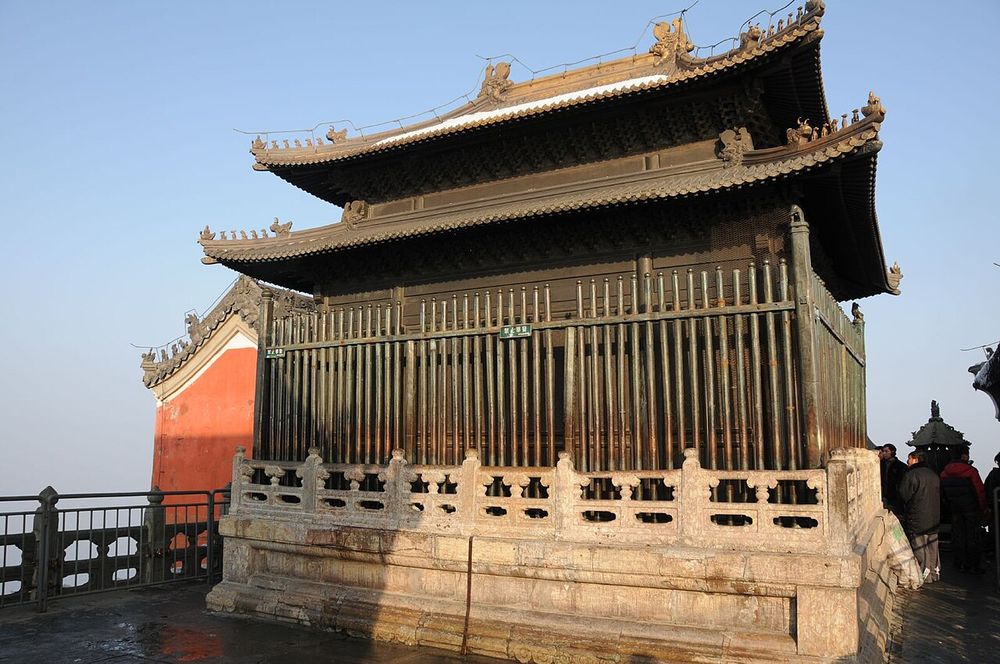
The Golden Hall from the side: columns, railings and roof are all metalYumeto, CC BY-SA 4.0
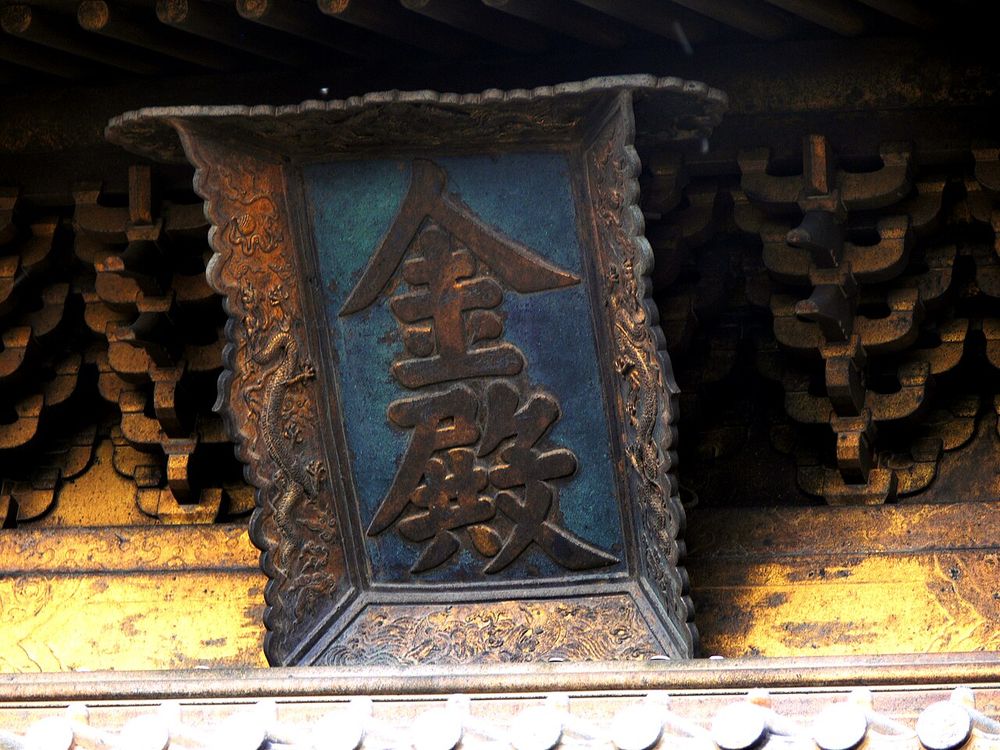
The Golden Hall faces east. It is three bays wide, yet the whole front is only about 4.4 metres across and the hall is about 5.5 metres high. Every part was cast separately, joined like timber, and gilded. It is the largest and highest-ranking gilded bronze hall left in China.
The emperor's order of 1416 for the boats that carried it survives. It tells the escort that the boats must be kept clean and that no cooking is allowed on board.
Inside sits Zhenwu. On his left and right stand the Golden Boy holding a book and the Jade Girl holding a seal, and the two generals of Water and Fire with a banner and a sword.
In thunderstorms, light plays around the hall. A bronze building on a peak 1,600 metres up draws electrical discharge.
7. The small bronze hall: the oldest in China
It stands inside a later building, the Zhuanyun Hall, below the summit and outside the Purple Gold City. It was made in 1307. It is the oldest bronze hall that survives, and very likely the first ever made in China.
It first stood on the very top of Tianzhu Peak. When the Ming built the Golden Hall it was moved down here.
The inscriptions show that the body and the ridge were cast in two cities, Wuchang and Xiangyang, and paid for by believers around Wuchang. So a small hall bought by ordinary people and a great one ordered by an emperor stand a hundred years and a few steps apart.
8. Wudang on the page and on the screen
A modern statue of Zhang SanfengGisling, CC BY 3.0
Most Chinese readers meet Wudang in the novels of Jin Yong. In The Heaven Sword and Dragon Saber, Zhang Sanfeng founds the Wudang school and invents tai chi boxing and the tai chi sword. That is fiction. The history is the short entry in the register of 1370.
Many Western visitors know the name from somewhere else. The New York hip-hop group Wu-Tang Clan took it from a Hong Kong kung fu film of 1983, Shaolin and Wu Tang.
Crouching Tiger, Hidden Dragon (Ang Lee, 2000): Li Mu Bai, played by Chow Yun-fat, is a Wudang swordsman, and the story ends on "Wudang Mountain". The film was not shot here; its last scene is usually identified as Cangyan Mountain in Hebei.
The Karate Kid (2010): Jackie Chan's Mr Han takes the boy Dre up a mountain of temples to drink from a well. On the way they watch a woman on a ledge hold the gaze of a cobra. Those scenes were filmed on Wudang.
Tai chi was added to UNESCO's list of intangible heritage on 17 December 2020. Early in the morning you can watch people practise on the terraces at Purple Heaven Palace and South Cliff.
9. Places to hold beside it
The Forbidden City in Beijing: the same emperor, the same decade. One is spread flat along an axis. The other is stacked up a mountain.
Other Daoist mountains, such as Longhu and Qingcheng, grew slowly over many dynasties. Wudang is the one that was planned as a whole by a court.
About a dozen bronze halls were made in China under the Yuan, Ming and Qing, and six survive, among them the ones at Mount Tai and the Summer Palace. This one mountain has the earliest and the largest.
The Hanging Temple at Mount Heng in Shanxi is, like South Cliff, a building fixed into a rock face.
Meanwhile in the world
Year
Here
Elsewhere
1285
South Cliff Palace is begun (Yuan)
Marco Polo is in the service of the Yuan court
1307
The small bronze hall is cast and set on the peak
Dante is about to begin the Divine Comedy
1370
A Daoist named Zhang Sanfeng is entered in the household register
The wall of Pingyao is faced with brick
1406–1420
—
The Yongle Emperor builds the Forbidden City in Beijing
1412
The great building campaign on Wudang begins
Zheng He is preparing his fourth voyage to the Western Ocean
1416
The Golden Hall is cast and shipped to the mountain
In Bohemia the Hussite wars are three years away; Columbus will not sail for another 76 years
1552
Xuanyue Gate is built
Francis Xavier dies on an island off the coast of Guangdong
1623
Xu Xiake climbs the mountain
The First Folio of Shakespeare's plays is printed in London
1994
Listed as World Heritage
The same session lists the Potala Palace, the Mountain Resort at Chengde and the Confucius sites at Qufu
2012
Yuzhen Palace is raised fifteen metres
Six hundred years since the building of Wudang began
2014
—
Water from Danjiangkou begins to flow north to Henan, Hebei, Beijing and Tianjin
2020
—
Tai chi is added to UNESCO's intangible heritage list
One line to remember: in the north he built the Forbidden City, in the south he built Wudang.
Then and now
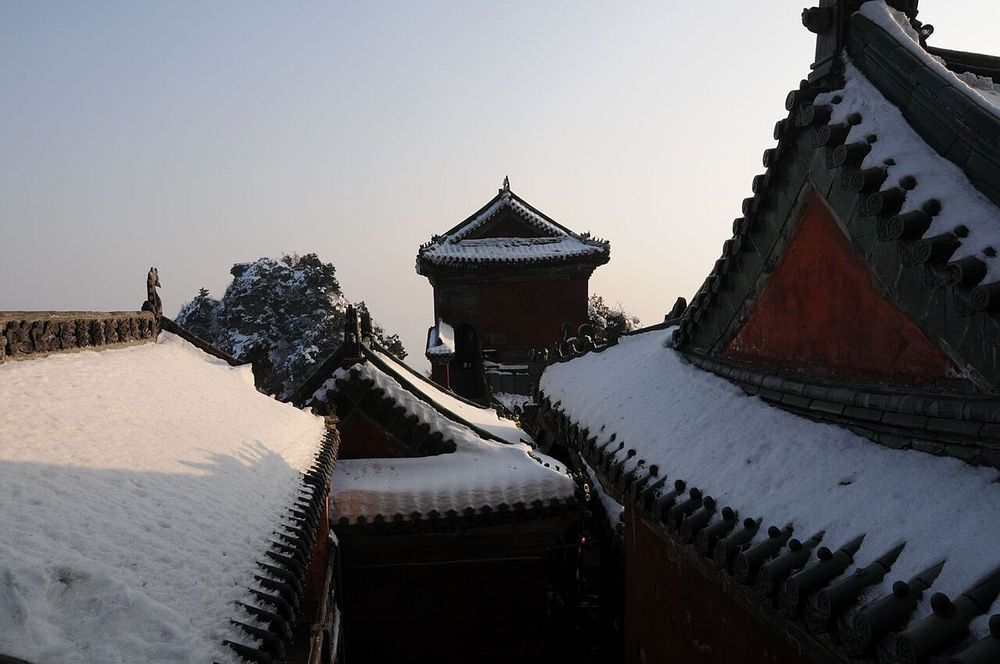
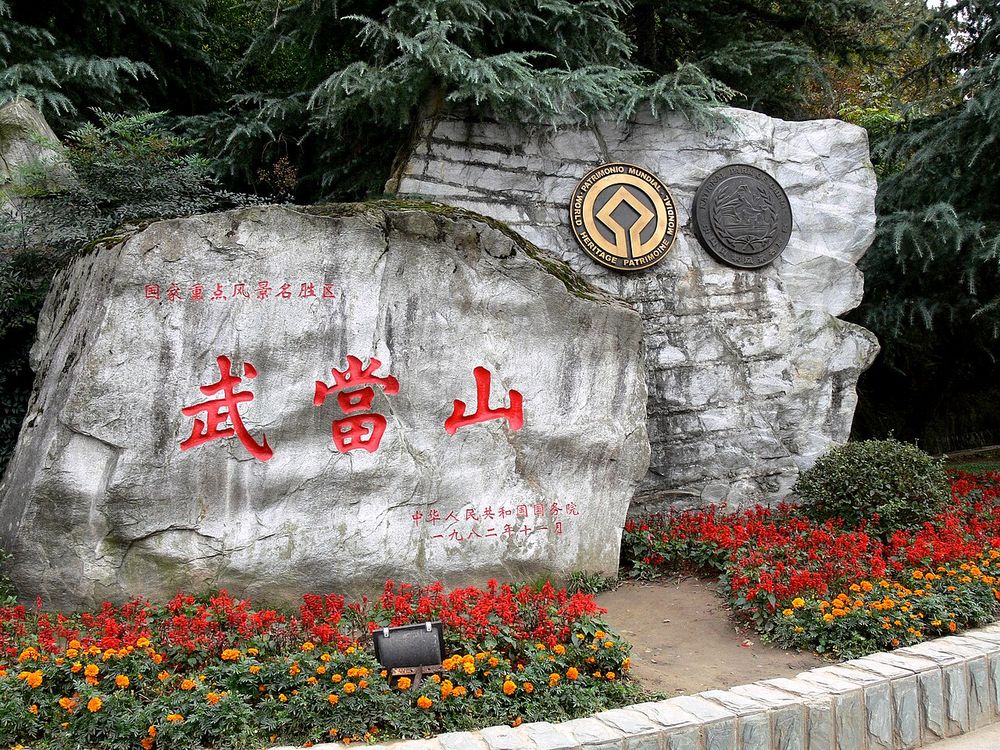
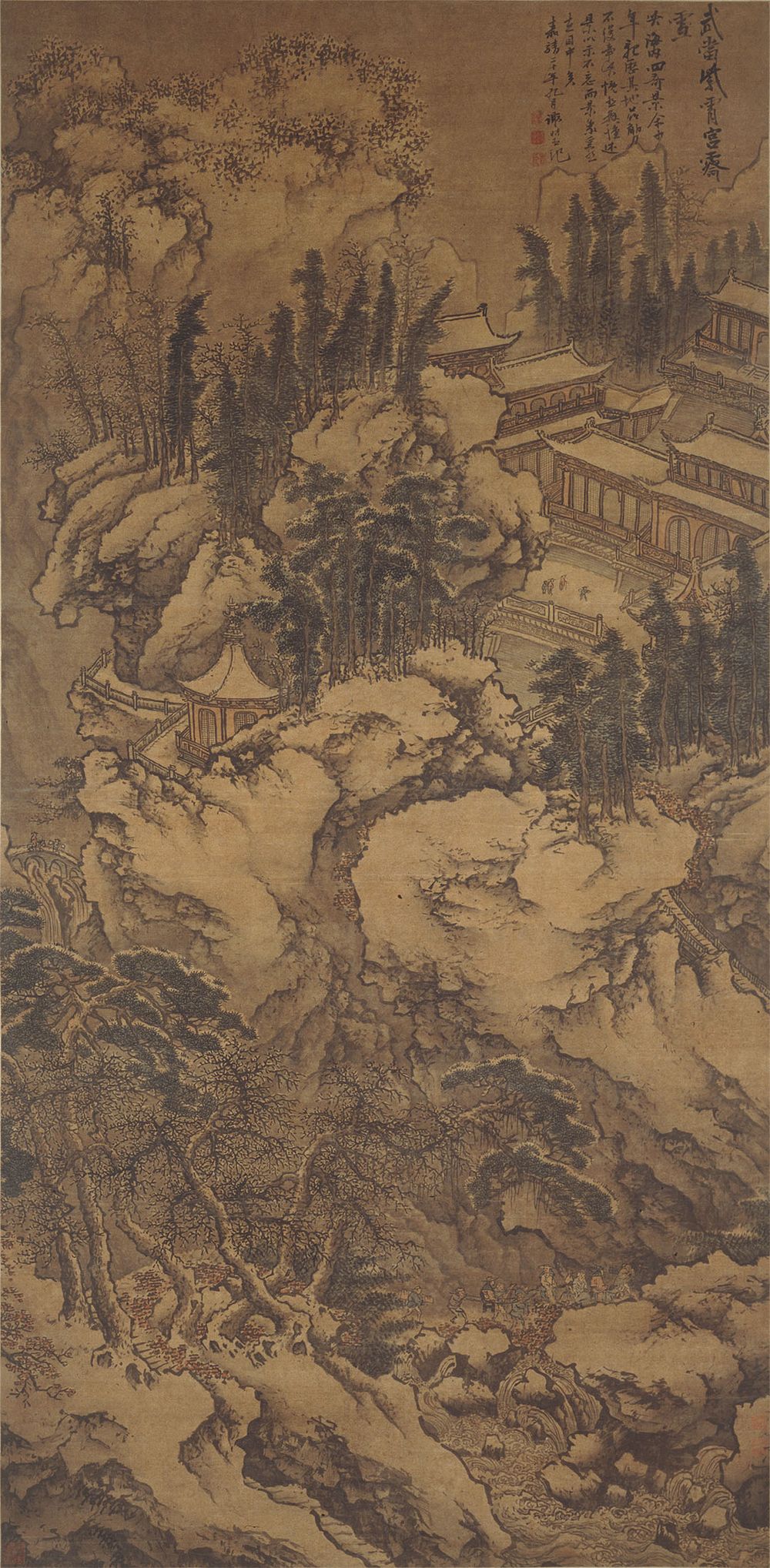
The Golden Hall on the summit, cast in bronze in 1416xiquinhosilva, CC BY 2.0, Wikimedia CommonsThe front of the Golden Hall with its bronze cranesxiquinhosilva, CC BY 2.0, Wikimedia CommonsThe Golden Hall from the side: columns, railings and roof are all metalYumeto, CC BY-SA 4.0, Wikimedia CommonsThe double roof of the Golden Hall; every tile and bracket is cast bronzeYumeto, CC BY-SA 4.0, Wikimedia CommonsThe name board of the Golden Hall under its bronze bracketsGisling, CC BY 3.0, Wikimedia CommonsThe Golden Hall seen from below its platformliuzr99, CC BY-SA 2.0, Wikimedia CommonsThe Golden Hall in low winter sun, 2008gongfu_king, CC BY-SA 2.0, Wikimedia CommonsTaihe Palace: red walls stacked against the rock under the summitxiquinhosilva, CC BY 2.0, Wikimedia CommonsThe halls of Taihe Palace at the start of the last climbxiquinhosilva, CC BY 2.0, Wikimedia CommonsTaihe Palace and the wall above itxiquinhosilva, CC BY 2.0, Wikimedia CommonsThe gate of Taihe Palace; the board reads "Great Peak, Palace of Supreme Harmony"Gisling, CC BY-SA 3.0, Wikimedia CommonsGreen-glazed roofs near the summitliuzr99, CC BY-SA 2.0, Wikimedia CommonsA stretch of stone wall on the ridge near the summitliuzr99, CC BY-SA 2.0, Wikimedia CommonsA small stone shrine on a spur, with the lower peaks behindliuzr99, CC BY-SA 2.0, Wikimedia CommonsTemple roofs under a peak near the summitliuzr99, CC BY-SA 2.0, Wikimedia CommonsPurple Heaven Palace climbs the slope terrace by terraceliuzr99, CC BY-SA 2.0, Wikimedia CommonsZixiao Hall on its three-tiered stone platformliuzr99, CC BY-SA 2.0, Wikimedia CommonsThe bridge and the entrance hall of Purple Heaven PalaceYumeto, CC BY-SA 4.0, Wikimedia CommonsPavilions inside the gate of Purple Heaven PalaceGisling, CC BY 3.0, Wikimedia CommonsA flight of steps between two terraces of Purple Heaven PalaceYumeto, CC BY-SA 4.0, Wikimedia CommonsLooking up the steps through a gatewayliuzr99, CC BY-SA 2.0, Wikimedia CommonsThe front of Zixiao HallGisling, CC BY-SA 3.0, Wikimedia CommonsThe name board of Zixiao Hall and its painted bracketsGisling, CC BY 3.0, Wikimedia CommonsThe Hall of Worship at Purple Heaven PalaceGisling, CC BY 3.0, Wikimedia CommonsThe Parents' Hall at the back of Purple Heaven PalaceGisling, CC BY 3.0, Wikimedia CommonsPurple Heaven Palace in snow, February 2008gongfu_king, CC BY-SA 2.0, Wikimedia CommonsPurple Heaven Palace under its cliff in wintergongfu_king, CC BY-SA 2.0, Wikimedia CommonsSouth Cliff Palace, built into the rock faceGisling, CC BY-SA 3.0, Wikimedia CommonsThe Dragon Head Incense: a carved beam over the drop, with a censer at its tipGisling, CC BY-SA 3.0, Wikimedia CommonsThe view past the Dragon Head Incenseliuzr99, CC BY-SA 2.0, Wikimedia CommonsStone and timber roofs crowd a cliff ledgeliuzr99, CC BY-SA 2.0, Wikimedia CommonsA timber hall built against the cliffliuzr99, CC BY-SA 2.0, Wikimedia CommonsThe curving red wall at Prince Slopeliuzr99, CC BY-SA 2.0, Wikimedia CommonsSteps and a gate at Prince SlopeGisling, CC BY 3.0, Wikimedia CommonsFuzhen Temple at Prince SlopeGisling, CC BY-SA 3.0, Wikimedia CommonsNeedle-Grinding Well, a small temple on the way upGisling, CC BY 3.0, Wikimedia CommonsXuanyue Gate, the stone archway of 1552 at the foot of the mountainGisling, CC BY 3.0, Wikimedia CommonsThe site of Yuxu Palace in 2009Gisling, CC BY-SA 3.0, Wikimedia CommonsYuzhen Palace on its raised ground, seen from the railway in 2025Saigyouji-Noriko, CC BY-SA 4.0, Wikimedia CommonsQiongtai Temple, near the lower station of the cable carGisling, CC BY 3.0, Wikimedia CommonsThe Hall of the Three Pure OnesGisling, CC BY 3.0, Wikimedia CommonsThe Hall of the Imperial ScripturesGisling, CC BY-SA 3.0, Wikimedia CommonsZhenwu Hall at Five Dragon Palace折金扇, CC BY 2.5, Wikimedia CommonsThe pool in Xiaoyao ValleyGisling, CC BY 3.0, Wikimedia CommonsAn imperial stele pavilionliuzr99, CC BY-SA 2.0, Wikimedia CommonsRidge beasts on an old tiled roofliuzr99, CC BY-SA 2.0, Wikimedia CommonsRidges at duskliuzr99, CC BY-SA 2.0, Wikimedia CommonsSunrise over the Wudang ridgesliuzr99, CC BY-SA 2.0, Wikimedia CommonsEvening sky over the mountainliuzr99, CC BY-SA 2.0, Wikimedia CommonsSummer cloud on the slopes涔水影人, CC BY 3.0, Wikimedia CommonsThe ridges of Wudang from a temple terrace, 2004Fanghong, CC BY-SA 3.0, Wikimedia CommonsPeaks in snow, February 2008gongfu_king, CC BY-SA 2.0, Wikimedia CommonsSnow on temple roofs at dusk, February 2008gongfu_king, CC BY-SA 2.0, Wikimedia CommonsA modern statue of Zhang SanfengGisling, CC BY 3.0, Wikimedia CommonsThe World Heritage marker stoneGisling, CC BY 3.0, Wikimedia CommonsXie Shichen, "Wudang after snow", hanging scroll, 1541Xie Shichen, Public domain, Wikimedia Commons
Local legends
These are stories people tell about this place. They are legends, not history, and each one says where it comes from.
LegendSouth Cliff
Zhenwu, prince of a kingdom far away, gave up his throne and came to this mountain. He practised here for forty-two years and rose to heaven from the cliff at South Cliff.
Source: The Daoist life of Zhenwu and the mountain's own gazetteers
LegendNeedle-Grinding Well
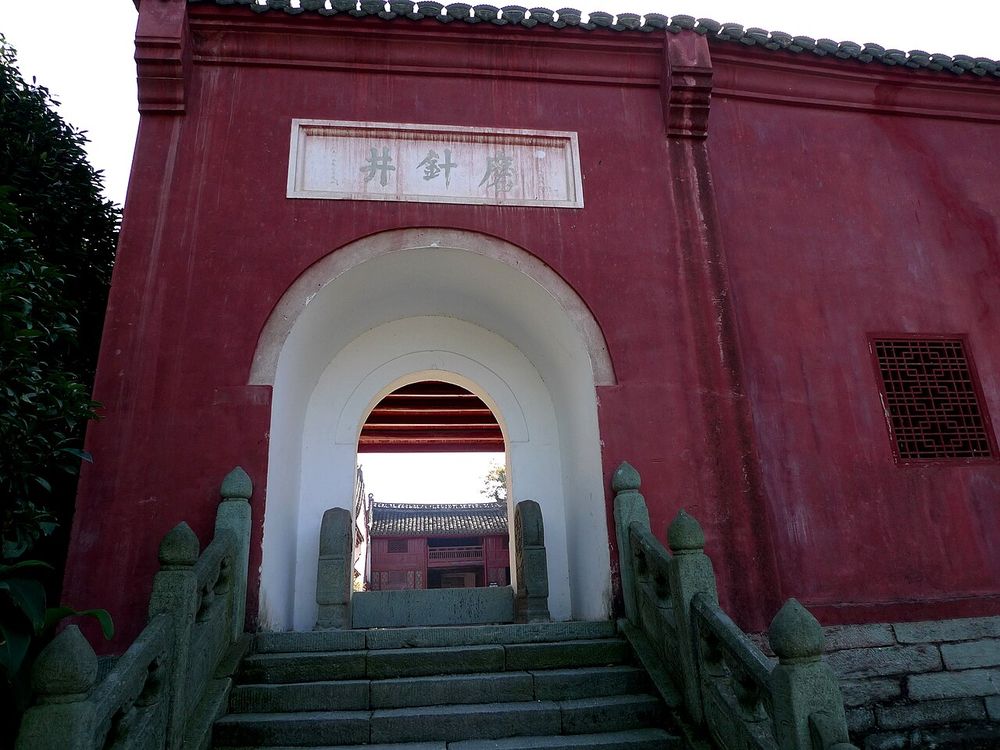
The young prince lost heart and started down the mountain. By a well he met an old woman grinding an iron bar on a stone. She said she was making a needle. He understood, turned round, and went back up.
Source: The Daoist life of Zhenwu; told on site at the well
LegendTai chi
Zhang Sanfeng watched a magpie fight a snake on this mountain. The snake gave way and struck, gave way and struck. From that he made the soft art of tai chi.
Source: Wudang martial tradition; scholars treat it as a later story (see "Not certain")
LegendThe Golden Hall
In a storm, fire from heaven washes and "smelts" the Golden Hall, and after the storm it shines as new. People call it thunder-fire refining the hall.
Source: Local saying
LegendYuzhen Palace
Zhang Sanfeng did not die. He could go without food for months, walk a thousand li in a day, and was seen again long after he was said to be dead.
Source: The official Ming history has a short life of him that repeats these stories
Later, people who live here will be able to add the stories they grew up with, and say which of these they have heard.
Not certain, and where accounts conflict
Who invented tai chi?
Wudang says Zhang Sanfeng. Chenjiagou in Wen County, Henan, says the Chen family, and calls itself the birthplace. We give both and do not judge.
Was Zhang Sanfeng a real person?
The scholar Yang Lizhi points to an entry in the household register of 1370. His dates, his life and the invention of tai chi come from later tradition.
Where was the Golden Hall cast?
It is often said to have been cast in Beijing. The order of 1416 only speaks of boats escorting the hall as far as Nanjing, and does not name the foundry (Zhang Jiankui, 2015).
Nine palaces and eight temples, or nine?
Most Chinese accounts count nine palaces and eight temples; some count differently. We follow the majority.
How many people built it?
"Three hundred thousand soldiers and craftsmen" is repeated everywhere. We could not find a Ming source for the number, so we give none.
How long did the building take?
Twelve years in China's report to UNESCO; thirteen, or "more than ten", elsewhere.
Was raising Yuzhen Palace a success?
The authorities call it a record and say it kept the old layout of the mountain. Beijing Youth Daily (2012) pointed out that 200 million yuan lifted three gates; UNESCO in 2013 expressed concern that plans were not sent in advance.
How high did Yuzhen Palace stand?
About 165 metres in most reports; 161 metres in one.
Is it ranked above the Five Great Mountains?
The title Xuanyue given by the Jiajing Emperor is often explained this way. It is a common reading, not a formal ranking.
Visiting
Tickets and hours
One ticket covers entry and the shuttle buses inside. Reports in 2025 and 2026 give prices between about 200 and 245 yuan. Check the price on the day.
Two places sell their own small ticket: the Golden Summit, listed at about 27 yuan, and Purple Heaven Palace, about 15 yuan.
The cable car from Qiongtai to the summit is extra: about 90 yuan up and 80 down in the busy season, less in winter.
The mountain is listed as open from 07:30 to 17:30. Entry is by real-name reservation with a daily limit, and the Golden Summit has had its own reservation. Bring the passport you booked with.
Last checked 2026-11-11. Travel and news reports, not the site's own notices.
Where to start
Everything starts at the visitor centre in Wudangshan town. Buses leave from there on two lines: one to Qiongtai for the cable car, one to Prince Slope, Purple Heaven Palace and South Cliff.
With one day: bus to Qiongtai, cable car up, the Golden Summit, cable car down, then bus to South Cliff and Purple Heaven Palace.
With two days: see Prince Slope, Purple Heaven Palace and South Cliff on the first day and sleep near South Cliff. Next morning walk the old stone road to the summit, two and a half to three hours of steps, and ride the cable car down.
Xuanyue Gate, Yuzhen Palace and Yuxu Palace are at the foot, outside the ticket gate. See them before or after the mountain.
Before you go
The summit is at about 1,612 metres. It is much colder and windier than the town, and often in cloud. Bring a layer even in summer.
The steps are steep and many. Shoes with grip matter more than anything else you bring.
In high season the wait for the cable car and the queue into the Golden Hall can each take an hour or more. Go up early.
The nearest high-speed station is Wudangshan West. Shiyan Wudangshan Airport is about 30 kilometres away.
There are monkeys in Xiaoyao Valley. Do not feed them and keep food out of sight.
Customs and manners
These are working Daoist temples. Priests keep their hair long, tied in a topknot. The polite way to address one is "daozhang".
Step over a threshold, not on it. Do not point at the statues.
Photographs are usually not allowed inside the halls, and never of a service in progress. Ask before photographing a priest.
Burning incense is not required of a visitor. If you wish to, three sticks is the custom.
Do not touch the Golden Hall. Hands wear the gilding away.
Do not climb out onto the Dragon Head Incense. It is forbidden and people have died there.
If people are practising tai chi on a terrace, walk around them, not through.
Look for these
At Yuzhen Palace, find a seam. Which wall is old, and which brick is new on the raised ground?
At Yuxu Palace, count the stone tortoises. What is written on the stelae they carry?
At South Cliff, find the Dragon Head Incense. Look, and stay off it.
In Tianyi Zhenqing Palace, find a "timber" beam that is stone.
On the Golden Hall, look for a join between two castings. It was made in pieces, but the joins are hard to find.
Inside the Golden Hall, find the Golden Boy and the Jade Girl. One holds a book, the other a seal.
Compare the two bronze halls, of 1307 and 1416. Which is brighter, and why?
On the roof ridge of the small bronze hall, look for the stars of the Northern Dipper.
I am here
Stand at the site, sign in, press the button, and collect its stamp. Your browser will ask to use your location. It is sent to us once to confirm that you are at the site; we keep how far you were from it, not the spot where you stood.
Your stamps are saved to your account, so they follow you to any device. Checking from a browser cannot rule out every false location; stricter checks arrive with the app.
Messages
Share your photos
Photos here show the place, not people. Each one is credited to the visitor who took it and appears after our team has looked at it. A photo with you in it belongs under “I am here”.