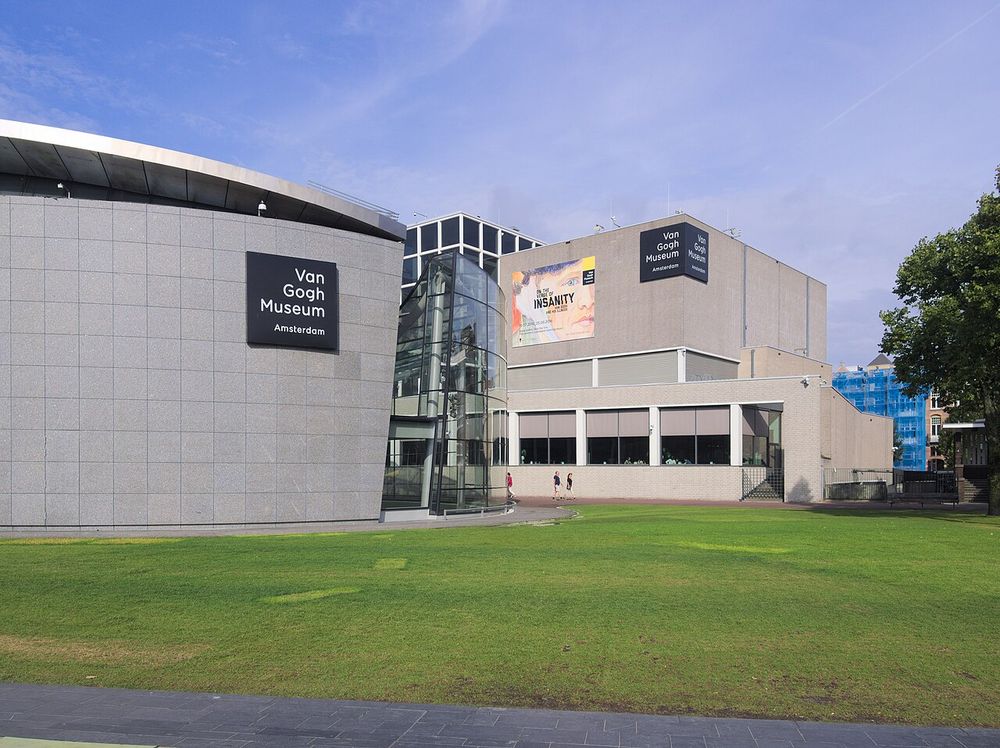
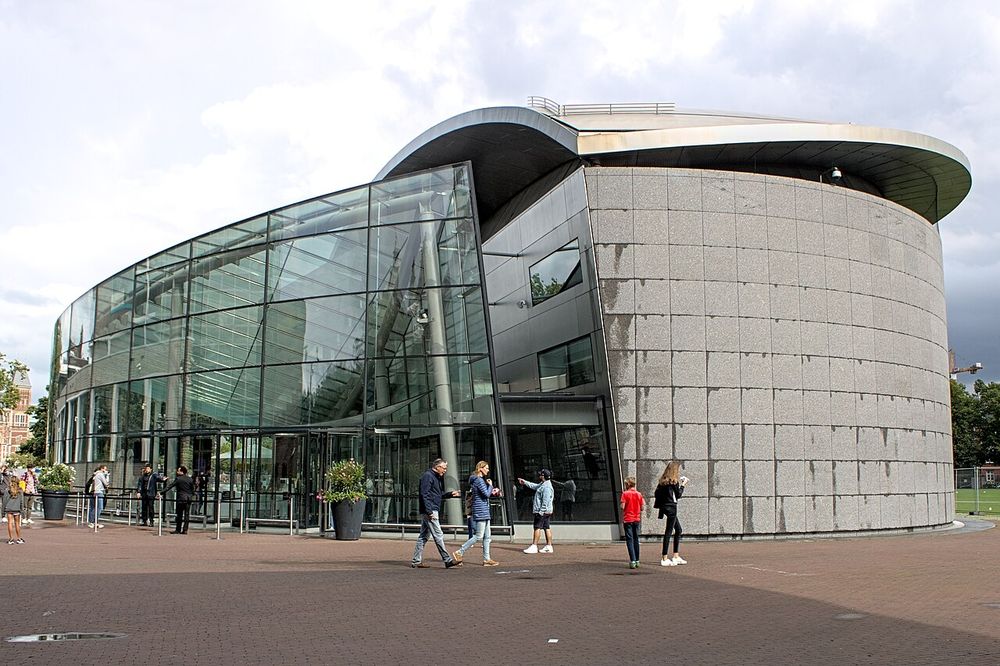
The largest collection of Van Gogh in the world: about two hundred paintings, five hundred drawings and his letters. Almost all of it was kept by his own family, who could not sell it when he died. A sister-in-law made him famous. A nephew gave it to the nation.
Photo: C messier, CC BY-SA 4.0, Wikimedia Commons
The story
Vincent van Gogh painted for ten years, from 1880 to 1890. He sold almost nothing. When he shot himself in July 1890, his brother Theo, an art dealer in Paris, owned most of what he had made. Theo died six months later.
Theo's widow, Jo van Gogh-Bonger, was left with a baby son and hundreds of unsold canvases. Friends told her to throw them away. Instead she lent them to exhibitions, sold a few at a time, and in 1914 published Vincent's letters. By the time she died in 1925 he was famous.
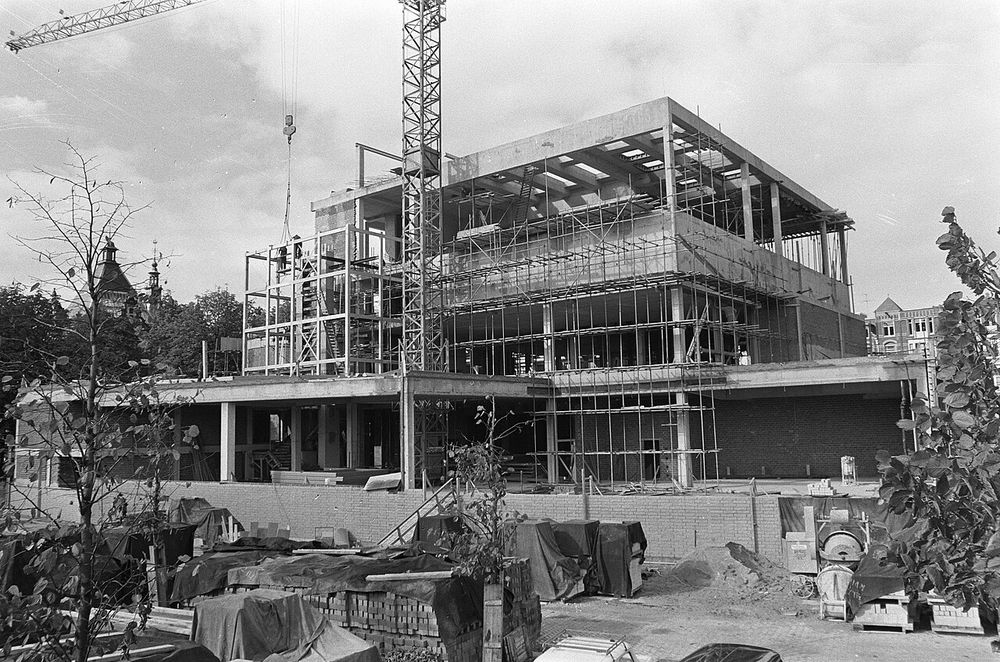
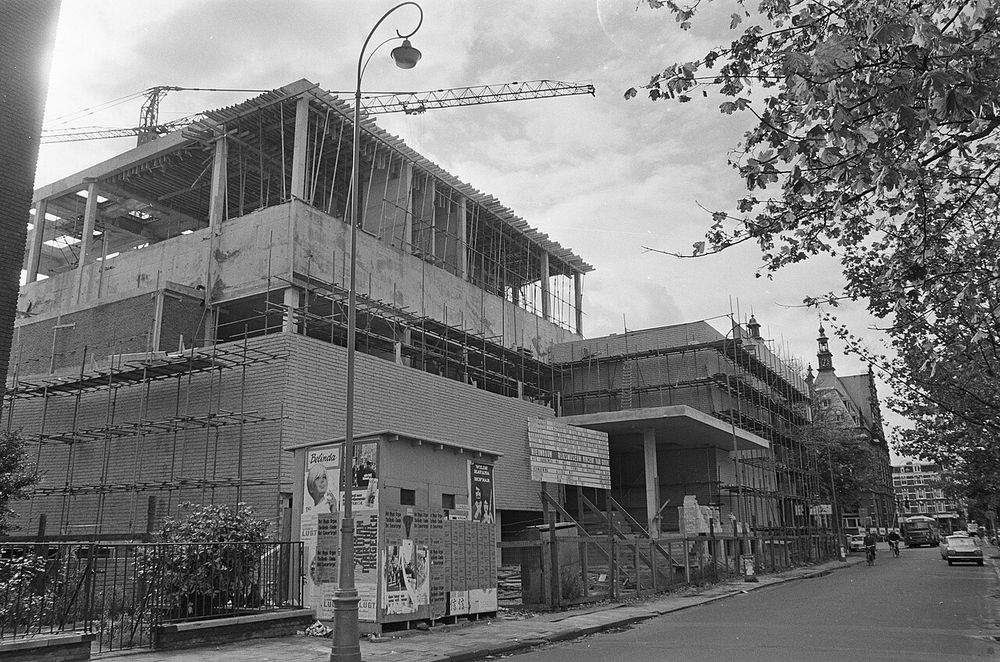
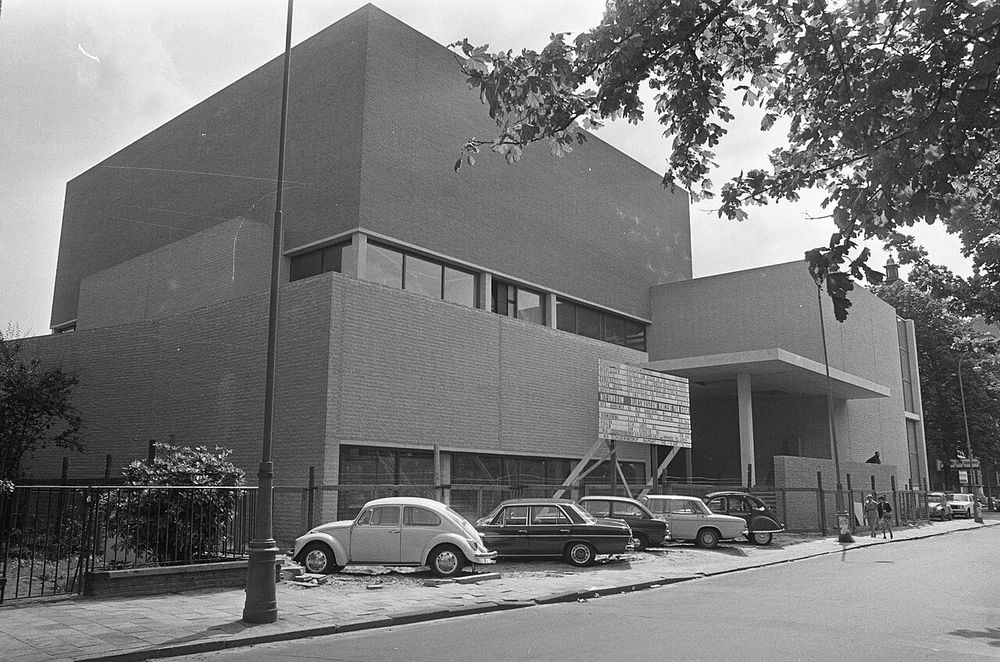
Her son, also called Vincent, put the collection into a foundation in 1962, and the Dutch state built this museum for it. It opened on 2 June 1973.
What is here
One ticket covers the permanent collection and the current exhibition. There are no separate exhibition fees.
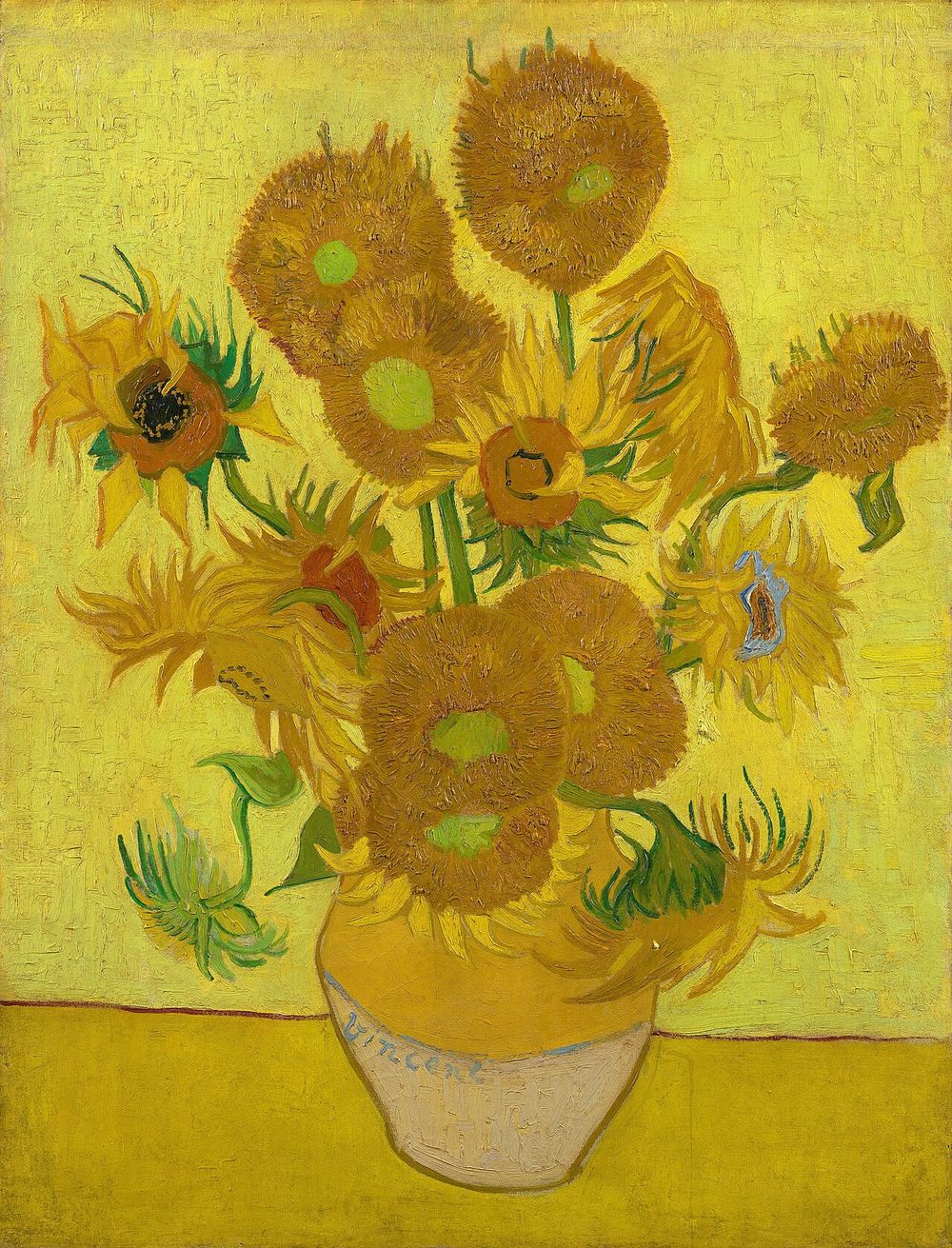
Sunflowers, January 1889Vincent van Gogh, Public domain
Van Gogh painted sunflowers in Arles in the summer of 1888 to decorate the room of his friend Paul Gauguin, who was coming to stay. This one is a repeat he made in January 1889, after their quarrel and the night he cut off his ear.
Almost everything is yellow: yellow flowers, yellow vase, yellow wall. New chrome yellow paint made that possible. Some of the yellow is slowly turning brown, and the museum keeps the light low to slow it.
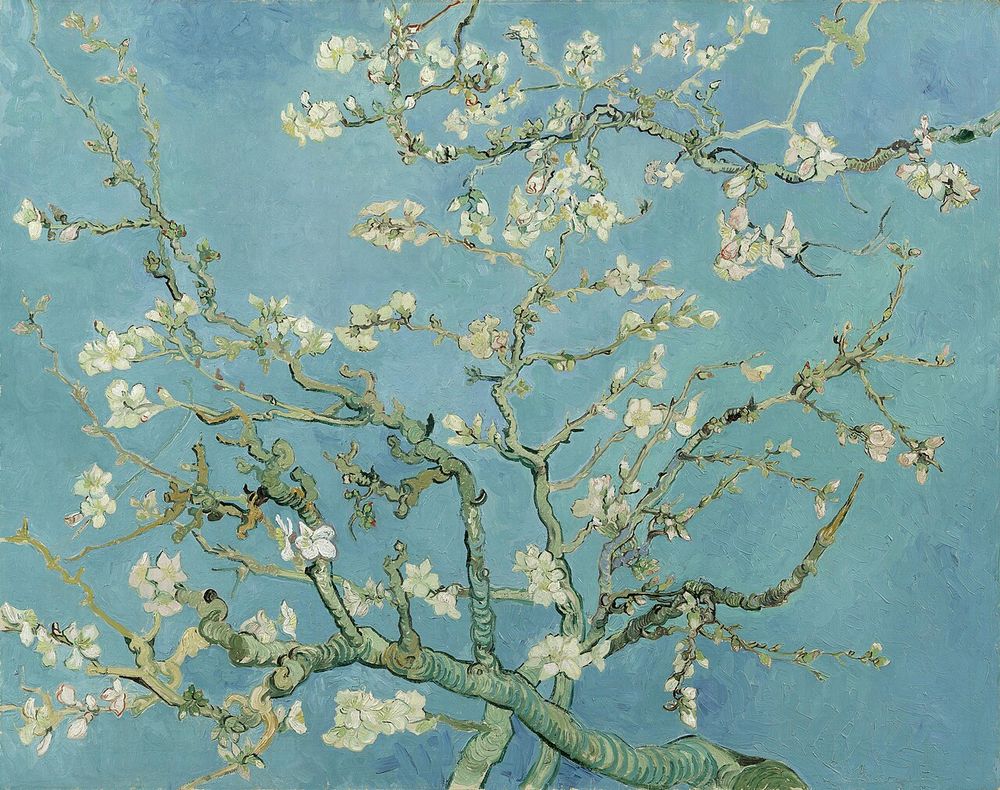
Almond Blossom, February 1890Vincent van Gogh, Public domain
Nearby hangs Almond Blossom, white branches on a blue sky. He painted it in February 1890 for the birth of Theo's son, named Vincent after him. The boy grew up with it over his bed. It is the boy's museum, in a way.
Things people often get wrong
"The Starry Night is here." It is in the Museum of Modern Art in New York.
"Wheatfield with Crows was his last painting." Films and books like to say so. His letters suggest he painted several pictures after it.
"He sold only one painting in his life." One sale is well known, The Red Vineyard. Records show a few other sales and exchanges. He was poor all the same.
"You can buy tickets at the door." There is no ticket desk. Every ticket is sold online with a time slot.
Films, songs and books
Lust for Life (1956), with Kirk Douglas as Vincent. Loving Vincent (2017), a Polish and British film painted frame by frame in oils by more than a hundred painters. At Eternity's Gate (2018), with Willem Dafoe. Each of them borrows scenes from paintings that hang here.
The American singer Don McLean's song Vincent (1971) is the best-known song about him. In China, Li Zhi's folk song Mr. Van Gogh (梵高先生) has been sung by a generation of students.
His Letters, published by Jo in 1914, are read as literature in many languages. In Chinese they appear as 《亲爱的提奥》.
People who stood here
We searched Dutch, English and Japanese sources for this list. Van Gogh himself never saw this building.
Jo van Gogh-Bonger (Theo's widow, 1862–1925)Without her there would be no museum and perhaps no famous Van Gogh. She ran a guest house to live, kept the paintings, and spent thirty years making the world look at them.
Vincent Willem van Gogh (Theo's son, 1890–1978)An engineer, he refused all offers from collectors, set up the foundation in 1962 and spoke at the opening in 1973. The Almond Blossom was painted for his birth.
Queen Juliana of the NetherlandsShe opened the museum on 2 June 1973 and was shown round by the painter's nephew.
Gerrit Rietveld (Dutch architect and designer)He designed the main building in 1963–64, a calm block of light and open stairs. He died in 1964 and never saw it built. His red and blue chair is in many museums of the world.
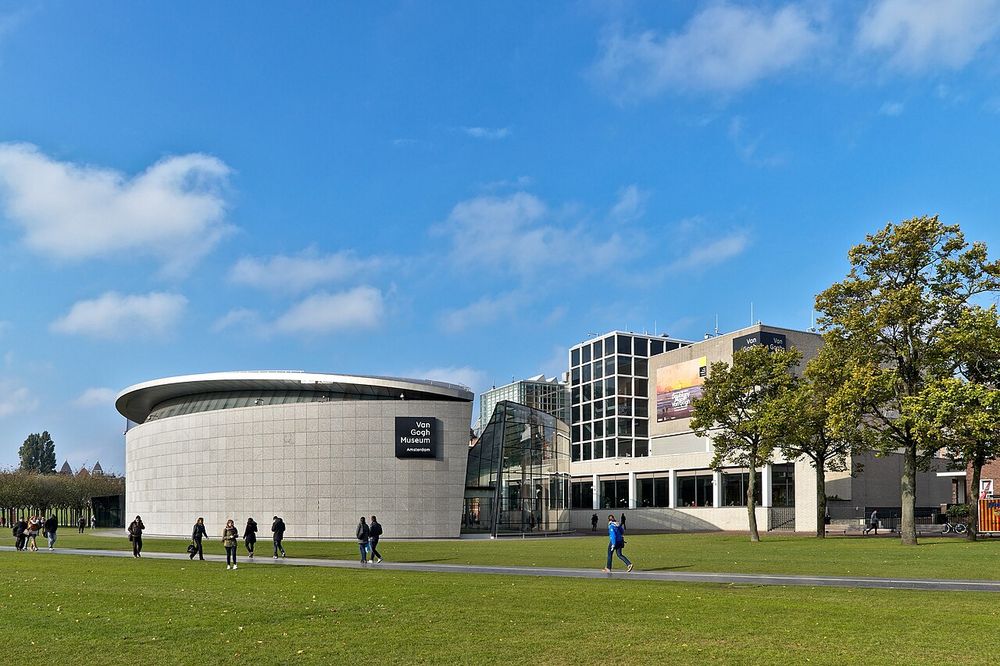
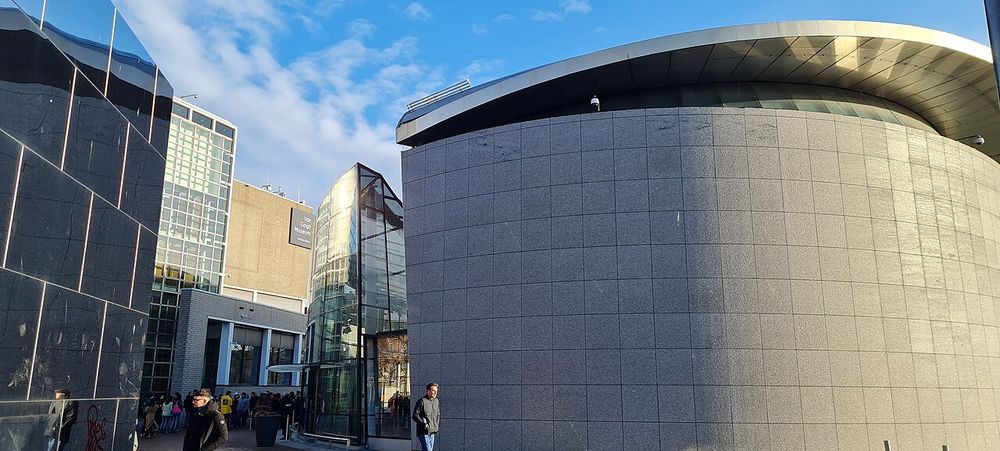
Kisho Kurokawa (Japanese architect)He designed the oval exhibition wing of 1999, half sunk into the ground behind the main building. It was largely paid for by a Japanese insurance company that had bought one of the Sunflowers in 1987.
Akira Kurosawa (Japanese film director)In his film Dreams (1990) a young painter walks into Van Gogh's pictures and meets Vincent, played by Martin Scorsese, in a field of crows.
Go deeper: seven stops, from the potato eaters to the almond tree
The collection is hung in order of his life: the Netherlands, Paris, Arles, Saint-Rémy, Auvers. Take the stairs and follow him.
1. The building and the square
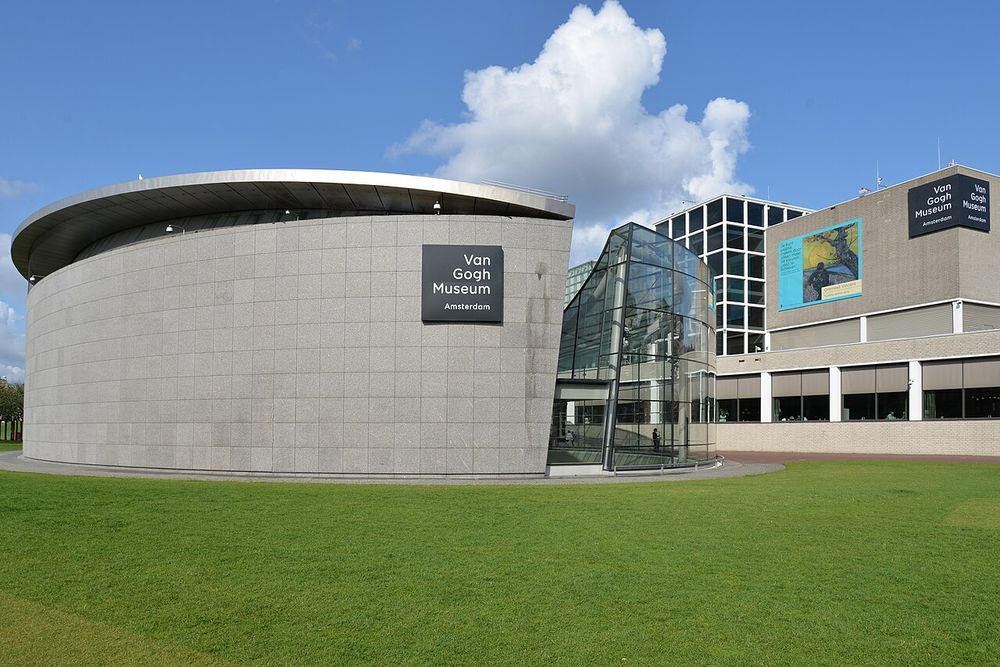
The three buildings from the grass, 2019Calips, CC BY-SA 3.0
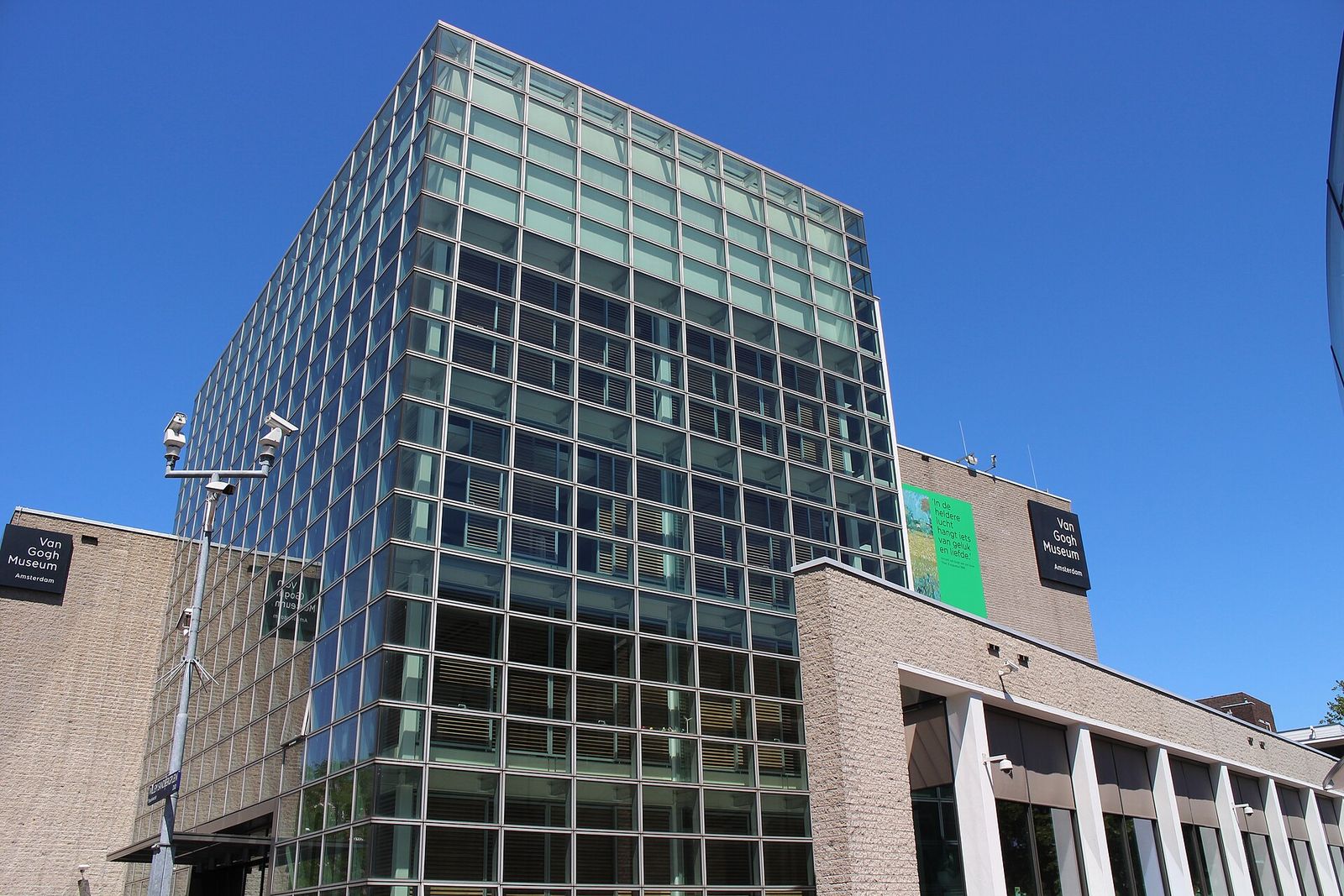
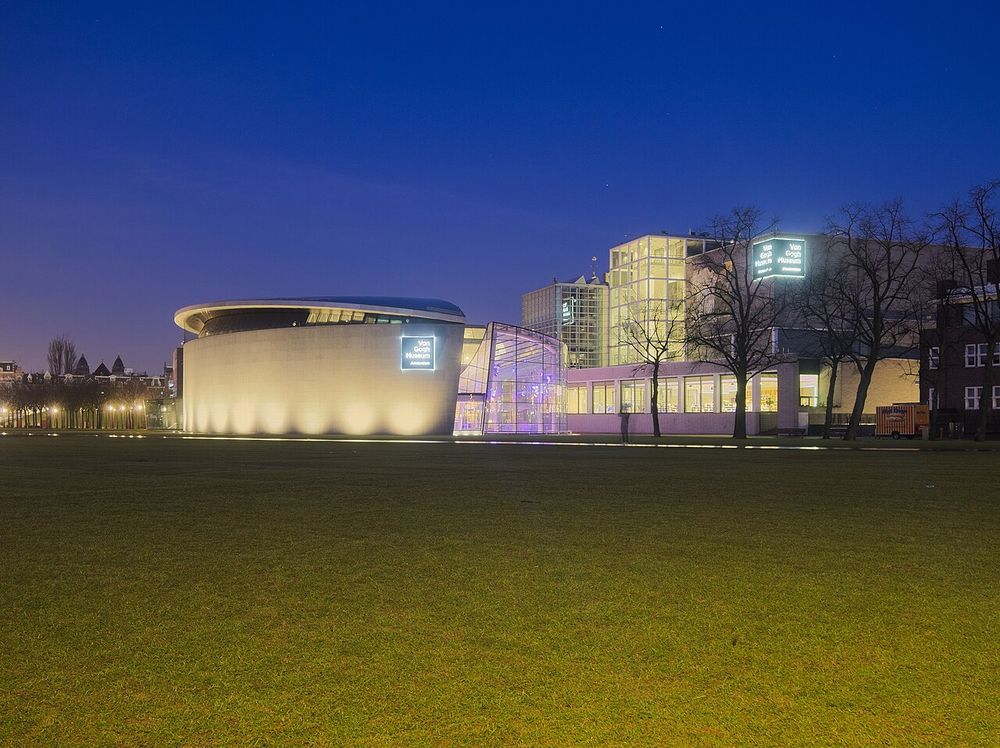
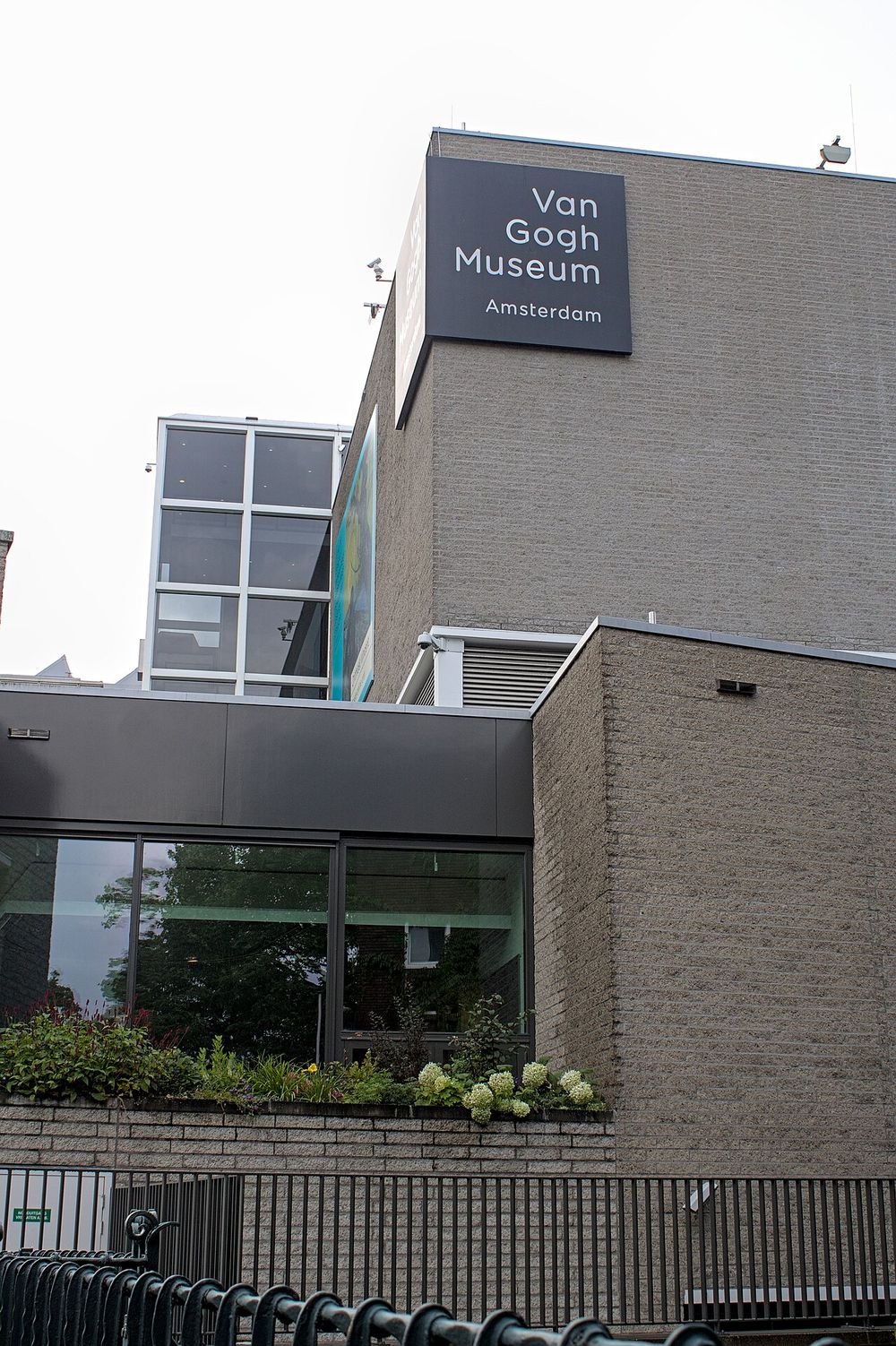
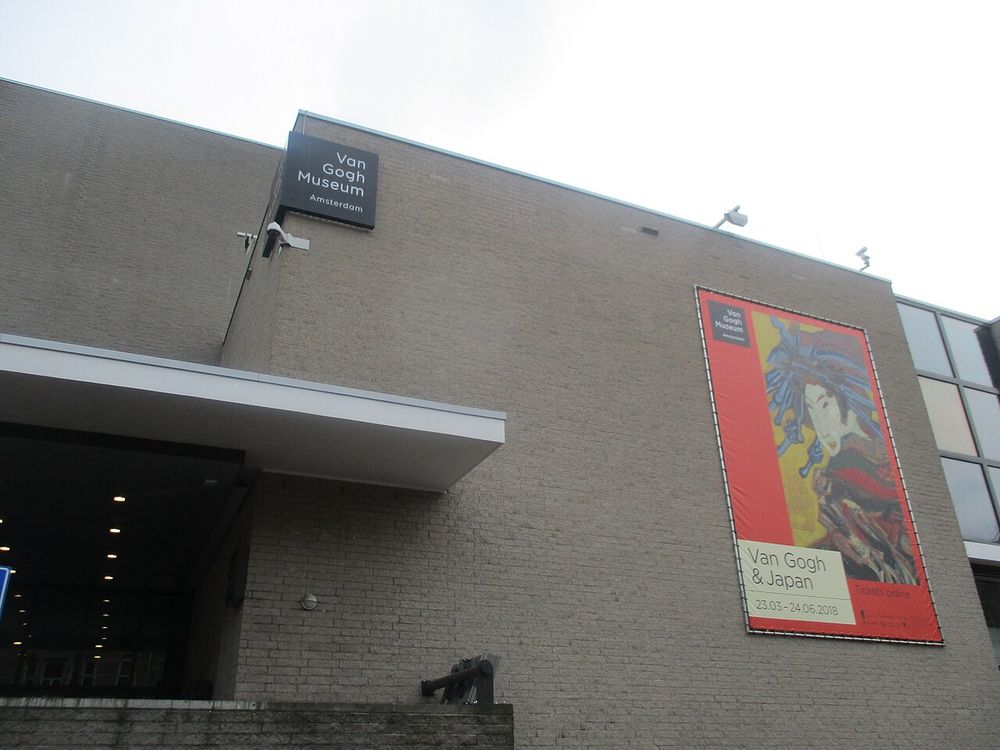
Three buildings stand here. Rietveld's square main block of 1973. Kurokawa's grey oval of 1999. And between them, since 2015, a glass entrance hall facing the Museumplein.
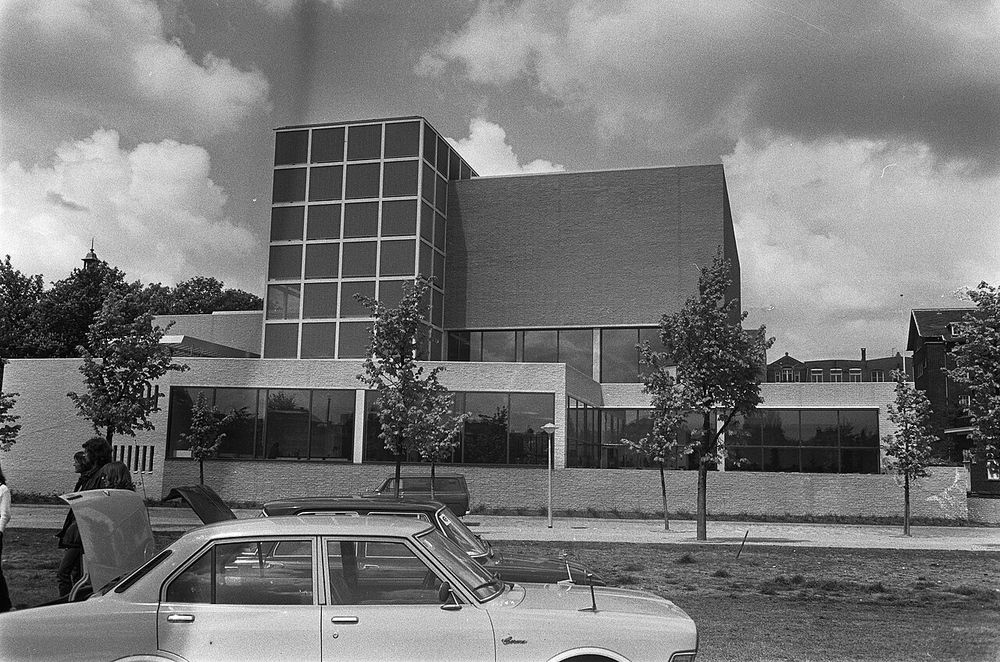
The new museum in its opening year, 1973Rob Croes for Anefo, CC0
When the museum opened, critics found Rietveld's building plain. Inside it was what he wanted: daylight from above and stairs open to the whole height, so you always see where you are.
2. The Netherlands: dark and heavy
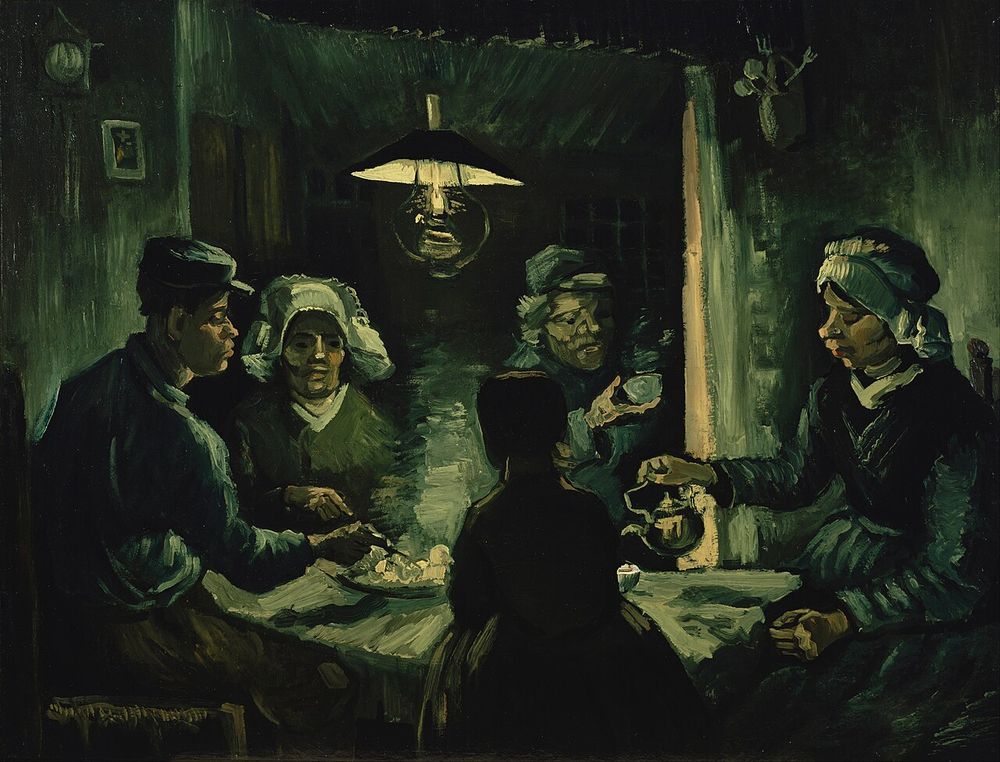
The Potato Eaters, 1885Vincent van Gogh, Public domain
He began late, at twenty-seven, after failing as an art dealer, a teacher and a preacher. In the village of Nuenen in 1885 he painted The Potato Eaters, a farming family eating by lamplight. He wanted them to look as if they had dug the potatoes with the same hands.
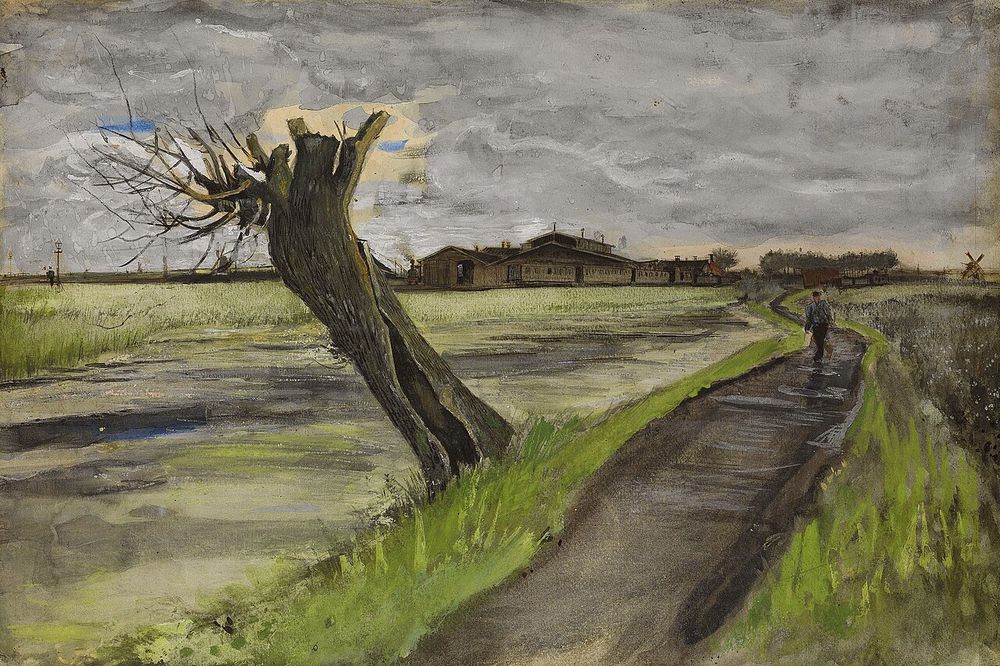
A pollard willow, 1882Vincent van Gogh, Public domain
The colours are brown and green, like the old Dutch masters he admired. Then he went to Paris.
3. Paris: colour, and Japan
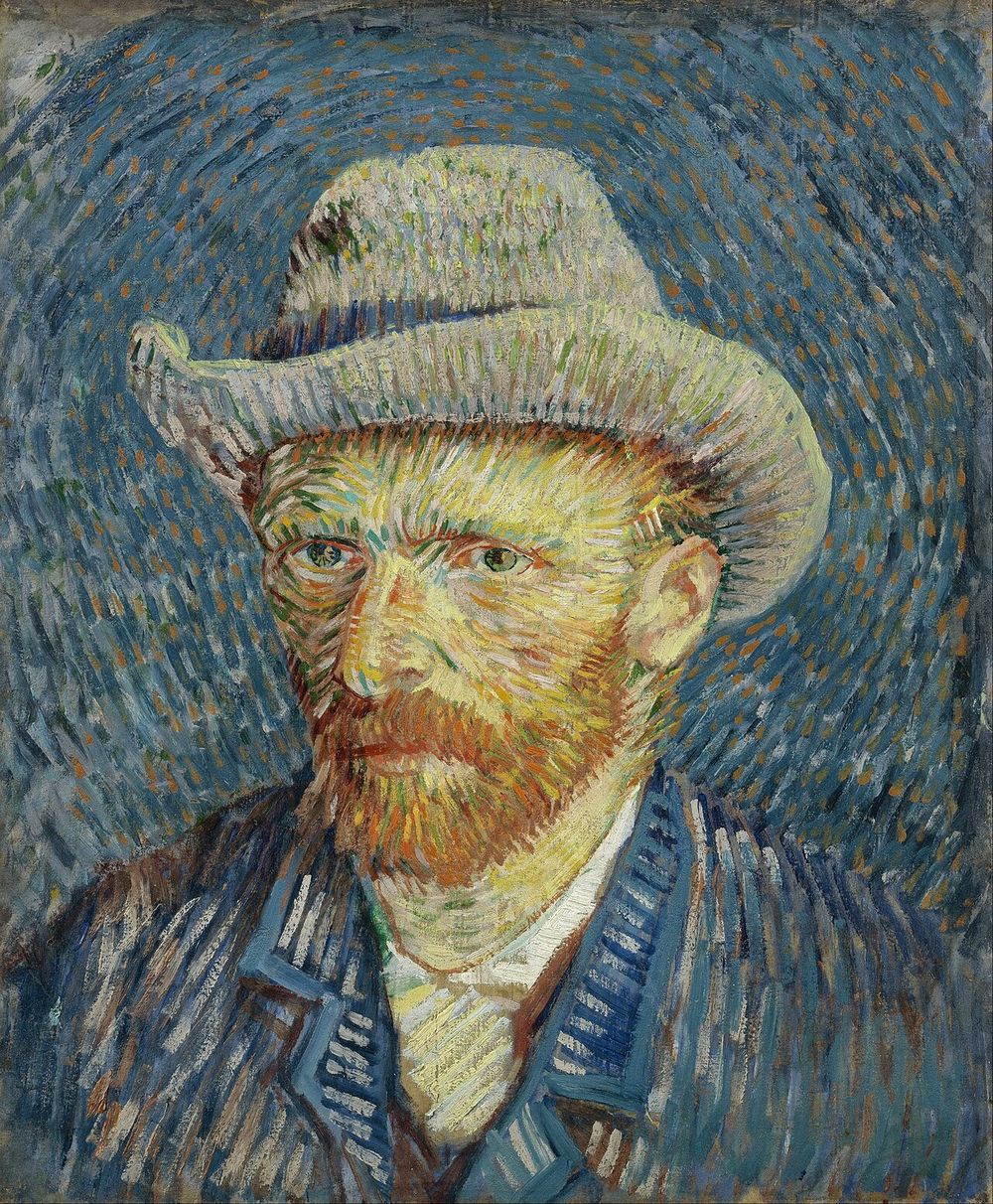
Self-portrait with grey felt hat, 1887Vincent van Gogh, Public domain
In Paris from 1886 to 1888 he lived with Theo and met the Impressionists. He painted himself again and again, because a model cost money and a mirror did not. In the grey felt hat the brushstrokes circle his head like a halo.
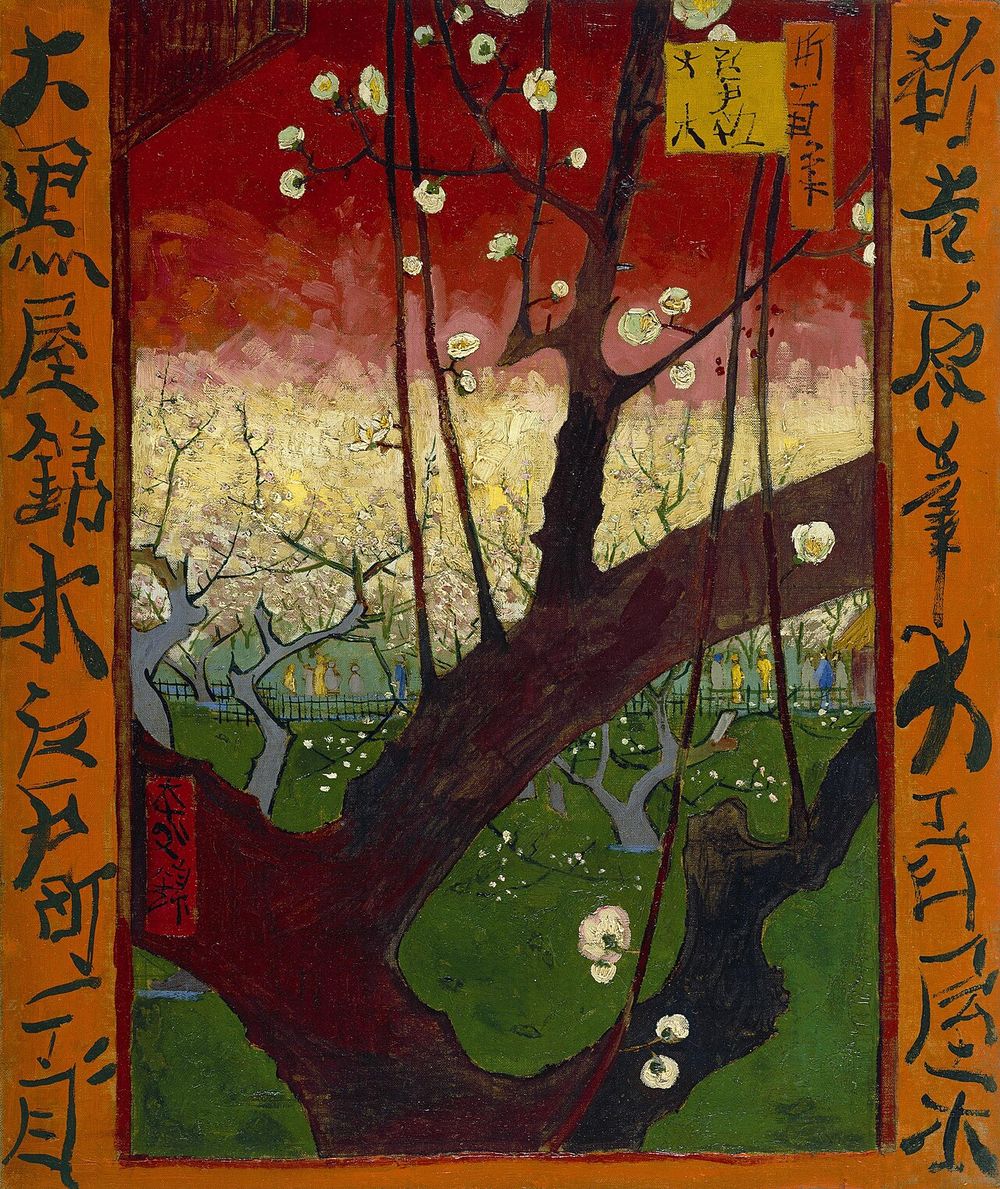
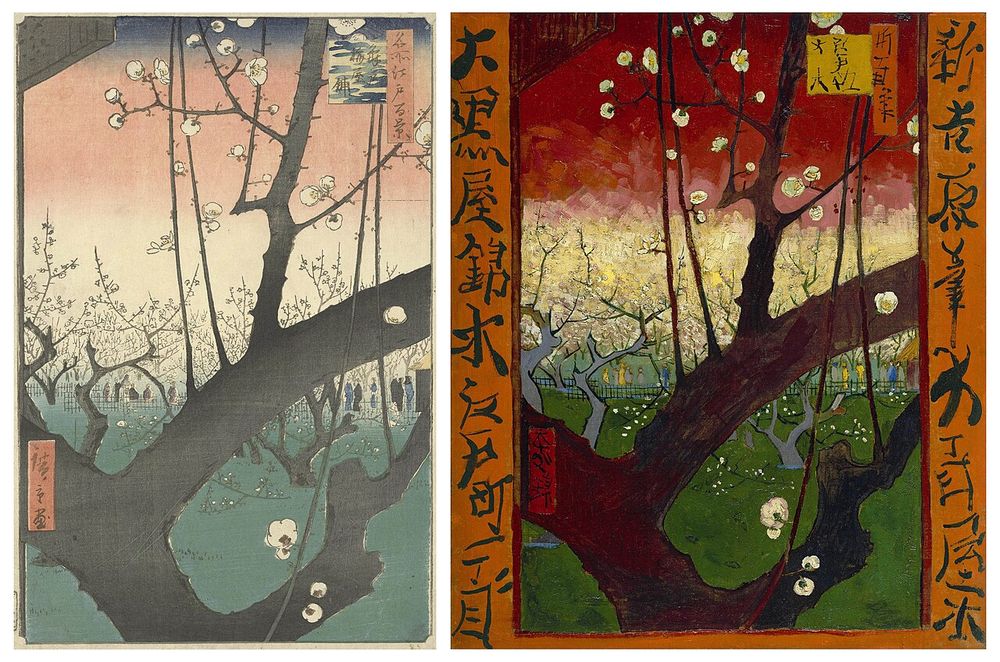
Flowering plum tree, after Hiroshige, 1887Vincent van Gogh, Public domain
He also collected Japanese woodblock prints, hundreds of them, cheaply from a Paris dealer. Here he copied Hiroshige's flowering plum tree in oils, and filled the borders with Japanese characters he could not read.
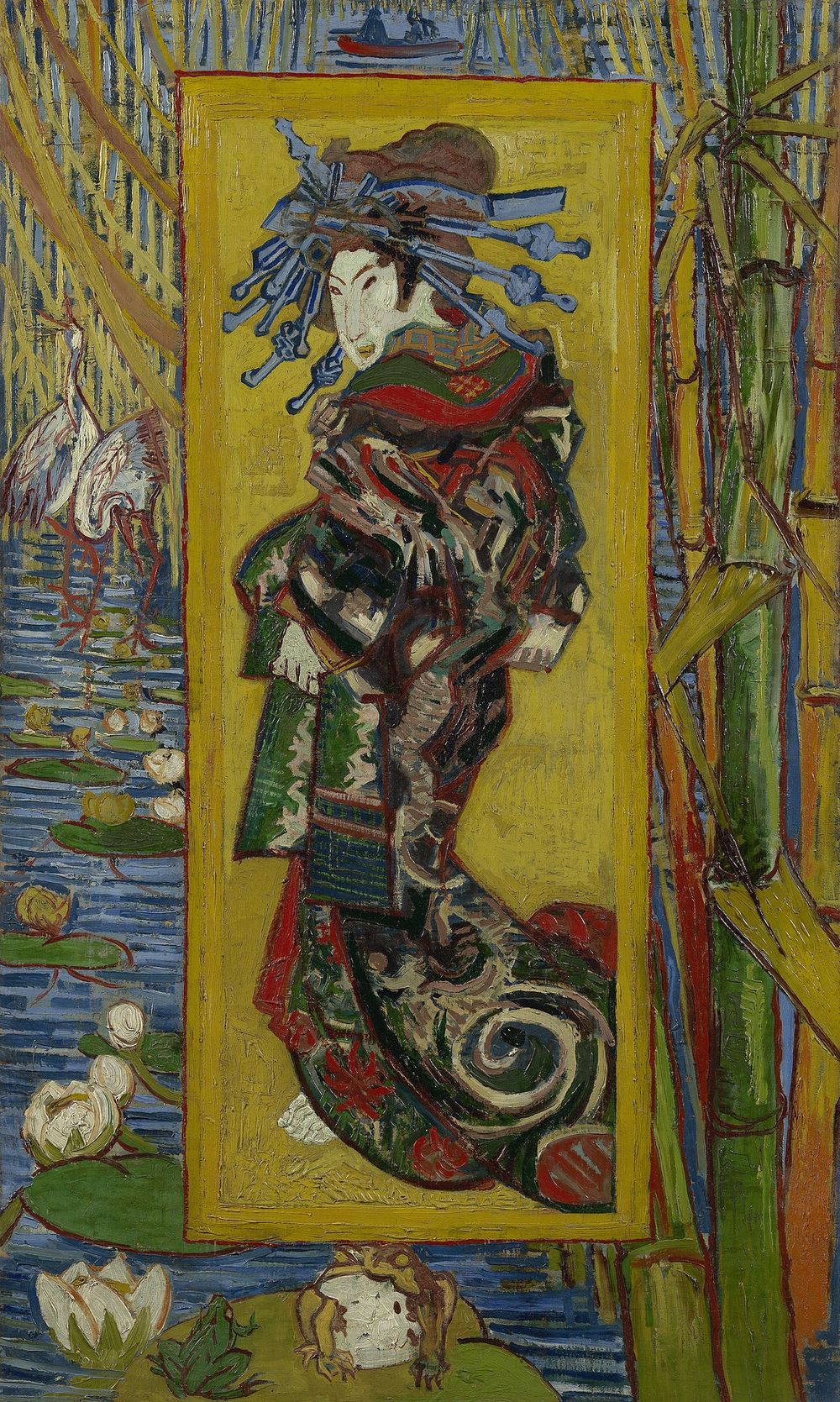
Courtesan, after Eisen, 1887Vincent van Gogh, Public domain
For this courtesan he copied a figure by Keisai Eisen from the cover of a Paris magazine, and added frogs and cranes. In the French slang of his day, grue (crane) and grenouille (frog) were both words for a prostitute. That was his joke.
The museum keeps about five hundred of his Japanese prints. He went south to Arles, he wrote, because it was the Japan of the South.
4. Arles: the yellow house
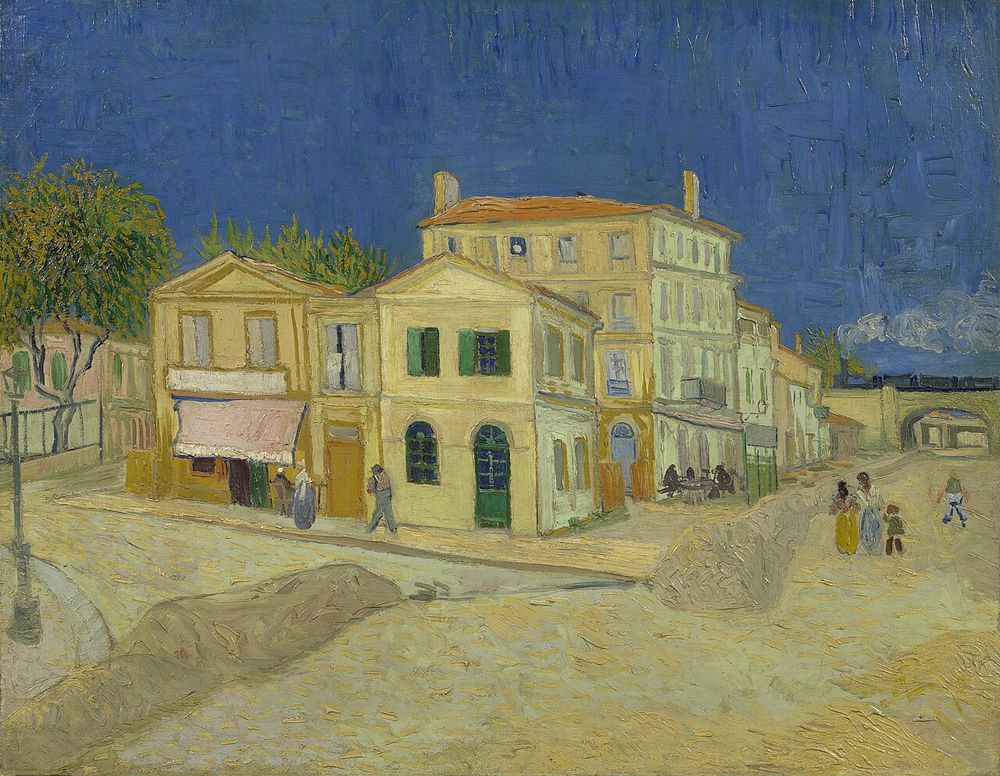
The Yellow House, 1888Vincent van Gogh, Public domain
In 1888 he rented four rooms in a yellow house on a square in Arles and dreamed of a house for artists. This is the house, with his windows open. It was destroyed by bombing in 1944.
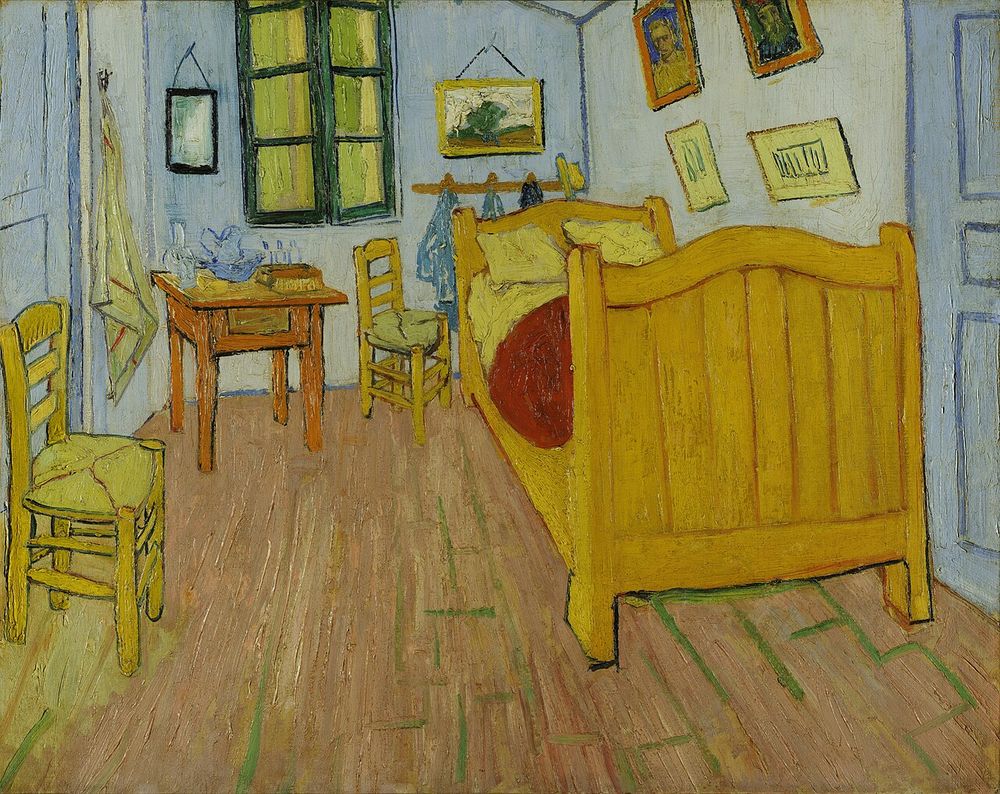
The Bedroom, 1888Unknown, Public domain
The Bedroom is his own room inside it. He wanted it to say rest. Count the two of everything: two chairs, two pillows, two pictures side by side. He was waiting for a friend. Gauguin came in October and left after the crisis of 23 December.
5. Saint-Rémy: the asylum
In May 1889 he went of his own will into an asylum at Saint-Rémy. Between attacks of illness he painted irises, olive groves, cypresses and the wall of the garden. He made about 150 paintings there in a year.
Almond Blossom, February 1890Vincent van Gogh, Public domain
It was there, in February 1890, that the news of Theo's son came, and he painted the almond tree. He wrote that it was perhaps his best and most patiently worked thing.
6. Auvers: the last weeks
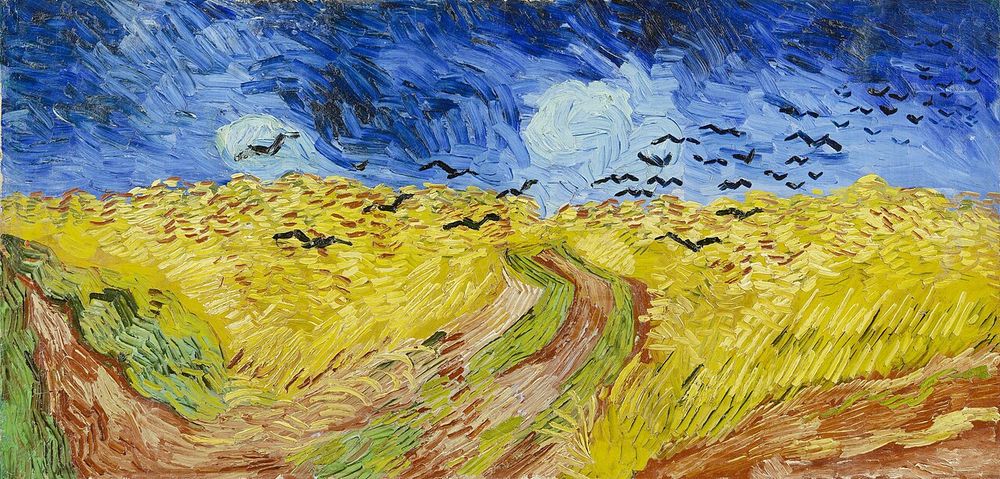
Wheatfield with Crows, July 1890Vincent van Gogh, Public domain
In May 1890 he moved to Auvers, north of Paris, and painted about seventy pictures in seventy days. Wheatfield with Crows is wide and low, under a dark sky. Many read it as despair. He himself wrote of the health and strength he found in the countryside.
On 27 July he shot himself in a field, and died two days later with Theo beside him. He was thirty-seven.
7. The letters, and the theft
About 820 of Vincent's letters survive, most of them to Theo. The museum shows a few at a time, because light damages them. All are online, in Dutch, French and English.
On 7 December 2002 thieves came in by a ladder through the roof and took two early paintings. They were found in Italy in 2016, in a house belonging to a drug gang, and came home in 2017.
In 1885, the year of the potato eaters, China had just ended its war with France. In 1890, the year he died, Zhang Zhidong was founding the Hanyang ironworks. Within a century his sunflowers were printed on posters in Beijing student dormitories.
Meanwhile in the world
Year
Here
Elsewhere
1853
Vincent is born in Zundert
Commodore Perry's ships reach Japan
1885
The Potato Eaters
Karl Benz drives the first motor car
1888
Arles, the yellow house, the sunflowers
The Eiffel Tower is going up in Paris
1890
Almond Blossom; death at Auvers
The first moving-picture cameras
1914
Jo publishes the letters
The First World War begins
1973
The museum opens
The oil crisis
1999
The Kurokawa wing opens
The euro is introduced
One line to remember: he sold almost nothing, his family kept everything, and his sister-in-law showed it to the world.
Then and now
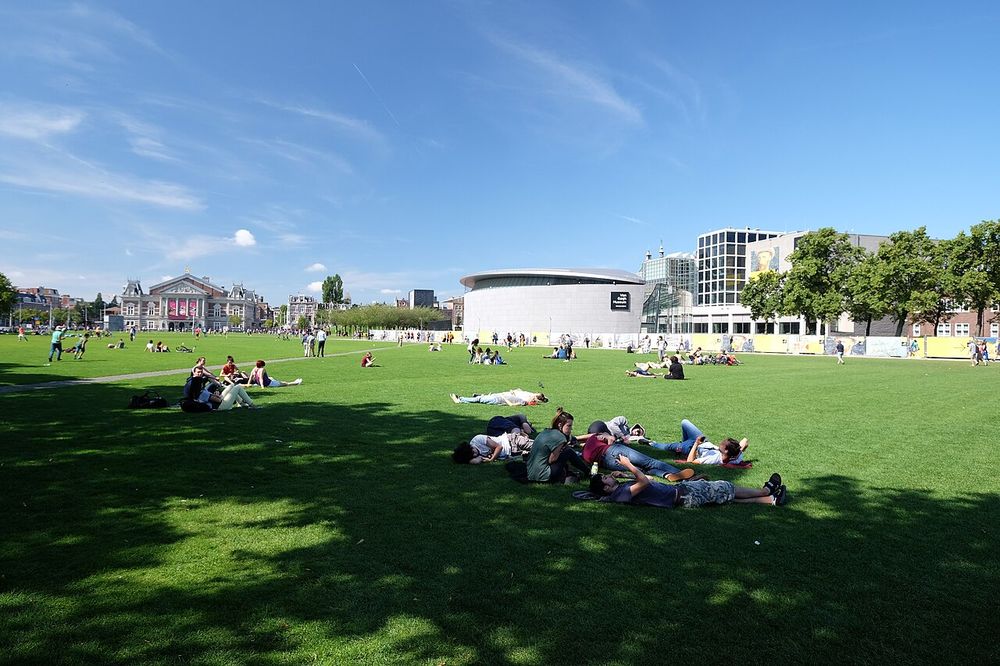
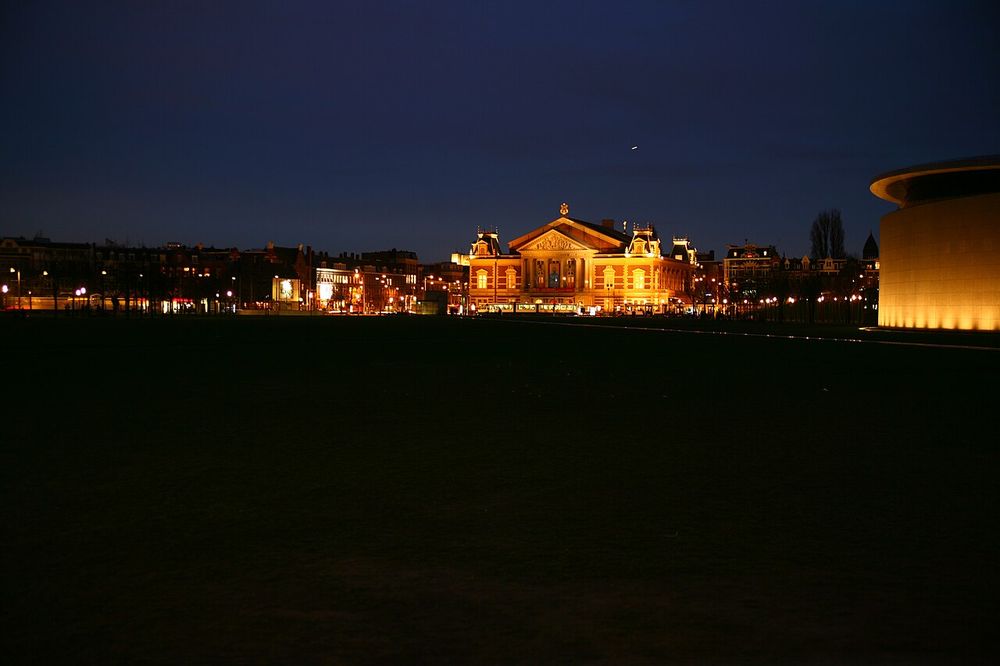
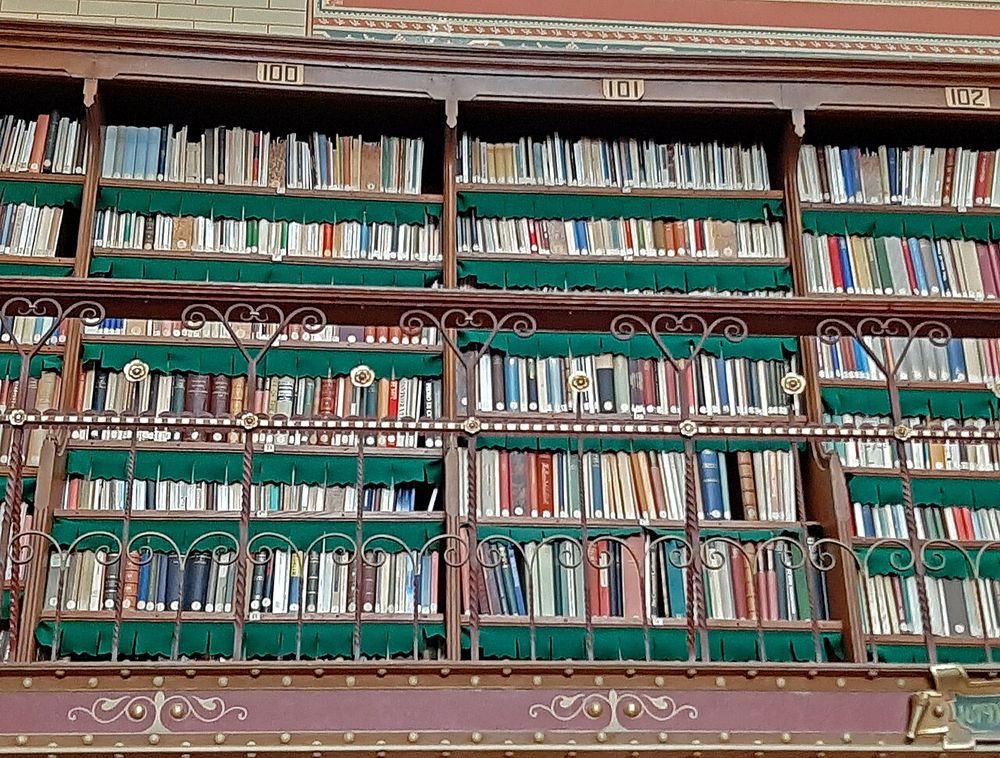
The Rietveld building and the Kurokawa wingC messier, CC BY-SA 4.0, Wikimedia CommonsThe glass entrance hall of 2015Suicasmo, CC BY-SA 4.0, Wikimedia CommonsThe museum at dusk from the MuseumpleinC messier, CC BY-SA 4.0, Wikimedia CommonsThe oval wing from the squareSebastian Koppehel, CC BY 4.0, Wikimedia CommonsThe Kurokawa wing and the glass hall, 2021Alexander Migl, CC BY-SA 4.0, Wikimedia CommonsThe three buildings from the grass, 2019Calips, CC BY-SA 3.0, Wikimedia CommonsRietveld's building, 2021Alexander Migl, CC BY-SA 4.0, Wikimedia CommonsThe entrance front, 2018Thomon, CC BY-SA 4.0, Wikimedia CommonsThe museum seen along Paulus Potterstraat, 2023Derbrauni, CC BY 4.0, Wikimedia CommonsThe Museumplein on a summer dayBen Bender, CC BY-SA 3.0, Wikimedia CommonsThe Concertgebouw at the other end of the squareMark, CC BY 2.0, Wikimedia CommonsThe museum's library, 2023Spielvogel, CC0, Wikimedia CommonsSunflowers, January 1889Vincent van Gogh, Public domain, Wikimedia CommonsAlmond Blossom, February 1890Vincent van Gogh, Public domain, Wikimedia CommonsThe Potato Eaters, 1885Vincent van Gogh, Public domain, Wikimedia CommonsA pollard willow, 1882Vincent van Gogh, Public domain, Wikimedia CommonsSelf-portrait with grey felt hat, 1887Vincent van Gogh, Public domain, Wikimedia CommonsFlowering plum tree, after Hiroshige, 1887Vincent van Gogh, Public domain, Wikimedia CommonsHiroshige's print beside Van Gogh's copyUtagawa Hiroshige / Vincent van Gogh, Public domain, Wikimedia CommonsCourtesan, after Eisen, 1887Vincent van Gogh, Public domain, Wikimedia CommonsSkull of a skeleton with a burning cigarette, 1886Vincent van Gogh, Public domain, Wikimedia CommonsThe Yellow House, 1888Vincent van Gogh, Public domain, Wikimedia CommonsThe Bedroom, 1888Unknown, Public domain, Wikimedia CommonsCrab on its back, 1888–89Vincent van Gogh, Public domain, Wikimedia CommonsWheatfield with Crows, July 1890Vincent van Gogh, Public domain, Wikimedia CommonsThe museum being built, 1971Rob Croes / Anefo, CC0, Wikimedia CommonsBuilding from Paulus Potterstraat, 1971Rob Croes / Anefo, CC0, Wikimedia CommonsNearly finished, 1972Hans Peters for Anefo, CC0, Wikimedia CommonsThe new museum in its opening year, 1973Rob Croes for Anefo, CC0, Wikimedia CommonsSouth Amsterdam from the air, before the museumUnknown, CC BY-SA 4.0, Wikimedia Commons
Local legends
These are stories people tell about this place. They are legends, not history, and each one says where it comes from.
LegendThe ear
Arles has long said that Vincent gave his ear to a girl at a brothel. In 2016 a researcher found that the girl was a farm worker's daughter named Gabrielle, who worked as a cleaner there, and that he cut off the whole ear, not a lobe.
Source: Bernadette Murphy, Van Gogh's Ear (2016); the Van Gogh Museum showed her evidence in 2016
Later, people who live here will be able to add the stories they grew up with, and say which of these they have heard.
Not certain, and where accounts conflict
Did he shoot himself?
He said so, and the people around him believed it. In 2011 two American writers suggested that two local boys shot him by accident and he covered for them. The museum and most specialists still hold that it was suicide.
What was his illness?
More than a hundred diagnoses have been offered: epilepsy, bipolar disorder, poisoning from absinthe or paint, and others. At a conference held by the museum in 2016, doctors still disagreed.
Adults about 25 euros on the museum's own site in 2026; resellers charge more. Under 18 free, with a ticket.
Open every day from 9:00. Closing time varies between 17:00 and 18:00 by day and season, and on most Fridays it is 21:00. Check your date on the museum's site.
Summer slots sell out weeks ahead.
Last checked 2026-11-12. Amsterdam guides checked against the museum's site in 2026.
Booking from abroad
Official page in English Tickets are sold only online, on the museum's ticket site in English and other languages, paid by card. Every visitor, including children who enter free, needs a ticket with a start time.
Ticket window on site There is no ticket desk. Visitors without a ticket are turned away.
Note The I amsterdam City Card is not valid here. The museum names its own official resellers on its site; buy nowhere else.
Checked 2026-11-12
Where to start
Tram 2 or 12 to Van Baerlestraat, a two-minute walk. The entrance is the glass hall on the Museumplein side.
Find the Sunflowers first, before the crowds. Then follow his life floor by floor.
Friday evening is the calmest time, often with music in the hall.
Before you go
Photography is allowed in the entrance hall only, not in the galleries.
Bags larger than A4 go in the free lockers.
A multimedia guide is offered in about a dozen languages.
Payment in the building is by card only.
Customs and manners
Do not stand long in front of the Sunflowers. Look, then step aside.
Speak quietly. Some visitors are moved by his letters about his illness.
In Dutch, his name is said "van KHOKH", with a rough sound in the throat. People here will understand "van Go" too.
Opening hours are given in the local time of the place. Prices are in the local currency. The figure after ≈ is approximate, at exchange rates checked on 9 November 2026, in .
Look for these
In Sunflowers, find his signature. Where did he put it? (On the vase.)
In the Bedroom, count the pairs.
Beside the plum tree, find the Japanese characters he copied without reading them.
In the courtesan picture, find the frogs.
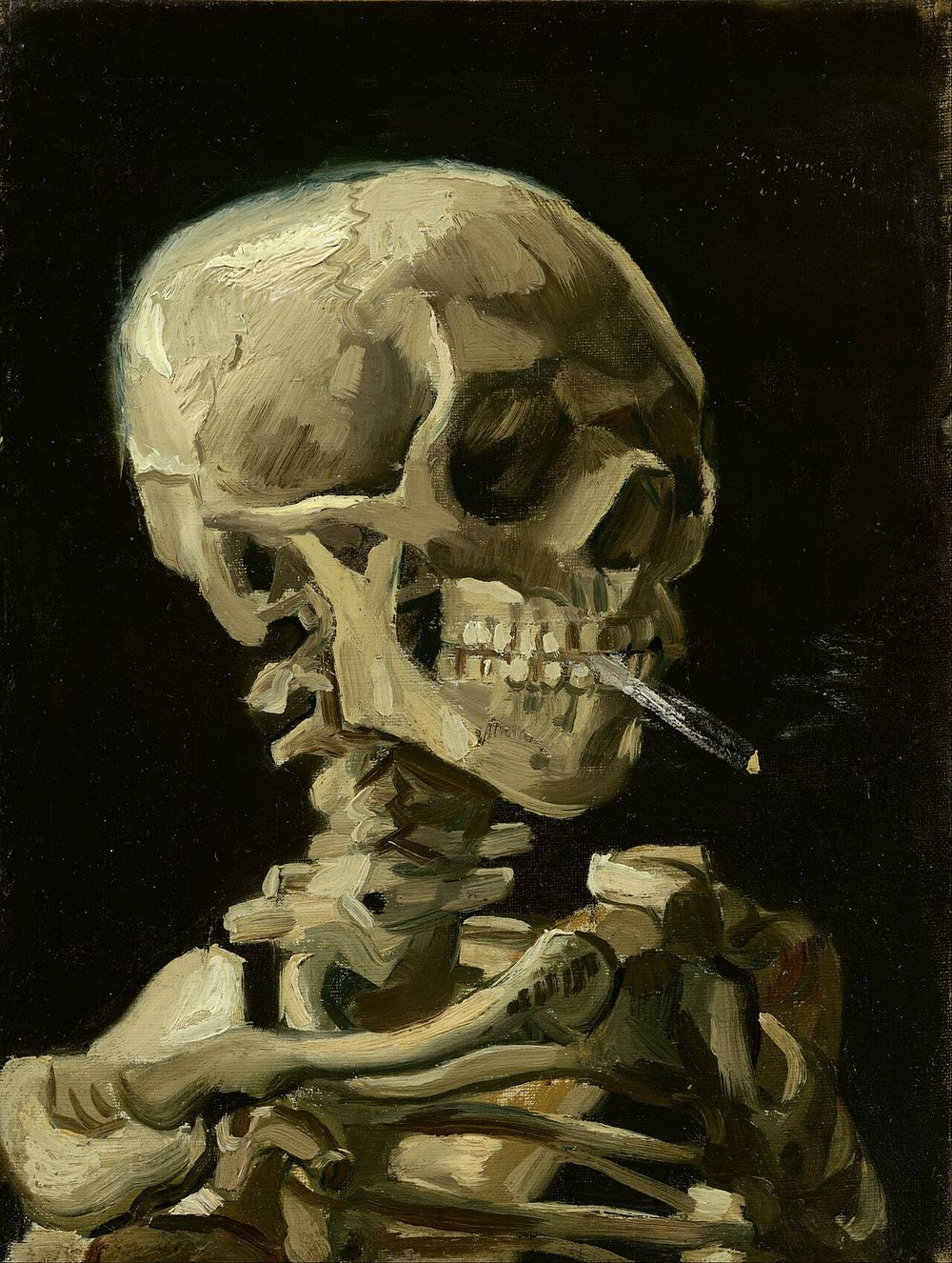
Find a picture of a skeleton smoking. Why did he paint it? (A joke from his student days in Antwerp.)
Outside, find which building is round.
I am here
Stand at the site, sign in, press the button, and collect its stamp. Your browser will ask to use your location. It is sent to us once to confirm that you are at the site; we keep how far you were from it, not the spot where you stood.
Your stamps are saved to your account, so they follow you to any device. Checking from a browser cannot rule out every false location; stricter checks arrive with the app.
Messages
Share your photos
Photos here show the place, not people. Each one is credited to the visitor who took it and appears after our team has looked at it. A photo with you in it belongs under “I am here”.