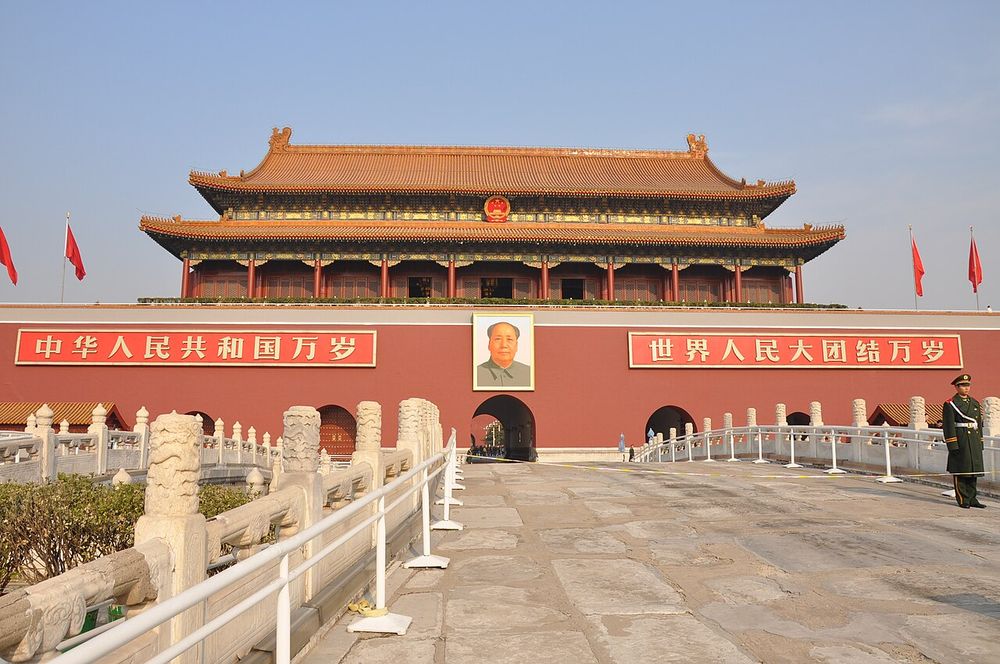
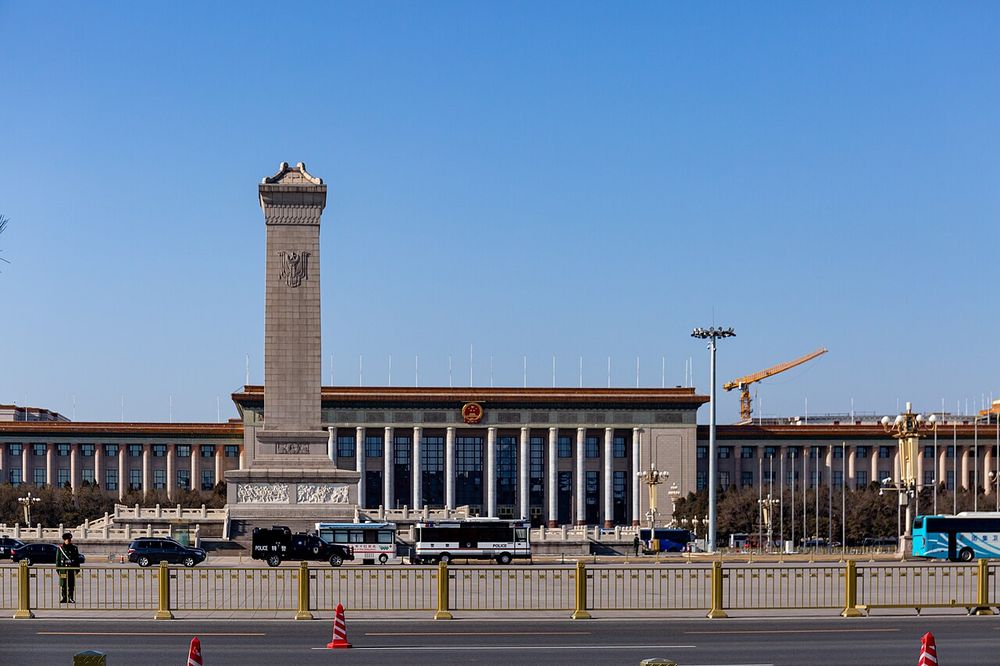
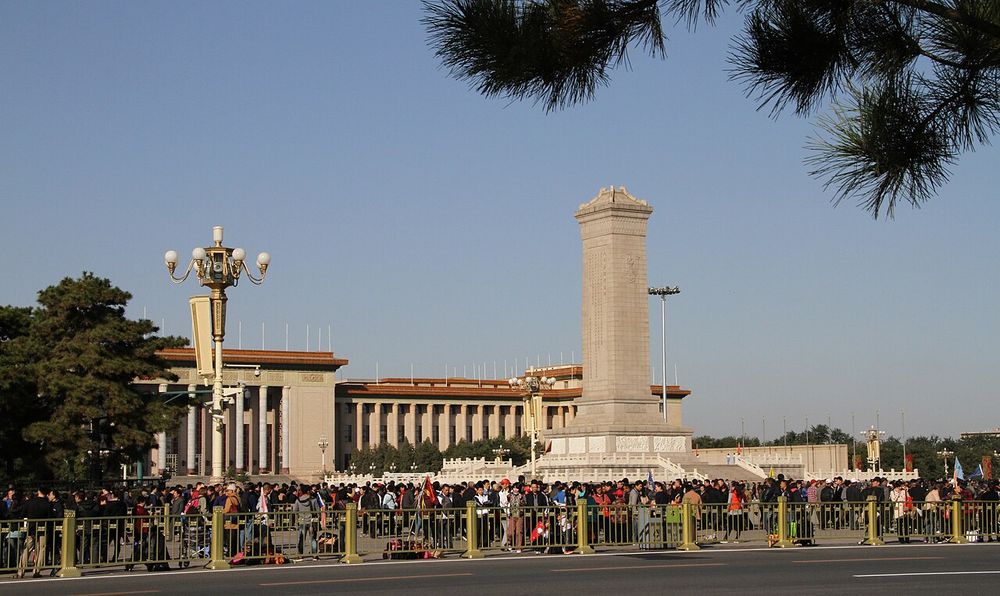
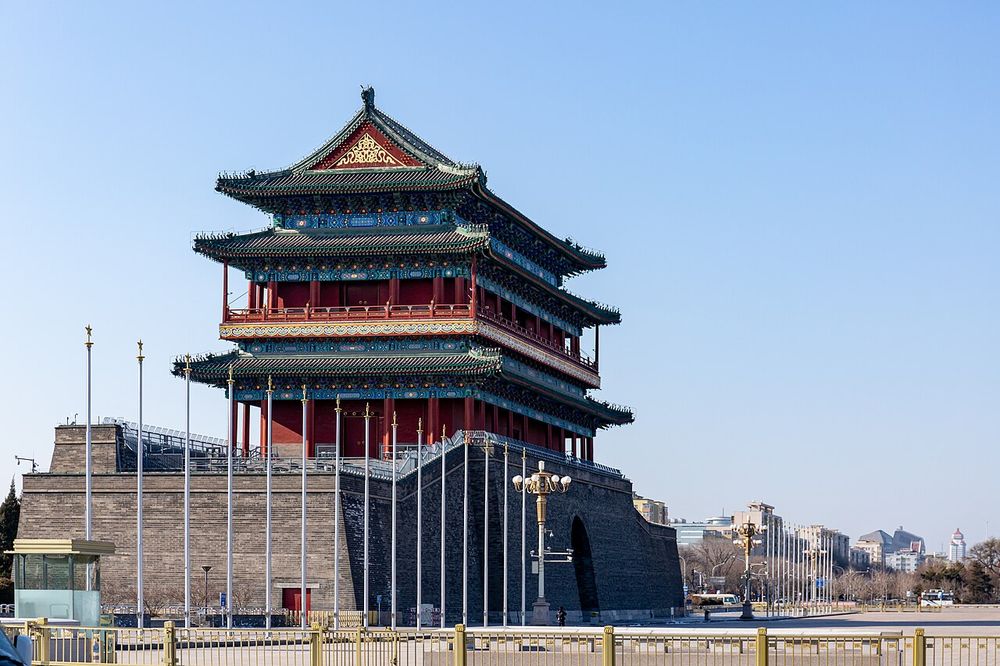
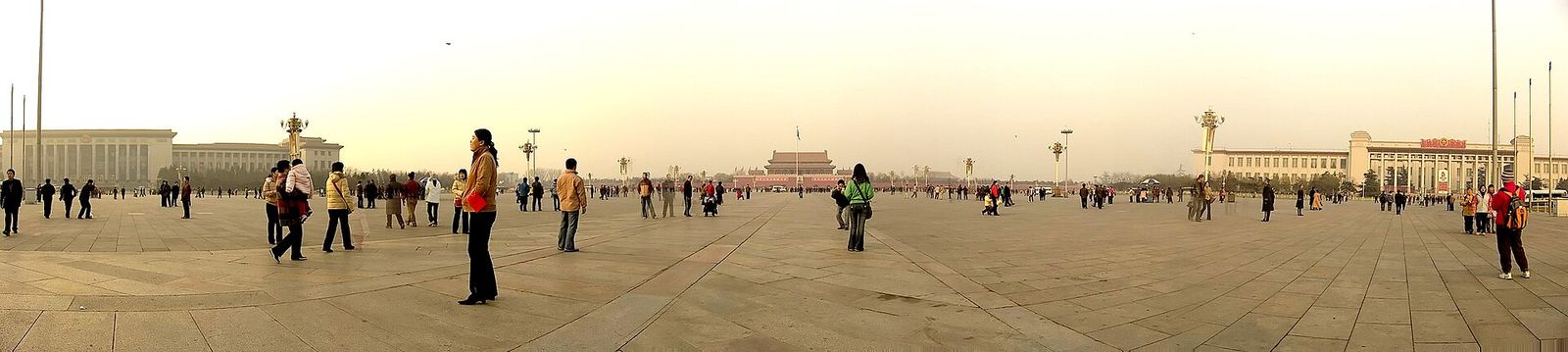
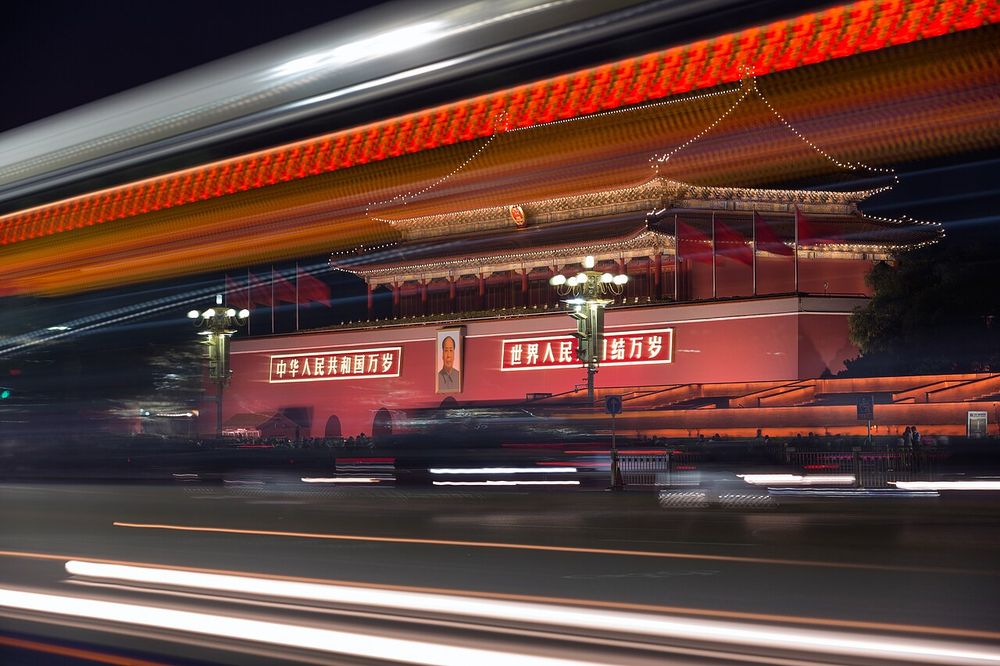
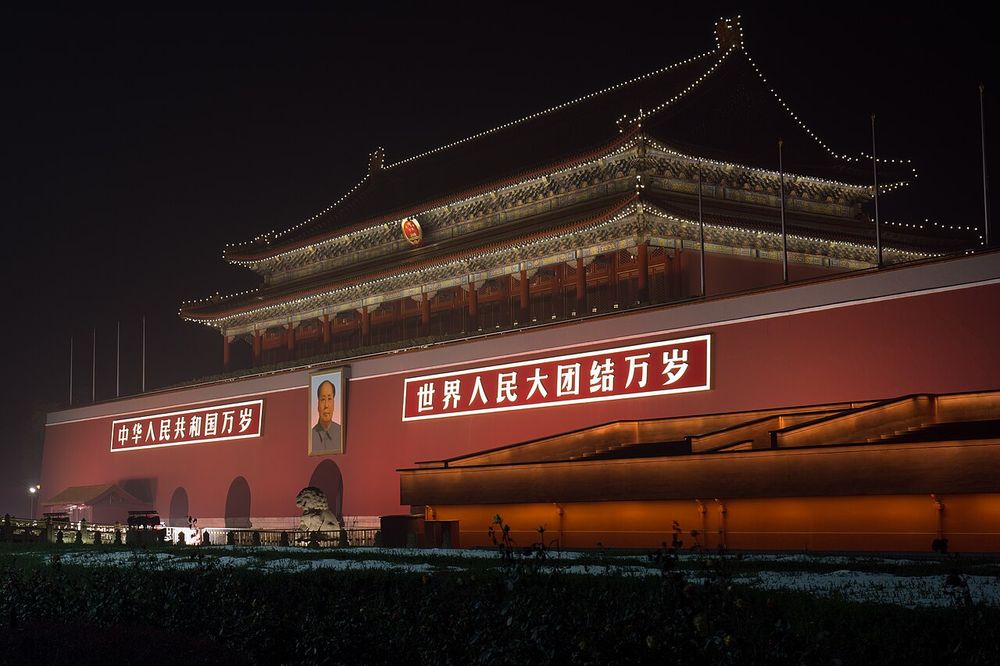
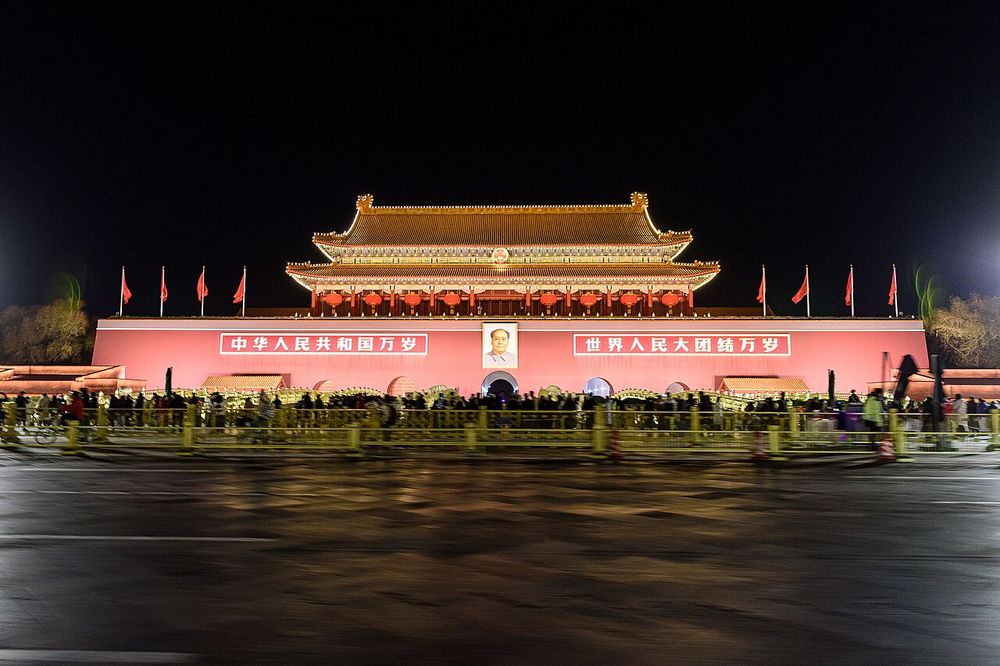
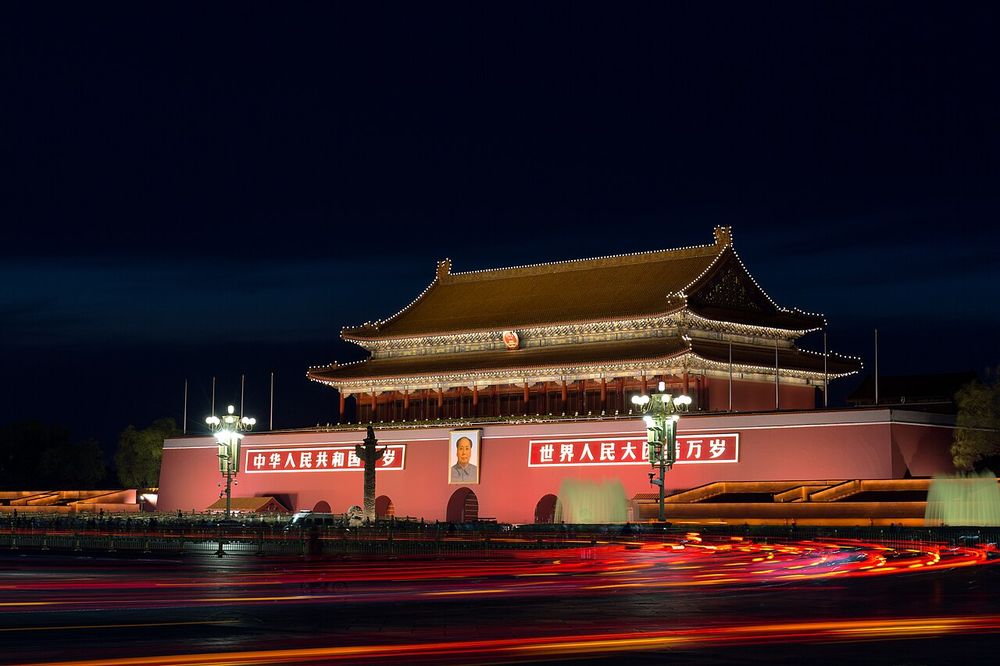
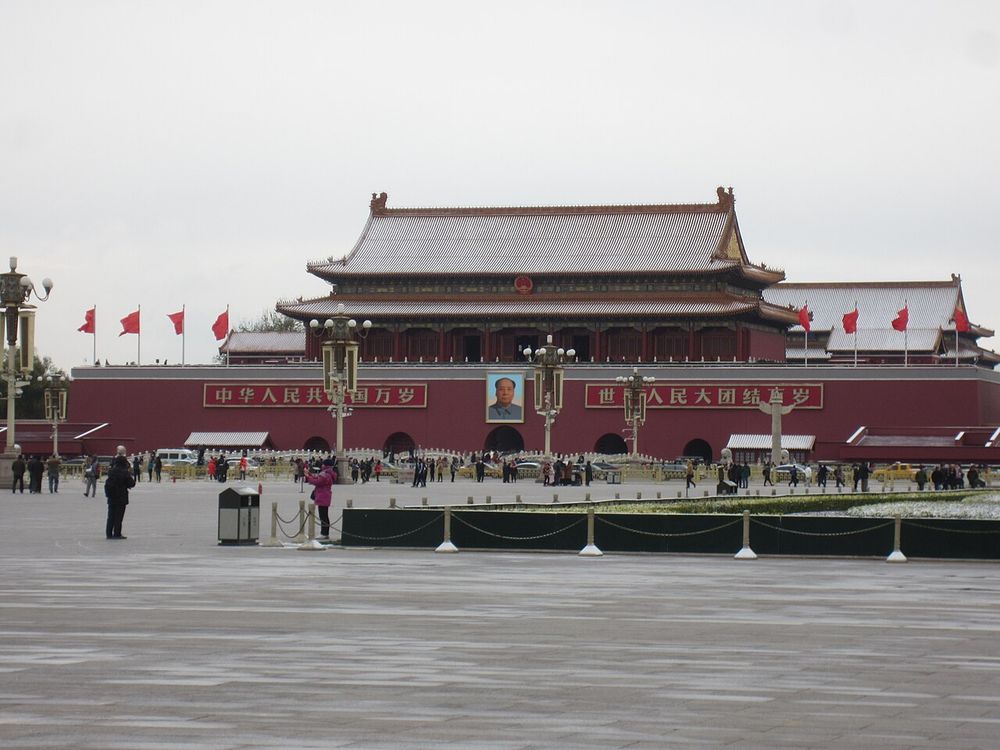
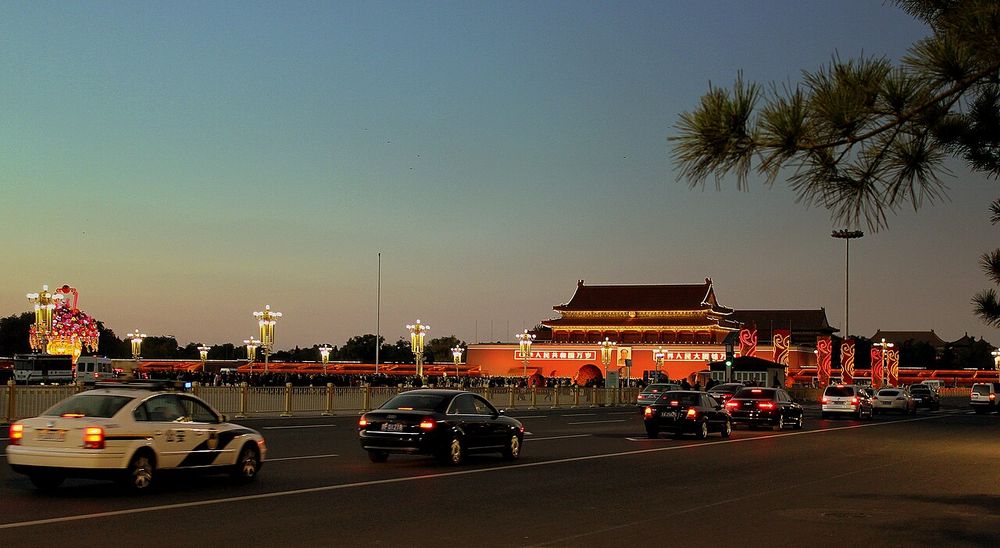
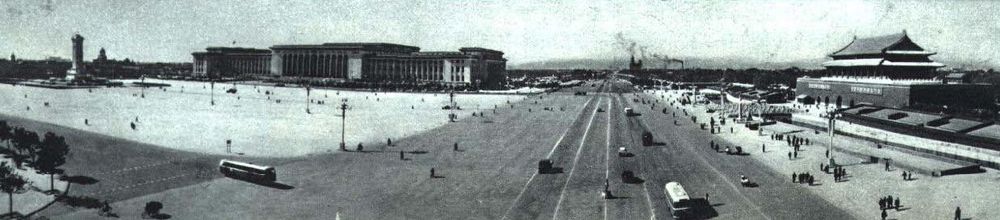
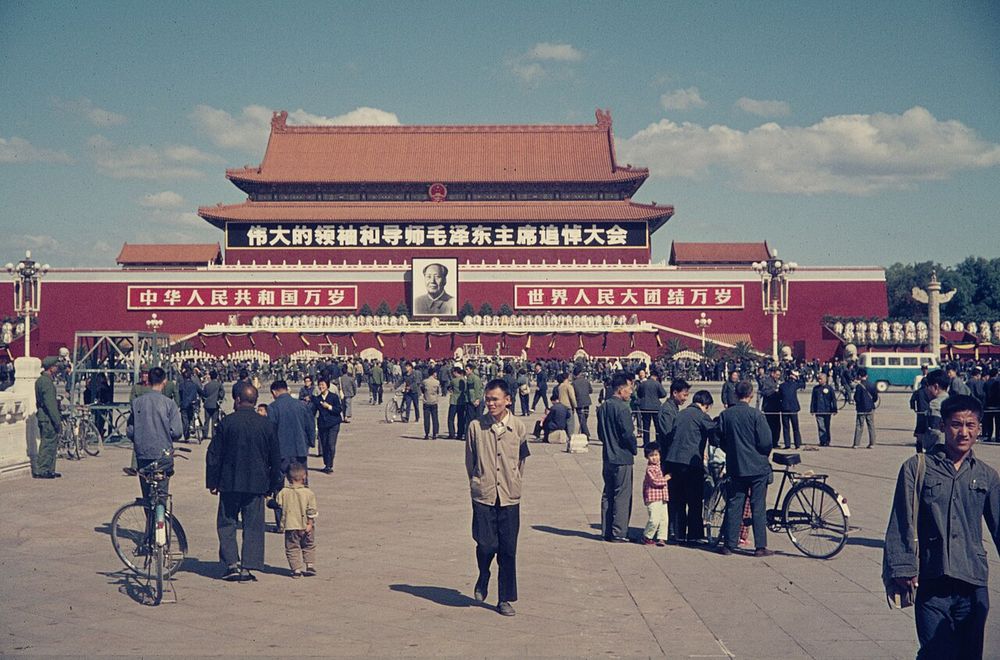
One of the largest city squares in the world, laid out in the 1950s in front of the Gate of Heavenly Peace, the Ming gate of the imperial city. Here Mao Zedong proclaimed the People's Republic in 1949, here the national flag is raised at every sunrise, and here much of China's 20th century, its celebrations and its protests, took place.
Photo: Unknown, CC BY 2.0, Wikimedia Commons
The story
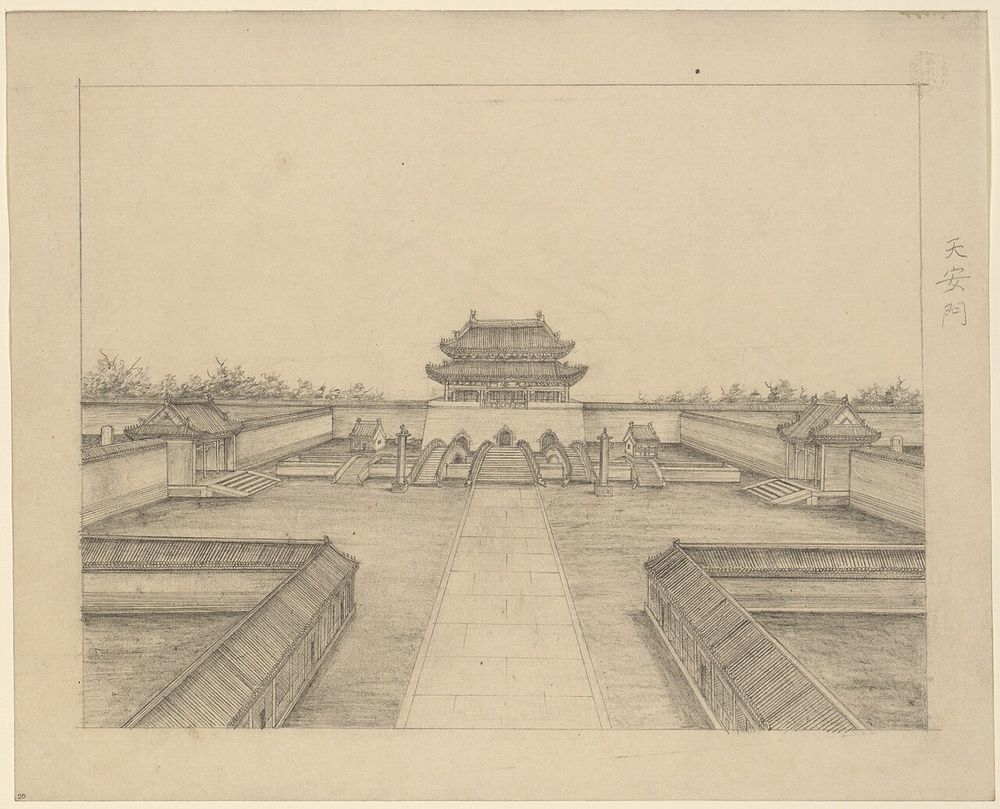
The Gate of Heavenly Peace was built in 1417, under the Ming dynasty (1368–1644), as the front gate of the imperial city, and rebuilt in 1651 under the Qing (1644–1912), when it took its present name. In front of it lay not an open square but a narrow walled court lined with ministries, where common people could not walk. From this gate imperial edicts were let down to officials kneeling below.
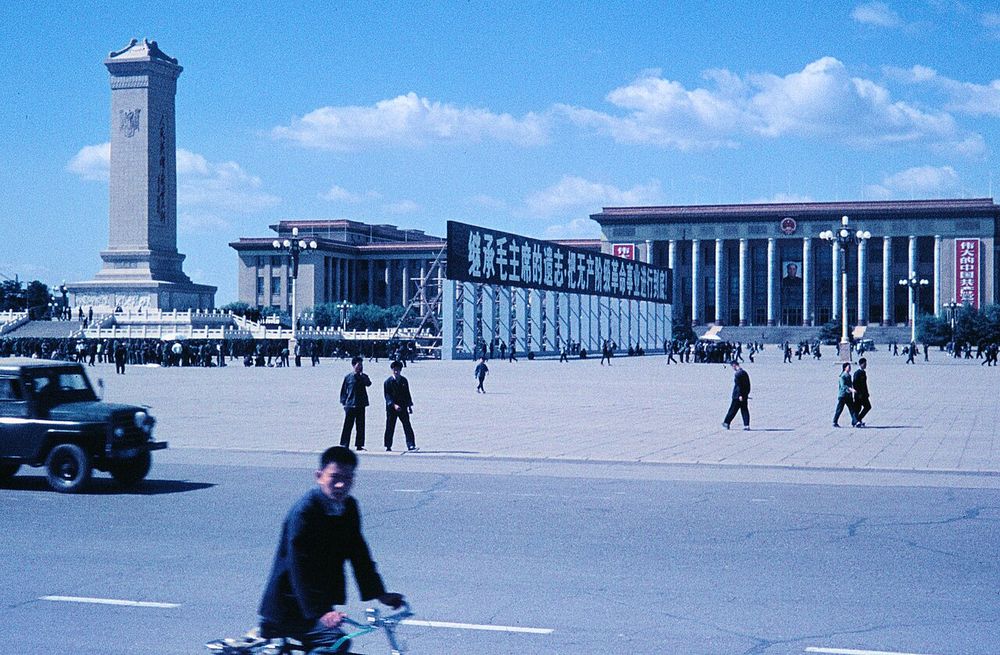
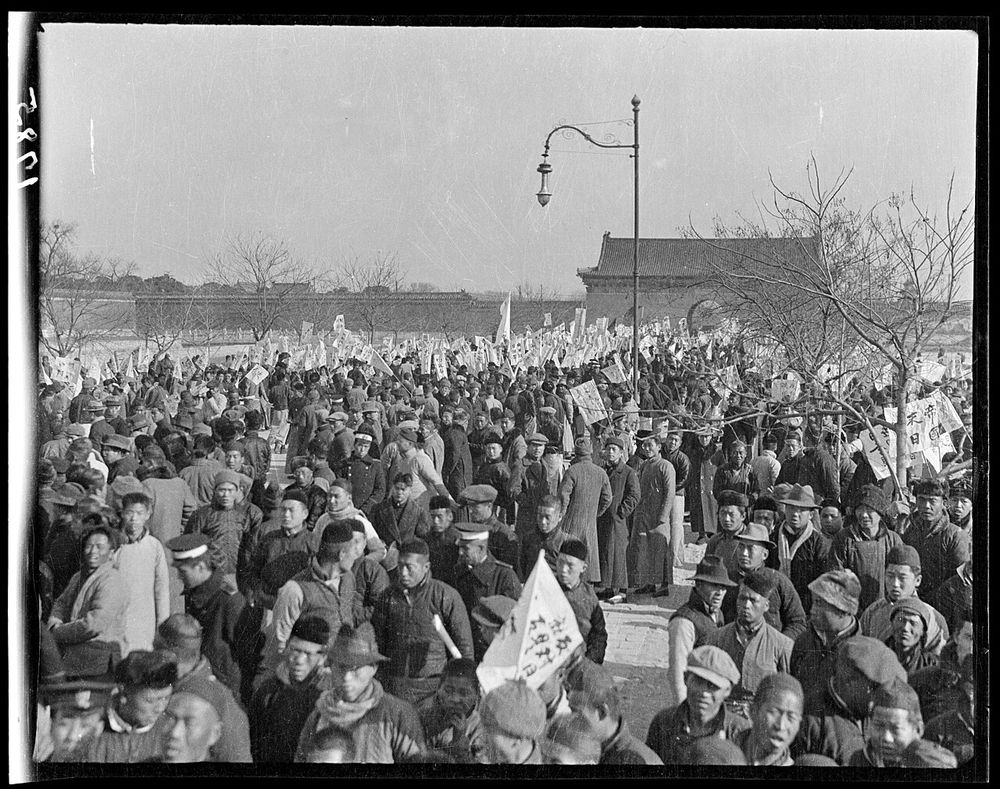
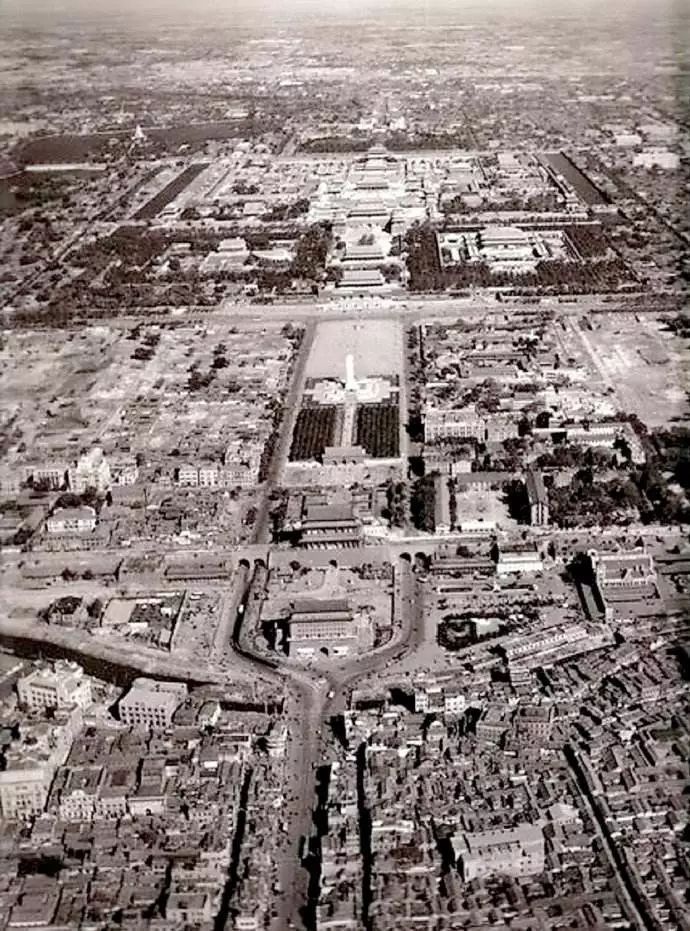
After the empire fell in 1911 the walls came down and the space opened. Students gathered here on 4 May 1919, and on 1 October 1949 Mao Zedong stood on the gate and proclaimed the People's Republic of China. In 1958–59 the square was cleared and enlarged to about 44 hectares, with the Great Hall of the People on the west, the national museum on the east, and the Monument to the People's Heroes in the middle. Since then it has seen parades, mass rallies, mourning and protest, most famously in the spring of 1989.
What is here
The square is free but must be booked in advance; the gate tower and the mausoleum have their own bookings. The National Museum and Zhengyangmen have their own pages.
The Gate of Heavenly Peace, 2008Jorge Láscar from Australia, CC BY 2.0
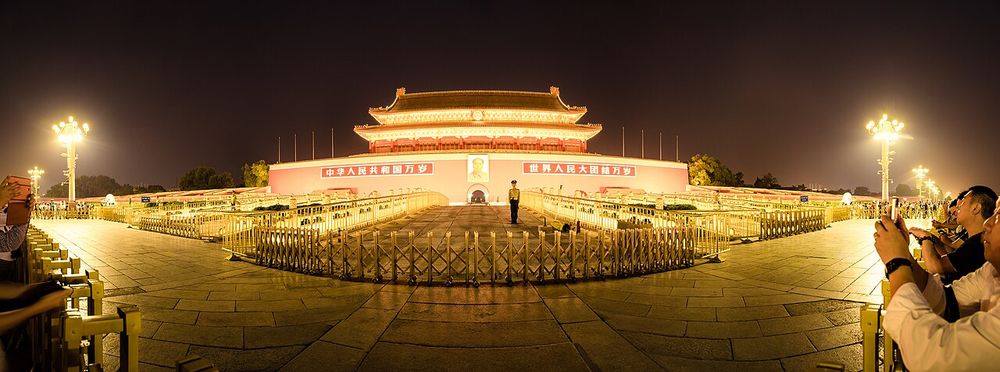
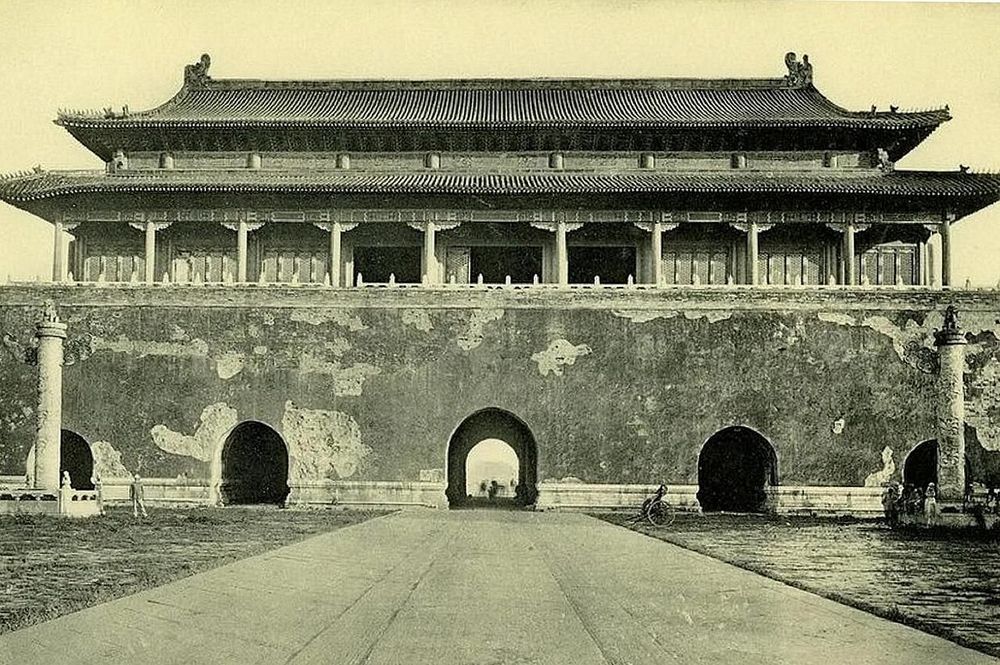
Look at the red gate with its yellow roof: five arched passages under a nine-bay tower. The central passage was for the emperor alone; today the portrait of Mao hangs above it. In front, the five marble Golden Water Bridges cross a moat, and two carved stone columns, the huabiao, stand guard with beasts on top.
Then turn round. The square stretches away about 880 metres to the Qianmen gate, the Monument to the People's Heroes in the middle and Mao's mausoleum behind it. You are standing on the old north–south axis of Beijing, which runs on through the gate behind you into the Forbidden City.
Things people often get wrong
"The square is as old as the gate." The gate is Ming; the open square is mostly a creation of the 1950s.
"Tiananmen is the entrance of the Forbidden City." It is the gate of the outer imperial city. The palace's own front gate, the Meridian Gate, lies about six hundred metres further north.
People who stood here
We searched Chinese sources first for this list, then English, French and Korean ones.
Mao Zedong (founder of the People's Republic, 1893–1976)On 1 October 1949 he proclaimed the People's Republic from the gate. In 1966 he reviewed millions of Red Guards here, and his body lies in the mausoleum on the square.
Zhou Enlai (premier, 1898–1976)He stood beside Mao in 1949. When he died, crowds filled the square at the Qingming festival of April 1976 with wreaths and poems in his memory; they were cleared by force on 5 April.
Liang Sicheng (architect, 1901–1972) and Lin Huiyin (architect and poet, 1904–1955)Liang led the design of the Monument to the People's Heroes; Lin Huiyin designed the garlands of flowers carved round its base, one of her last works before her death.
Jean-Paul Sartre (philosopher, 1905–1980) and Simone de Beauvoir (writer, 1908–1986)On 1 October 1955 they watched the National Day celebrations at Tiananmen as guests of the government.
Kim Il Sung (North Korean leader, 1912–1994)He watched China's National Day parades from the gate in 1954 and 1959.
4 more people
Deng Xiaoping (Chinese leader, 1904–1997)He reviewed the parade of 1 October 1984, the 35th anniversary, when students passing the gate unrolled a banner reading "Hello, Xiaoping".
Vladimir Putin (Russian president, born 1952)He watched the parades marking the end of the Second World War from the gate in 2015 and again on 3 September 2025.
Kim Jong Un (North Korean leader, born 1984)On 3 September 2025 he stood on the gate beside Xi Jinping and Putin, the first North Korean leader there since his grandfather in 1959.
Xi Jinping (Chinese president, born 1953)He reviewed the parades of 2015, 2019 and 2025 from the gate; in 2025, 26 foreign heads of state and government stood with him.
Go deeper: six stops from the gate to Qianmen8 stops · about 2 min to read
The square itself takes an hour; add the gate tower, the mausoleum or the museum and it becomes a morning. The stops go from north to south.
1. The Gate of Heavenly Peace
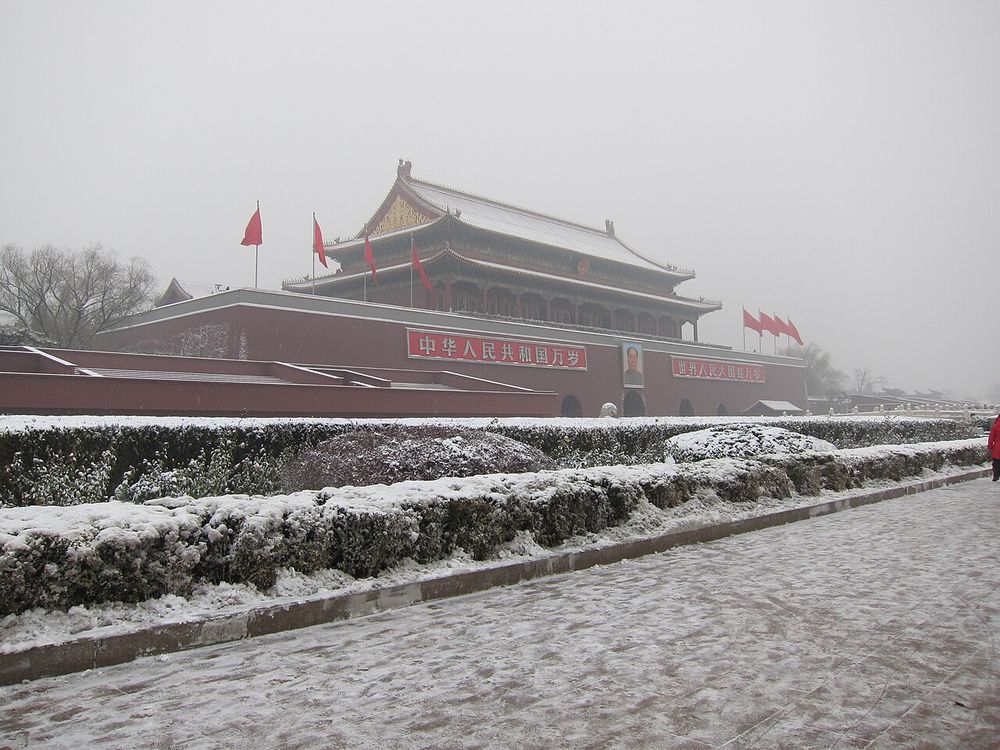
The gate in snow, 2012Regina800809, CC BY-SA 3.0
You can climb the gate tower and stand where Mao stood in 1949, looking down the square. Inside the hall are exhibits on its history. The slogans on either side of the portrait read "Long live the People's Republic of China" and "Long live the great unity of the peoples of the world".
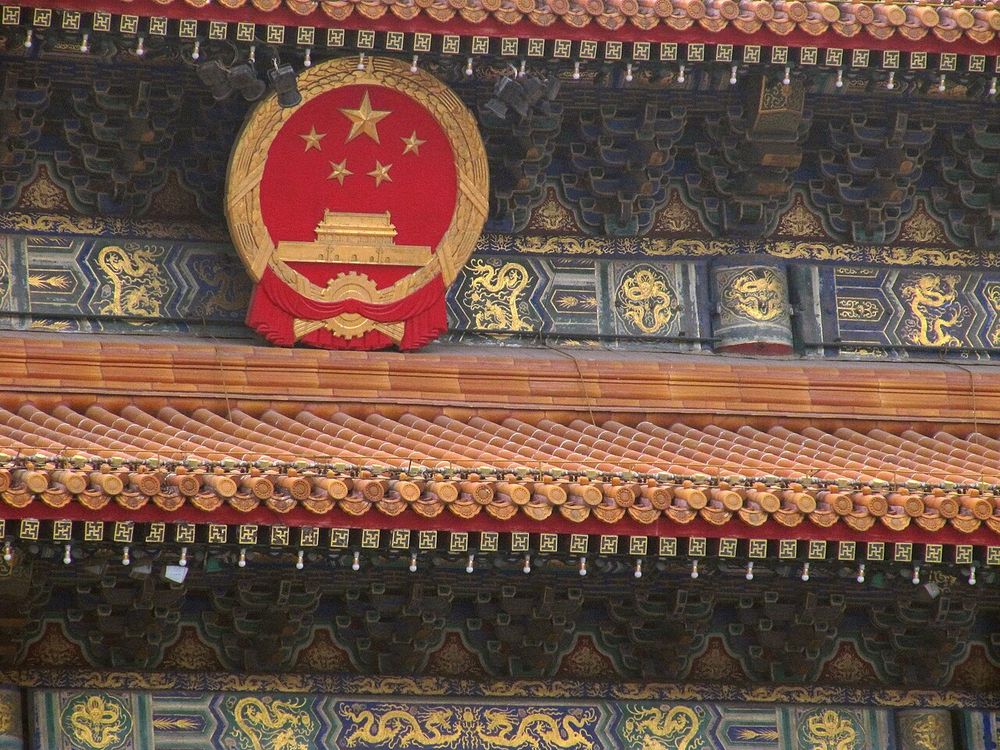
The national emblem on the gate tower, 2010ZZCTZXT, CC BY-SA 3.0
2. The flag
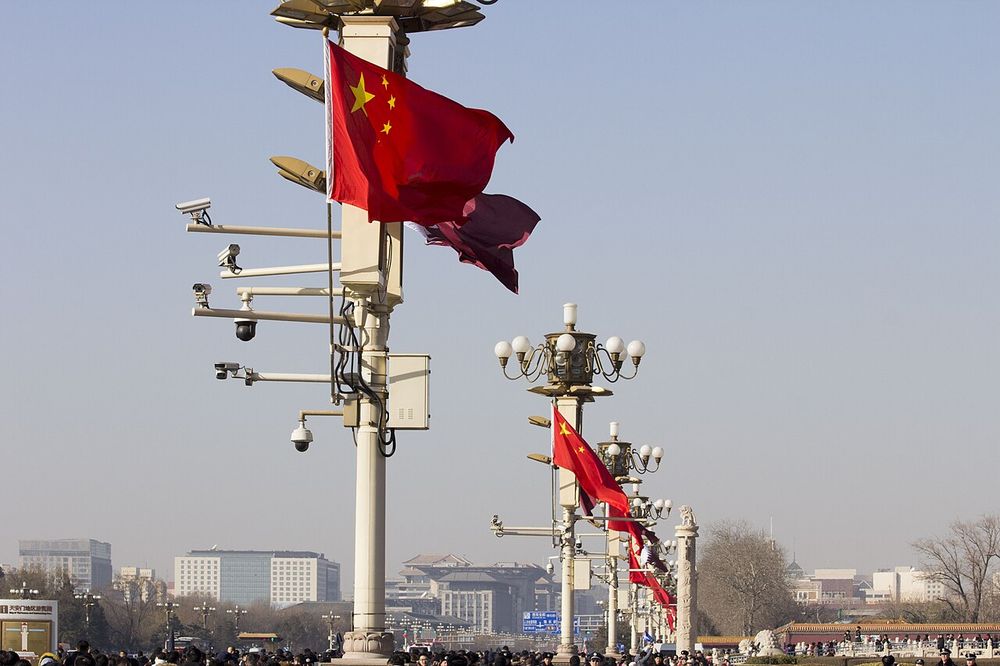
Flags on the lamp posts, 2019維基小霸王, CC BY-SA 4.0
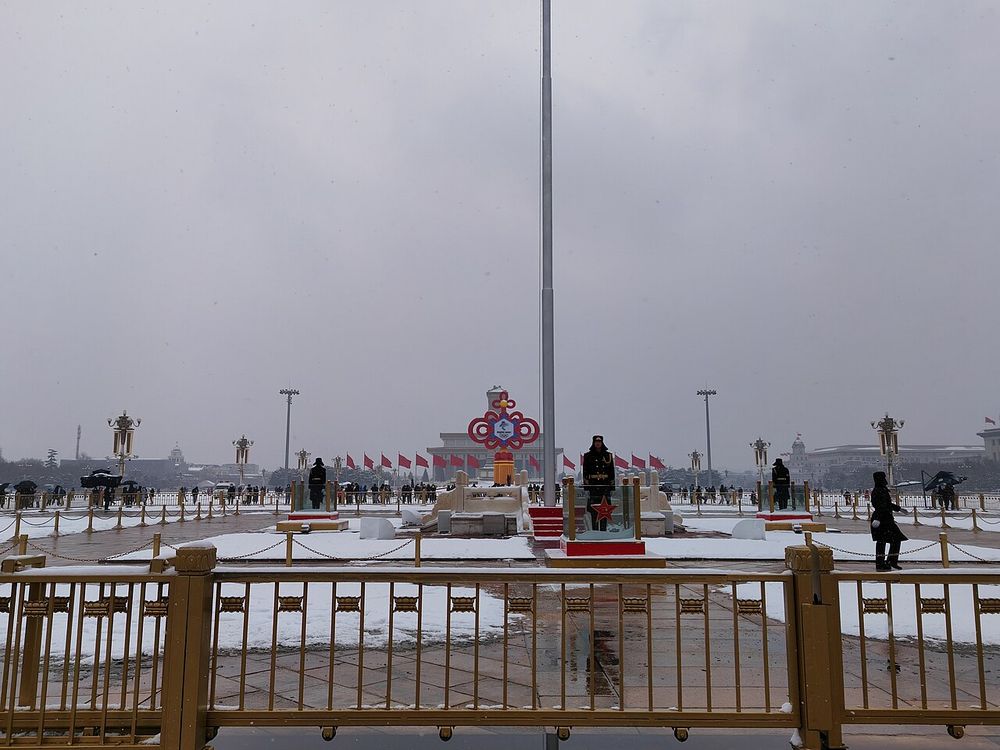
The national flag at the north end of the square is raised by a guard of honour at sunrise and lowered at sunset every day, the time changing with the sun, from before 5 in June to after 7 in winter. Thousands come to watch, many having queued since the small hours.
3. The Monument to the People's Heroes
The Monument and the Great Hall, January 2020Balon Greyjoy, CC0
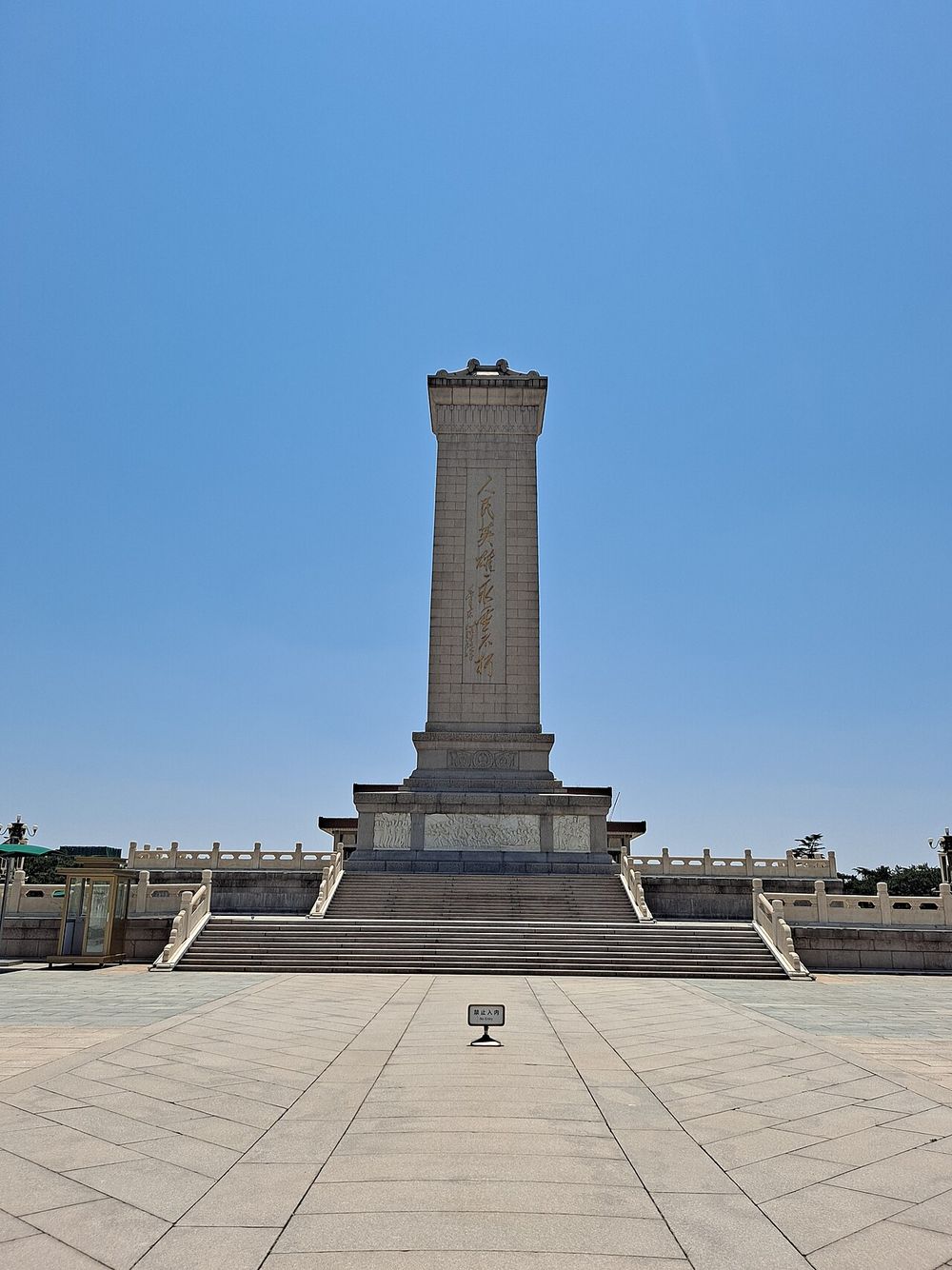
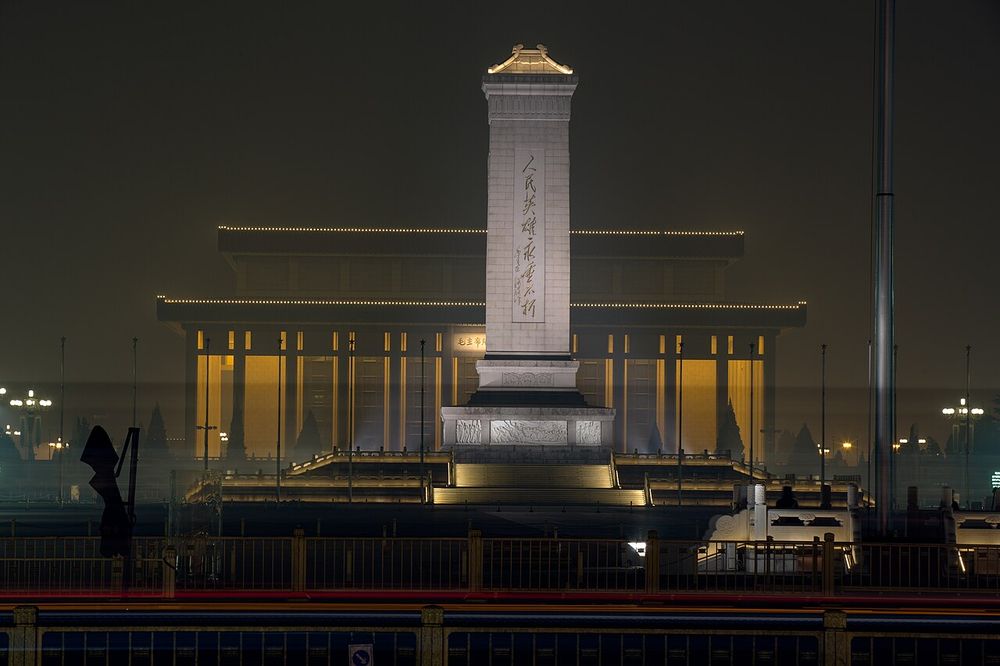
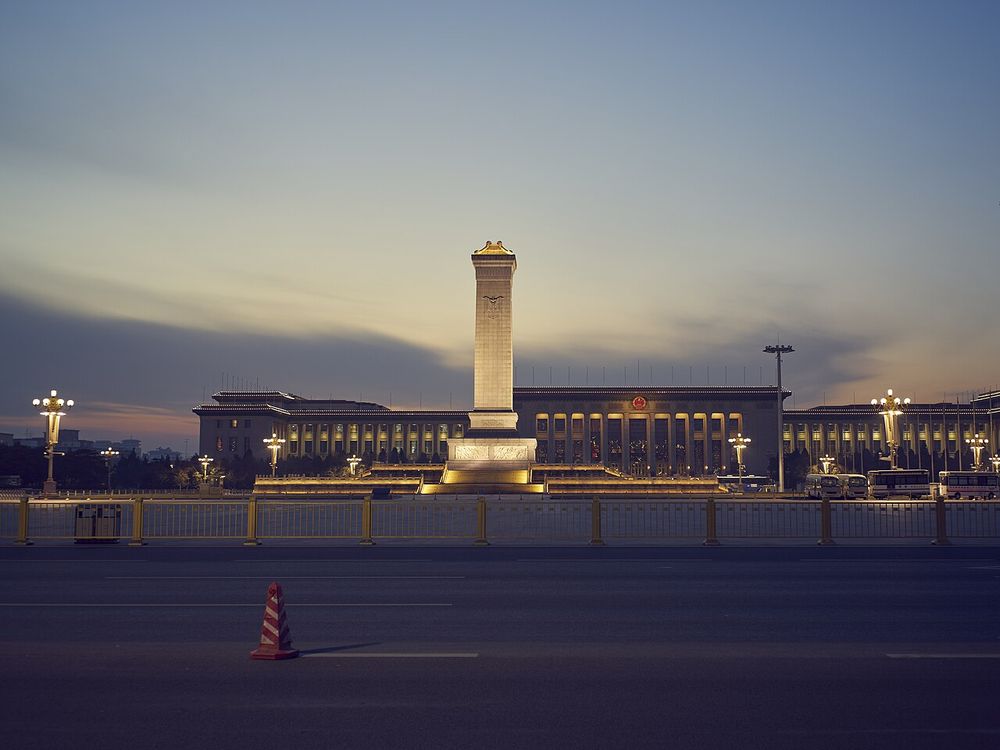
The granite obelisk, finished in 1958 and about 38 metres high, carries Mao's inscription on its north face. Round its base, eight large marble reliefs tell the story of China's revolutions from the burning of opium in 1839 to the crossing of the Yangtze in 1949. Look for the garlands of peonies, lotuses and chrysanthemums designed by Lin Huiyin.
The Monument to the People's Heroes, 2023EditQ, CC BY-SA 4.0
4. The Great Hall and the museum
The Monument and the Great Hall of the PeopleGerd Eichmann, CC BY-SA 4.0
Both were built in ten months for the tenth anniversary in 1959. The Great Hall on the west is where the National People's Congress meets; the National Museum of China on the east is one of the largest museums in the world and has its own page.
5. The Mausoleum of Mao Zedong
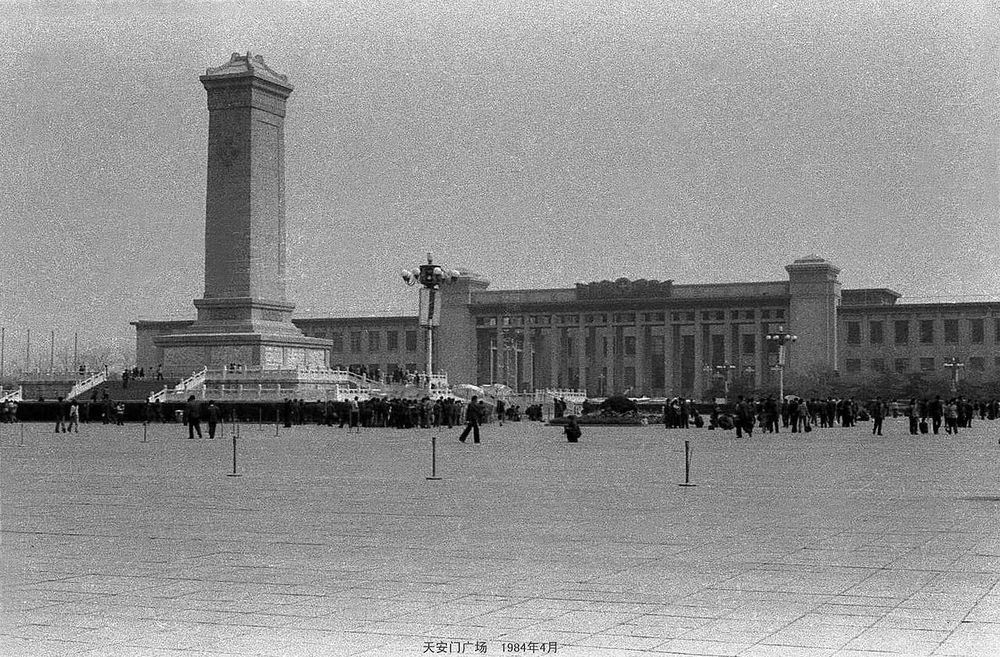
The square in 1984wanghongliu, CC BY-SA 3.0
Completed in 1977, a year after Mao's death, the hall holds his embalmed body in a crystal coffin. Visitors file past in silence; many leave flowers at the statue in the north hall.
6. Zhengyangmen (Qianmen)
Zhengyangmen at the south end, January 2020Balon Greyjoy, CC0
The south end of the square is closed by the great gate of the Ming inner city, Zhengyangmen, with its archery tower beyond. It has its own page.
The square in 1989
The Monument and the Great Hall in 1976Karl-Heinz Wellmann, CC BY-SA 4.0
In April 1989 students began to gather in the square to mourn the reformist leader Hu Yaobang, and the gathering grew into weeks of protest for political reform and against corruption, joined by workers and residents and occupying the square. Martial law was declared on 20 May. On the night of 3 to 4 June the army moved into central Beijing and cleared the square. Many people were killed, mostly in the streets around it. The number of dead has never been established: the government gave a figure of about two hundred civilians and several dozen soldiers, while other estimates run from several hundred to several thousand. A photograph taken on 5 June of a man standing in front of a column of tanks on Chang'an Avenue, his identity still unknown, became one of the best-known images of the century. The events are not discussed in public in mainland China, and the square is closely guarded each year around 4 June.
The square and the same years elsewhere
The Ming court moved to Beijing in 1421, while the gate was new. The year before, the Treaty of Troyes made Henry V of England heir to the French throne.
Meanwhile in the world
Year
Here
Elsewhere
1420
The new imperial city of Beijing is finished
The Treaty of Troyes makes Henry V heir to France
1651
The gate is rebuilt and named Tiananmen
Hobbes publishes Leviathan
1919
Students gather here on 4 May
The Treaty of Versailles is signed in June
1949
The People's Republic is proclaimed from the gate
NATO is founded
1976
Crowds mourning Zhou Enlai are cleared from the square on 5 April
Apple is founded in California four days earlier
1989
The protests in the square end with the army's clearance on 3–4 June
The Berlin Wall falls in November
One line to remember: an imperial gate, and the square where modern China has gathered.
Then and now
The square in a single sweep, from the Great Hall to the museumUnknown, CC BY 2.0, Wikimedia CommonsThe gate and the square at night, 2014Carlos Adampol Galindo from DF, México, CC BY-SA 2.0, Wikimedia CommonsThe Gate of Heavenly Peace, 2008Jorge Láscar from Australia, CC BY 2.0, Wikimedia CommonsThe gate in snow, 2012Regina800809, CC BY-SA 3.0, Wikimedia CommonsTraffic on Chang'an Avenue before the gate, September 2015Morio, CC BY-SA 4.0, Wikimedia CommonsThe gate at dusk, November 2015Morio, CC BY-SA 4.0, Wikimedia CommonsThe gate lit at night, New Year's Eve 2023N509FZ, CC BY-SA 4.0, Wikimedia CommonsThe gate at night, April 2016Morio, CC BY-SA 4.0, Wikimedia CommonsThe national emblem on the gate tower, 2010ZZCTZXT, CC BY-SA 3.0, Wikimedia CommonsFlags on the lamp posts, 2019維基小霸王, CC BY-SA 4.0, Wikimedia CommonsThe Monument and the Great Hall, January 2020Balon Greyjoy, CC0, Wikimedia CommonsThe Monument to the People's Heroes, 2023EditQ, CC BY-SA 4.0, Wikimedia CommonsThe Monument at night, November 2015Morio, CC BY-SA 4.0, Wikimedia CommonsThe Monument and the Great Hall of the PeopleGerd Eichmann, CC BY-SA 4.0, Wikimedia CommonsZhengyangmen at the south end, January 2020Balon Greyjoy, CC0, Wikimedia CommonsThe giant flower basket for National Day, October 2024HoweyYuan, CC0, Wikimedia CommonsThe flower basket at night, October 2024N509FZ, CC BY-SA 4.0, Wikimedia CommonsA winter flower bed for the Winter Olympics, February 2022維基小霸王, CC BY-SA 4.0, Wikimedia CommonsA grey November day, 2016Another Believer, CC BY-SA 4.0, Wikimedia CommonsDusk over the square, October 2012calflier001, CC BY-SA 2.0, Wikimedia CommonsKites over the square at sunset, 2008Dave Proffer, CC BY 2.0, Wikimedia CommonsThe Monument and the Great Hall at evening, 2016BarabaszO, CC BY-SA 4.0, Wikimedia CommonsA drawing of the Gate of Heavenly Peace and the walled court in front of it, before 1911I︠U︡din, G. V. (Gennadiĭ Vasilʹevich), 1840-1912, collector; Yudin Collection (L, Public domain, Wikimedia CommonsA gate of the imperial city on the old axis, early 20th centuryUnknown authorUnknown author, Public domain, Wikimedia CommonsStudents demonstrating before the gate on 29 November, probably 1919Gamble, Sidney D., Public domain, Wikimedia CommonsThe centre of Beijing from the air, 1958, as the square was being enlargedUnknown photographer, Public domain, Wikimedia CommonsThe square in 1964《人民画报》, Public domain, Wikimedia CommonsThe gate in 1976Karl-Heinz Wellmann, CC BY-SA 4.0, Wikimedia CommonsThe Monument and the Great Hall in 1976Karl-Heinz Wellmann, CC BY-SA 4.0, Wikimedia CommonsThe square in 1984wanghongliu, CC BY-SA 3.0, Wikimedia Commons
Local legends
These are stories people tell about this place. They are legends, not history, and each one says where it comes from.
LegendThe beasts on the columns
The stone beasts on top of the huabiao columns are called hou. Those in front of the gate face south, out of the palace, and are said to watch for the emperor's return, calling him home if he stayed away too long; those behind the gate face north and watch him inside, reminding him to go out and see his people.
Source: A popular Beijing story told by guides; no imperial document gives this meaning
Later, people who live here will be able to add the stories they grew up with, and say which of these they have heard.
Not certain, and where accounts conflict
How many died in 1989?
There is no agreed figure. Beijing's mayor in 1989 gave about two hundred civilians, 36 of them students, and several dozen soldiers. The US embassy estimated more than a thousand; the Chinese Red Cross first reported 2,600 and then withdrew the figure; the Tiananmen Mothers, a group of bereaved families, have named 202 of the dead. Estimates run from several hundred to several thousand. Most deaths were in the streets west of the square rather than on the square itself.
Is the square the largest in the world?
It is often called so, but the comparison depends on what is counted as a square; it is among the largest city squares anywhere.
Visiting
Tickets and hours
The square is free with a booking. The gate tower has a small ticket of its own and is usually closed on Mondays; the mausoleum is free, opens in the mornings and is usually closed on Mondays.
Flag-raising is at sunrise and flag-lowering at sunset: in early October 2026, for example, about 6:10 and 17:58. Check the time for your day.
Last checked 2026-11-12. Booking rules and flag times from the Beijing Tiananmen Area Management Committee as published by Beijing Tourism (visitbeijing.com.cn), October 2026; the prices of the gate tower are from visitor guides.
Booking without WeChat
Official page in English Book on the Tiananmen Square booking platform (WeChat mini-program 天安门广场预约参观, or its website) with a passport, one to seven days ahead; up to ten people per booking.
International booking platform The same booking can be made through the Jingtong mini-program and several Beijing news apps.
Ticket window on site There is no ticket window for the square. Visitors without a booking for that date and time are turned back at the checkpoints.
Note Choose the "flag-raising" or "flag-lowering" time slot if you want to see the ceremony.
Checked 2026-11-12
Where to start
Metro Line 1 to Tiananmen East or Tiananmen West, or Line 2 to Qianmen. Allow time for the security check at the entrance.
For the flag-raising, night buses 1, 2 and 17 stop at Tiananmen East.
Before you go
Carry your passport; it is checked at the entrance. Lighters, knives, drones and large bags are not allowed.
The square has no shade and is hot in summer and bitterly cold on winter mornings.
Customs and manners
Stand still and quiet during the flag ceremony. Inside the mausoleum, no bags, cameras or talking, and hats off.
Banners, leaflets and gatherings are forbidden, and plain-clothes police are present; take photographs of the monuments, not of the guards.
Opening hours are given in the local time of the place.
Look for these
Find the two hou on the huabiao in front of the gate and see which way they face.
On the Monument, find the relief of the burning of opium in 1839.
Stand in the middle of the square and find the Forbidden City's Meridian Gate on the axis behind Tiananmen.
I am here
Stand at the site, sign in, press the button, and collect its stamp. Your browser will ask to use your location. It is sent to us once to confirm that you are at the site; we keep how far you were from it, not the spot where you stood.
Your stamps are saved to your account, so they follow you to any device. Checking from a browser cannot rule out every false location; stricter checks arrive with the app.
Messages
Share your photos
Photos here show the place, not people. Each one is credited to the visitor who took it and appears after our team has looked at it. A photo with you in it belongs under “I am here”.