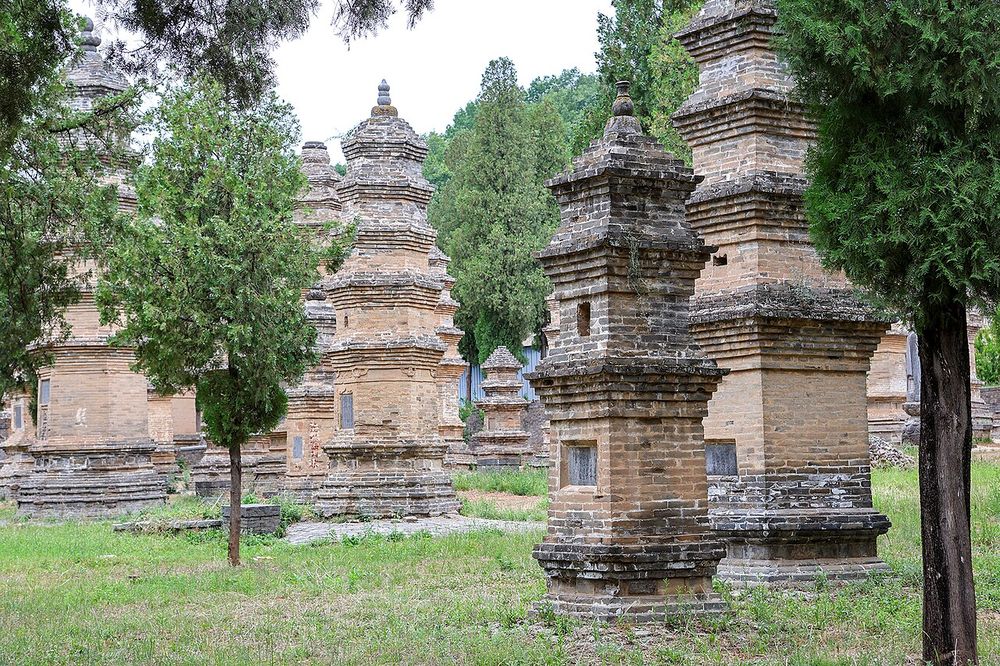
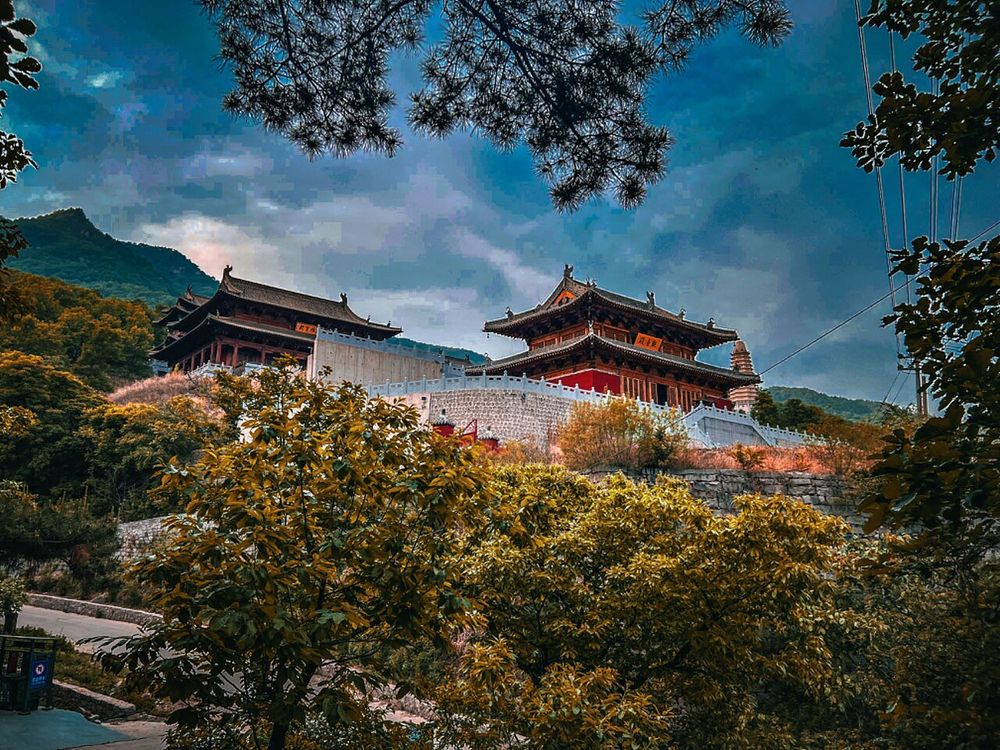
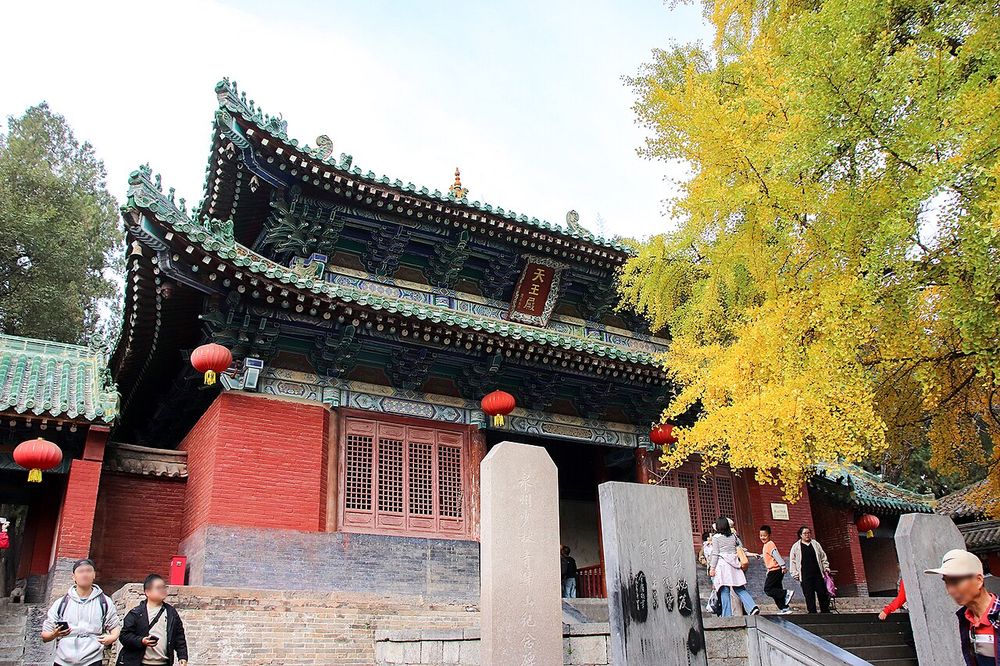
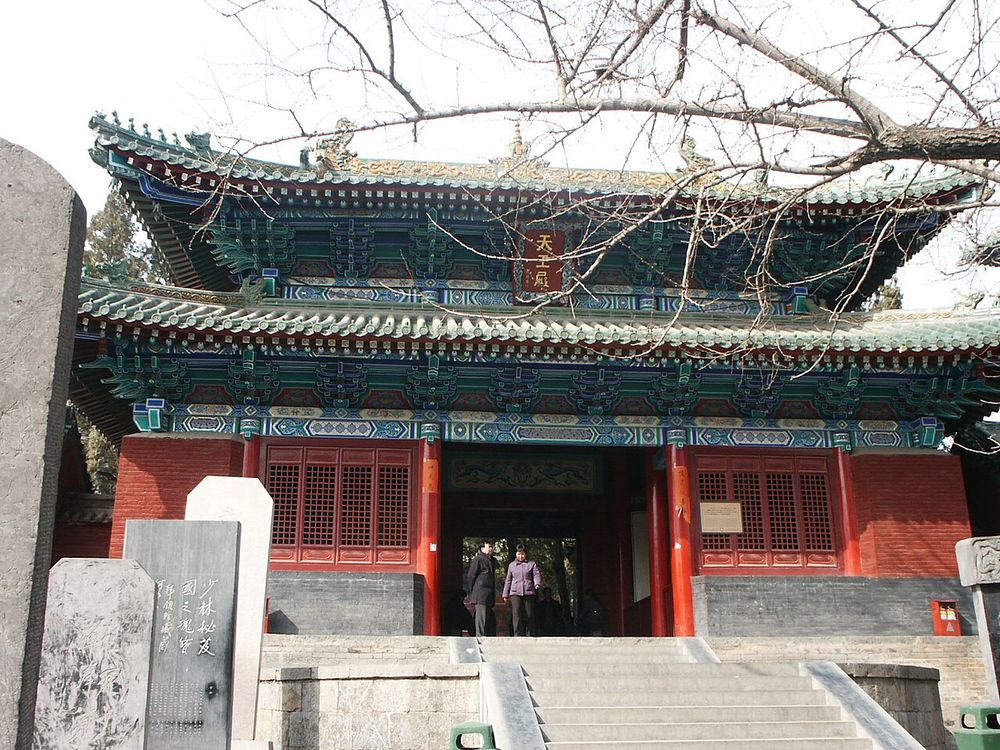
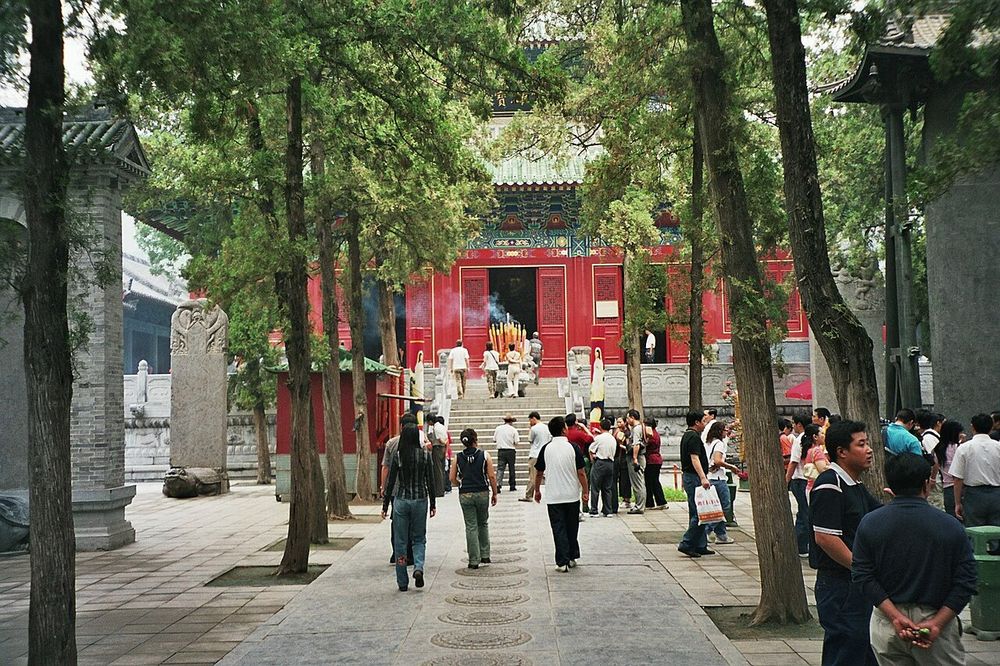
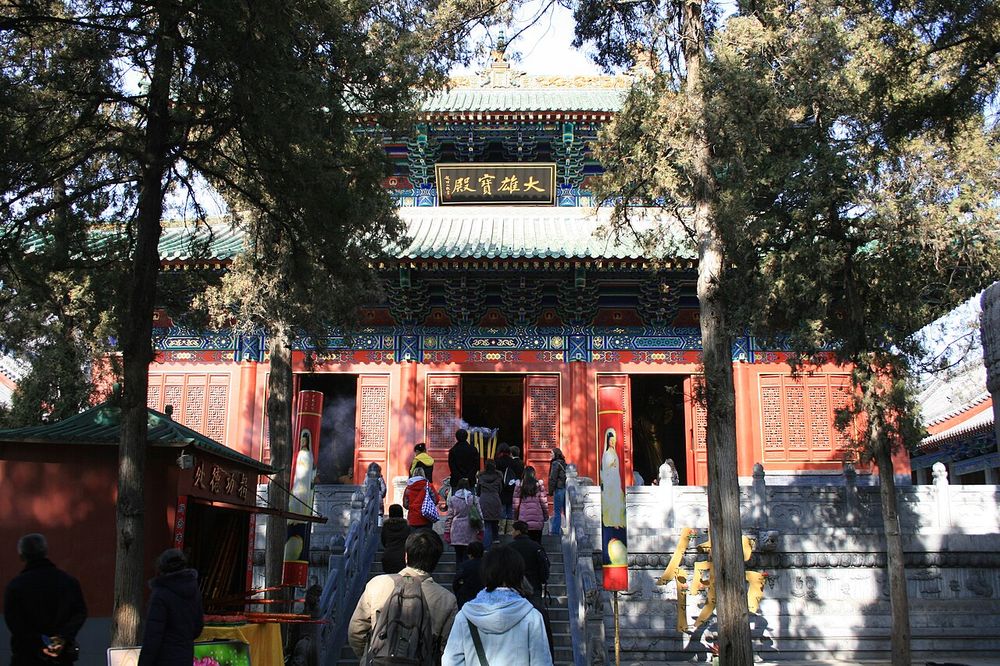
A monastery in the forests of Mount Song, founded in 495 for an Indian monk, where the Chan school of Buddhism, Zen in Japan, traces its first patriarch, and where monks practised fighting for so long that "Shaolin" came to mean kung fu itself. Beyond its halls stands a forest of over two hundred stone pagodas, the graves of its abbots and teachers.
Photo: Yumeto, CC BY-SA 4.0, Wikimedia Commons
The story
In 495 Emperor Xiaowen of the Northern Wei (386–534), who had just moved his capital to Luoyang, built a monastery in the woods below Shaoshi peak for an Indian teacher named Batuo. Its name means "the forest of Shaoshi". A generation later, tradition says, another Indian monk, Bodhidharma, came here and sat facing the wall of a cave above the monastery for nine years. The Chan school, which spread to Japan as Zen, counts him as its first patriarch and Shaolin as its ancestral home.
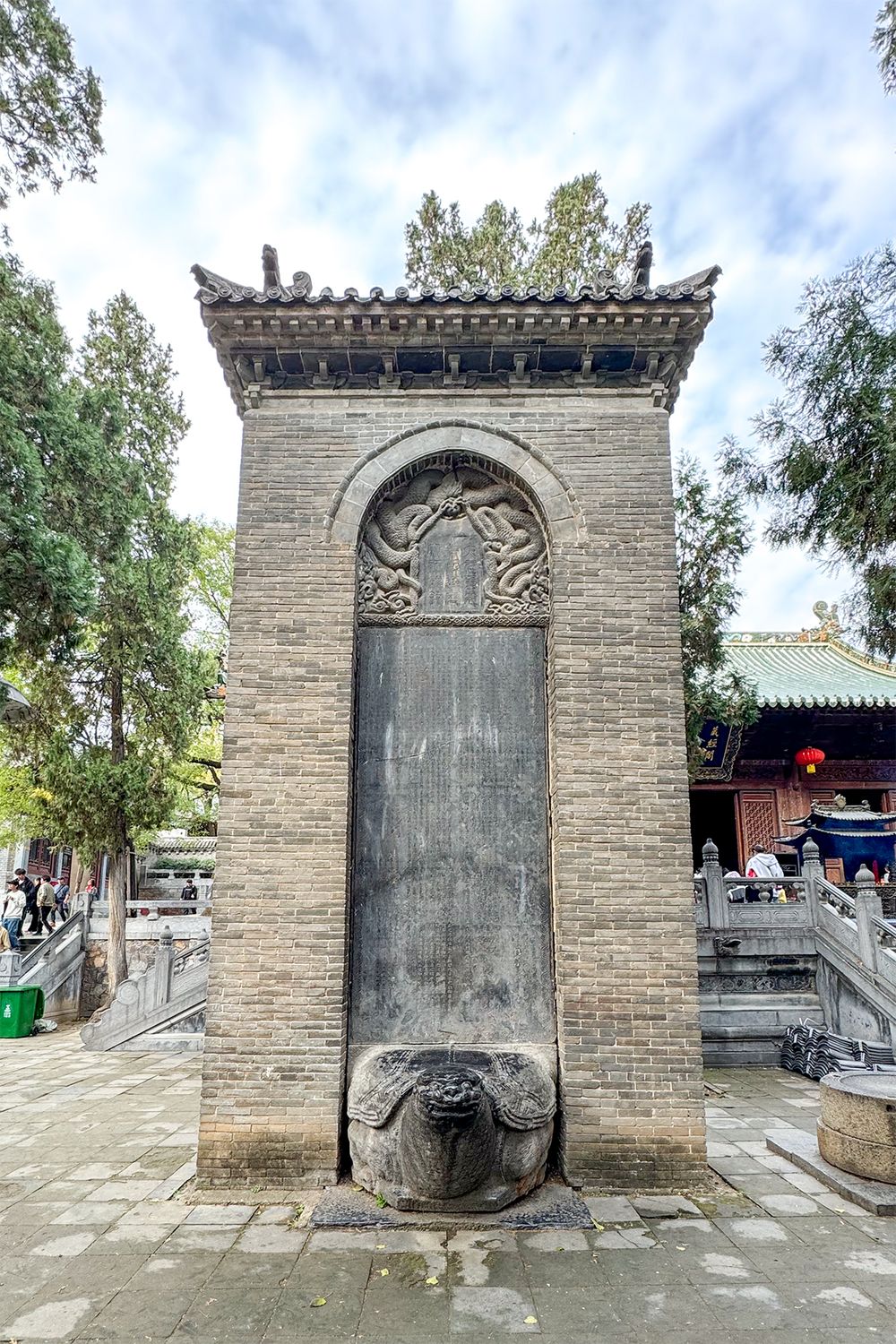
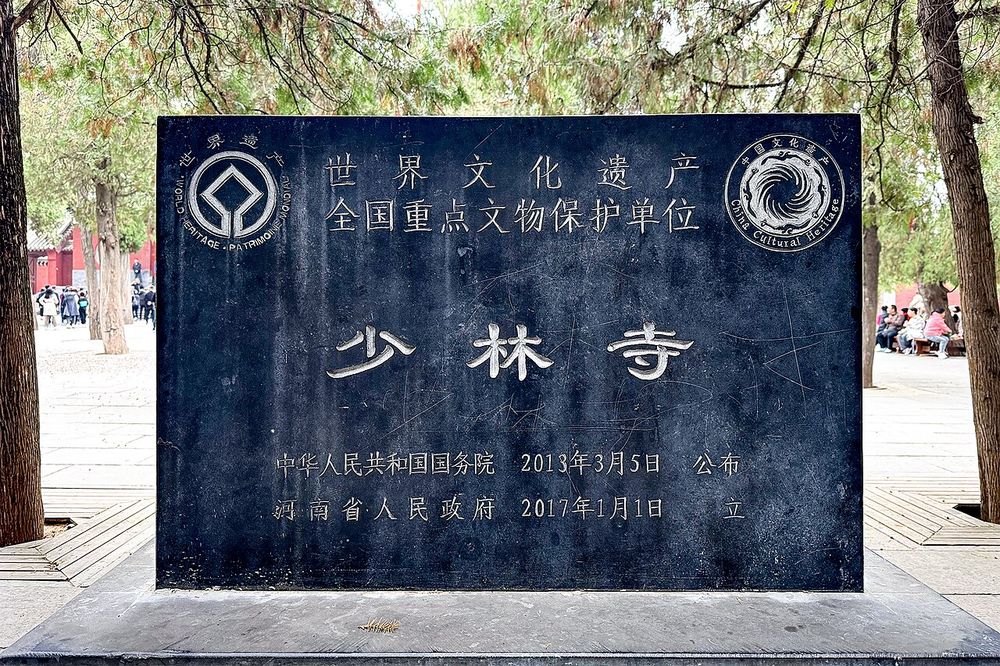
The monks also fought. In 621 a band of them helped the young Li Shimin, the future Tang emperor Taizong, against a rival, and were rewarded with land; a stele in the monastery still records it. Over the following centuries Shaolin fighting, especially with the staff and later with bare hands, became famous across China. The monastery was burned by a warlord in 1928; in 1982 a film made here, starring the teenage Jet Li, brought crowds back, and in 2010 it was listed as a World Heritage Site with the other old buildings of Dengfeng.
What is here
One ticket of 80 yuan covers the monastery, the Pagoda Forest, Chuzu An, the cave of the Second Patriarch, Sanhuangzhai and the kung fu show. The shuttle cars and the cable cars cost extra.
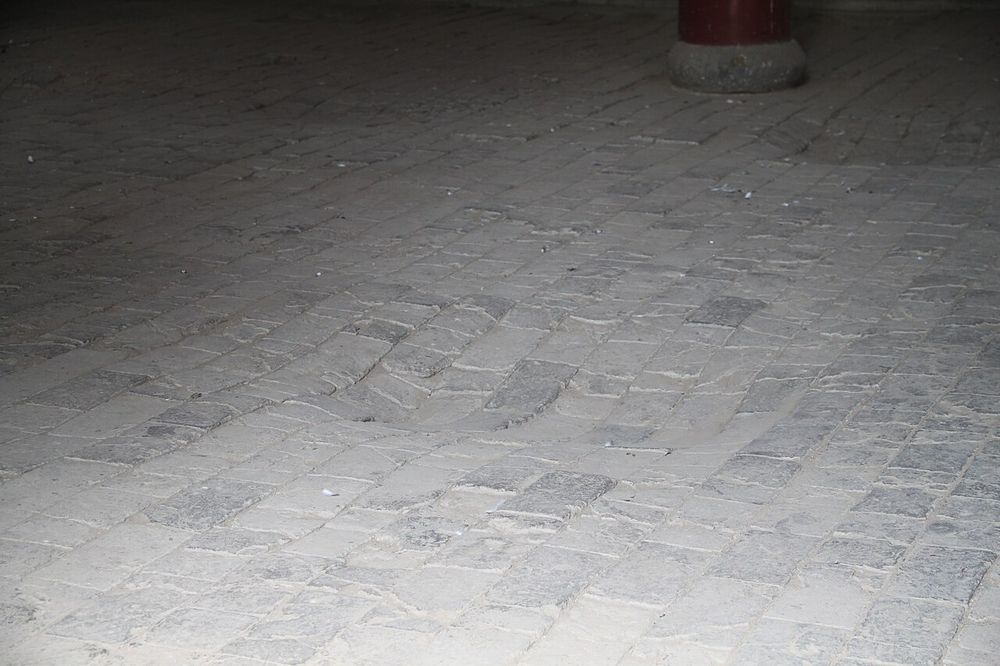
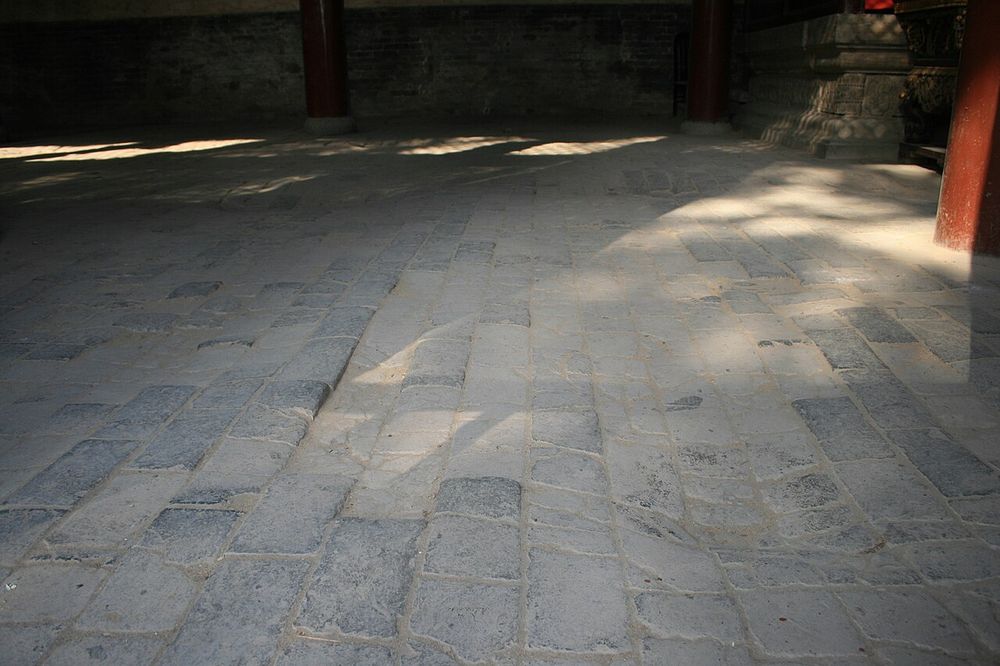
Pits worn in the floor of the Thousand Buddha Hall, 2011Gary Todd from Xinzheng, China, CC0
The last and largest hall of the monastery is the one to see. Look down: the brick floor is worn into a row of shallow pits, said to be the marks of monks stamping through their exercises over centuries. Look up: on the walls is a Ming-dynasty mural of five hundred arhats.
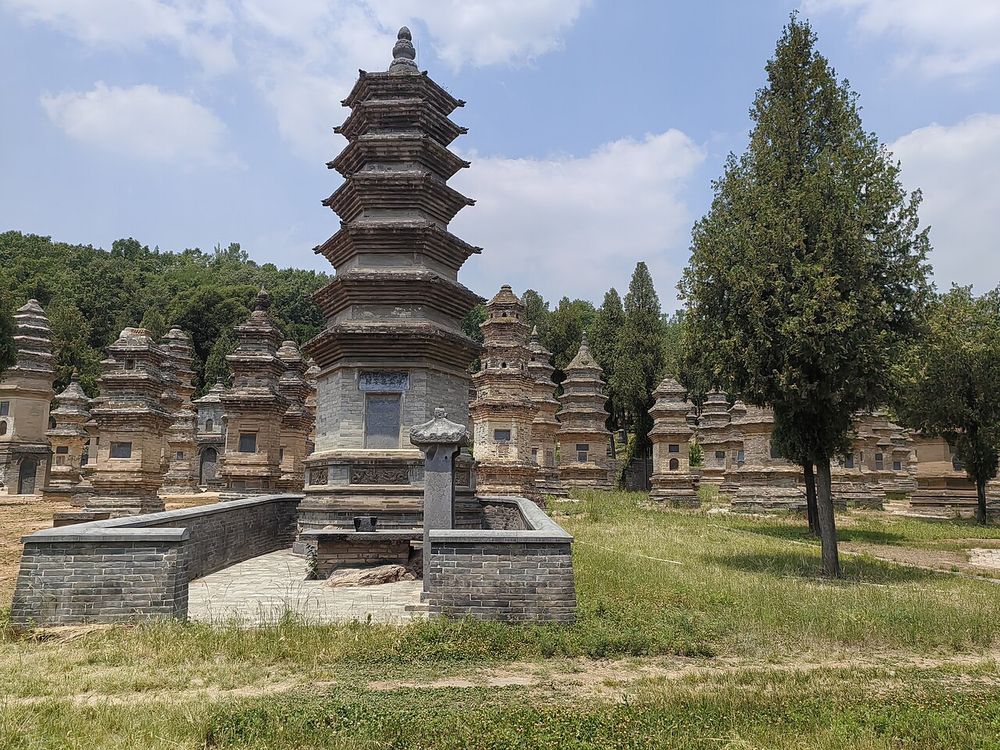
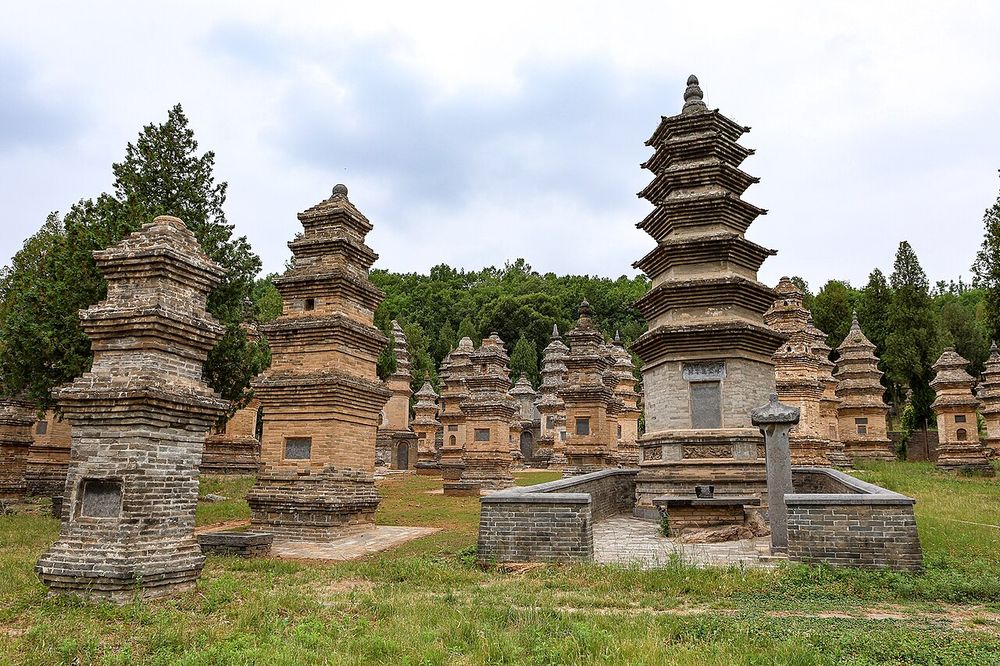
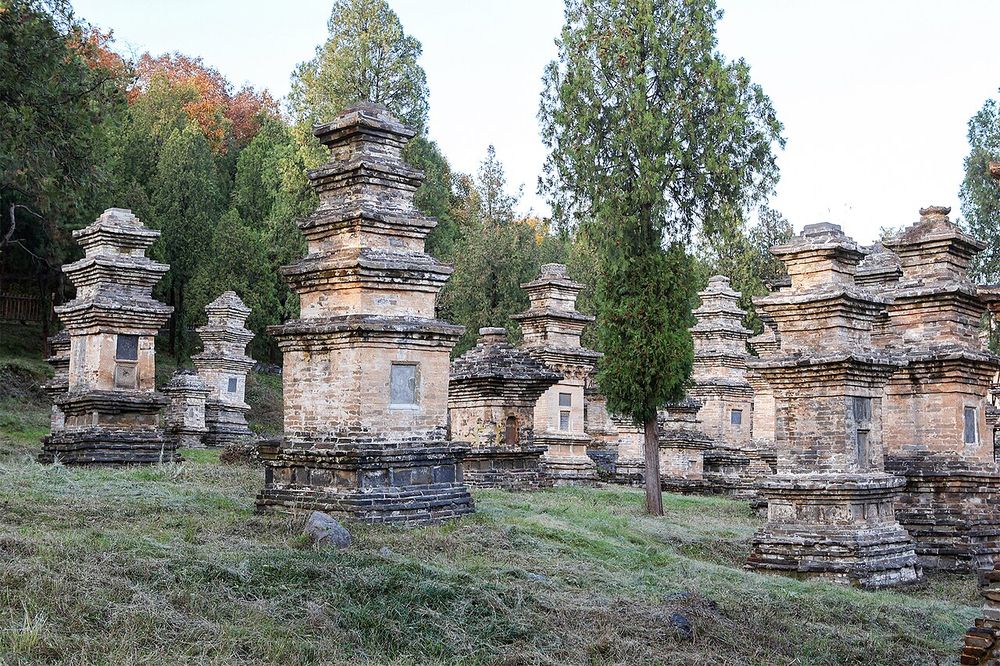
Then walk out of the back of the monastery and along the road to the Pagoda Forest, where over two hundred brick and stone pagodas, from the Tang dynasty (618–907) to today, mark the graves of Shaolin's monks. The taller the pagoda, the more respected the monk.
The Pagoda Forest, 2025Yumeto, CC BY-SA 4.0
Things people often get wrong
"Bodhidharma invented kung fu here." That story appears only in texts of the last few centuries; historians find no early record linking him to fighting. What is recorded is the monks' staff fighting, from the Ming (1368–1644) dynasty on.
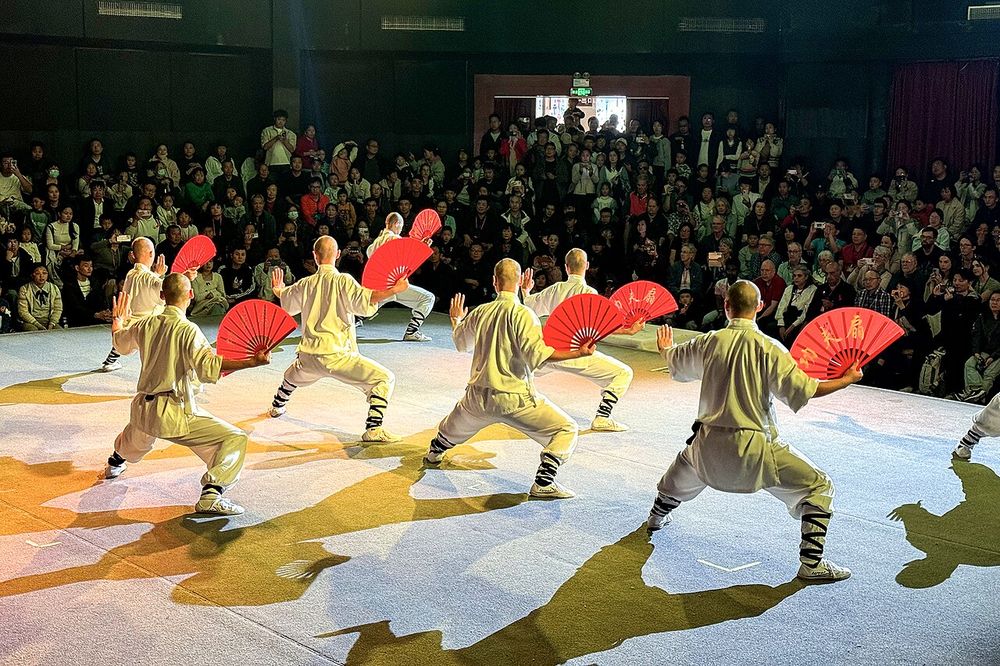
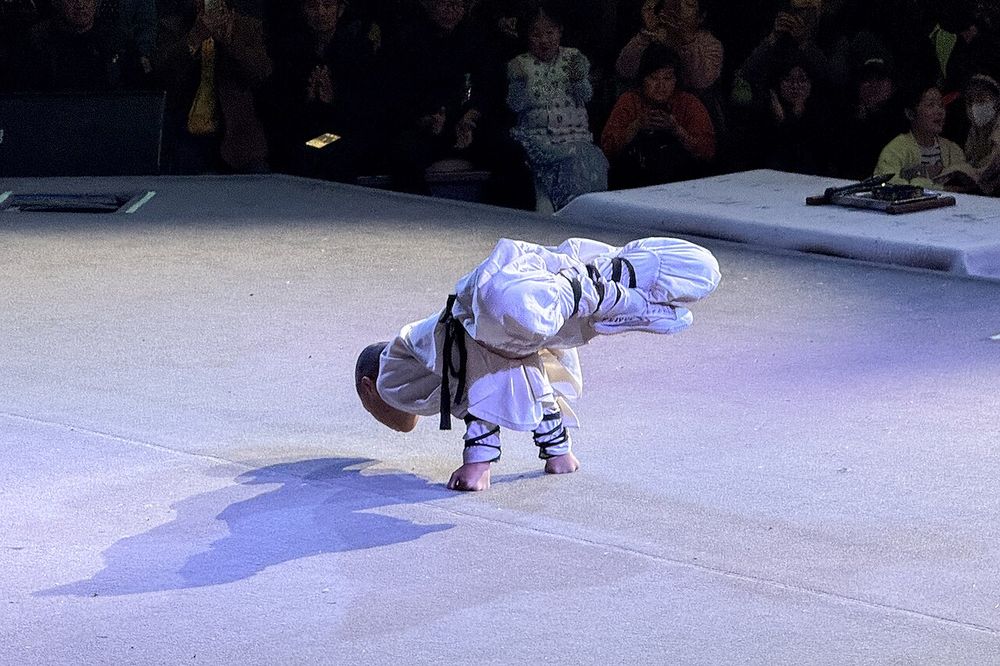
"The show is put on by monks." The daily performance near the monastery is given mostly by students of the martial arts schools of Dengfeng.
People who stood here
We searched Chinese sources first for this list, then English ones.
Batuo (monk, 5th century)The Indian monk for whom the monastery was built in 495; he was its first abbot.
Bodhidharma (monk, 5th–6th century)Honoured as the first patriarch of Chan; a cave on the hill behind the monastery and the Chuzu An hall are dedicated to his nine years of meditation.
Huike (monk, 487–593)Bodhidharma's successor, the second patriarch; the Standing in the Snow pavilion marks the story of how he won his teacher's attention.
Li Shimin (Emperor Taizong of Tang, 598–649)Helped by Shaolin monks in 621, he thanked them in a letter that is carved on the Tang stele still standing in the monastery.
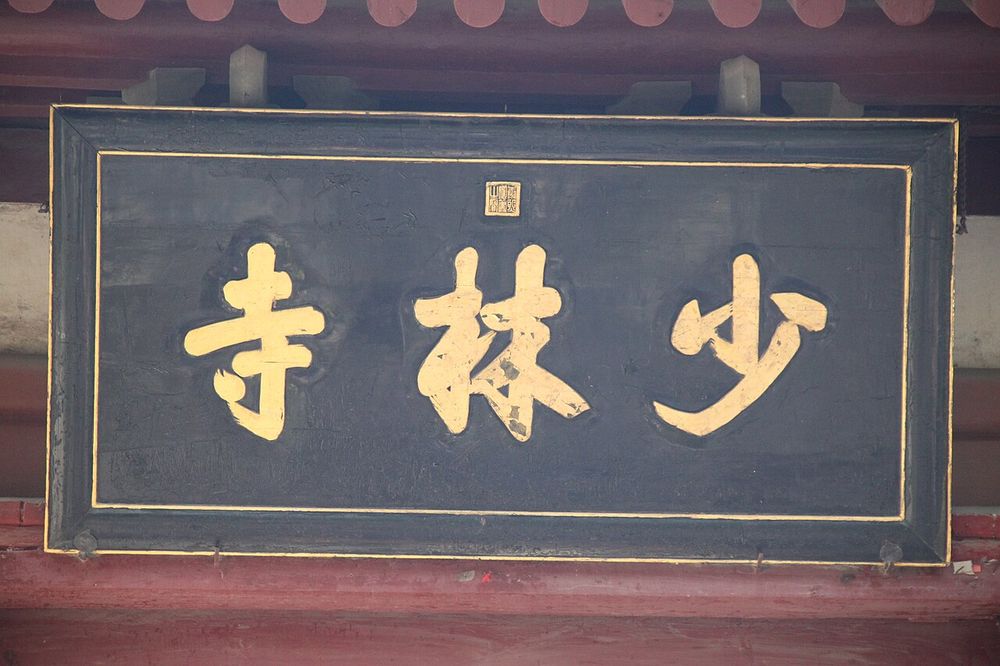
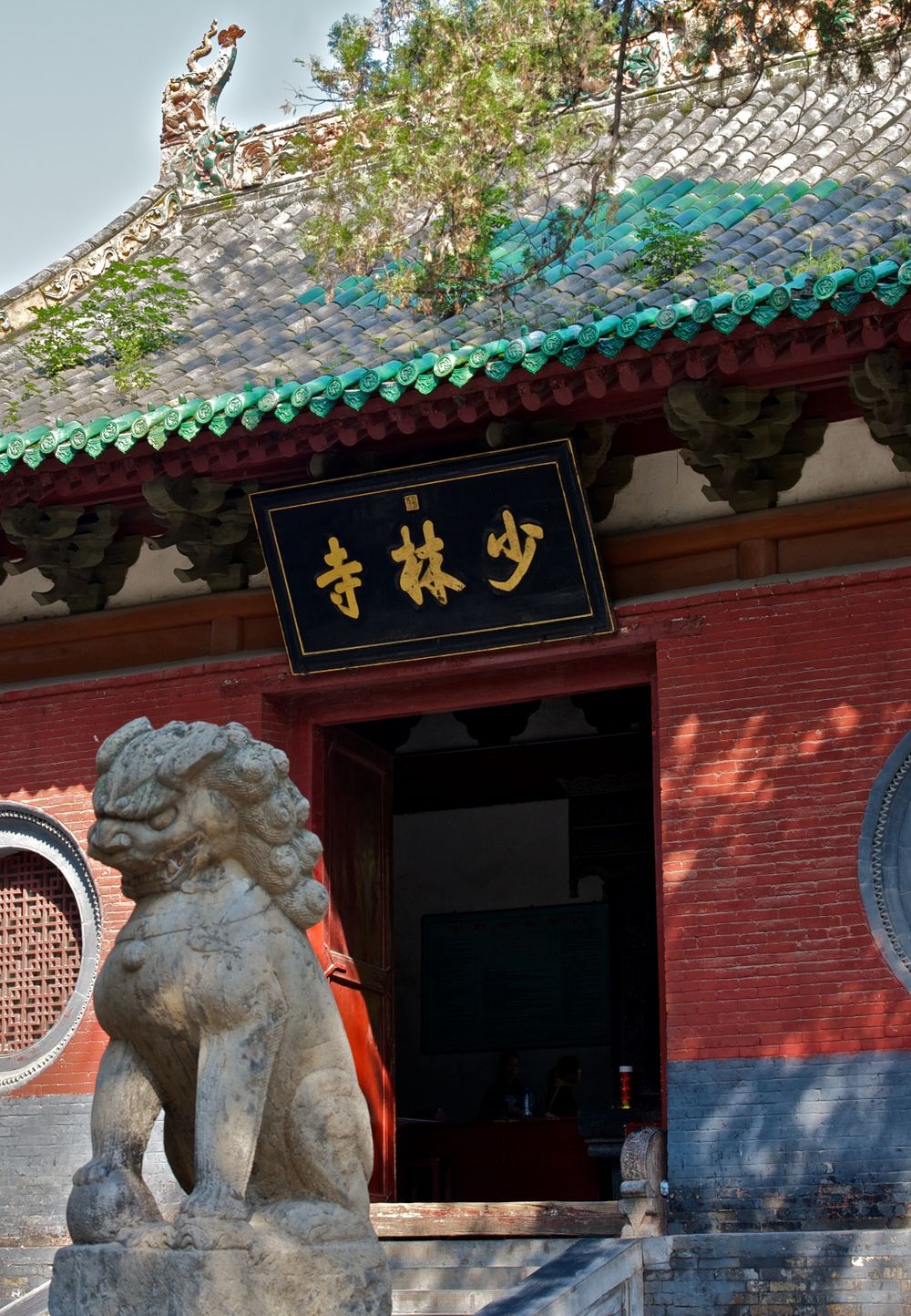
The Kangxi Emperor (1654–1722)He wrote the three characters "Shaolin Si" on the plaque over the mountain gate.
Jet Li (actor, born 1963)At eighteen he played the young monk Jueyuan in "Shaolin Temple" (1982), the first film shot at the monastery.
Go deeper: from the mountain gate to Bodhidharma's hall, seven stops8 stops · about 2 min to read
The scenic area is large: allow most of a day, and use the shuttle cars between the entrance, the monastery and the far sights.
1. The mountain gate
The mountain gate, 2024Windmemories, CC BY-SA 4.0
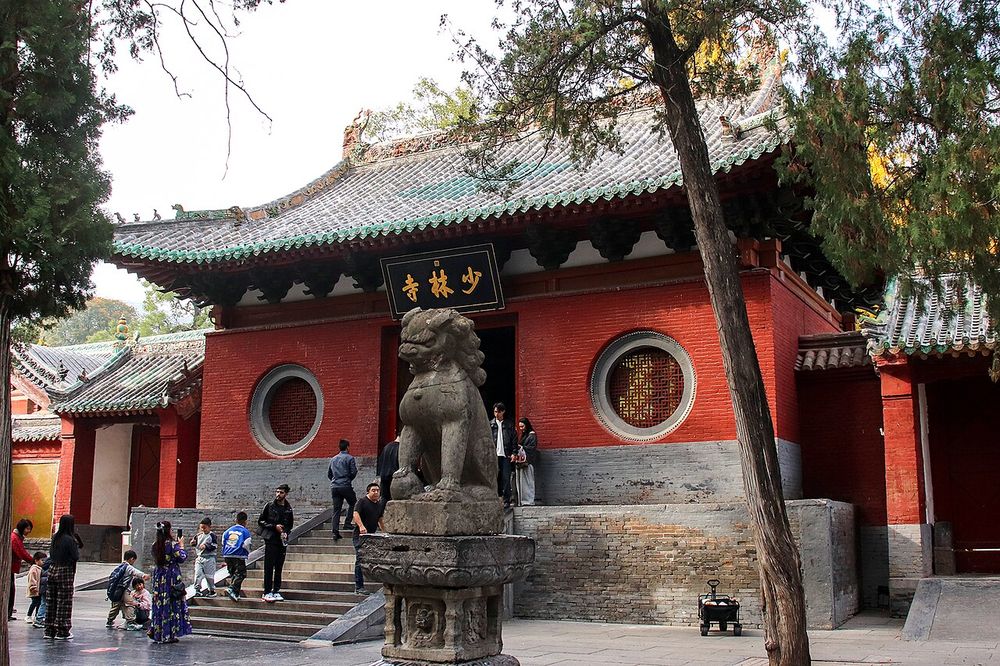
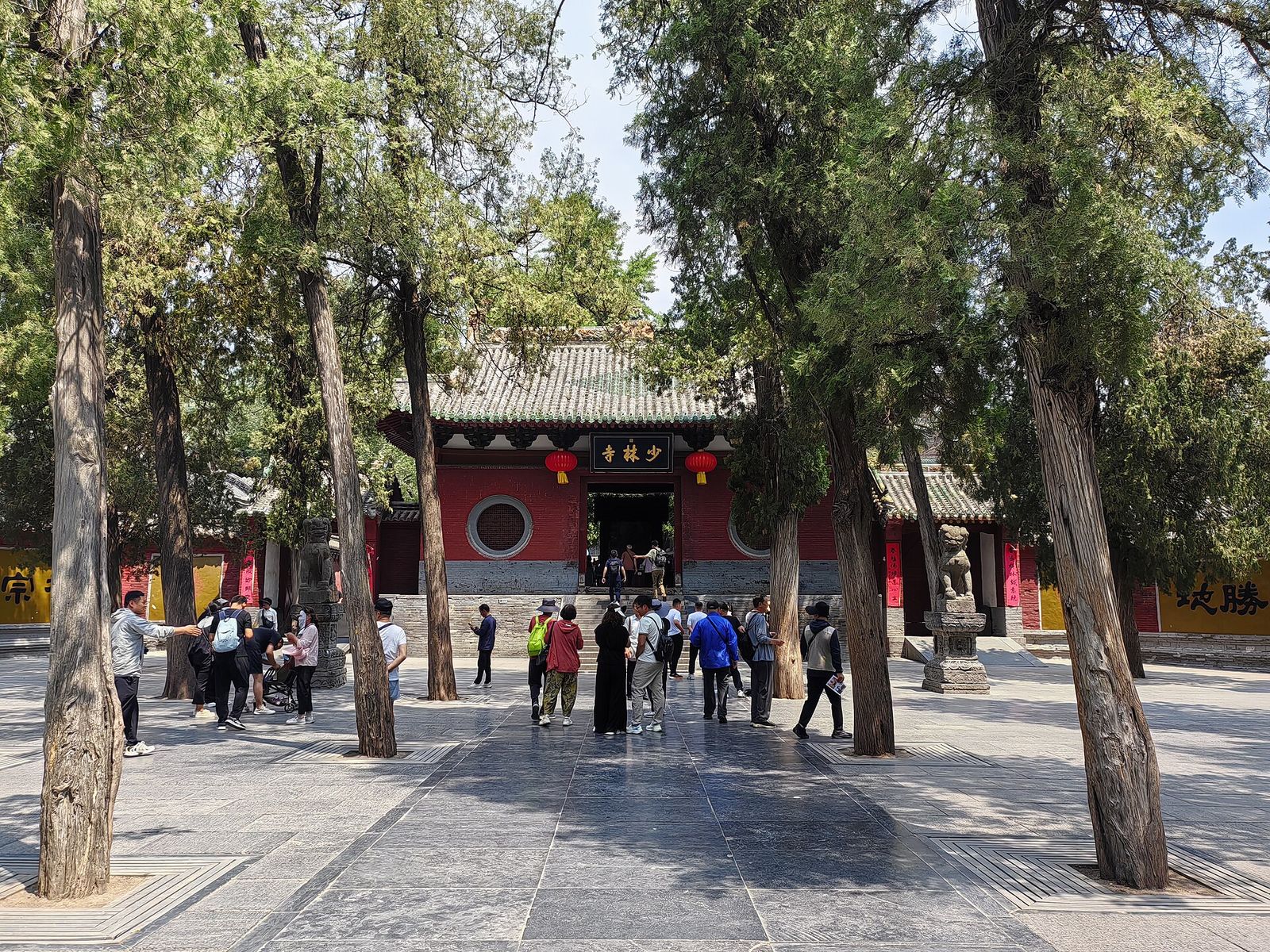
Two stone lions guard the gate; above it hangs the plaque written by the Kangxi Emperor.
The plaque written by the Kangxi EmperorGary Todd from Xinzheng, China, CC0
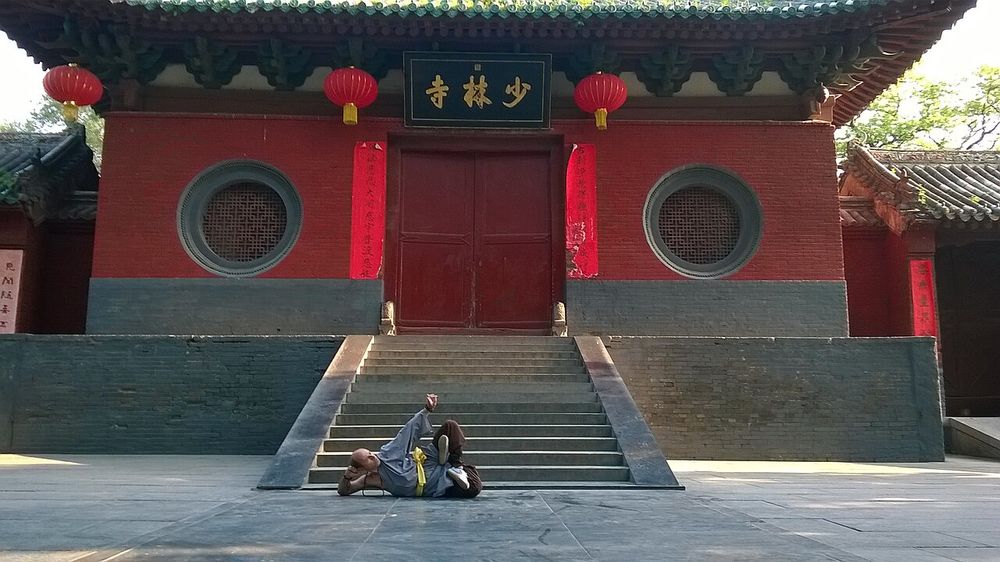
The 1982 film "Shaolin Temple" was the first to be shot at the monastery, and its gate became the picture everyone knows. Stand in the square in front of it, with the plaque and the lions in the frame, strike the young monk's pose, and you have a film-still shot of your own.
2. The stele forest
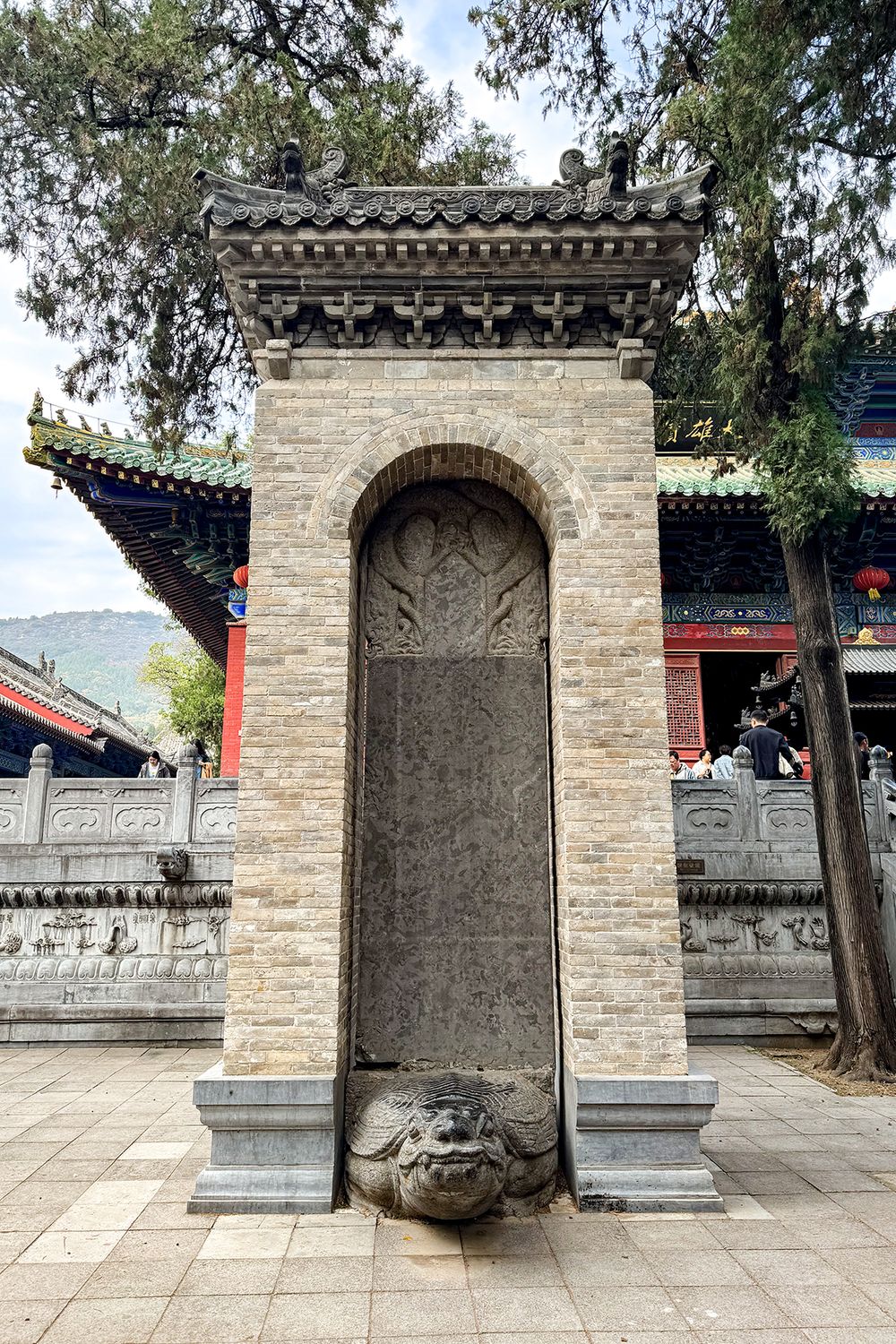
A stele on a tortoise base, 2024Windmemories, CC BY-SA 4.0
Along the first courtyard stand steles of fifteen centuries. Look for the Tang stele recording the monks' help to Li Shimin.
3. The Mahavira Hall
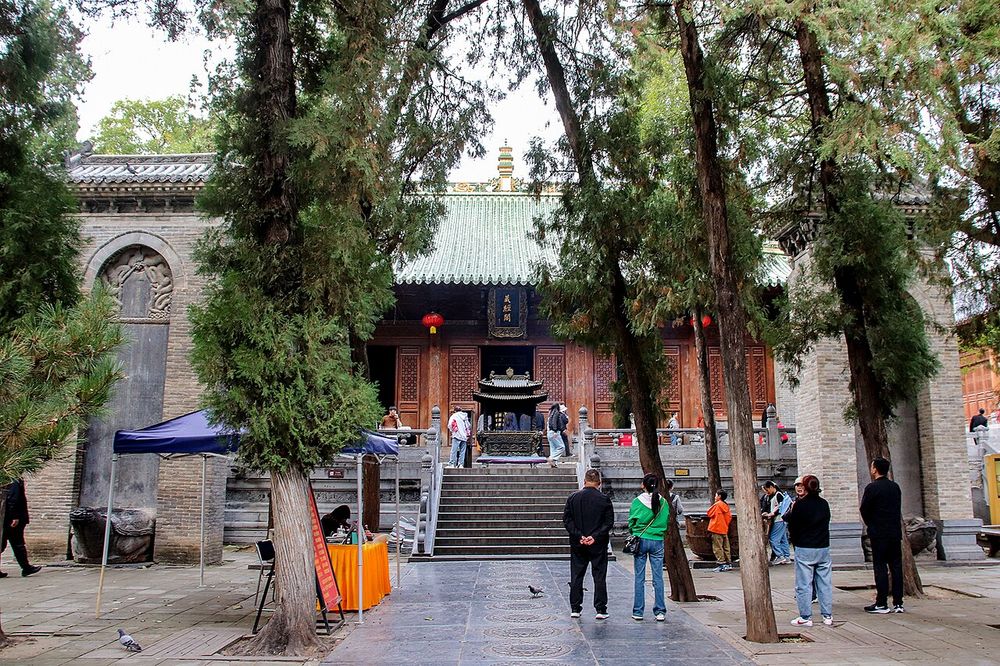
The Mahavira Hall, 2024Windmemories, CC BY-SA 4.0
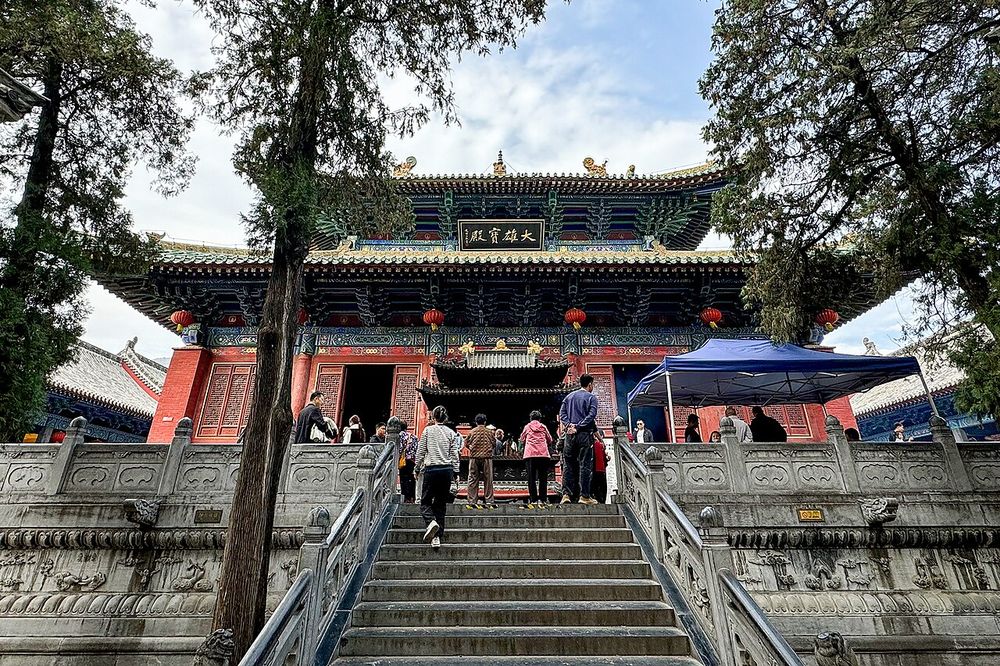
Rebuilt after the fire of 1928, the main hall holds the Buddhas of the past, present and future.
4. The Standing in the Snow pavilion
The Standing in the Snow pavilion, 2024Windmemories, CC BY-SA 4.0
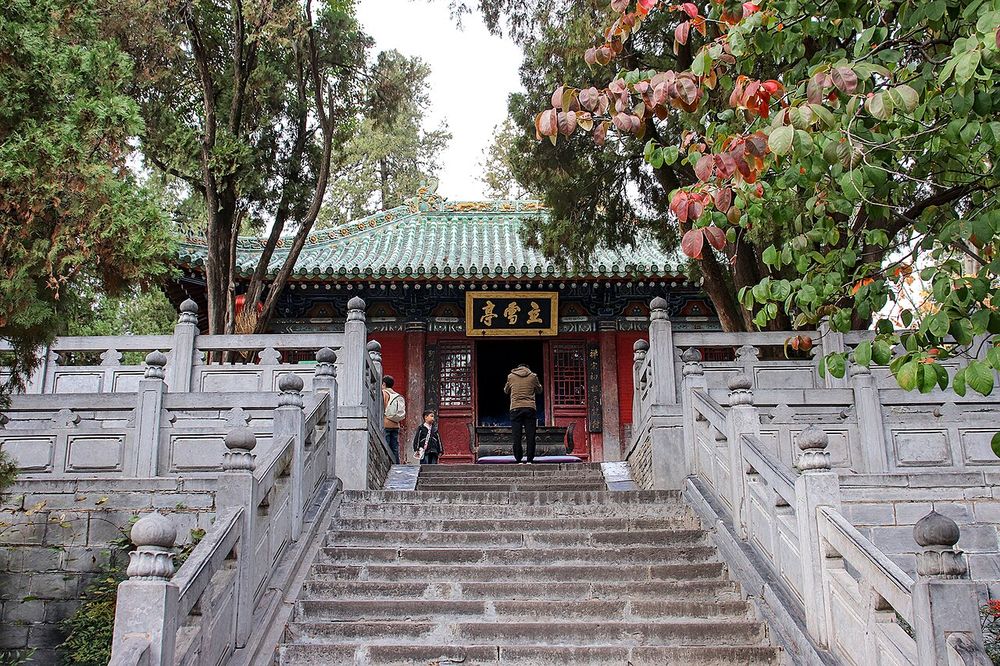
The hall commemorates Huike, who is said to have stood all night in the snow outside Bodhidharma's cave and then cut off his own arm to prove his resolve.
5. The Thousand Buddha Hall
The floor of the Thousand Buddha Hall, 2007Gary Todd from Xinzheng, China, CC0
The worn pits in the floor and the mural of five hundred arhats; the hall is the oldest large building of the monastery to survive the fire.
6. The Pagoda Forest
Pagodas of different dynasties, 2025Windmemories, CC BY-SA 4.0
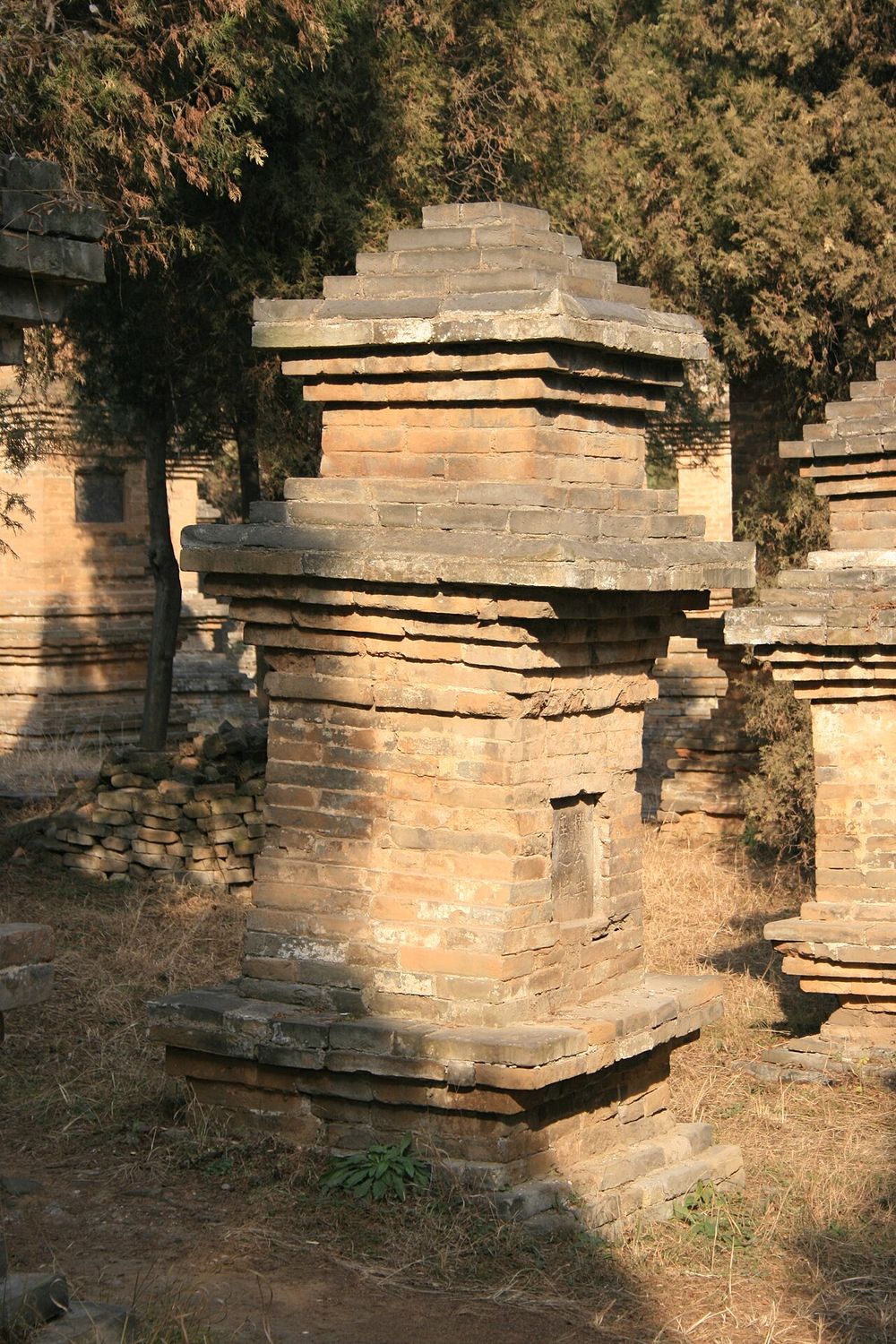
About 230 grave pagodas of seven dynasties, the largest group of its kind in China. Some carry carvings of the monk's life; a few modern ones even show a train or an airliner.
An old brick pagoda, 2007Gary Todd from Xinzheng, China, CC0
7. Chuzu An, the hall of the First Patriarch
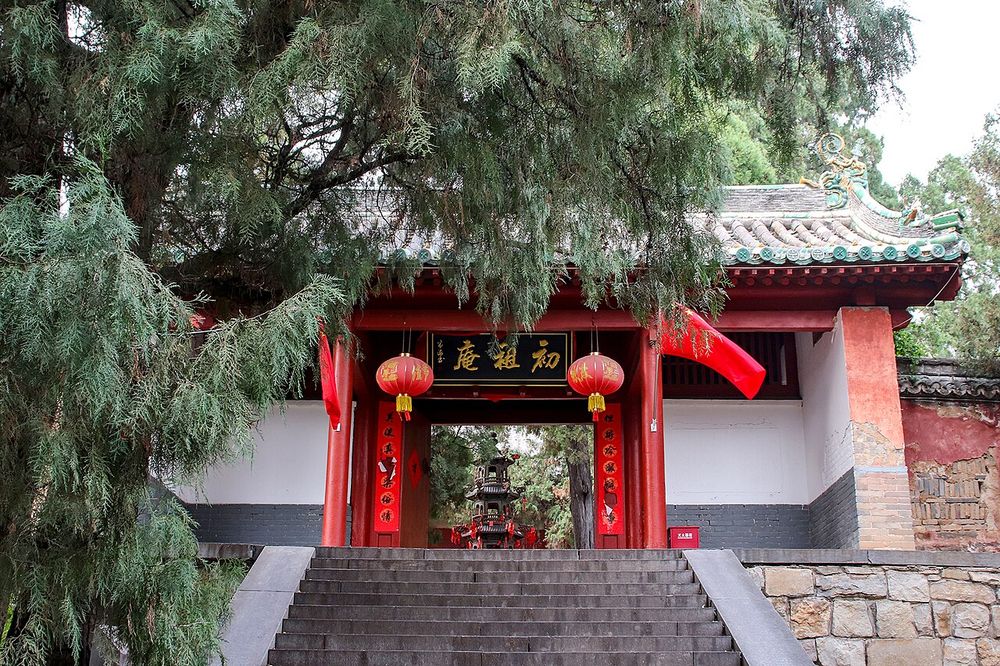
The gate of Chuzu An, 2024Windmemories, CC BY-SA 4.0
A short climb north-west of the monastery, a small hall built in 1125 in memory of Bodhidharma. It is one of the oldest wooden buildings in Henan, with carved stone pillars of the Song dynasty (960–1279). Above it is the cave where he is said to have meditated.
The monastery and the same years elsewhere
When the Kangxi Emperor wrote the plaque in 1704, British and Dutch forces were taking Gibraltar from Spain.
Meanwhile in the world
Year
Here
Elsewhere
495
Emperor Xiaowen founds Shaolin for the Indian monk Batuo
Clovis, king of the Franks, is baptised the next year (496)
621
Shaolin monks help Li Shimin and are given land
Muhammad leaves Mecca for Medina the next year (622)
1704
The Kangxi Emperor writes the plaque over the gate
British and Dutch forces take Gibraltar
1928
A warlord's troops burn much of the monastery
Alexander Fleming discovers penicillin
2010
Listed as a World Heritage Site with the monuments of Dengfeng
An Icelandic volcano grounds flights across Europe
One line to remember: a monastery in a forest where Zen found its first home and monks practised fighting until the name itself meant kung fu.
The monastery and the pagoda forest
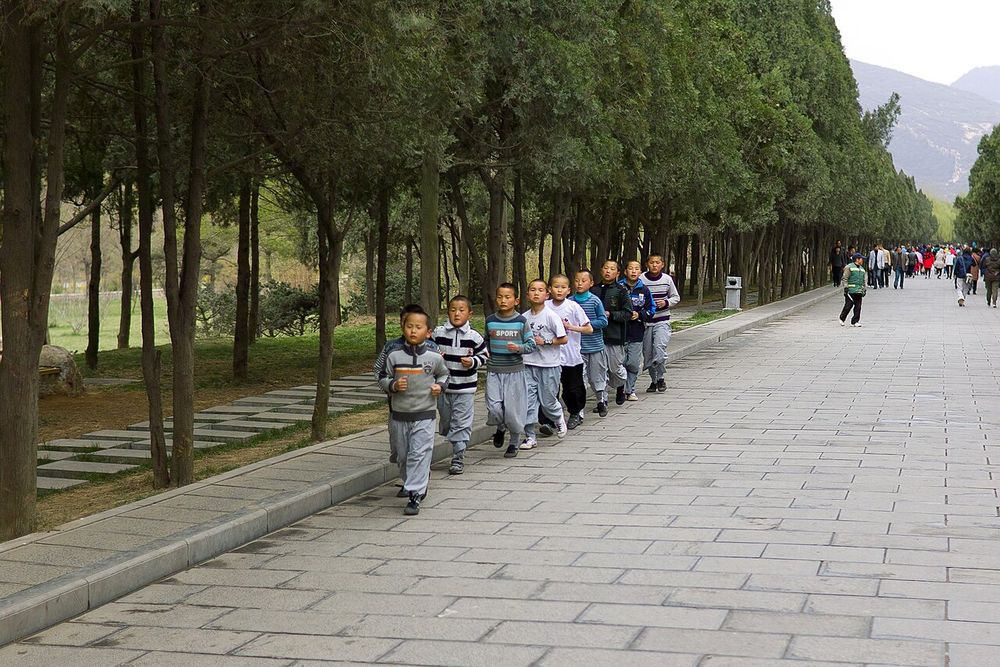
The approach to the monastery, 2025Yumeto, CC BY-SA 4.0, Wikimedia CommonsThe mountain gate, 2024Windmemories, CC BY-SA 4.0, Wikimedia CommonsThe plaque written by the Kangxi EmperorGary Todd from Xinzheng, China, CC0, Wikimedia CommonsA stone lion at the gate, 2011kevinmcgill from Den Bosch, Netherlands, CC BY-SA 2.0, Wikimedia CommonsPractising on the steps of the gate, 2017Gusmilazzo, CC BY-SA 4.0, Wikimedia CommonsThe heritage marker, 2024Windmemories, CC BY-SA 4.0, Wikimedia CommonsRoof ridges with glazed tiles, 2019xiquinhosilva, CC BY 2.0, Wikimedia CommonsHalls among the treesJuliane89, CC BY-SA 4.0, Wikimedia CommonsThe Hall of the Heavenly Kings in autumn, 2024Windmemories, CC BY-SA 4.0, Wikimedia CommonsThe Hall of the Heavenly Kings, 2006Gary Todd from Xinzheng, China, CC0, Wikimedia CommonsThe Mahavira Hall, 2024Windmemories, CC BY-SA 4.0, Wikimedia CommonsVisitors before the Mahavira Hall, 2006Don-kun, CC BY-SA 3.0, Wikimedia CommonsThe Mahavira Hall, 2007Gary Todd from Xinzheng, China, CC0, Wikimedia CommonsA stele on a tortoise base, 2024Windmemories, CC BY-SA 4.0, Wikimedia CommonsAnother stele of the courtyard, 2024Windmemories, CC BY-SA 4.0, Wikimedia CommonsThe Depository of Sutras, 2024Windmemories, CC BY-SA 4.0, Wikimedia CommonsThe steps to the Depository of Sutras, 2011Gary Todd from Xinzheng, China, CC0, Wikimedia CommonsThe Abbot's Hall, 2013Robinlun, CC BY-SA 3.0, Wikimedia CommonsThe Standing in the Snow pavilion, 2024Windmemories, CC BY-SA 4.0, Wikimedia CommonsPits worn in the floor of the Thousand Buddha Hall, 2011Gary Todd from Xinzheng, China, CC0, Wikimedia CommonsThe floor of the Thousand Buddha Hall, 2007Gary Todd from Xinzheng, China, CC0, Wikimedia CommonsA stone basin in a courtyard, 2010thierrytutin, CC BY 2.0, Wikimedia CommonsGinkgo trees in autumn, 2024Windmemories, CC BY-SA 4.0, Wikimedia CommonsThe bell tower behind a ginkgo, 2024Windmemories, CC BY-SA 4.0, Wikimedia CommonsGinkgo leaves before a hall plaque, 2024Windmemories, CC BY-SA 4.0, Wikimedia CommonsThe Pagoda Forest, 2025Yumeto, CC BY-SA 4.0, Wikimedia CommonsPagodas of different dynasties, 2025Windmemories, CC BY-SA 4.0, Wikimedia CommonsPagodas among cypresses, 2025Windmemories, CC BY-SA 4.0, Wikimedia CommonsThe Pagoda Forest in autumn, 2025Windmemories, CC BY-SA 4.0, Wikimedia CommonsAn old brick pagoda, 2007Gary Todd from Xinzheng, China, CC0, Wikimedia CommonsThe gate of Chuzu An, 2024Windmemories, CC BY-SA 4.0, Wikimedia CommonsThe Song-dynasty hall of Chuzu An, 2024Windmemories, CC BY-SA 4.0, Wikimedia CommonsStudents running along the avenue, 2010thierrytutin, CC BY 2.0, Wikimedia CommonsA kung fu show, 2024Windmemories, CC BY-SA 4.0, Wikimedia CommonsA performer in the show, 2024Windmemories, CC BY-SA 4.0, Wikimedia Commons
Local legends
These are stories people tell about this place. They are legends, not history, and each one says where it comes from.
LegendNine years facing the wall
Bodhidharma sat facing the rock wall of his cave for nine years, until, it is said, his shadow was printed on the stone. A "shadow stone" was kept in the monastery for centuries.
Source: Told in Chan histories from the Song dynasty on
LegendHuike in the snow
Huike stood all night in the snow outside the cave; when Bodhidharma said he would teach him only when red snow fell, Huike cut off his arm.
Source: From the "Jingde Record of the Transmission of the Lamp" (1004)
Later, people who live here will be able to add the stories they grew up with, and say which of these they have heard.
Not certain, and where accounts conflict
Did Bodhidharma teach fighting?
The earliest texts on Bodhidharma say nothing about fighting; the link appears in manuals of the 17th century and later. Historians such as Meir Shahar trace Shaolin fighting to the monks' own history, not to him.
The thirteen staff monks
The Tang stele records monks helping Li Shimin and names several of them; the number thirteen and the scene of the rescue come from later retellings and the film.
Visiting
Tickets and hours
80 yuan, open daily about 8:00 to 17:00 (16:30 in winter in some guides). Over-60s, children under 6 and disabled visitors enter free with ID, but still book.
Kung fu shows are given several times a day, usually around 10:30, 11:30, 14:00 and 15:00.
Last checked 2026-11-12. Ticket price and what it covers from 2025–2026 guides (Ctrip, Dahe Piao, Maigoo); online booking rule announced by the scenic area in July 2025.
Booking without WeChat
Official page in English Tickets must be booked online in advance, with real names; the scenic area announced this for all visitors from 31 July 2025. Booking is through its official WeChat account and the big Chinese travel platforms.
International booking platform Ctrip (Trip.com) sells the 80-yuan ticket and combinations with the evening show and cable cars.
Note Foreign visitors book with a passport number and bring the passport.
Checked 2026-11-12
Where to start
Walk from the entrance past the Martial Arts Hall to the mountain gate, then through the monastery and out to the Pagoda Forest.
If you have time, climb to Chuzu An in the quiet hills, which most groups skip.
Before you go
Shaolin is about 80 km from Zhengzhou and 13 km north-west of Dengfeng town; buses run from both.
Wear good shoes; the area is spread out and the paths to the caves are steep.
Customs and manners
This is a working monastery: do not photograph monks at prayer without asking, and keep quiet in the halls.
Step over, not on, the thresholds of the halls; do not climb the pagodas.
Opening hours are given in the local time of the place. Prices are in the local currency. The figure after ≈ is approximate, at exchange rates checked on 9 November 2026, in .
Look for these
In the Thousand Buddha Hall, find the pits in the floor.
In the Pagoda Forest, find the tallest pagoda and the one with the most carving.
At the gate, find the Kangxi Emperor's seal on the plaque.
I am here
Stand at the site, sign in, press the button, and collect its stamp. Your browser will ask to use your location. It is sent to us once to confirm that you are at the site; we keep how far you were from it, not the spot where you stood.
Your stamps are saved to your account, so they follow you to any device. Checking from a browser cannot rule out every false location; stricter checks arrive with the app.
Messages
Share your photos
Photos here show the place, not people. Each one is credited to the visitor who took it and appears after our team has looked at it. A photo with you in it belongs under “I am here”.