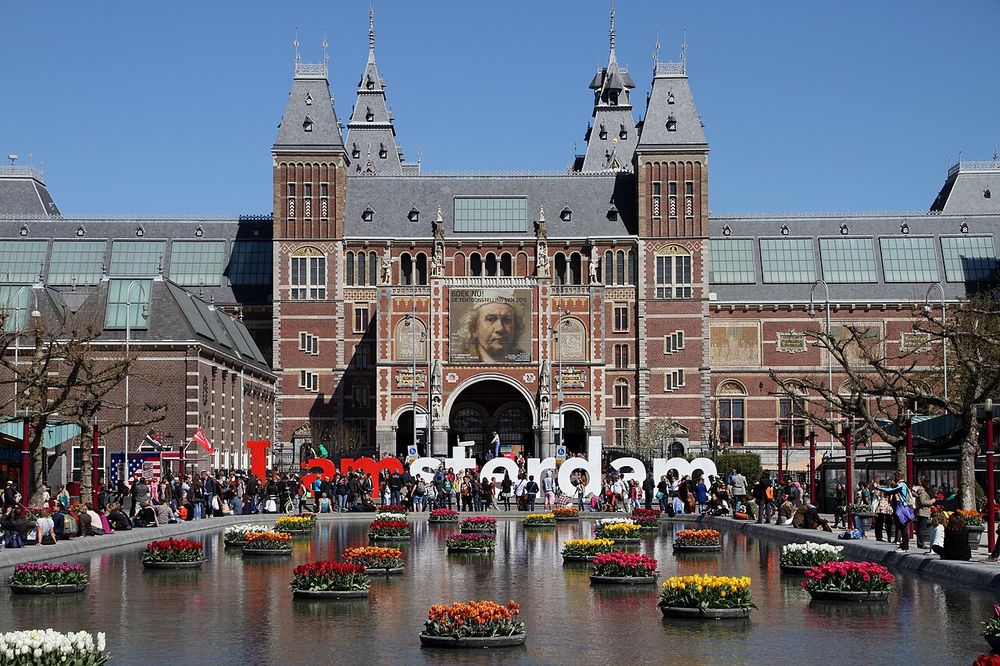
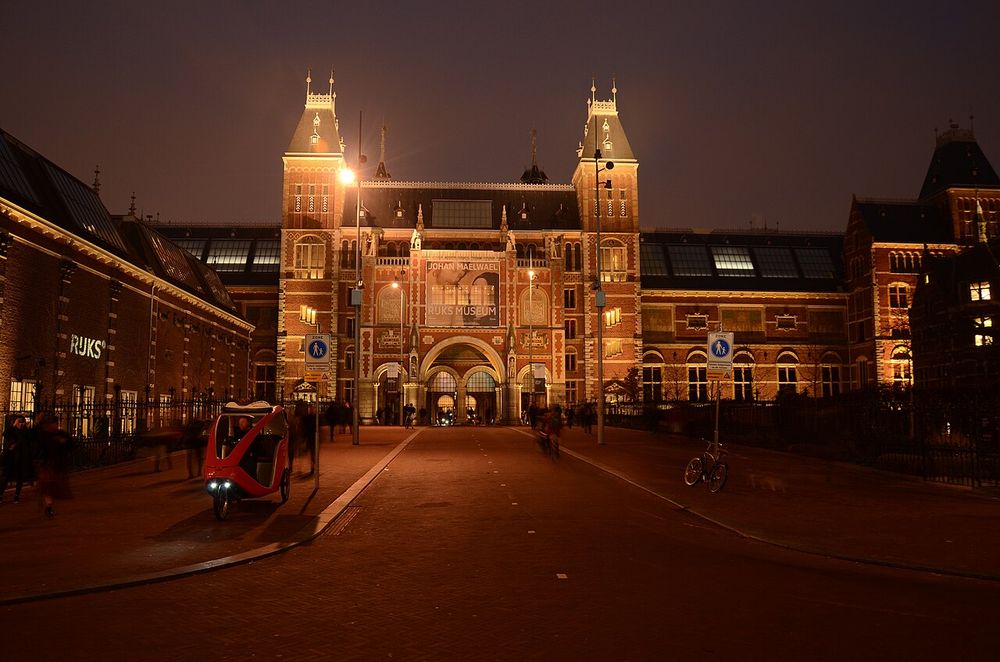
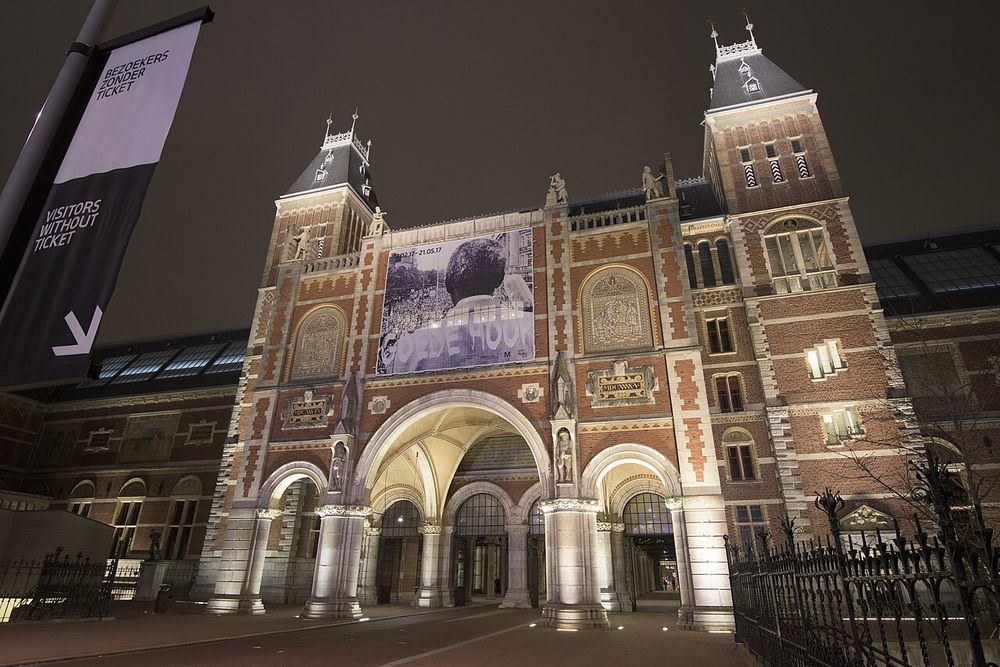
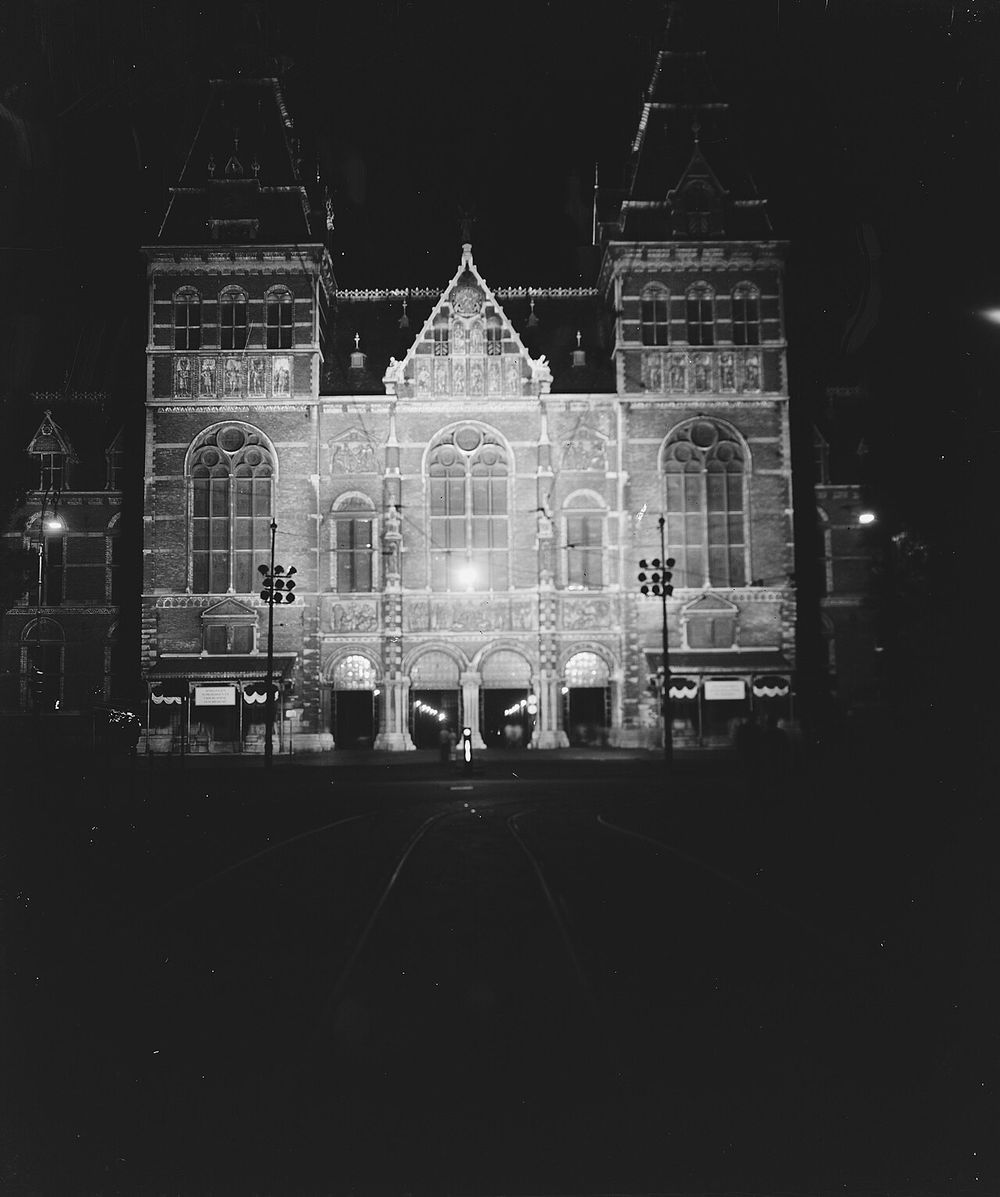
The national museum of the Netherlands, in a red-brick palace of 1885 with a public road running through the middle of it. Inside are Rembrandt's Night Watch, four Vermeers, a doll's house that cost as much as a real one, and eight hundred years of a small country that once traded with half the world.
Photo: Diego Delso, CC BY-SA 4.0, Wikimedia Commons
The story
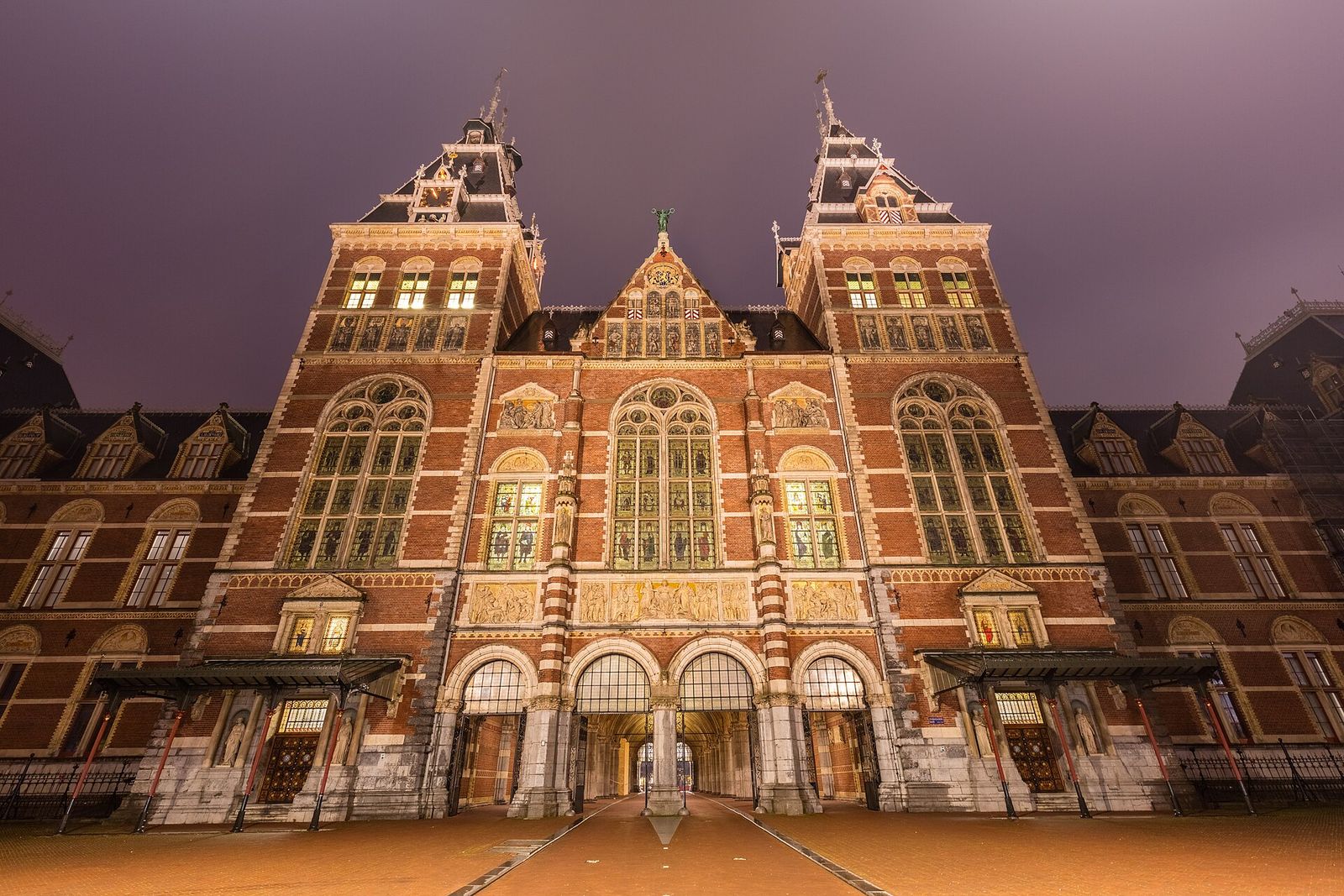
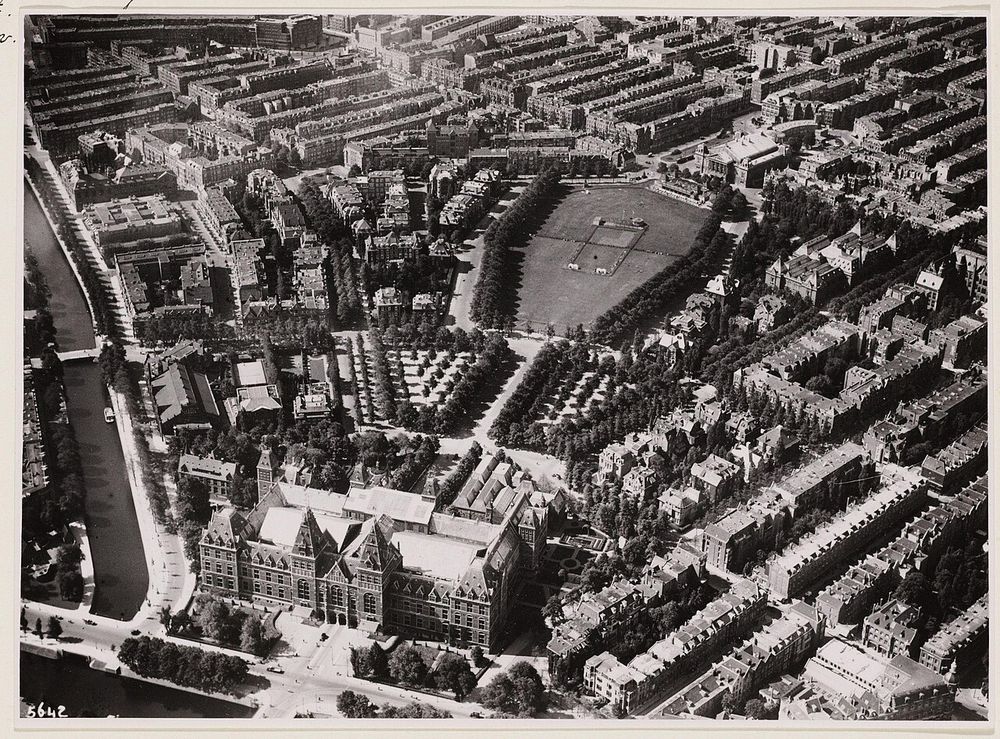
The building looks like a cathedral, and that was the trouble. Its architect, Pierre Cuypers, was a Catholic who built churches. When it opened on 13 July 1885, many in this Protestant country thought it far too Catholic for a national museum.
Through its middle runs an arched passage, a public road for cyclists. During the rebuilding of 2003–2013 the architects wanted to close it for a new entrance. Amsterdam's cyclists fought them for years, and won. The bicycles still ring their way under the museum.
What is here
One ticket with a timed start covers the whole collection. The garden and the cyclists' passage are free.
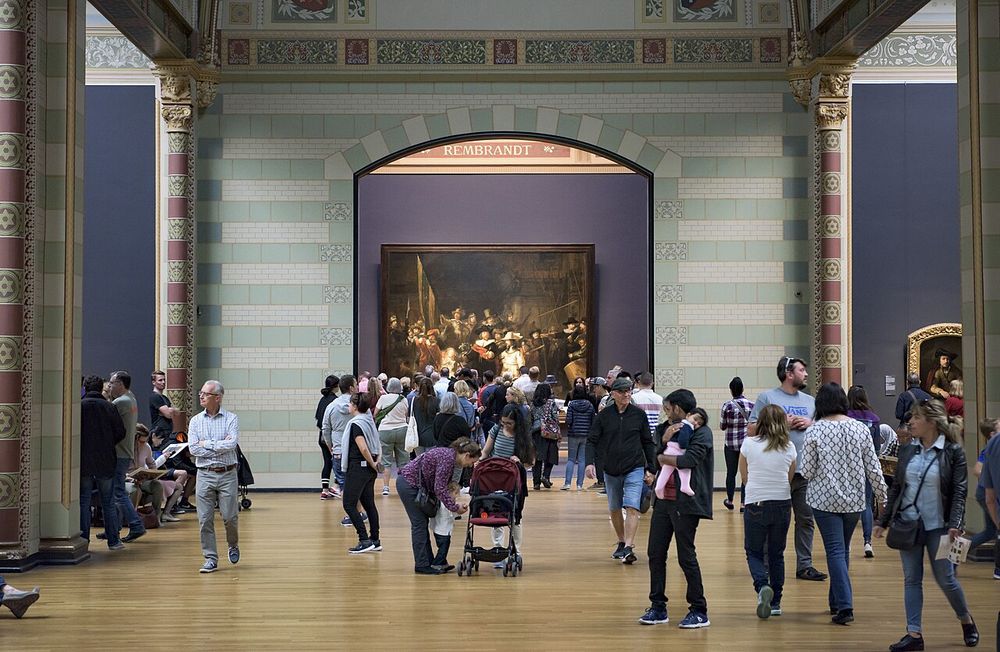
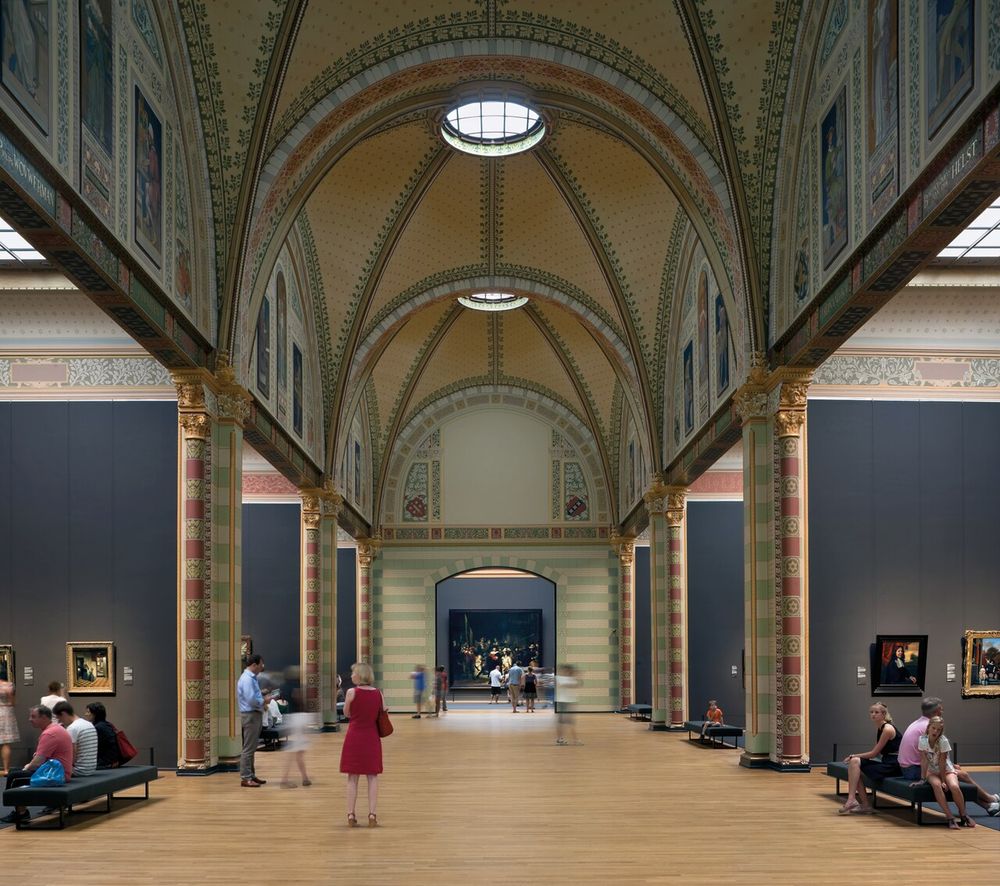
The Gallery of Honour with The Night Watch at the endHnapel, CC BY-SA 4.0
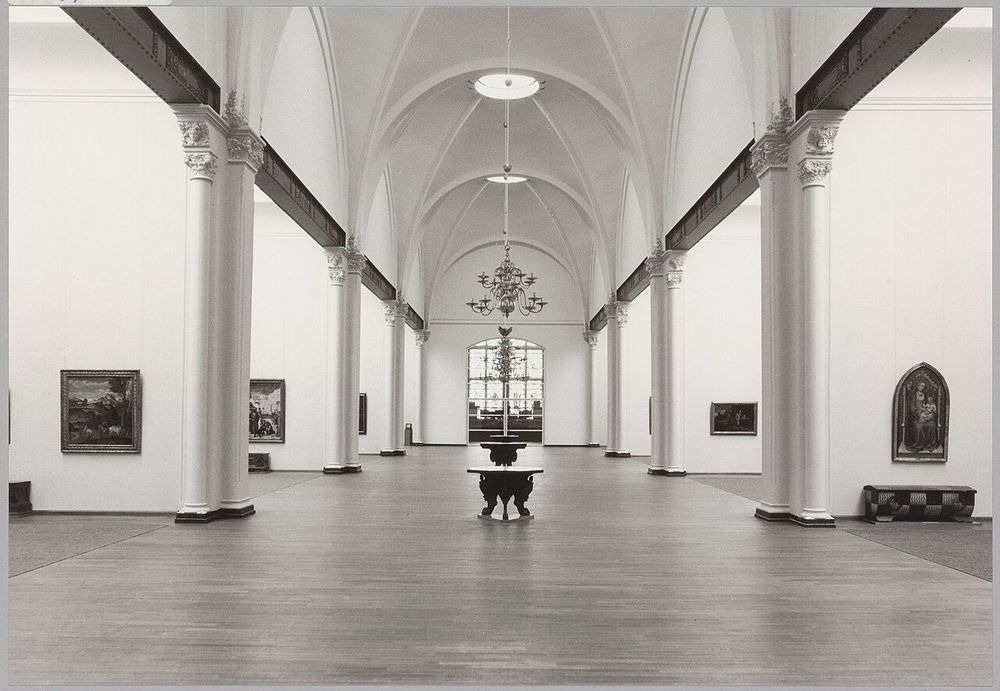
Go up to the second floor and walk the long hall. The side bays hold the Golden Age, the seventeenth century, when the Dutch Republic was the richest trading nation on earth. At the far end hangs The Night Watch.
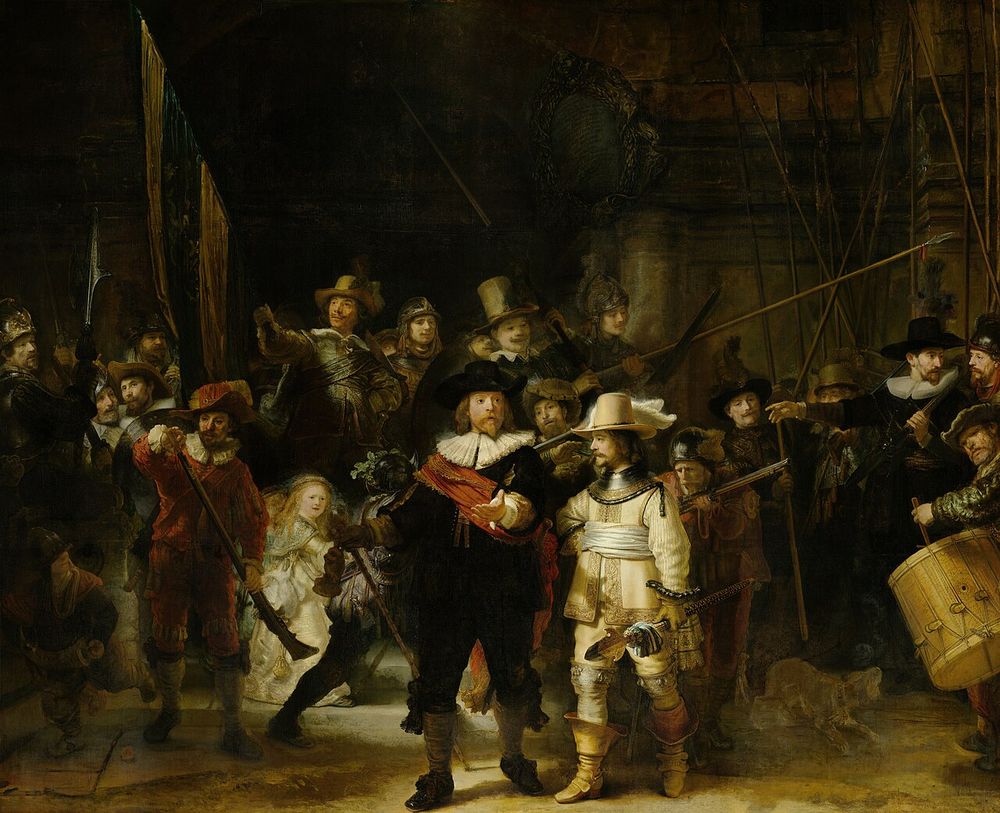
Rembrandt, The Night Watch, 1642Rembrandt, Public domain
Rembrandt finished it in 1642 for the hall of a civic guard company. It is nearly four and a half metres wide. It is not a night scene. The name was given much later, when old varnish had turned it dark.
Since 2019 the painting has been studied and restored in a glass room, in front of visitors. If the glass room is there when you come, you may see someone at work on it.
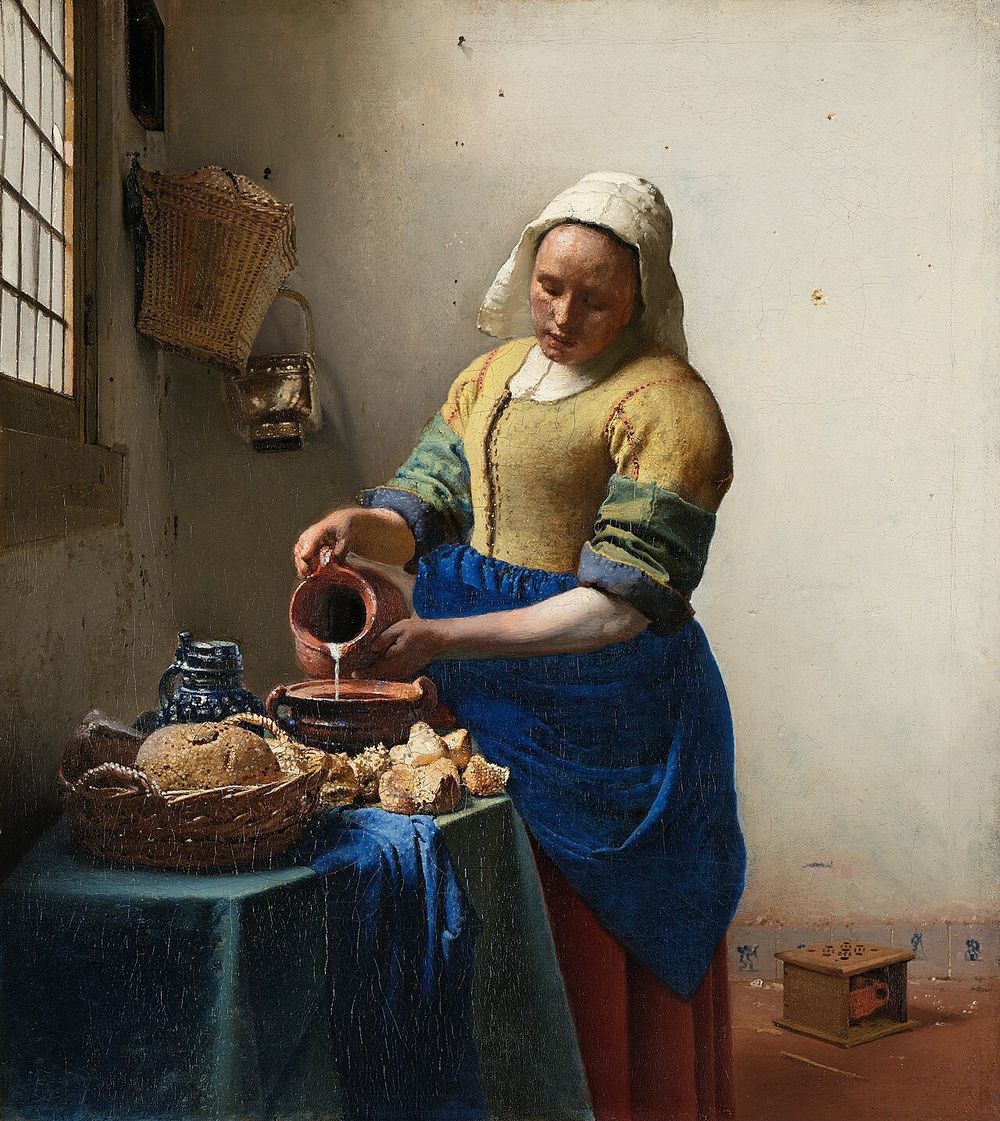
Vermeer, The Milkmaid, about 1660Johannes Vermeer, Public domain
Before you reach it, look in the bays on the left for a small picture of a maid pouring milk. Vermeer painted it about 1660. The bread on the table is made of tiny dots of light.
Things people often get wrong
"The Night Watch is a night scene." It shows a company marching out in daylight. Cleaning in 1946–47 brought back much of the light.
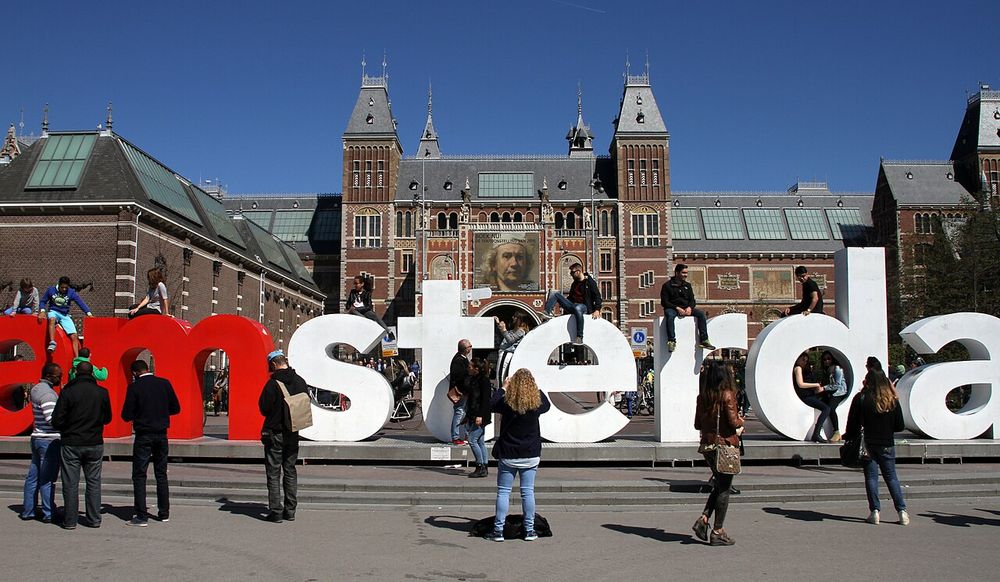
"The big I amsterdam letters are in front of the museum." They were, from 2004. The city took them away in December 2018, saying they had become a symbol of mass tourism.
"The Van Gogh paintings are here." Almost all are at the Van Gogh Museum, a five-minute walk across the square. The Rijksmuseum has a self-portrait and a few others.
"It is only paintings." It holds about a million objects, including ship models, weapons, silver, Delft pottery, a Japanese temple's guardians, and the doll's house.
People who stood here
We searched Dutch and English sources for this list.
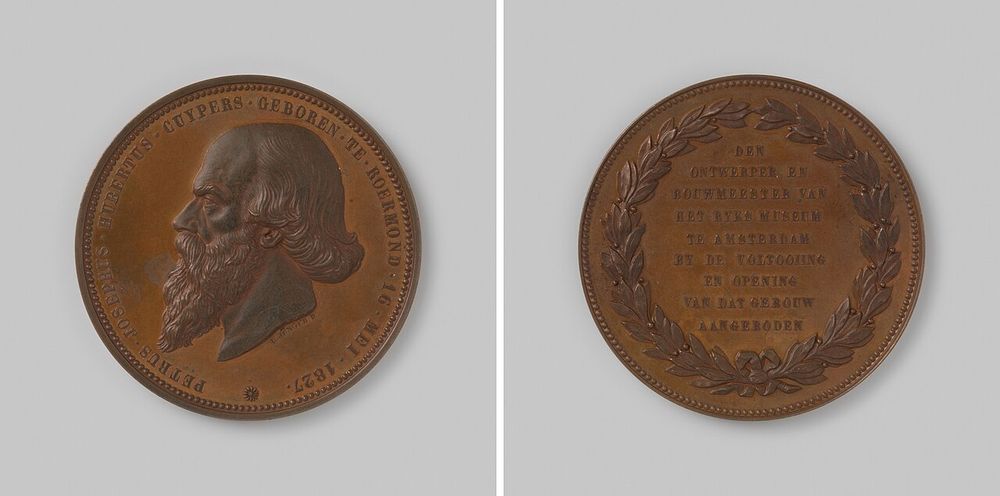
Pierre Cuypers (Dutch architect, 1827–1921)He designed the museum and, four years later, Amsterdam Central Station, which looks like its brother. He lived to ninety-four and saw his building become loved.
Rembrandt van Rijn (Dutch painter)He never saw this building. Three of his greatest works hang here: The Night Watch, The Jewish Bride, and the Syndics of the Drapers' Guild.
Vincent van Gogh (Dutch painter)In October 1885, three months after the museum opened, he came here and sat a long time in front of Rembrandt's Jewish Bride. His friend Anton Kerssemakers remembered him saying he would give ten years of his life to sit before it for a fortnight with only a crust of dry bread.
Louis Bonaparte (Napoleon's brother, King of Holland)In 1808 he made Amsterdam his capital and brought the national collection here from The Hague. That was how the museum came to Amsterdam.
Queen Beatrix of the NetherlandsOn 13 April 2013 she reopened the museum after ten years of rebuilding. It was one of her last public acts as queen; she gave up the throne seventeen days later.
Barack Obama (president of the United States)On 24 March 2014 he and the Dutch prime minister spoke to the press standing in front of The Night Watch. He joked that it was not every day one held a press conference in front of a Rembrandt.
Jessie Burton (British novelist)She saw Petronella Oortman's doll's house here in 2009, and wrote The Miniaturist, a bestseller of 2014, around it.
Go deeper: eight stops, from the bicycle passage to the doll's house
The museum is big. These eight stops take about two and a half hours. Start in the atrium, go to the top floor, and come down.
1. The passage and the atrium
The atrium and its chandeliersVasyatka1, CC BY-SA 4.0
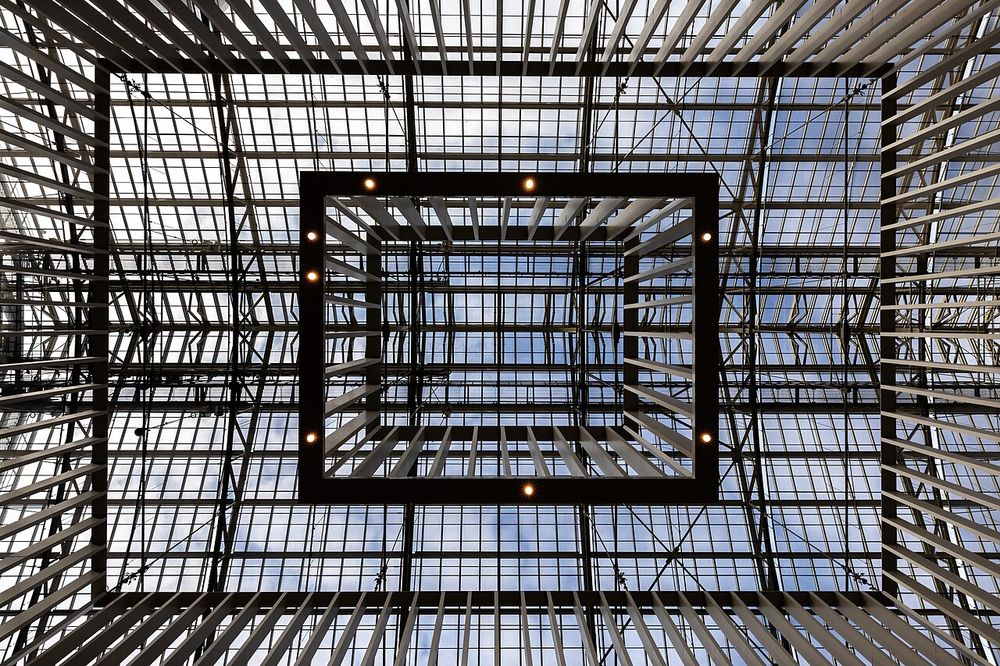
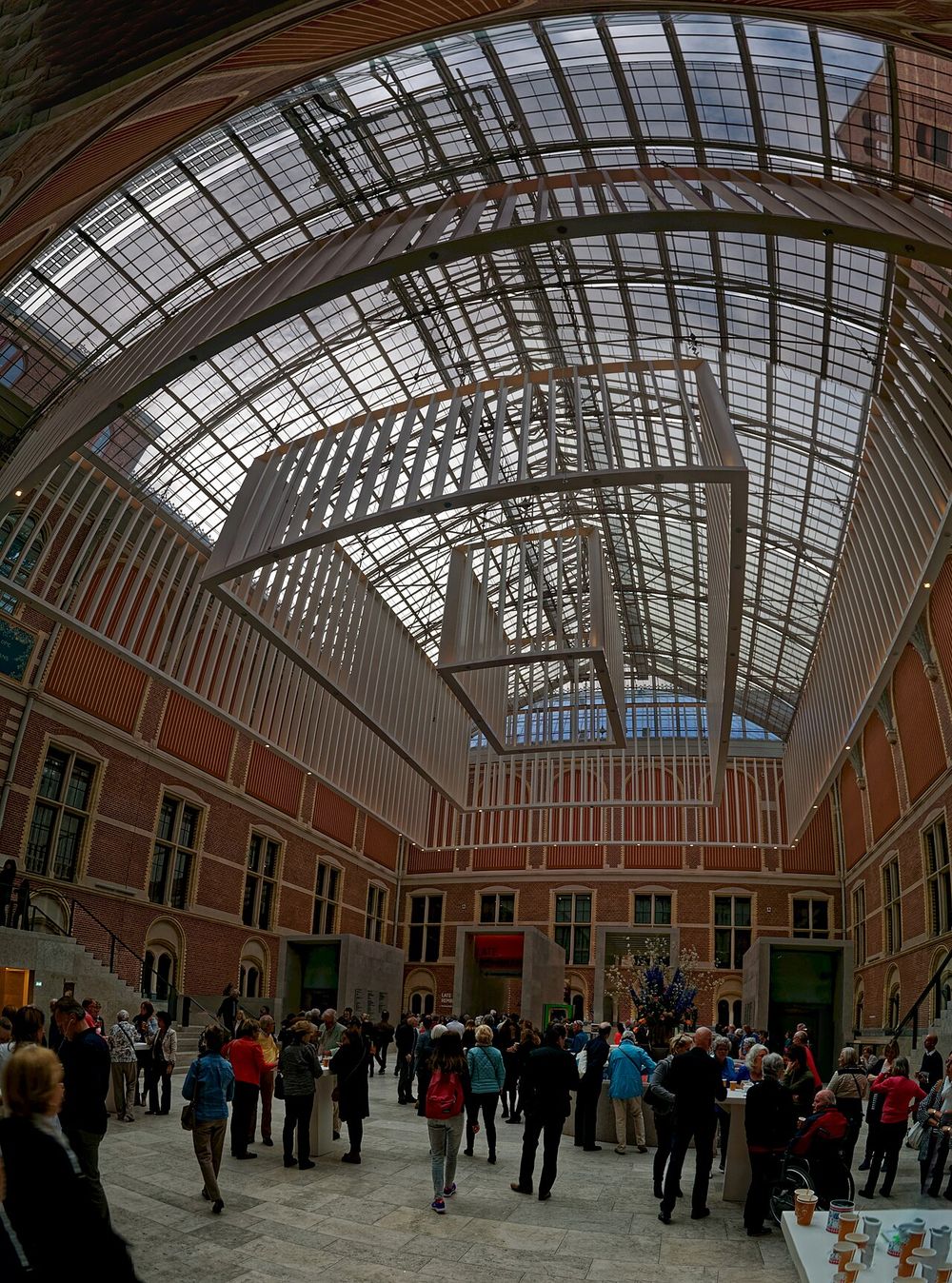
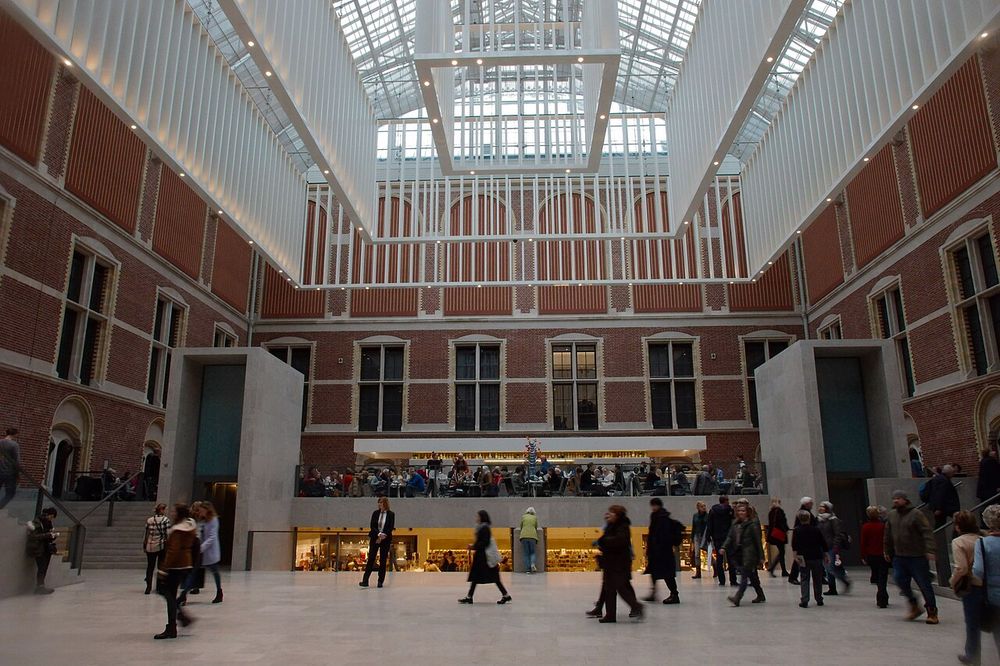
You enter from the passage into one of two courtyards. Cuypers left them open to the sky. Later they were filled with offices. The Spanish architects Cruz y Ortiz cleared them and roofed them in glass. Hanging from the roof are great square chandeliers.
The glass roof from belowBasile Morin, CC BY-SA 4.0
The cyclists' road runs between the two courtyards. You can hear the bells through the glass.
2. The front: a building that tells its own story
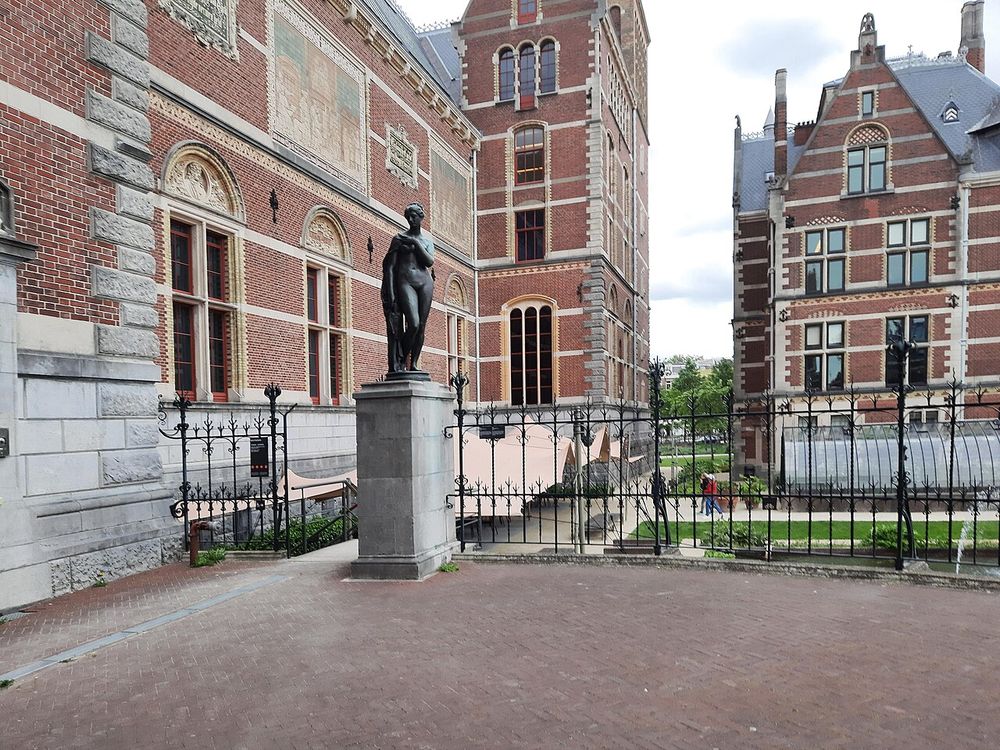
The front from the garden side, 2022Bybbisch94, Christian Gebhardt, CC BY-SA 4.0
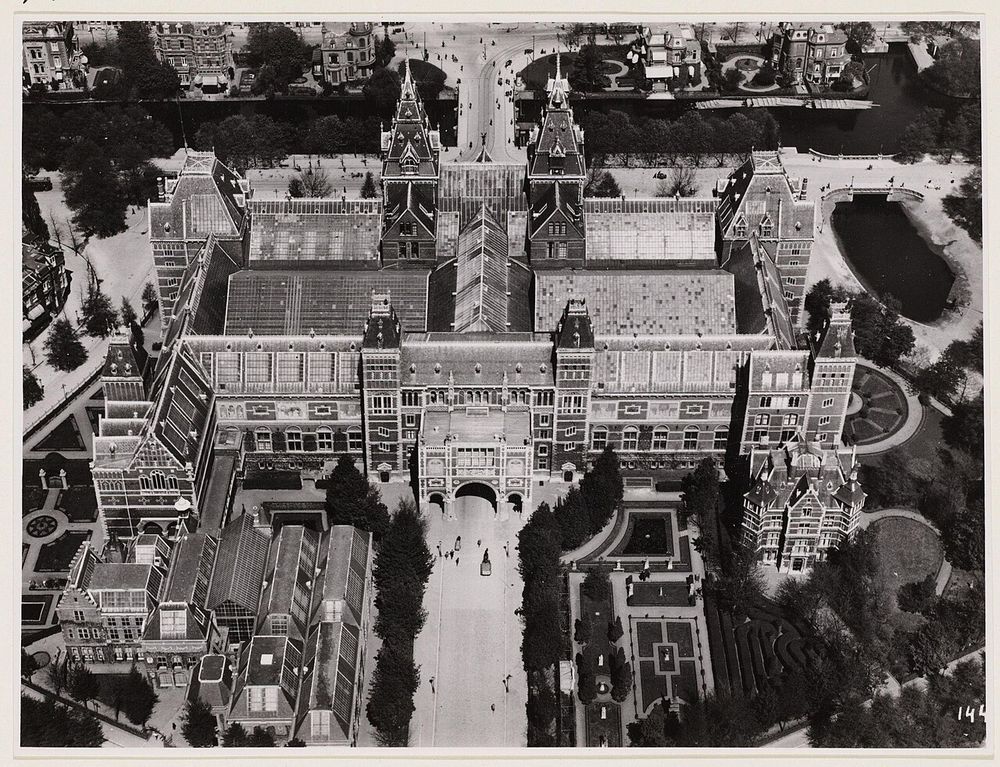
Look at the outside before you go in. Cuypers covered it in tiles, statues and painted panels that tell the history of Dutch art. Artists' names are worked into the walls.
The style mixes Gothic and Dutch Renaissance. Protestant critics called it a monastery. Cuypers answered that a nation's art deserved a building as rich as a church.
3. The Gallery of Honour
The Gallery of Honour after the rebuildingBond van Nederlandse Architecten, CC BY 2.0
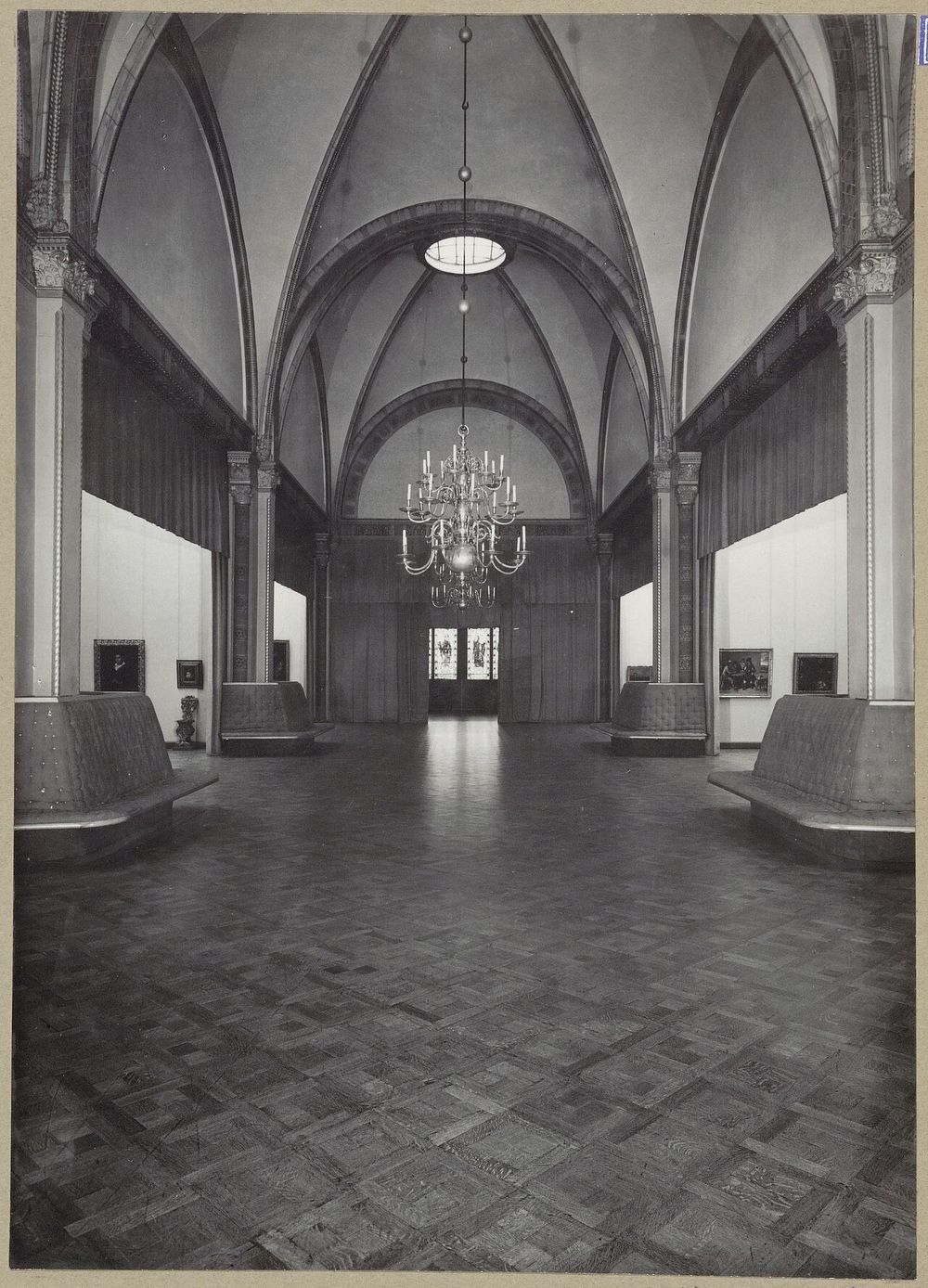
The hall was built like the nave of a church, with The Night Watch where the altar would be. That was Cuypers' plan from the start, and after many moves it is where the painting hangs today.
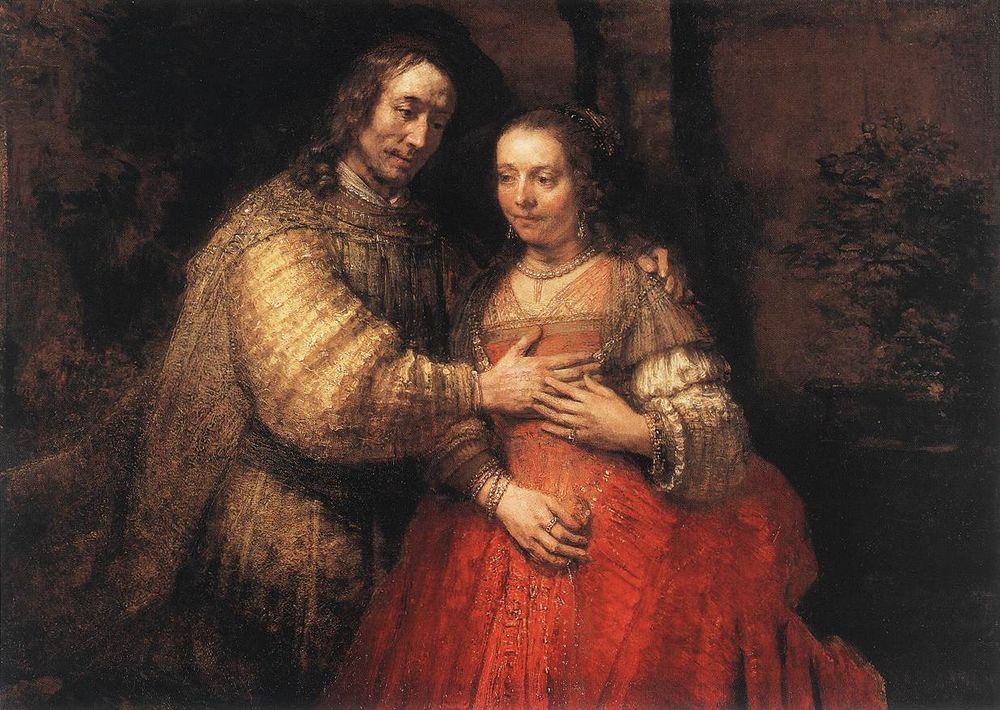
Rembrandt, The Jewish Bride, about 1665Rembrandt, Public domain
In the bays: Frans Hals' laughing drinker, Vermeer's little street in Delft and his woman reading a letter in blue, and Rembrandt's Jewish Bride. Look at the man's hand resting on the woman's breast, and hers laid lightly over it. Nobody knows who the couple were.
4. The Night Watch, up close
Rembrandt, The Night Watch, 1642Rembrandt, Public domain
The captain in black, Frans Banninck Cocq, gives the order to march. His lieutenant in pale yellow listens. Between them a girl in gold carries a chicken at her belt. The chicken's claws were the emblem of the company, the arquebusiers.
In 1715 the painting was moved to the town hall and cut down on all four sides to fit between two doors. Two men on the left were lost. In 2021 the museum hung printed reconstructions of the missing strips beside it for a time, made with help from a computer.
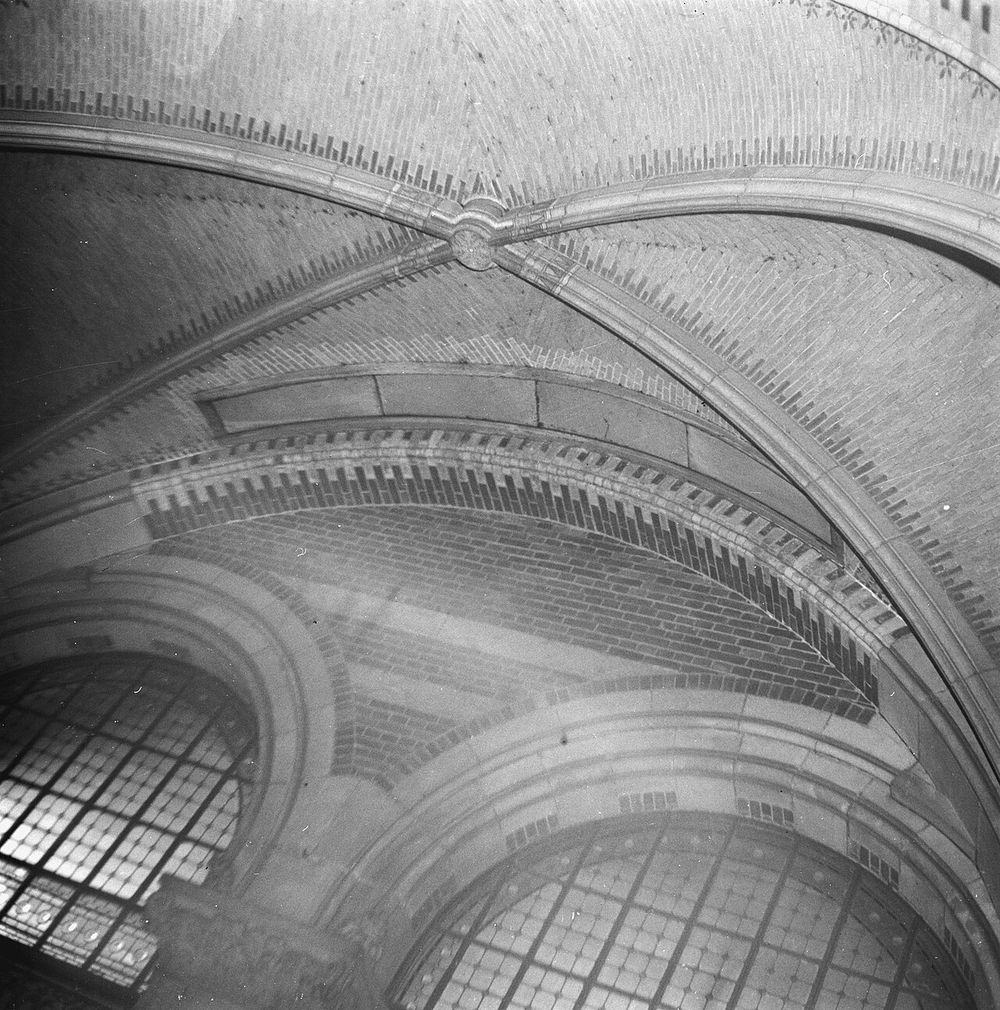
The slot cut in a ceiling to bring The Night Watch backCharles Breijer / Anefo, CC0
When war came in 1939 it was rolled up and moved from hiding place to hiding place. It spent the last years in a cave in the marl hills at Maastricht. The slot in this photograph was cut in a ceiling to get it back in.
It has been attacked three times: with a knife in 1911 and 1975, and with acid in 1990. Each time it was repaired.
5. The Cuypers Library
On the second floor, a door off the hall opens onto a balcony above a four-storey library of iron and wood, with spiral stairs in the corners. It is the oldest and largest art history library in the Netherlands. You can look down into it from the visitors' gallery.
6. The doll's house
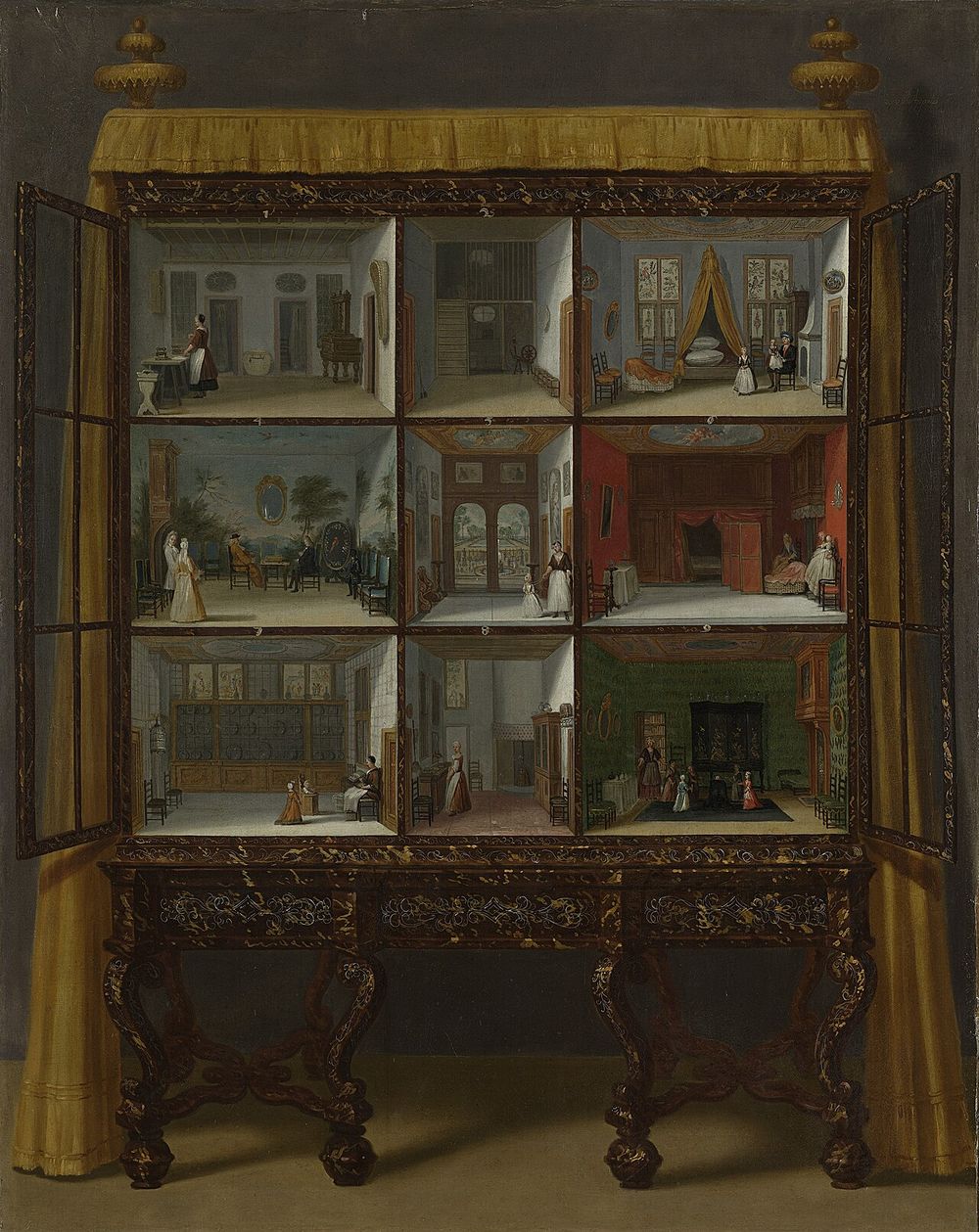
Petronella Oortman's doll's house, painted about 1710Jacob Appel, Public domain
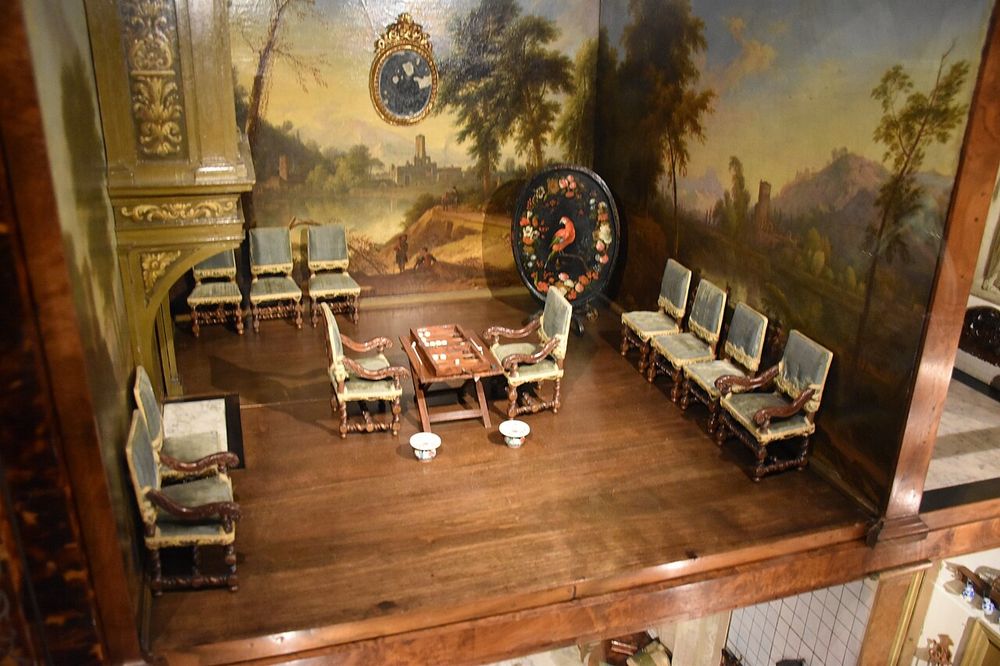
Petronella Oortman, the wife of a rich silk merchant, had this cabinet made between about 1686 and 1710. Every piece in it was made by craftsmen to scale: Chinese porcelain, a linen room, a peat loft, a nursery. It is said to have cost as much as a house on a canal.
A room in the doll's houseAnonymousUnknown author, Public domain
The tiny porcelain in it came from China, like much of the real porcelain in Dutch houses. The Dutch East India Company shipped millions of pieces from Jingdezhen. Delft potters copied the blue and white, and their imitations became Delftware.
7. Ships, and the world they reached
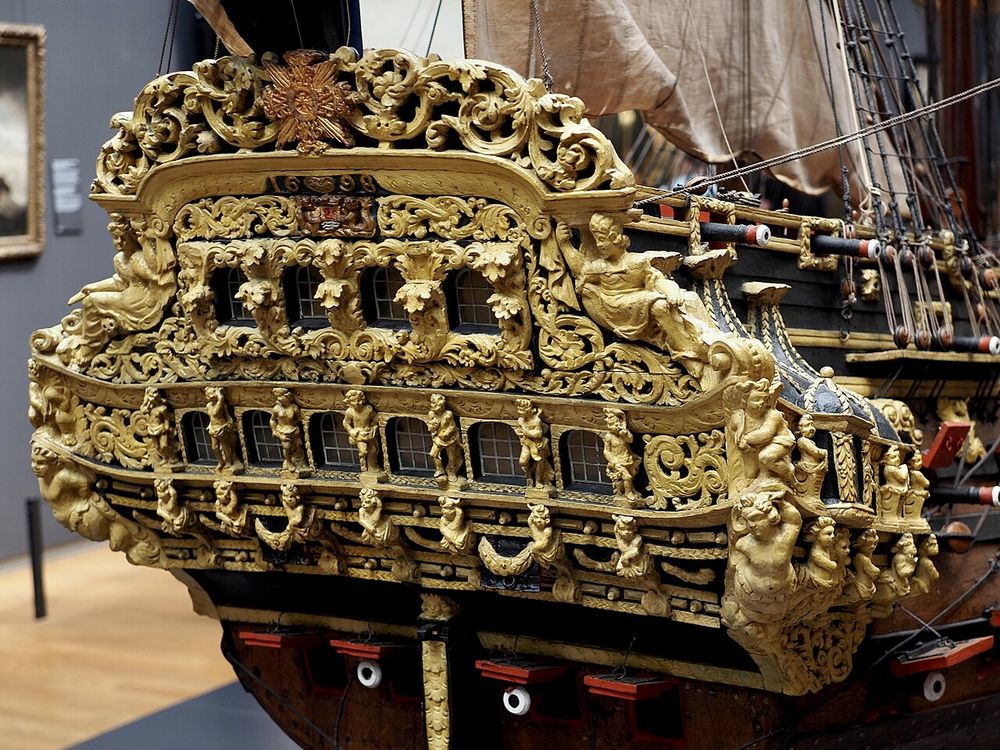
The stern of the William Rex model, 1698Jazzmaster1997, CC0
On the first floor is a great model of a warship of 1698, carved and gilded. The Republic's wealth came by sea. The same ships carried spices, slaves and soldiers. Since 2021 the museum has told that side too, with labels and an exhibition on slavery.
In 1624 the Dutch took the south-west of Taiwan and held it for thirty-eight years. In 1662 they surrendered Fort Zeelandia to Koxinga (Zheng Chenggong). The Golden Age you see upstairs and that story are one story.
8. The Asian Pavilion and the garden
Shiva as Lord of the Dance, south India, about 1100–1200Rijksmuseum, CC0
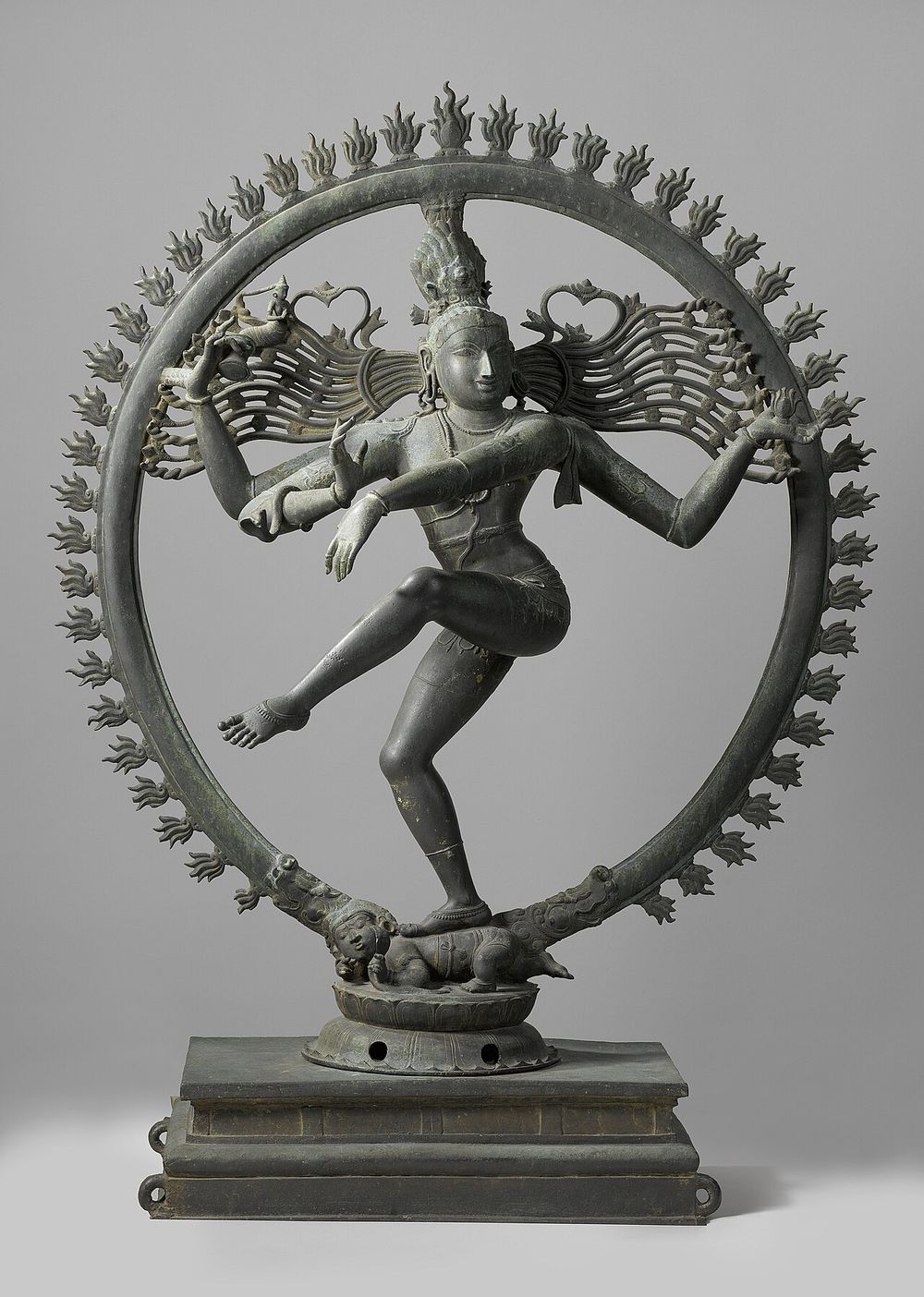
A low stone building in the garden holds Asian art. The dancing Shiva from south India is about eight hundred years old. Two wooden Japanese temple guardians of the fourteenth century stand in the pavilion, fierce and twice the height of a man.
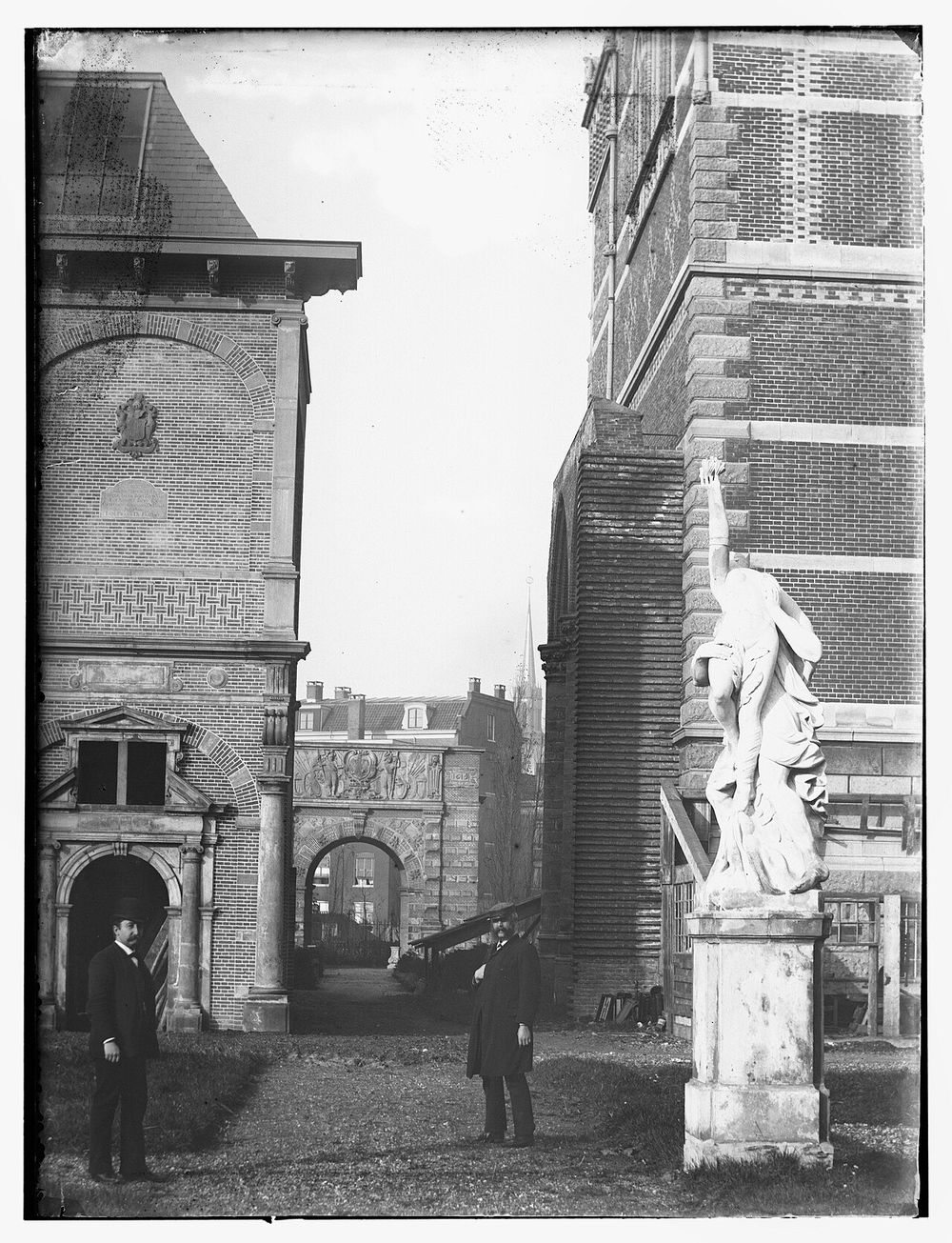
The garden behind the museum, 1892Jacob Olie, Public domain
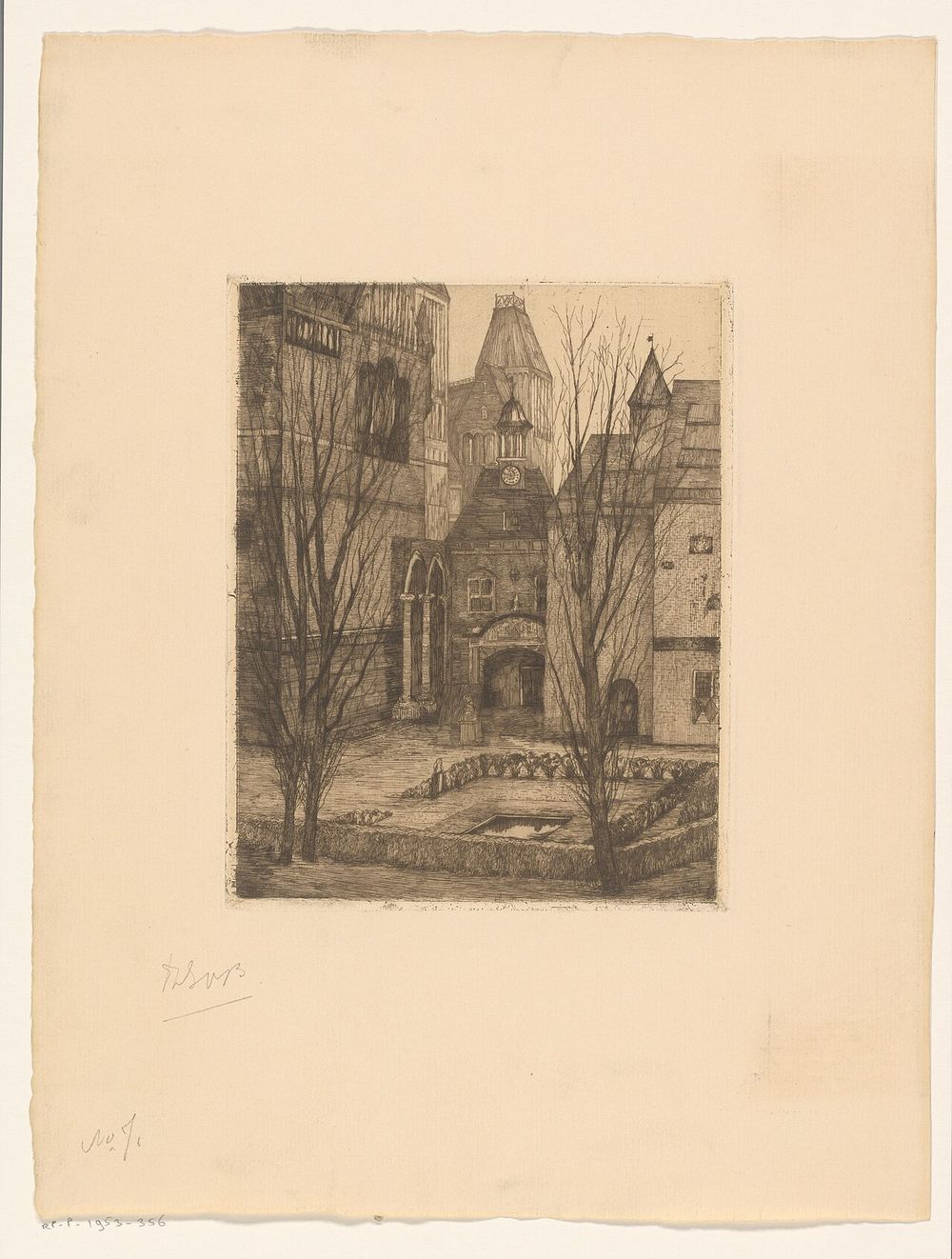
The garden is free and open to all. Cuypers filled it with fragments of old buildings pulled down across the country: gateways, columns, carved stones. He was a builder who mourned what others demolished.
Meanwhile in the world
Year
Here
Elsewhere
1642
The Night Watch is finished
The English Civil War begins
about 1660
Vermeer paints The Milkmaid
Charles II returns to the English throne
about 1686
The doll's house is begun
Newton's Principia, 1687
1808
The collection comes to Amsterdam
Napoleon invades Spain
1885
The building opens
The first motor car, by Karl Benz
1939–1945
The Night Watch in hiding
The Second World War
2013
Reopened after ten years
Edward Snowden's leaks
One line to remember: a cathedral of art, a road through the middle, and a captain who is not marching at night.
Then and now
The north front at dusk, 2016Diego Delso, CC BY-SA 4.0, Wikimedia CommonsThe front from the garden side, 2022Bybbisch94, Christian Gebhardt, CC BY-SA 4.0, Wikimedia CommonsThe south front with the I amsterdam letters, 2015Gerd Eichmann, CC BY-SA 4.0, Wikimedia CommonsTulips and the letters, three years before they were removedGerd Eichmann, CC BY-SA 4.0, Wikimedia CommonsThe museum lit at night, 2017Steven Lek, CC BY-SA 4.0, Wikimedia CommonsThe passage front at nightHnapel, CC BY-SA 4.0, Wikimedia CommonsThe atrium and its chandeliersVasyatka1, CC BY-SA 4.0, Wikimedia CommonsThe glass roof from belowBasile Morin, CC BY-SA 4.0, Wikimedia CommonsThe atrium of 2013Txllxt TxllxT, CC BY-SA 4.0, Wikimedia CommonsThe courtyard under glassFrans de Wit from Netherlands, CC BY-SA 2.0, Wikimedia CommonsThe Gallery of Honour with The Night Watch at the endHnapel, CC BY-SA 4.0, Wikimedia CommonsThe Gallery of Honour after the rebuildingBond van Nederlandse Architecten, CC BY 2.0, Wikimedia CommonsRembrandt, The Night Watch, 1642Rembrandt, Public domain, Wikimedia CommonsVermeer, The Milkmaid, about 1660Johannes Vermeer, Public domain, Wikimedia CommonsRembrandt, The Jewish Bride, about 1665Rembrandt, Public domain, Wikimedia CommonsHendrick Avercamp, skating on the ice, about 1610Hendrick Avercamp, Public domain, Wikimedia CommonsPetronella Oortman's doll's house, painted about 1710Jacob Appel, Public domain, Wikimedia CommonsA room in the doll's houseAnonymousUnknown author, Public domain, Wikimedia CommonsThe stern of the William Rex model, 1698Jazzmaster1997, CC0, Wikimedia CommonsShiva as Lord of the Dance, south India, about 1100–1200Rijksmuseum, CC0, Wikimedia CommonsA medal for Cuypers given at the openingRijksmuseum, CC0, Wikimedia CommonsThe museum from the air, 1921KLM Aerocarto NV, Public domain, Wikimedia CommonsThe museum and the Museumplein, 1928KLM Aerocarto NV, Public domain, Wikimedia CommonsThe garden behind the museum, 1892Jacob Olie, Public domain, Wikimedia CommonsThe garden, an etching of about 1899Rijksmuseum, CC0, Wikimedia CommonsThe Gallery of Honour looking north, 1980sRijksmuseum, CC0, Wikimedia CommonsThe Gallery of Honour and its side roomsRijksmuseum, CC0, Wikimedia CommonsThe slot cut in a ceiling to bring The Night Watch backCharles Breijer / Anefo, CC0, Wikimedia CommonsThe museum lit up in 1948Ben Merk / Anefo, CC0, Wikimedia CommonsA medal struck for the opening in 1885Ludwig Jünger, Public domain, Wikimedia Commons
Local legends
These are stories people tell about this place. They are legends, not history, and each one says where it comes from.
LegendThe king who would not go in
King William III is said to have disliked the building so much that he called it "the archbishop's palace" and refused to set foot in it.
Source: A story told by Amsterdam guides and repeated in Dutch histories of the museum; we found no record from the king himself
LegendThe doll's house
Petronella Oortman is said to have spent on her doll's house as much as a real house on the canal, and her husband to have complained.
Source: The museum gives the cost as 20,000 to 30,000 guilders; the husband's complaint is later storytelling
Later, people who live here will be able to add the stories they grew up with, and say which of these they have heard.
Not certain, and where accounts conflict
Who was the Jewish Bride?
The name was given in the nineteenth century, when a collector thought the couple were a Jewish father and his daughter on her wedding day. Many now think they are a married couple dressed as Isaac and Rebecca from the Bible. Their real names are not known.
How much of The Night Watch was cut off?
A copy painted by Gerrit Lundens before 1715, now in London, shows the full scene. Measurements differ, but the left side lost most, about sixty centimetres.
Adults 25 euros on the museum's own site in 2026. Free up to and including age 18. Resellers charge more.
Open every day of the year, 9:00 to 17:00.
The garden and the passage are free and open during the day.
Last checked 2026-11-12. The museum's own Dutch ticket page and Amsterdam travel guides of 2026.
Booking from abroad
Official page in English Tickets are sold on the museum's own website in English and Dutch, paid by card. Every visitor needs a start time, including those under 18 who enter free and holders of the Dutch Museumkaart.
Ticket window on site A few tickets are sold at the entrance, but popular times sell out. The museum does not take cash.
Checked 2026-11-12
Where to start
Tram 2 or 12 to Rijksmuseum, or tram 5 or 12 to Museumplein. From Central Station it is a thirty-minute walk across the canal ring.
The entrance is in the passage, on the atrium side. Book 9:00 and go straight up to the Gallery of Honour, before the groups.
Plan three hours at least. The Van Gogh Museum is five minutes away; doing both in one day is tiring.
Before you go
Payment is by card only, in the shop and café too.
Large bags go in the free cloakroom or lockers.
Photographs without flash are allowed in most rooms.
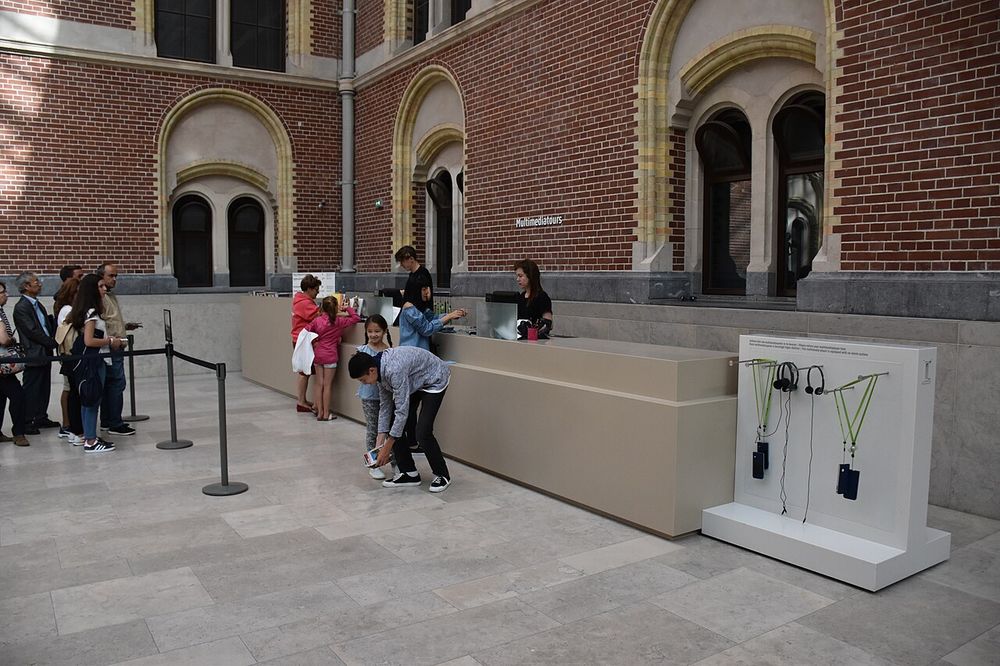
A free app gives tours in several languages, and an audio guide can be rented.
Customs and manners
Never stop or stand in the cyclists' passage. It is a road. Walk at the side.
Keep a step back from the paintings. Guards will ask you to, and alarms sound if you lean in.
In front of The Night Watch, take your picture and make room for the next person.
Dutch staff are direct and friendly. A plain question gets a plain answer.
Opening hours are given in the local time of the place. Prices are in the local currency. The figure after ≈ is approximate, at exchange rates checked on 9 November 2026, in .
Look for these
In the passage, count the bicycles that pass in one minute.
On the outside walls, find the name of Rembrandt.
In The Night Watch, find the girl with the chicken.
Also in The Night Watch, find the face peeping out from behind the soldiers at the back. Some say it is Rembrandt.
In The Milkmaid, find the foot warmer on the floor.
In the doll's house, find the Chinese porcelain.
In the garden, find a gateway that once stood somewhere else.
I am here
Stand at the site, sign in, press the button, and collect its stamp. Your browser will ask to use your location. It is sent to us once to confirm that you are at the site; we keep how far you were from it, not the spot where you stood.
Your stamps are saved to your account, so they follow you to any device. Checking from a browser cannot rule out every false location; stricter checks arrive with the app.
Messages
Share your photos
Photos here show the place, not people. Each one is credited to the visitor who took it and appears after our team has looked at it. A photo with you in it belongs under “I am here”.