The story
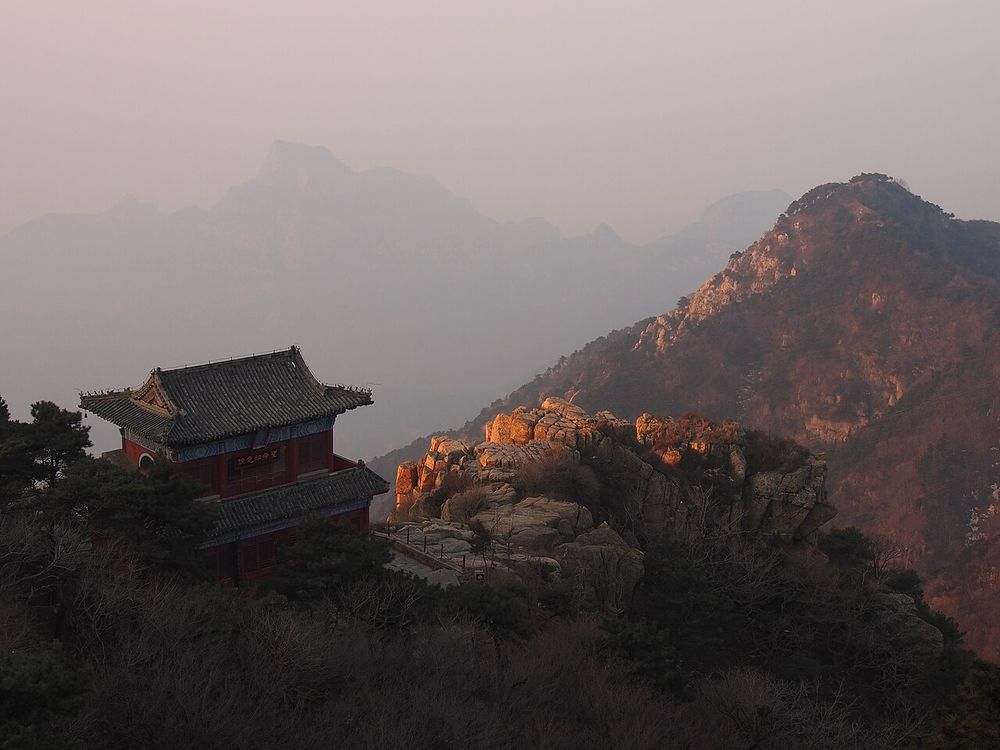
The mountain on the back of the five-yuan note is this one. Mount Tai is only a little over 1,500 metres high, yet it ranks first among China's Five Sacred Mountains.
For more than two thousand years emperors came here to perform the feng and shan rites: a sacrifice to Heaven on the summit and to Earth at the foot, to show the whole realm that they ruled by Heaven's will. The rock under your feet is among the oldest in eastern China, more than 2.5 billion years old.
What is here
The mountain ticket covers the climb from the foot to the summit, with the temples and inscriptions along the way. It does not cover Dai Temple in the town, which has its own ticket, or any transport on the mountain.
| Part | Ticket |
|---|---|
| Dai Temple, in the town at the foot | Own ticket, 20 yuan |
| The climb from Red Gate: Sutra Rock Valley, Midway Gate, the Eighteen Bends | Mountain ticket |
| The top: South Gate to Heaven, the Tang cliff inscription, Jade Emperor Summit | Mountain ticket |
| Bus from Tianwai Village to Midway Gate | Extra, 35 yuan one way |
| Cable car from Midway Gate to the top | Extra, 100 yuan one way |
If you have one minute
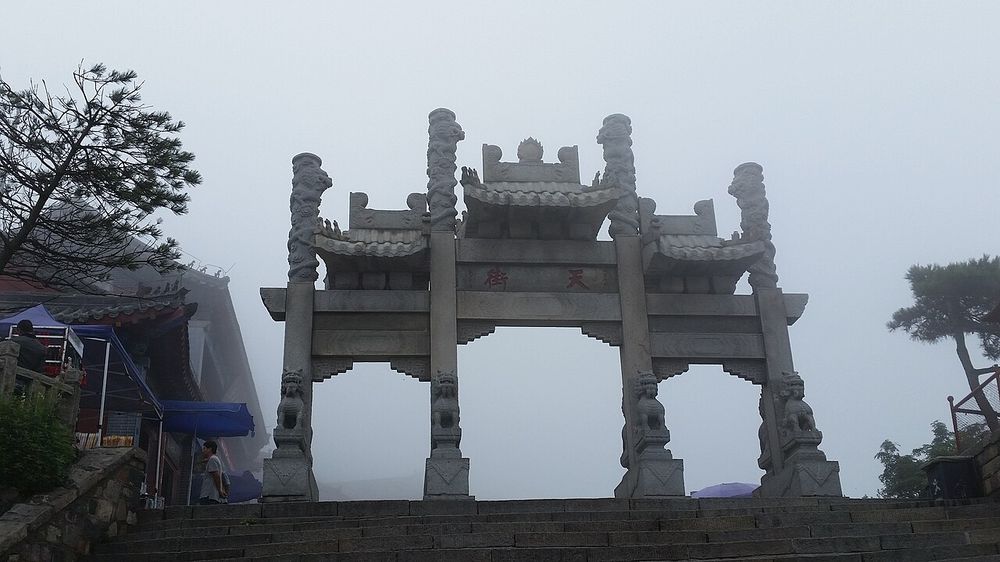
Standing at the South Gate to Heaven
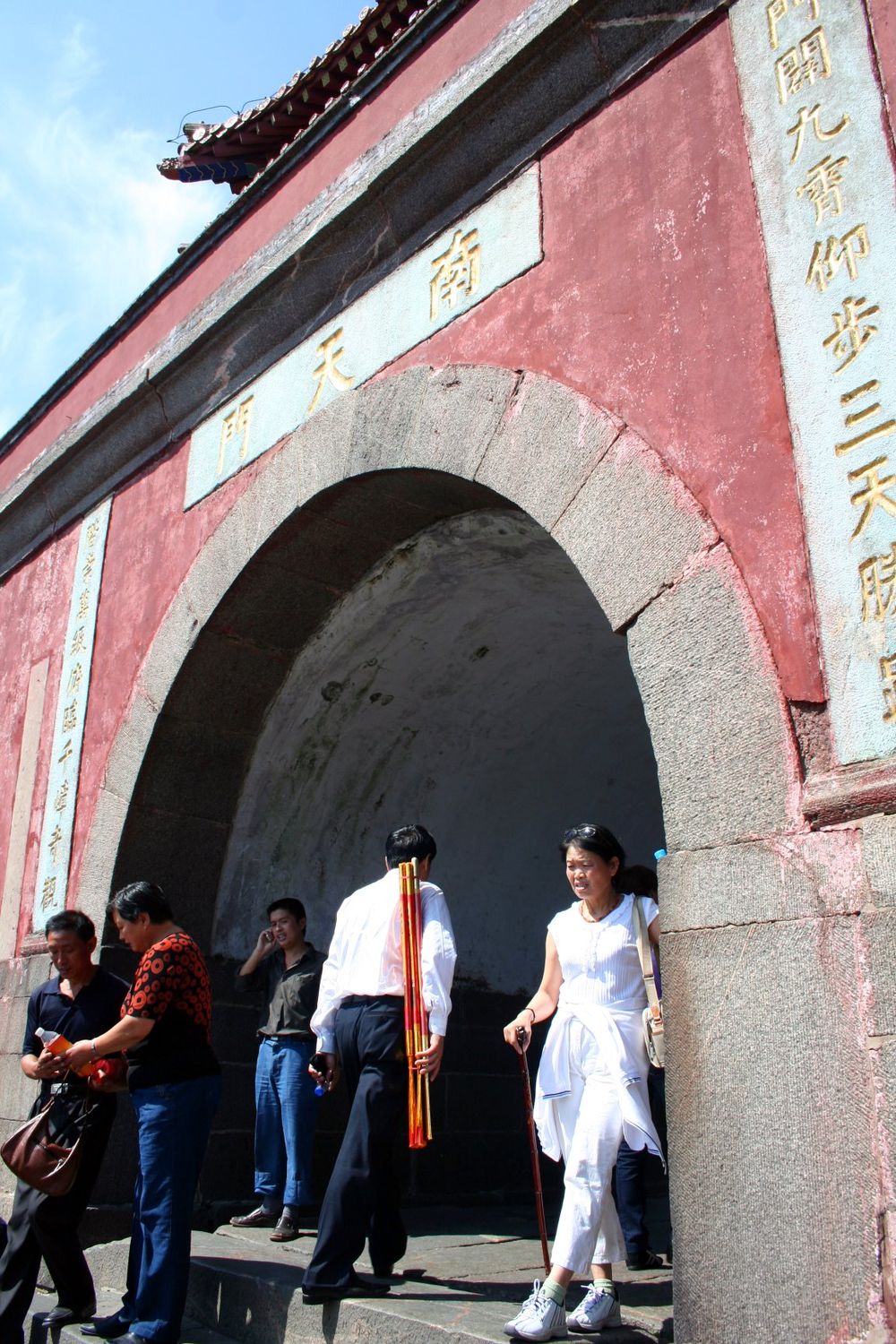
Behind you are the Eighteen Bends, the steepest stretch of the whole climb and the line between earth and sky: beyond this point you are "in heaven".
The gate was built in 1264 and sits in the notch between two crags. Through it runs Heavenly Street.
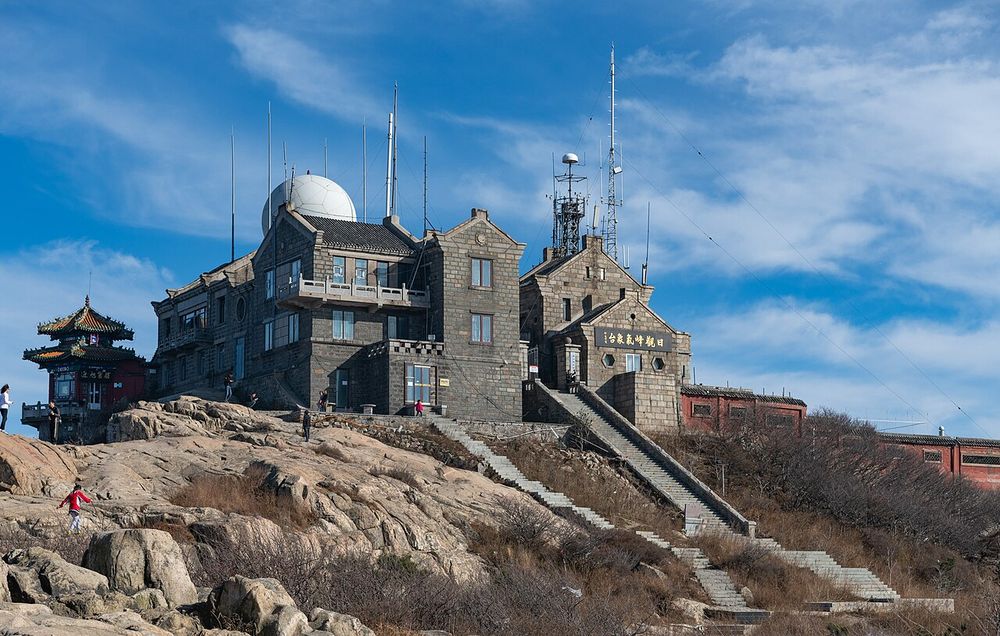
Higher up are the Bixia Temple, founded in 1009 for the goddess of the mountain, then a cliff inscribed by a Tang (618–907) emperor, then the Jade Emperor Summit.
Look out. Jinan lies to the north, the town of Tai'an to the south, and beyond it Qufu, the home of Confucius. The plain is why this mountain matters: it stands more than a thousand metres above everything around it.
People who stood here
Few mountains have had such visitors. Some of the most famous names in Chinese history climbed the same steps, and their words are still cut into the rock beside you.
- Confucius, philosopher, 6th–5th century BCChina's most influential thinker lived a day's journey to the south. The philosopher Mencius wrote that he climbed Mount Tai and found the whole world small. Perhaps he stood on this summit looking toward his home.
- Qin Shi Huang, the First Emperor, 219 BCThe man who unified China came to announce it to Heaven. Caught in a rainstorm on the way, he sheltered under a tree and rewarded it with an official rank.
- Emperor Wu of Han, 110 BCThe Han dynasty (206 BC–AD 220) ruler who opened the Silk Road performed the rites here, the first of several visits.
- Emperor Xuanzong of Tang, 725At the height of the Tang he held the rites on the summit and the next year had his own essay cut into the cliff, about a thousand characters. Stand in front of it and you are reading his handwriting.
- Li Bai, Tang poet, 8th centuryHe wrote of giving one long whistle at the Gate of Heaven and a clear wind arriving from ten thousand miles away. Try to picture him at this gate.
- Du Fu, Tang poet, 736At 24, having just failed the imperial examination, he looked up at this mountain from below and wrote that one day he would stand on the very top and see all other mountains small.
Go deeper: seven stops from foot to summit
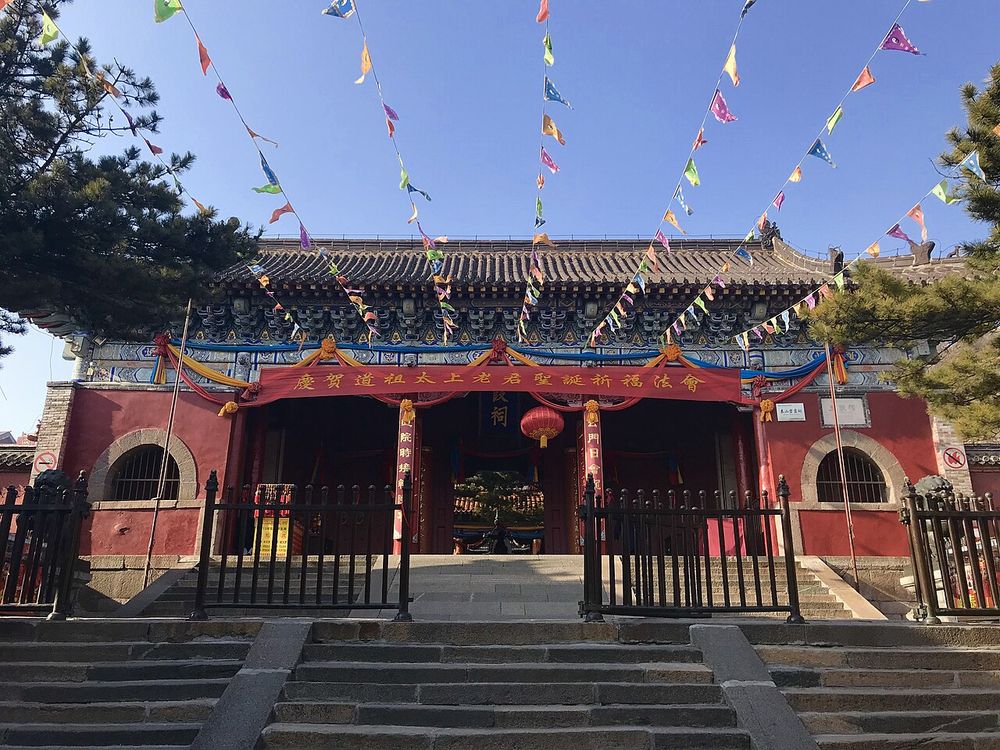
1. Dai Temple: the palace of the mountain god
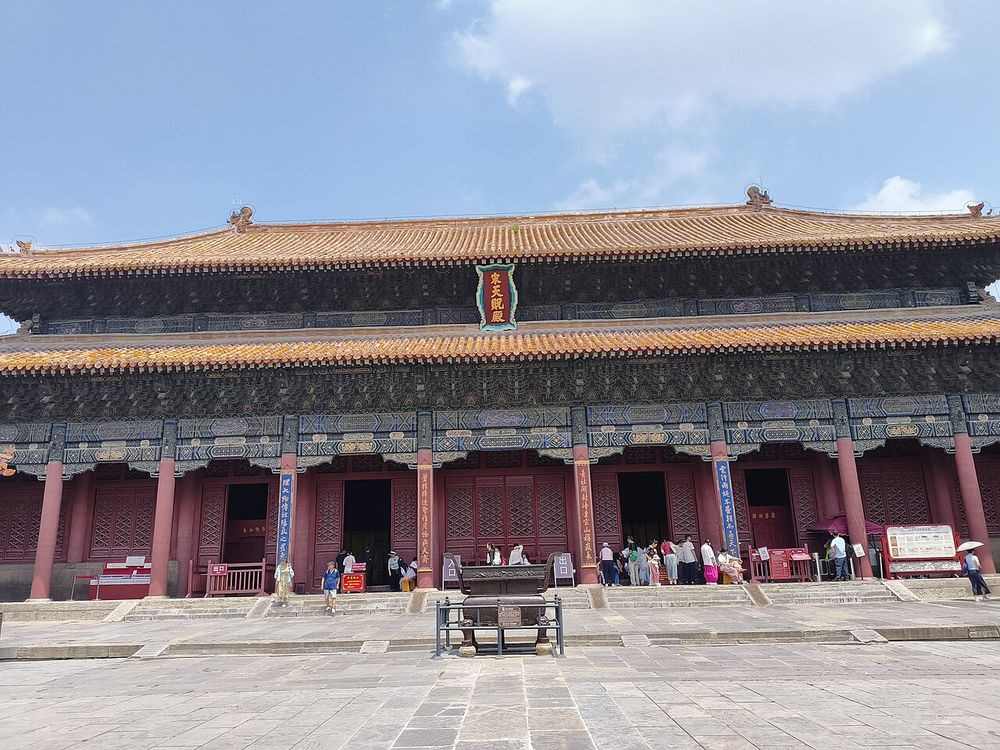
Dai Temple stands in the town at the southern foot of the mountain. It is where the god of Mount Tai is worshipped, laid out like an imperial palace about 406 metres from south to north. Emperors made offerings here before they climbed.
The main hall, Tiankuang Hall, was built in 1009 under the Northern Song (960–1127). It is nine bays wide under a double-eaved hipped roof of yellow tiles, the highest grade in Chinese building, and is counted with the Hall of Supreme Harmony in the Forbidden City and the main hall of the Confucius Temple at Qufu as one of the "three great palace halls".
Inside, a mural 3.3 metres high and 62 metres long shows more than 690 figures: the mountain god setting out on a tour on the east wall and returning on the west. It was first painted in the Song and repainted in the early Qing (1644–1912). Art historians point out that the rocks and buildings at the top use Western-style perspective.
The temple also keeps the Qin inscription: a stone written in seal script by the chancellor Li Si to record the First Emperor's deeds. It once had more than a hundred characters. About ten are left. It is the oldest inscription on the mountain.
2. Daizong Archway and the Red Gate: the climb begins
The archway, built in the Ming (1368–1644), was the old starting point. Daizong is another name for Mount Tai, and it is the first word of Du Fu's poem. The Red Gate is where the eastern route on foot begins. From here up you are on the Imperial Way, the path the emperors took.
3. Sutra Rock Valley: the ancestor of large characters
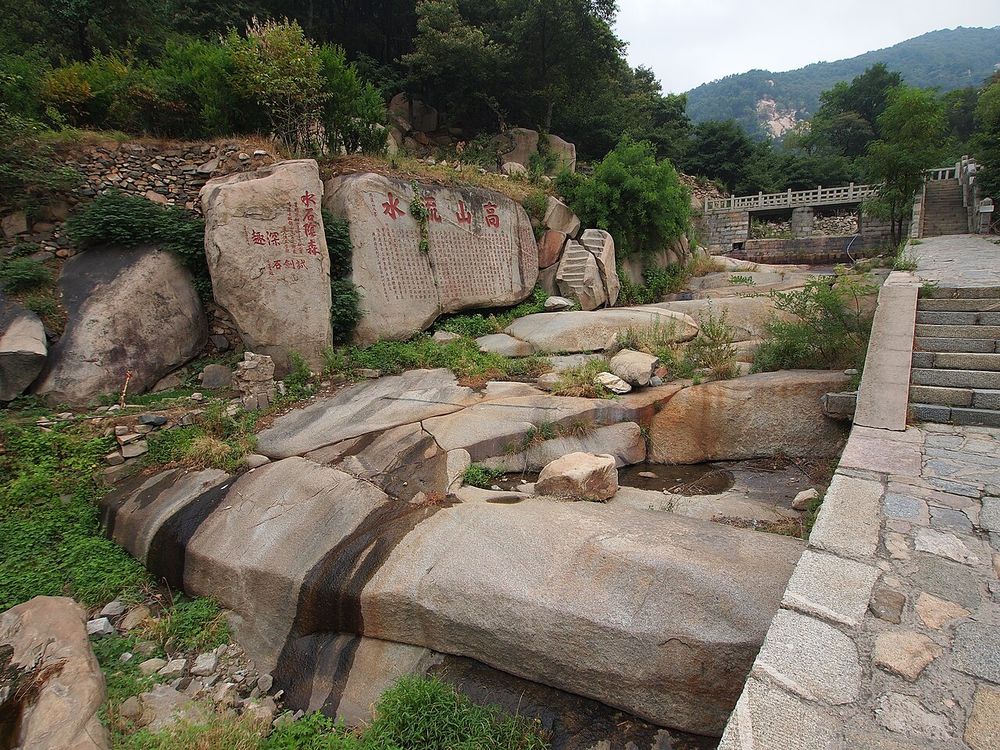
On a broad shelf of rock in a stream bed someone cut the Diamond Sutra in characters 50 to 60 cm across. More than a thousand survive. Water runs over the stone, and the text comes and goes in the light.
Who cut it? There is no signature and no date. Earlier writers guessed the great calligrapher Wang Xizhi, or the Tang. Most scholars now put it in the Northern Qi (550–577) and link it to the monk An Daoyi. The question is still open.
4. Midway Gate to Heaven and the Five-Rank Pine
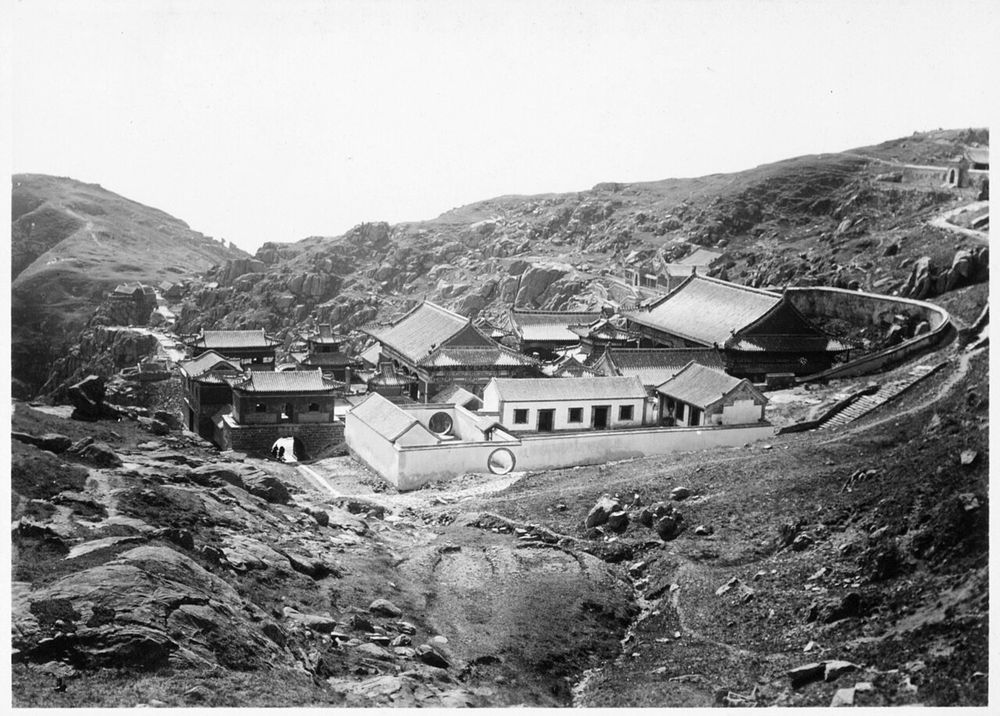
The Midway Gate is the halfway station, where the buses arrive and the cable car leaves. A little above it is the Five-Rank Pine. The historian Sima Qian records that the First Emperor sheltered from rain under a tree here and gave it the rank of wu dafu, a grade in the nobility of the Qin dynasty (221–206 BC). The name means one rank, not five trees. The original was destroyed in a storm in the Ming. Five were planted in the Qing, and two are alive.
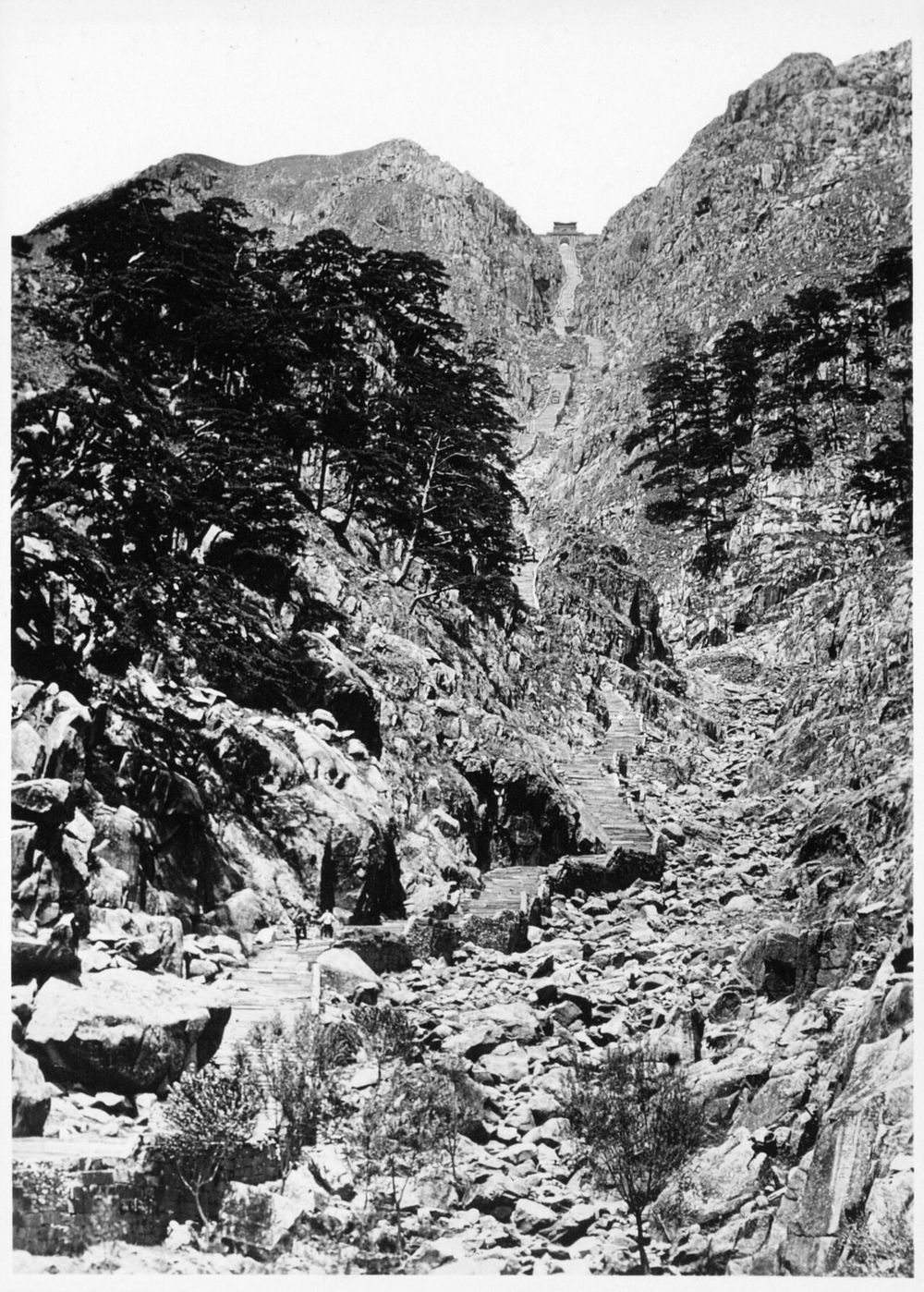
5. The Eighteen Bends: a ladder to the sky
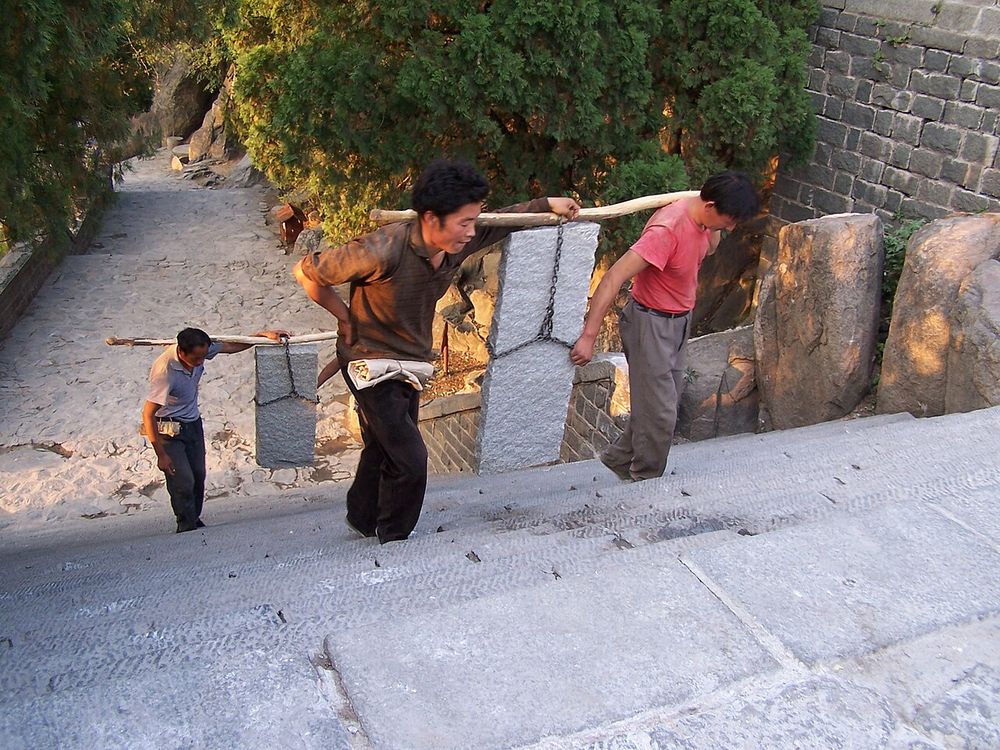
In about 800 metres of path you gain about 400 metres of height, on roughly 1,600 steps.
Everything used on the summit was once carried up these steps on a shoulder pole. In 1981 the writer Feng Jicai published an essay about the porters, and from 1983 it was in primary school textbooks, so most Chinese adults have read it. The porters working today are the last generation.
6. The Tang cliff: an emperor's letter on a rock face
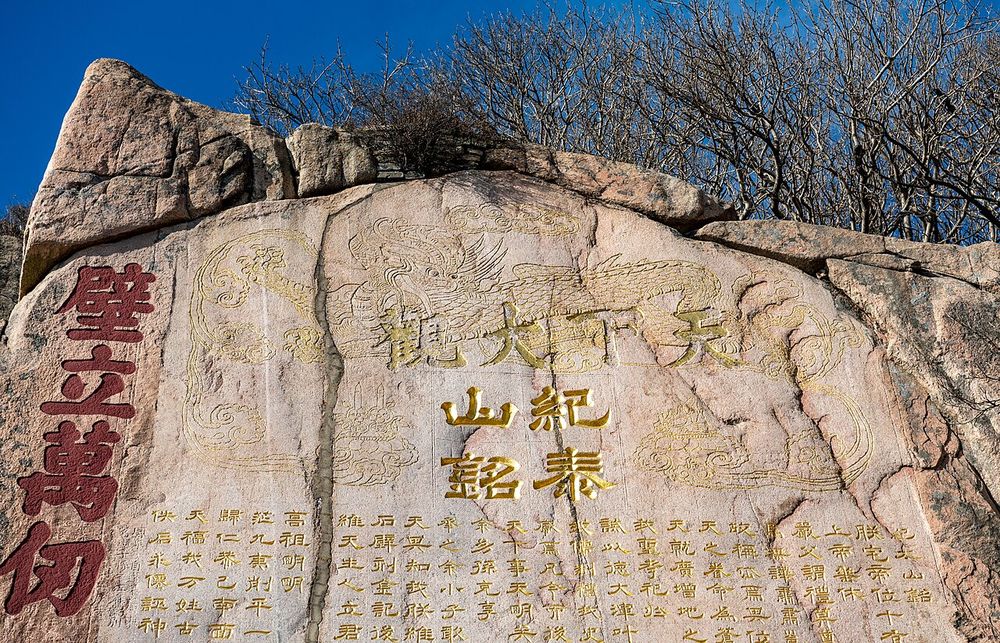
Just below the summit, Emperor Xuanzong's Inscription Recording Mount Tai fills a cliff about 13 metres high: about a thousand characters in the clerical script of the Tang. Many climbers are so tired by this point that they walk straight past it. Do not.
7. The summit, the wordless stele and the stone on the banknote
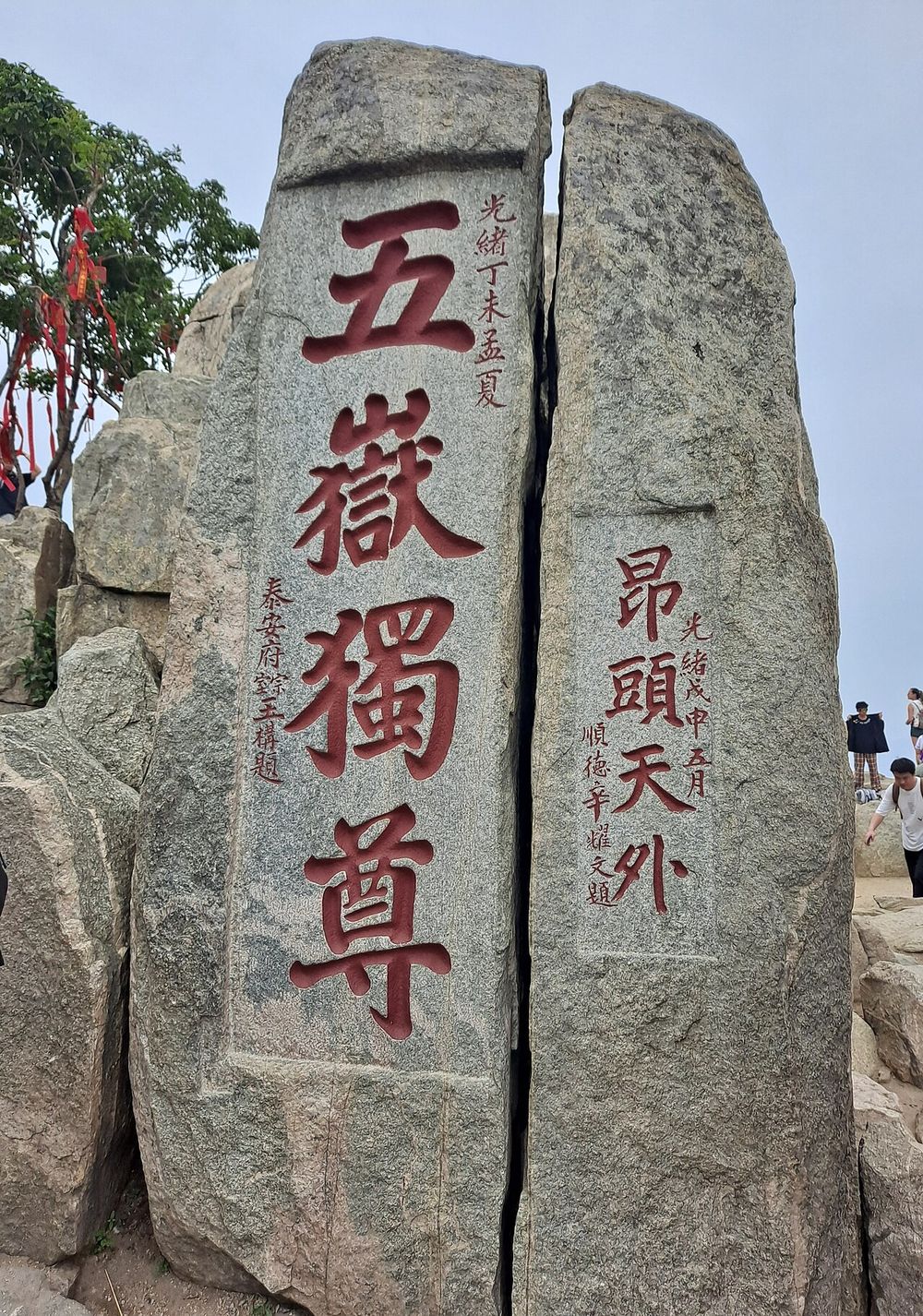
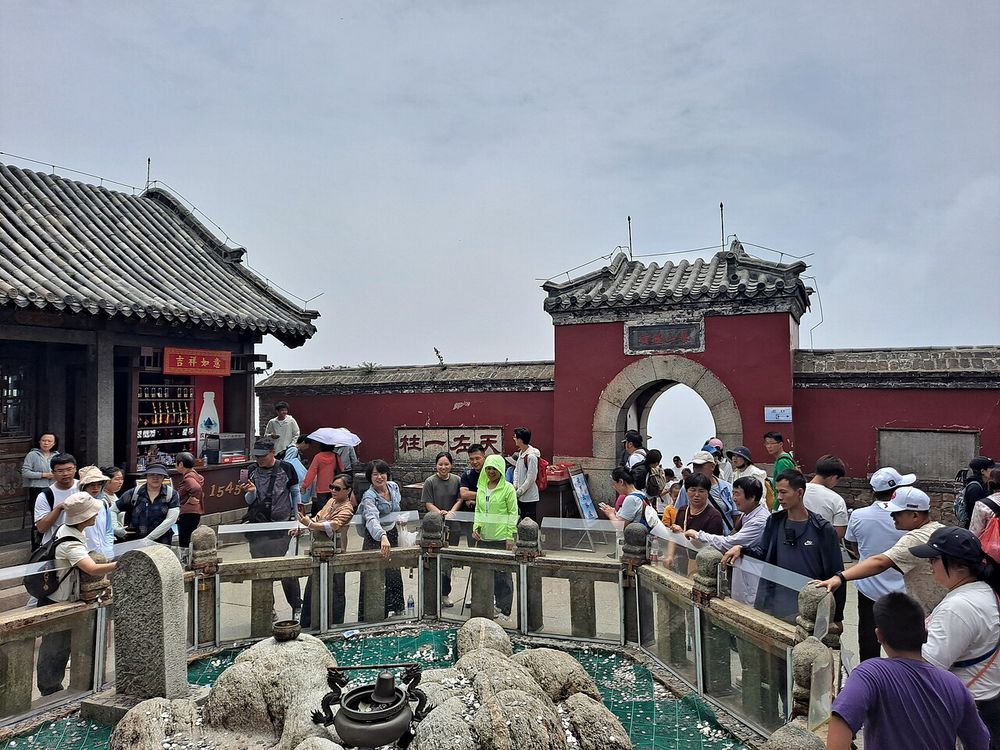
The Jade Emperor Summit is the top, marked by a rock in the temple courtyard. Below it stands a tall stone with nothing written on it. Whether the First Emperor or Emperor Wu set it up, and why it is blank, is argued over.
Nearby is the rock carved with four characters meaning "Most Revered of the Five Sacred Mountains". This is the view on the five-yuan note, but the note is a montage of the carved rock and the main peak. You cannot see that exact picture from any one spot.
Among the five mountains Tai stands for the east, and so for sunrise and new life. Spending a night on top to watch the sun come up is the classic way to do it.
Words, sayings and one coincidence
Sima Qian wrote that everyone must die, but a death may be weightier than Mount Tai or lighter than a goose feather. In Chinese the mountain is still the measure of weight and steadiness: "steady as Mount Tai", or "to have eyes and not recognise Mount Tai" for failing to see greatness in front of you.
Across China you will see stones at village entrances and street corners cut with the words "Stone of Mount Tai that dares to resist". They are set up to keep bad luck away, and the custom is on the national list of intangible heritage.
A coincidence English speakers enjoy: in Chinese, Tarzan is called Taishan, written with the same two characters as the mountain. It is only a transliteration and has nothing to do with this place.