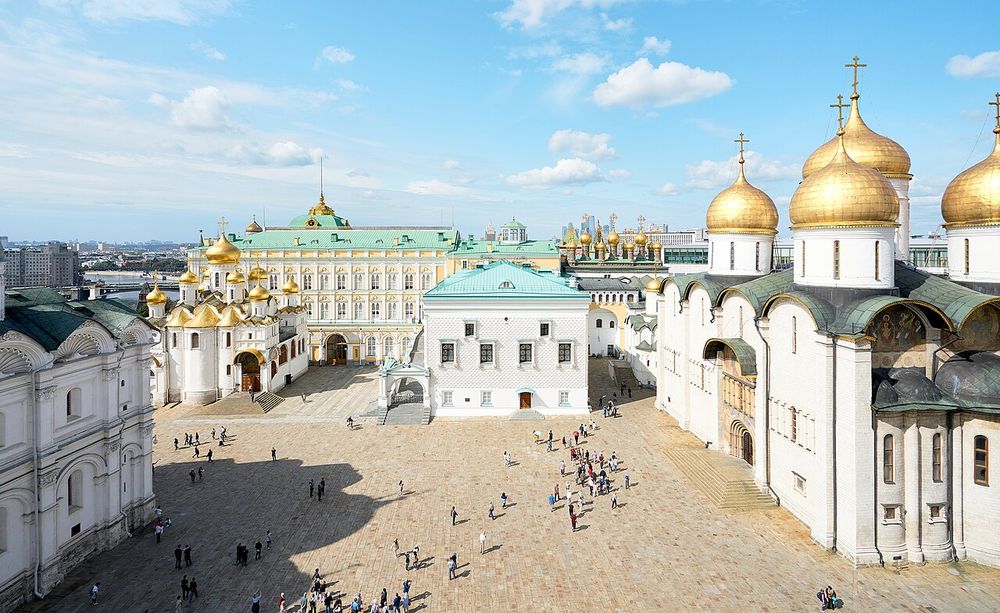
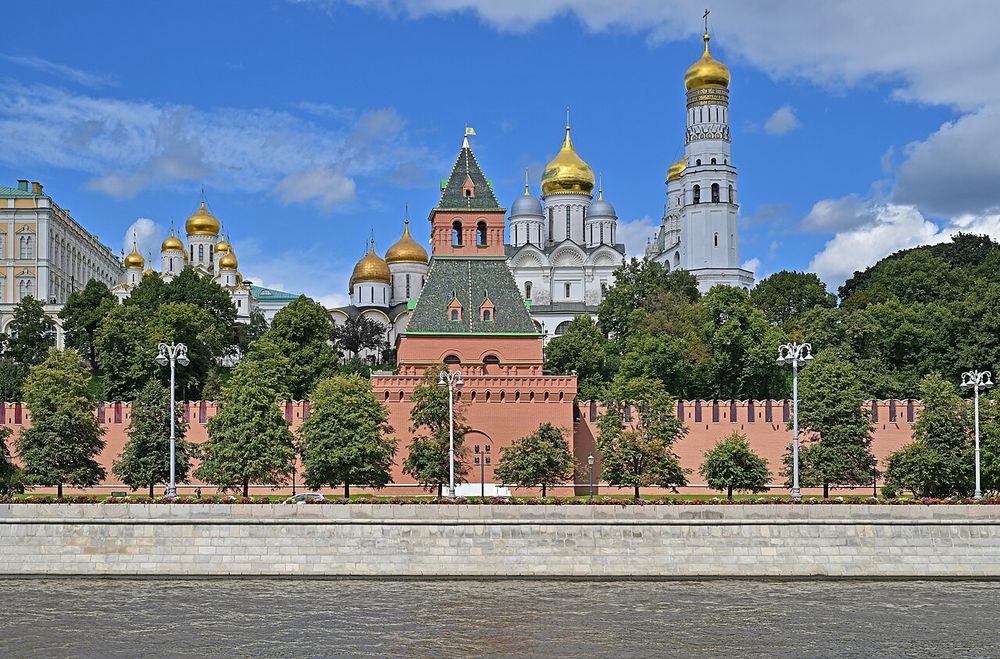
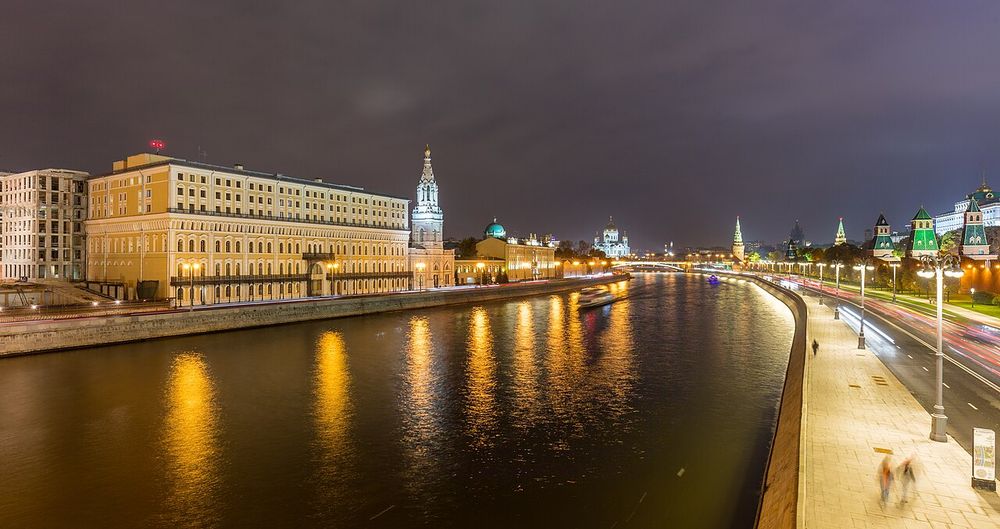
A walled triangle of 27 hectares on a hill above the Moskva river: the fortress where Moscow began, the seat of the tsars and of the Soviet leaders, and today of the Russian president. Inside the red walls, built by Italian masters in the 1480s and 90s, stand three white cathedrals with golden domes, a bell that was never rung and a cannon that was never fired.
Photo: Юрий Д.К., CC BY 4.0, Wikimedia Commons
The story
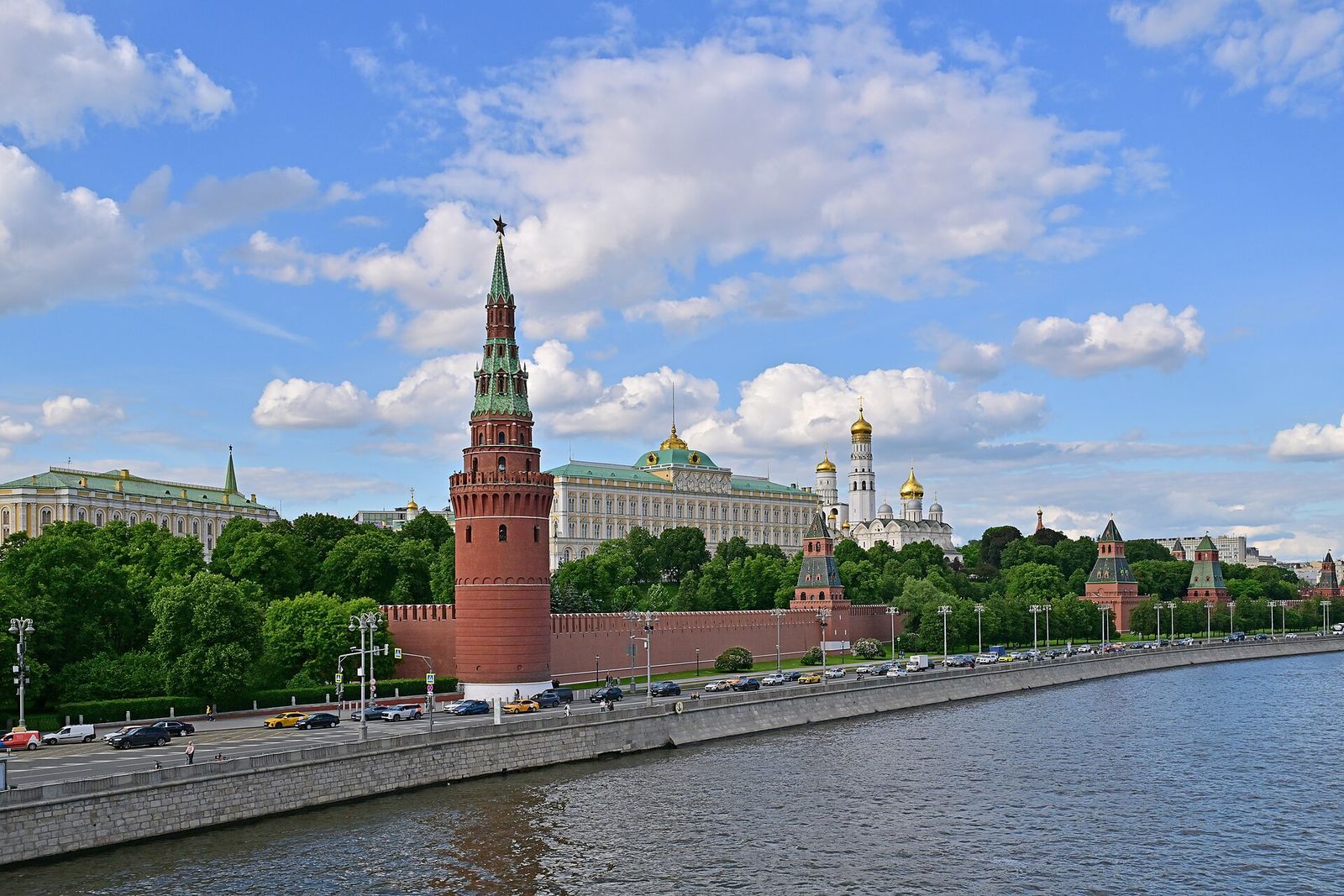
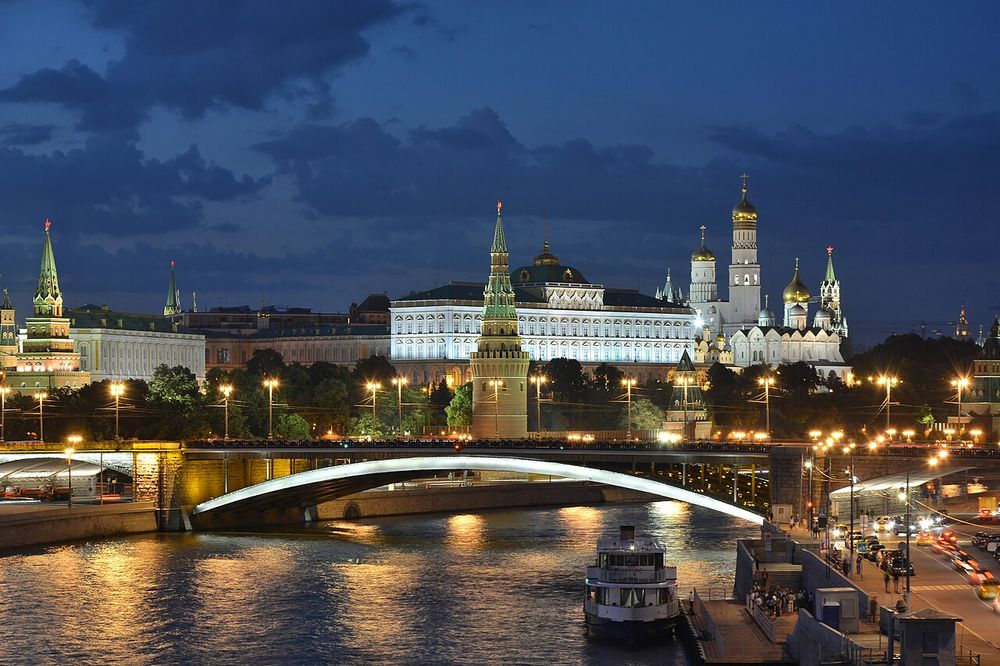
A kremlin is the fortified heart of an old Russian town. Moscow's grew from a wooden fort first recorded in 1147. Ivan III, who married a Byzantine princess and threw off Tatar rule, rebuilt it in stone. Between 1485 and 1495 Italian engineers raised the red brick walls you see: 2.2 kilometres long, with twenty towers. Their swallowtail battlements are the same as those of castles in Milan and Verona.
Peter the Great moved the capital to St Petersburg in 1712. In 1918 Lenin moved it back, and for nearly forty years the Kremlin was closed to the public. Since 1955 visitors may walk in its squares and see its cathedrals and treasures. The rest is the working seat of the president.
What is here
There are two tickets. The Cathedral Square ticket covers the grounds, the cathedrals, the Tsar Bell and the Tsar Cannon. The Armoury Chamber has its own ticket with a timed entry. The Diamond Fund, inside the Armoury building, is run by another body and sold separately. The Grand Kremlin Palace and the government buildings are not open.
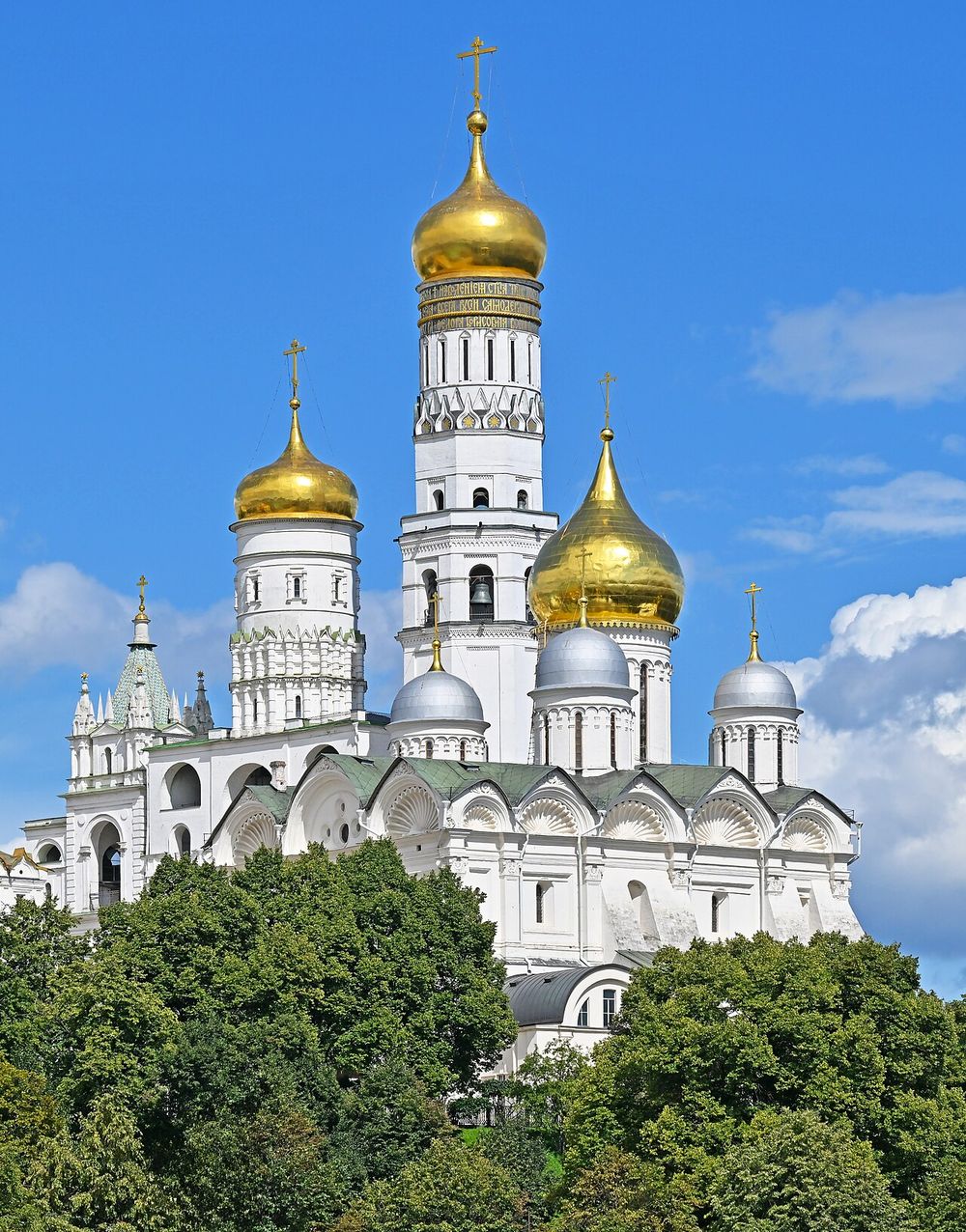
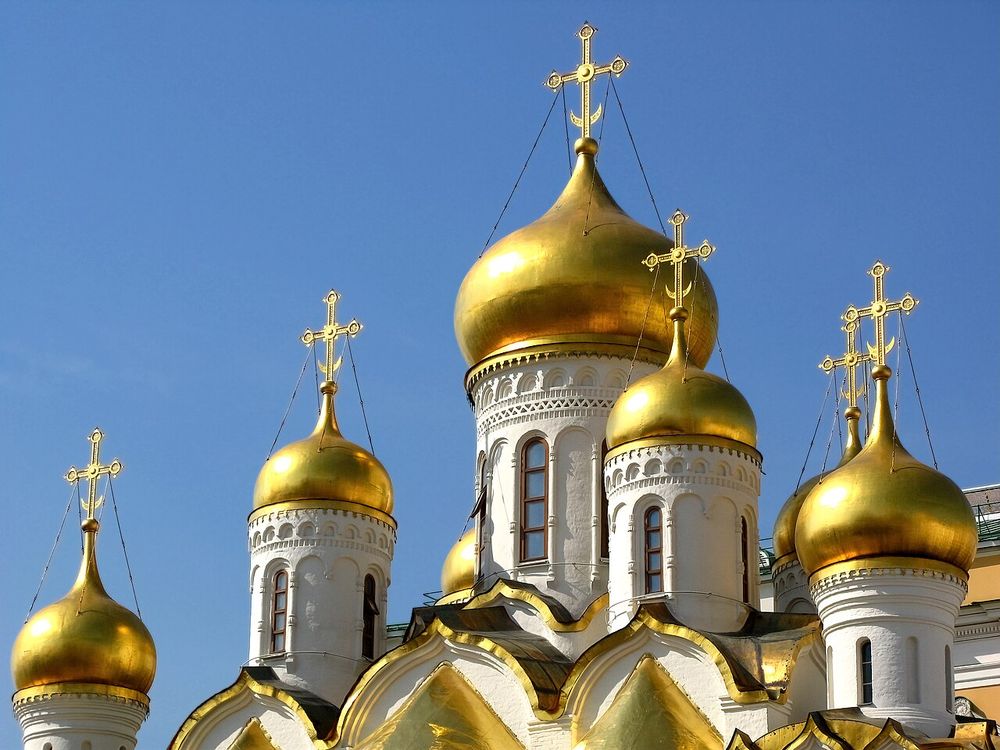
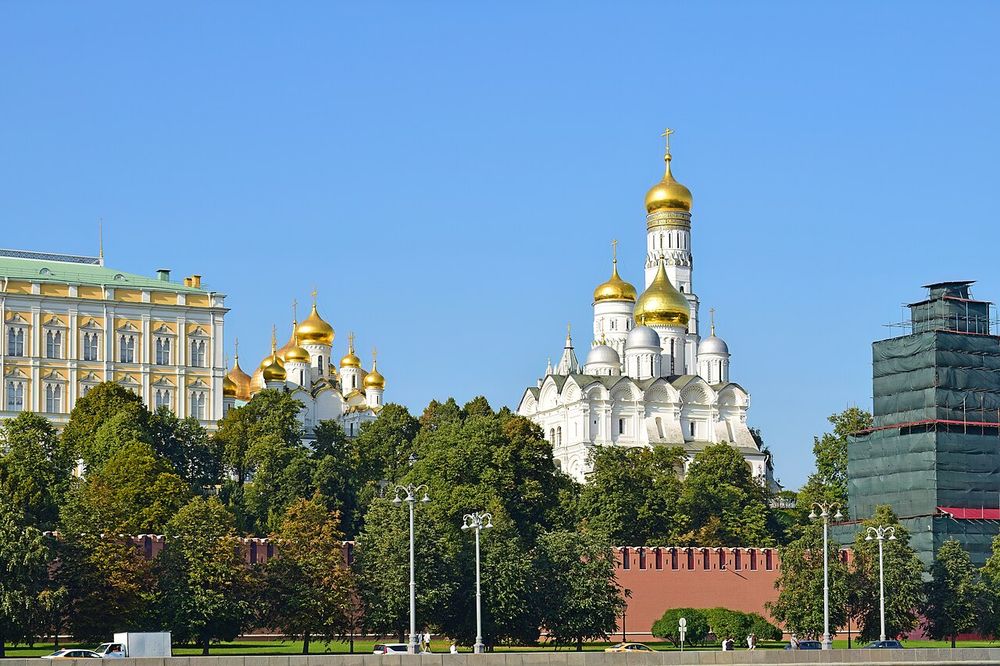
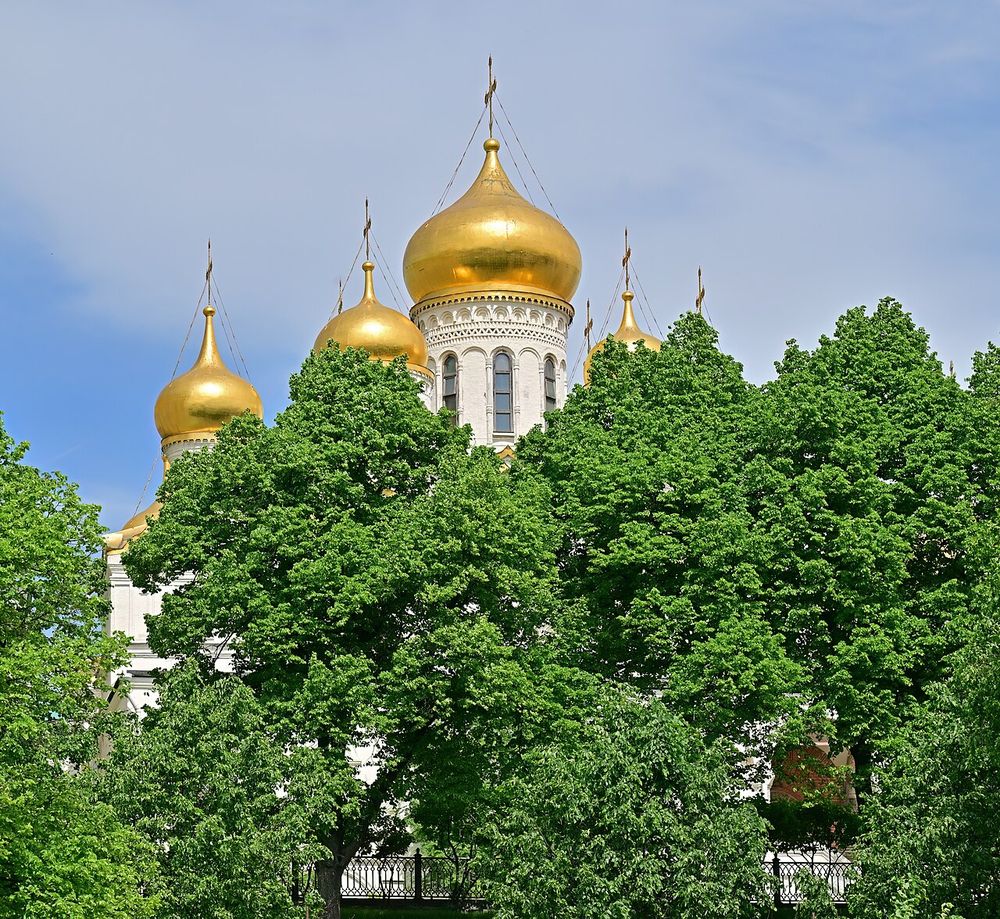
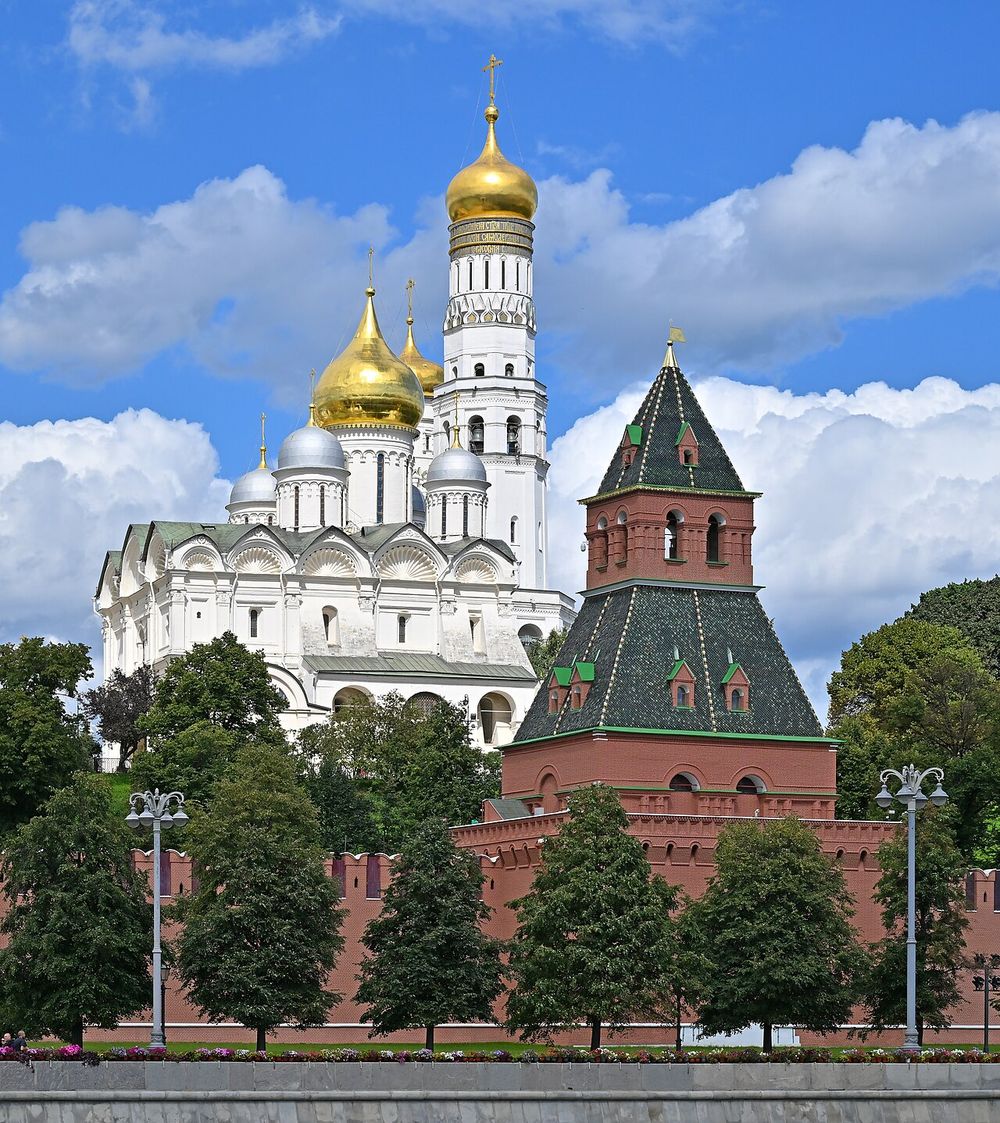
Three cathedrals face each other across the square. The Assumption Cathedral, where the tsars were crowned. The Archangel Cathedral, where they were buried until Peter the Great. The Annunciation Cathedral, their private chapel, with nine golden domes.
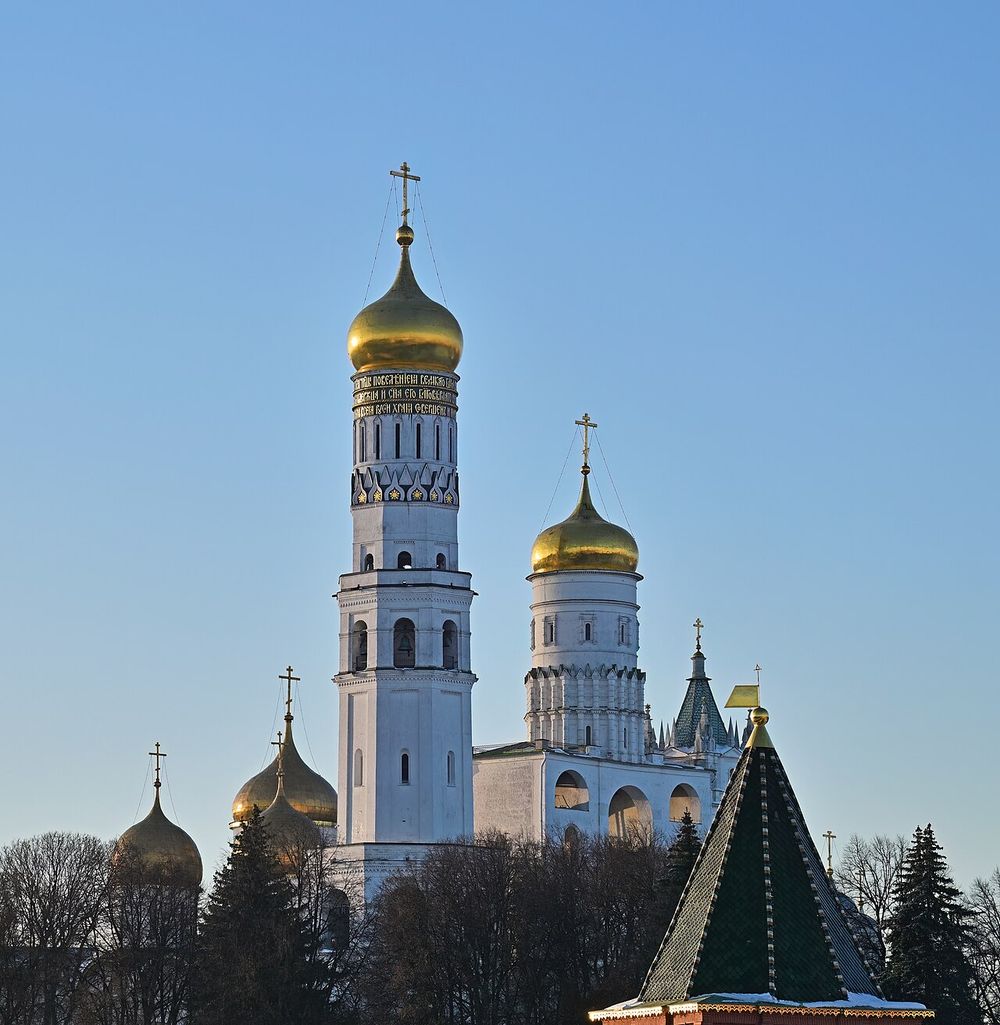
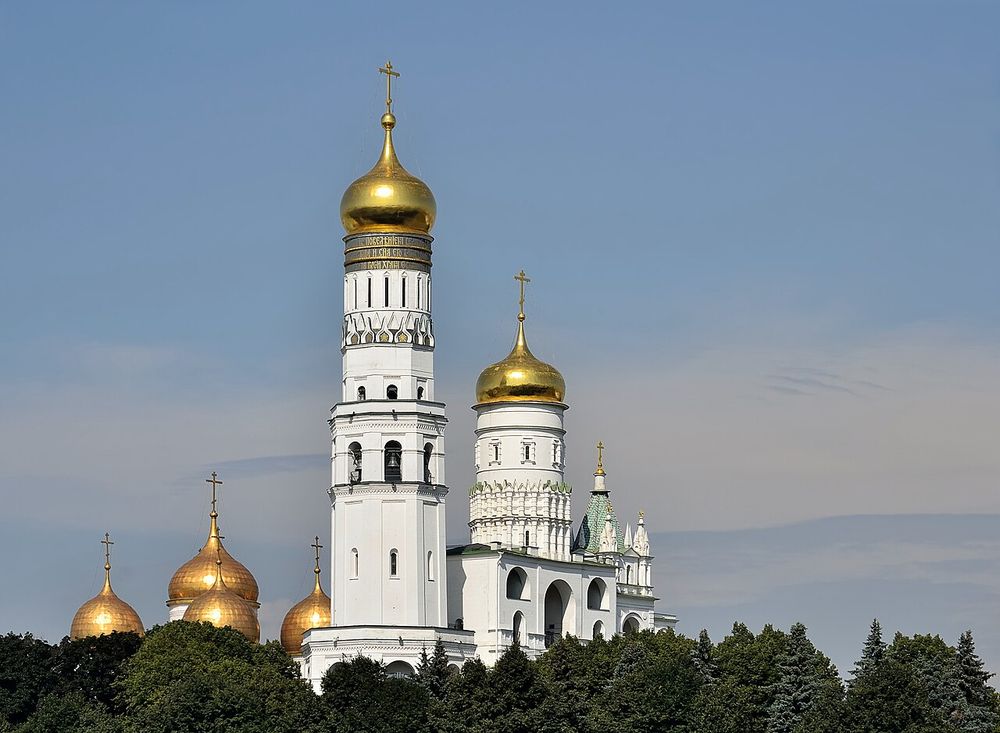
The Ivan the Great Bell Tower at sunset, 2026Юрий Д.К., CC BY 4.0
Above them rises the white Ivan the Great Bell Tower, 81 metres. Until the twentieth century no building in Moscow was allowed to be taller.
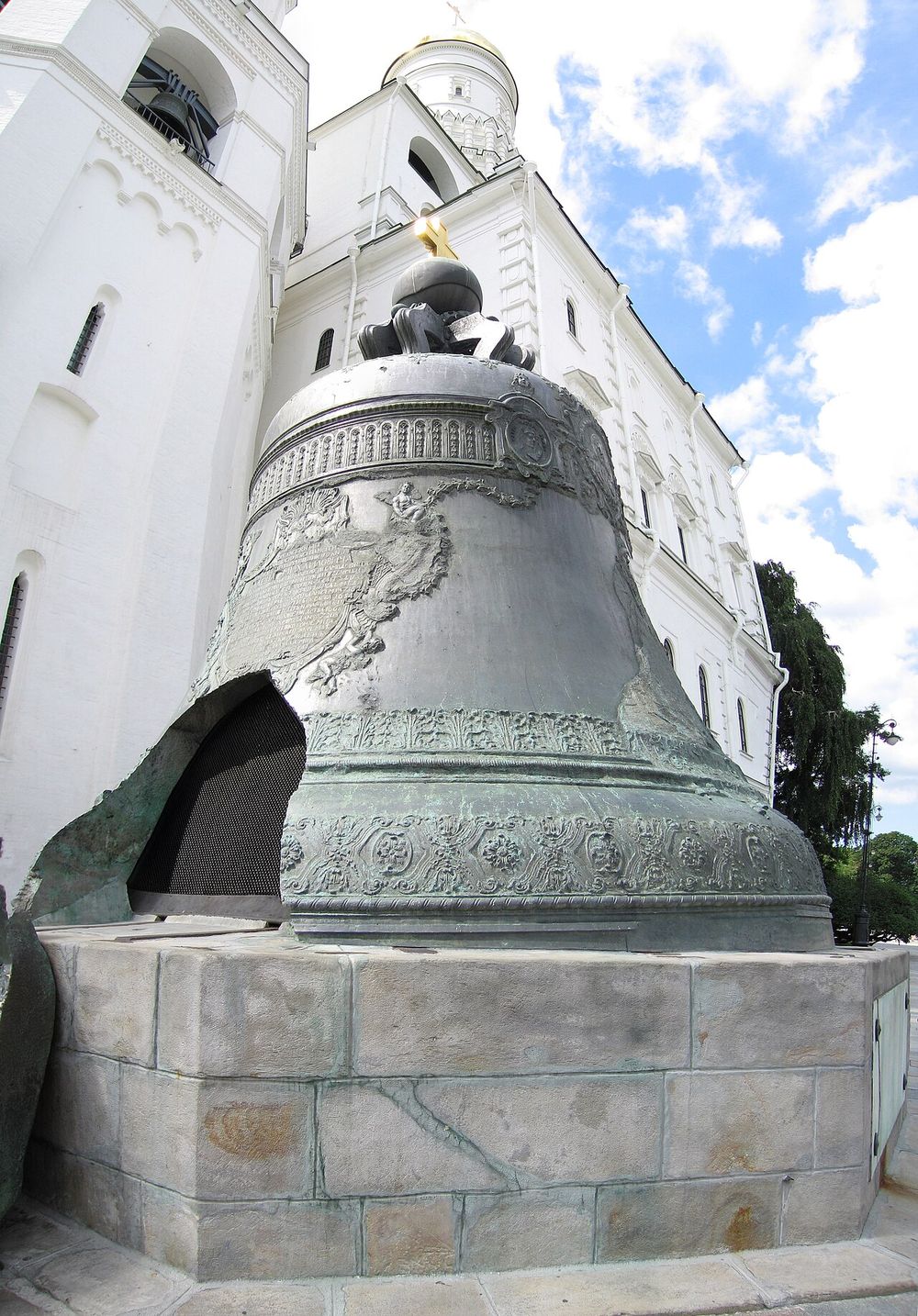
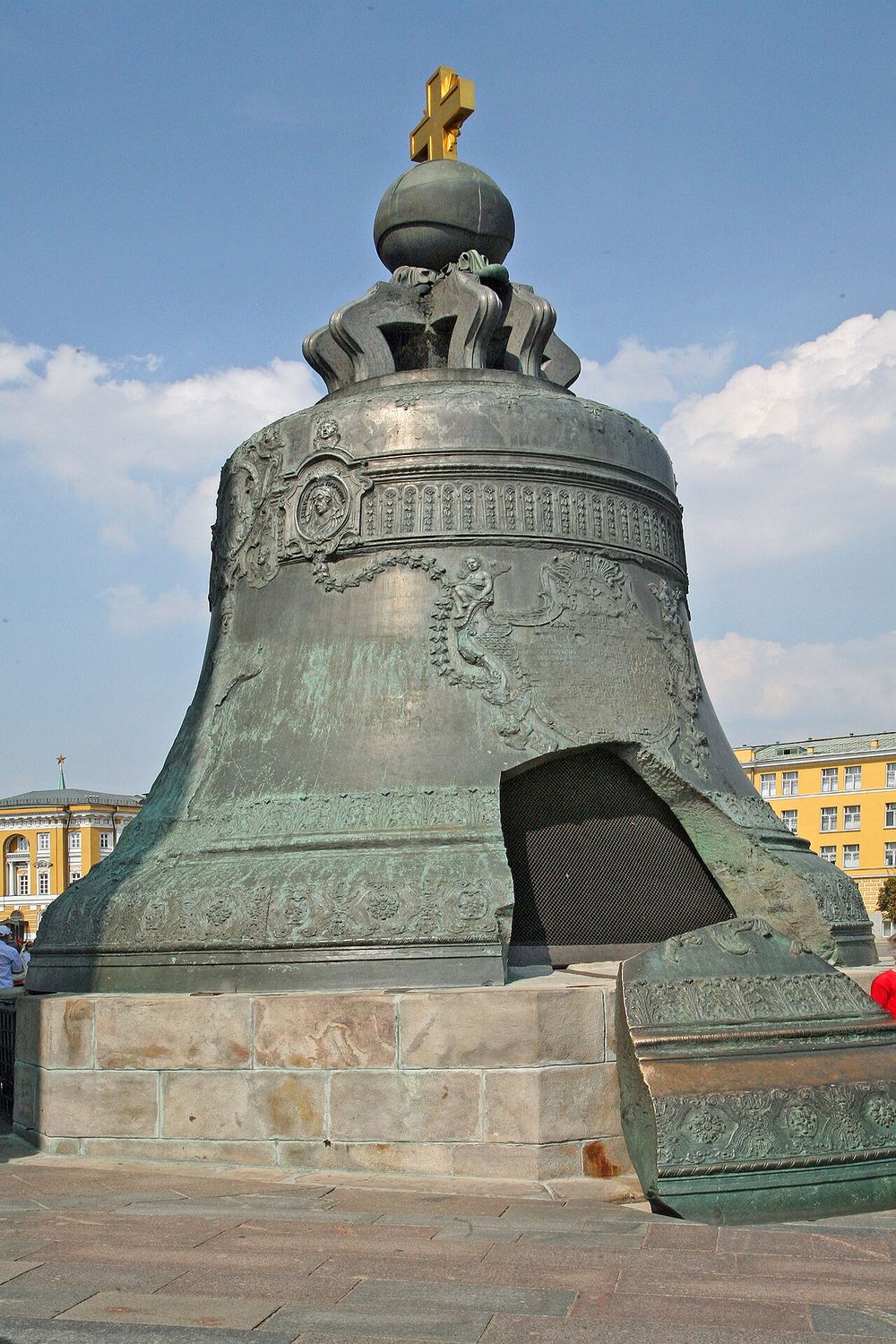
The Tsar Bell and its broken pieceLSDSL, CC BY-SA 3.0
At its foot sits the Tsar Bell, the largest in the world, about 200 tonnes. It was cast in 1735 and still in its casting pit when a fire broke out in 1737. Water thrown on the hot metal cracked it, and a piece of 11 tonnes fell off. It has never rung.
Things people often get wrong
"The Kremlin is one building." It is a fortress holding palaces, cathedrals, government buildings, gardens and museums. "The Kremlin" is also used to mean the Russian government.
"St Basil's is inside." It stands outside the walls, on Red Square.
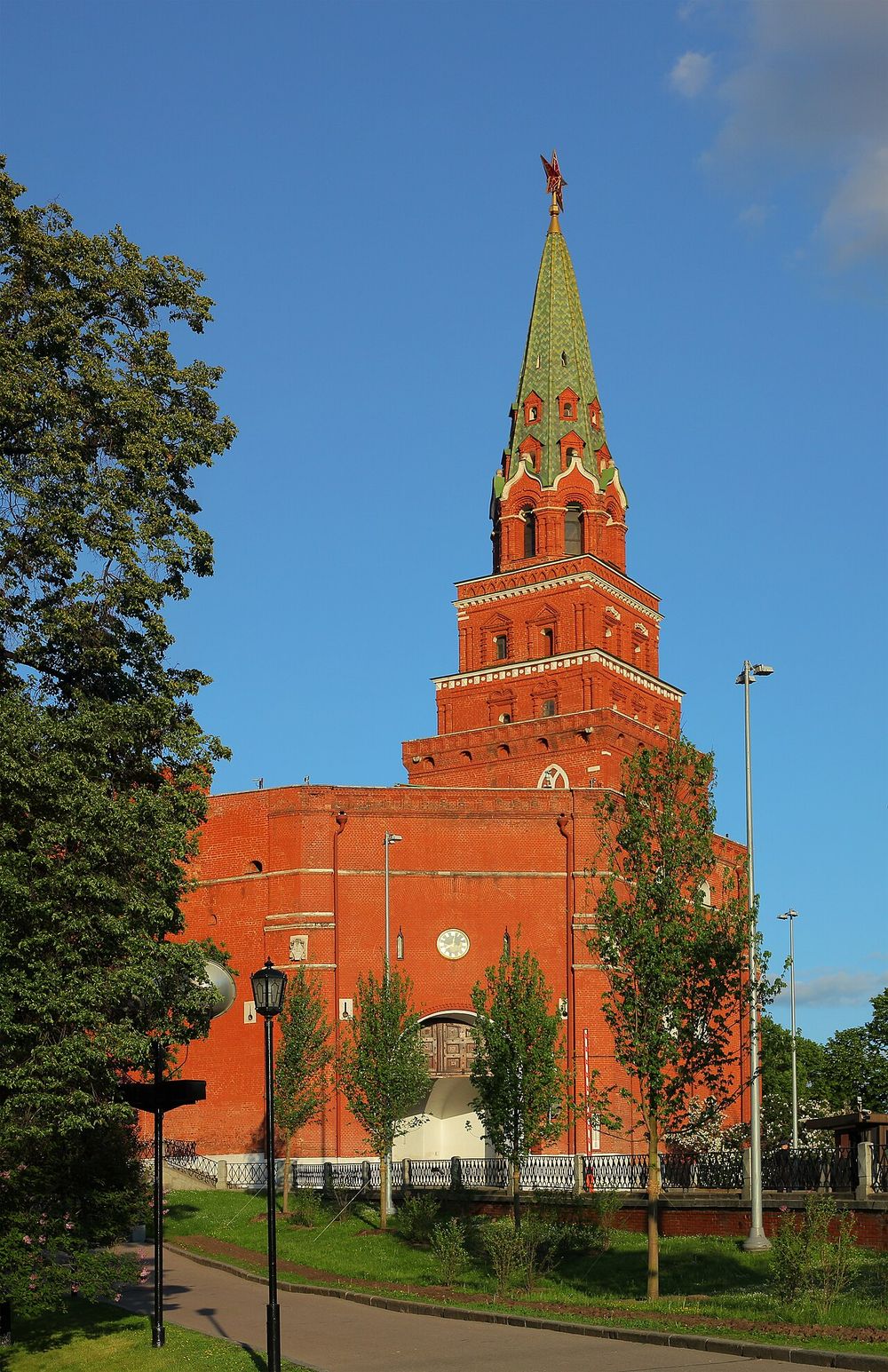
"You can enter from Red Square." The visitors' entrance is the Kutafya Tower in the Alexander Garden on the west side. The Armoury has its own entrance by the Borovitskaya Tower.
"It is open every day." It is closed on Thursdays.
Music, films and books
Tchaikovsky's 1812 Overture ends with the bells of Moscow and cannon fire, celebrating the retreat of Napoleon. The bells of Ivan the Great are among those it imitates. In Mission: Impossible – Ghost Protocol (2011) the Kremlin is blown up, in the film only.
People who stood here
We searched Russian, Chinese and English sources for this list.
Ivan III (grand prince of Moscow, 1462–1505)He built the walls, the Assumption Cathedral and the Palace of Facets, married Sophia Palaiologina, niece of the last Byzantine emperor, and took the double-headed eagle as his arms.
Aristotele Fioravanti (Italian architect from Bologna)He built the Assumption Cathedral in 1475–79, in the Russian form but with Italian engineering, and taught Moscow to make good brick.
Ivan IV ("the Terrible")He was crowned the first tsar in the Assumption Cathedral in 1547 and is buried in the Archangel Cathedral.
Peter the GreatHe was born in the Kremlin in 1672 and crowned here with his half-brother in 1682, on a double throne now in the Armoury. Then he left to build a new capital.
Napoleon BonaparteHe moved into the Kremlin in September 1812 as Moscow burned around it. When he left in October, his troops blew up parts of the walls and towers.
Mao Zedong and Joseph StalinOn 14 February 1950 the treaty of friendship between the People's Republic of China and the Soviet Union was signed in the Kremlin, at the end of Mao's two-month stay in Moscow.
Mikhail Gorbachev (last leader of the Soviet Union)On the evening of 25 December 1991 he resigned on television, and the Soviet red flag was lowered from the Senate dome and the Russian tricolour raised.
Go deeper: seven stops, from the Kutafya Tower to the Armoury
A visit to the grounds and Cathedral Square takes two hours; the Armoury another hour and a half. You cannot go everywhere: guards will whistle you back from the government areas.
1. The Kutafya and Trinity towers
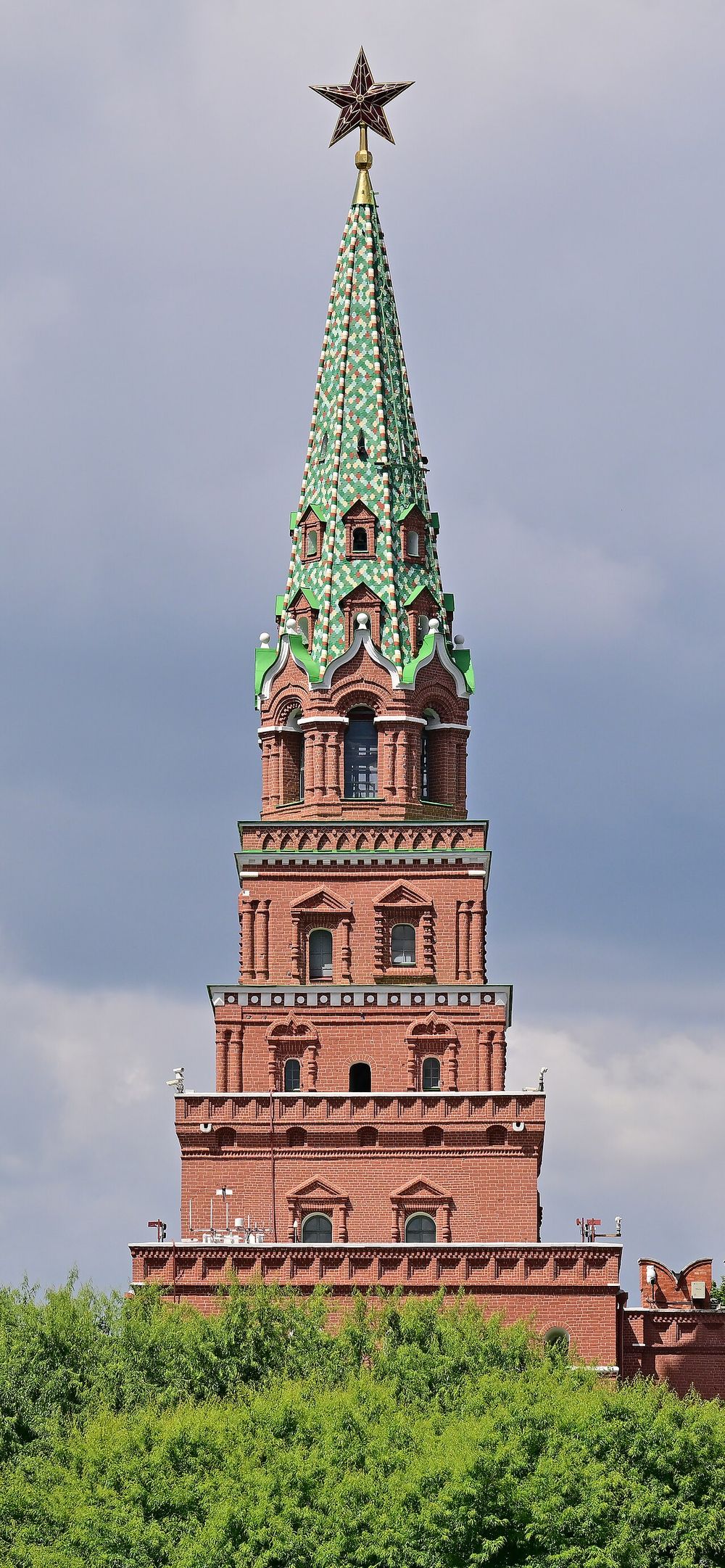
The Borovitskaya Tower, 2026Юрий Д.К., CC BY 4.0
You enter by the low white Kutafya Tower and cross a bridge over the Alexander Garden into the tall Trinity Tower. The garden was once the Neglinnaya river, which ran along the wall as a moat. It was put into a pipe in the 1810s.
2. The palaces and the Senate
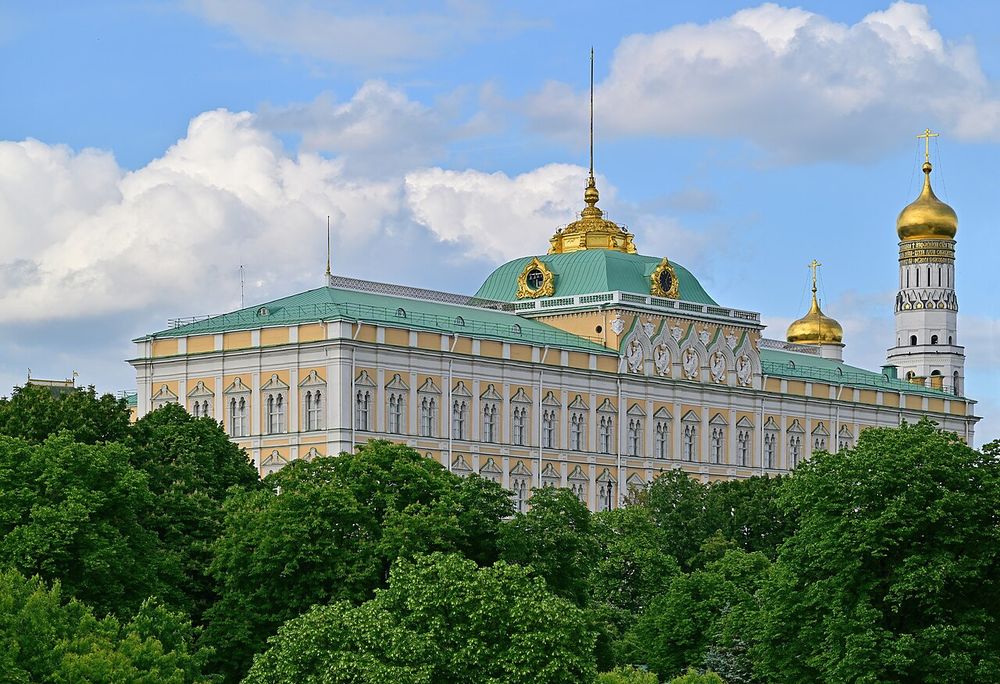
The Grand Kremlin Palace above the riverЮрий Д.К., CC BY 4.0
On your left is the State Kremlin Palace of 1961, a glass and marble hall for party congresses, now a theatre. Ahead is the yellow Senate of the 1780s, the president's office, with the flag on its dome. Visitors keep to the road.
3. The Tsar Cannon and the Tsar Bell
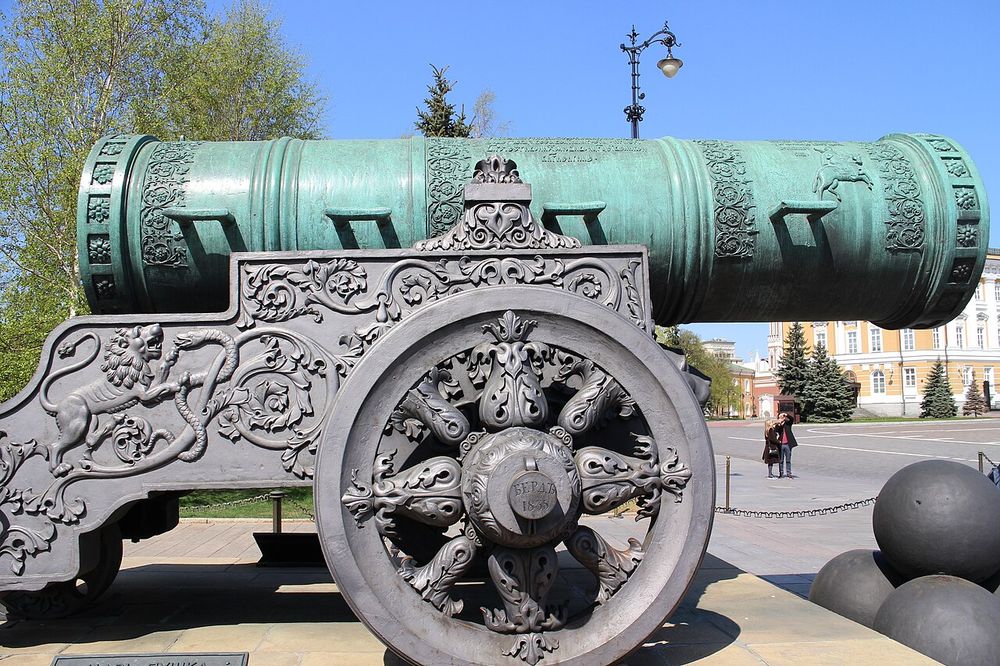
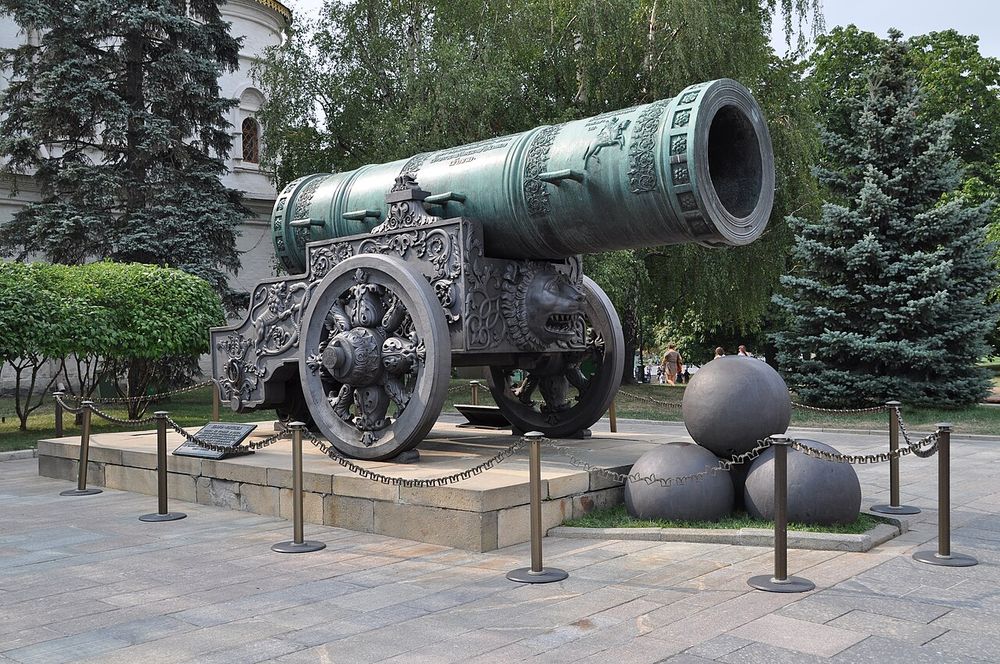
The Tsar Cannon, 2019Suicasmo, CC BY-SA 4.0
The cannon was cast by Andrey Chokhov in 1586, weighs about 39 tonnes, and has a bore of 89 centimetres. It was never fired in war. The four great iron balls beside it were added in 1835 for show, and are too big to fit.
The Tsar Bell, 2010W. Bulach, CC BY-SA 4.0
The broken piece of the bell stands beside it. Russians say the bell that does not ring and the cannon that does not shoot are the Kremlin's two jokes.
4. The Assumption Cathedral
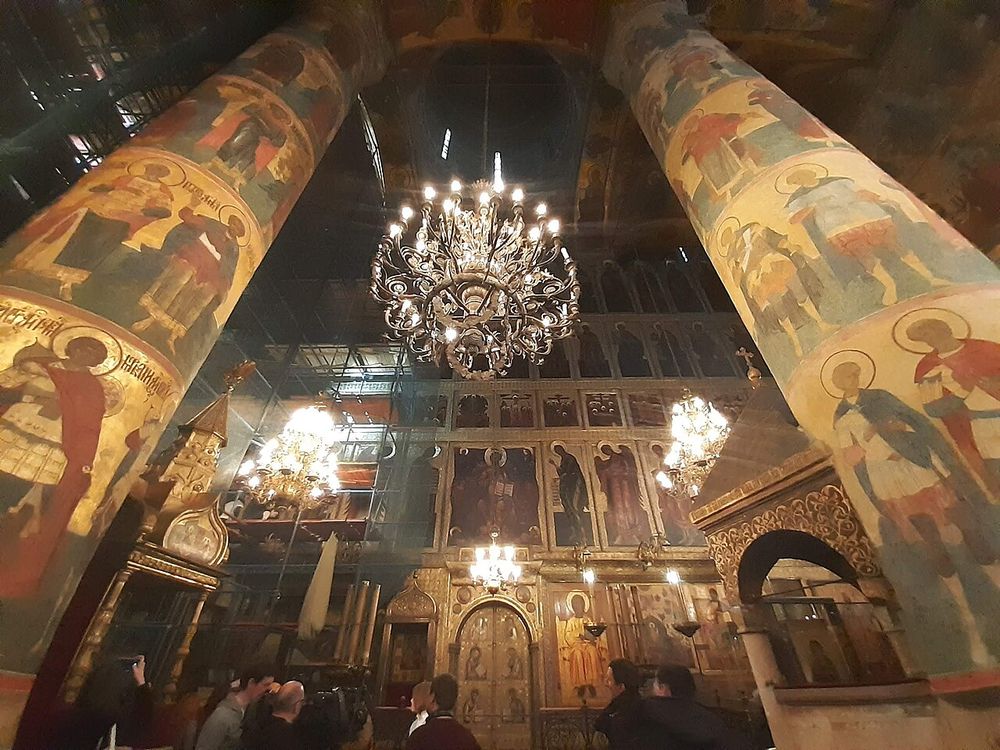
Inside the Assumption Cathedral, 2020Shakko, CC BY-SA 4.0
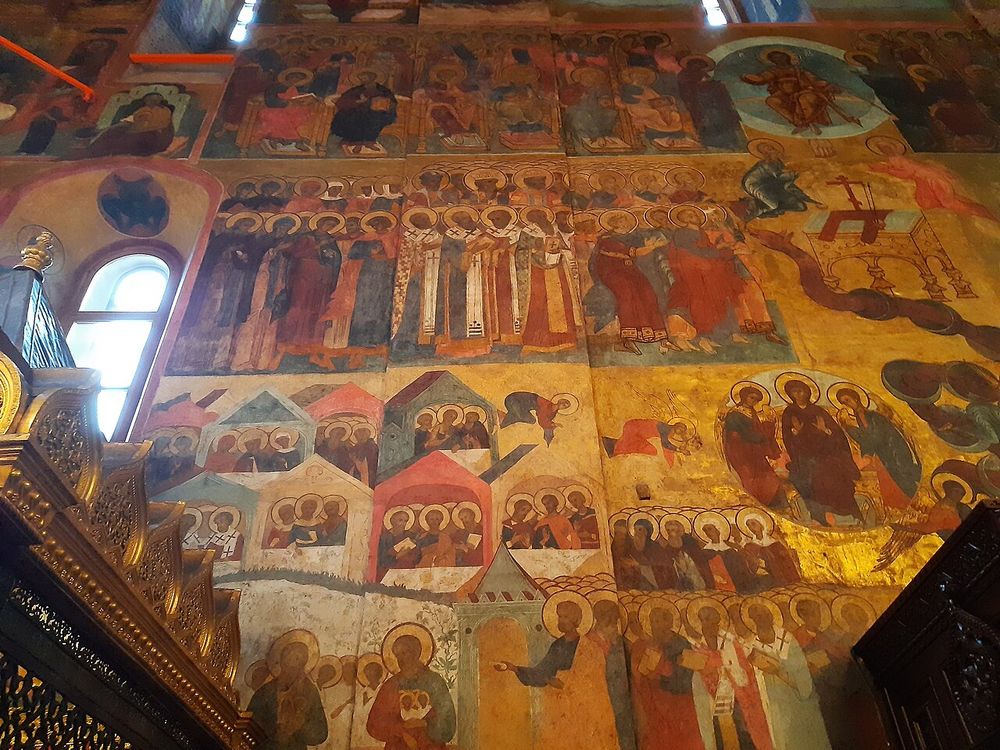
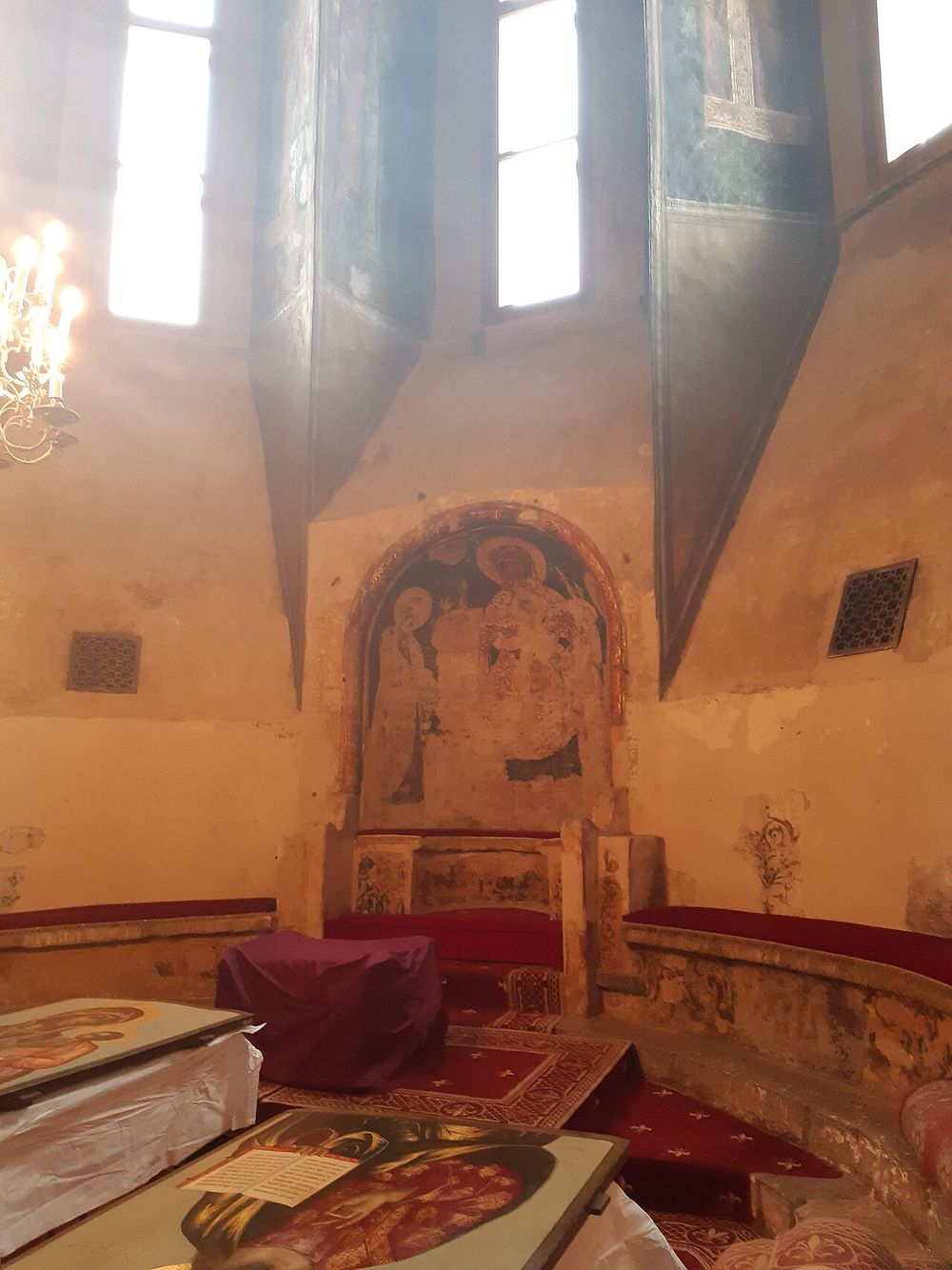
Inside, every wall and pillar is painted with saints, on gold. The iconostasis, the screen of icons before the altar, rises in five rows. Here the tsars were crowned and the heads of the Russian church were enthroned and buried.
Wall paintings in the Assumption CathedralShakko, CC BY-SA 4.0
Napoleon's cavalry stabled their horses here in 1812 and melted down the silver. They took five tonnes of it. The great chandelier was later made from silver the Cossacks took back.
5. The Archangel and Annunciation cathedrals
The Archangel Cathedral and Ivan the Great, 2025Юрий Д.К., CC BY 4.0
The Archangel Cathedral holds the tombs of the grand princes and tsars of Moscow, Ivan the Terrible and his son among them. Its shell-shaped gables are Venetian, the work of an Italian called Aloisio the New.
The golden domes of the AnnunciationPetar Milošević, CC BY-SA 4.0
The Annunciation Cathedral was the tsars' own chapel. Its iconostasis has icons by the two great painters of medieval Russia, Theophanes the Greek and Andrei Rublev.
6. The Palace of Facets
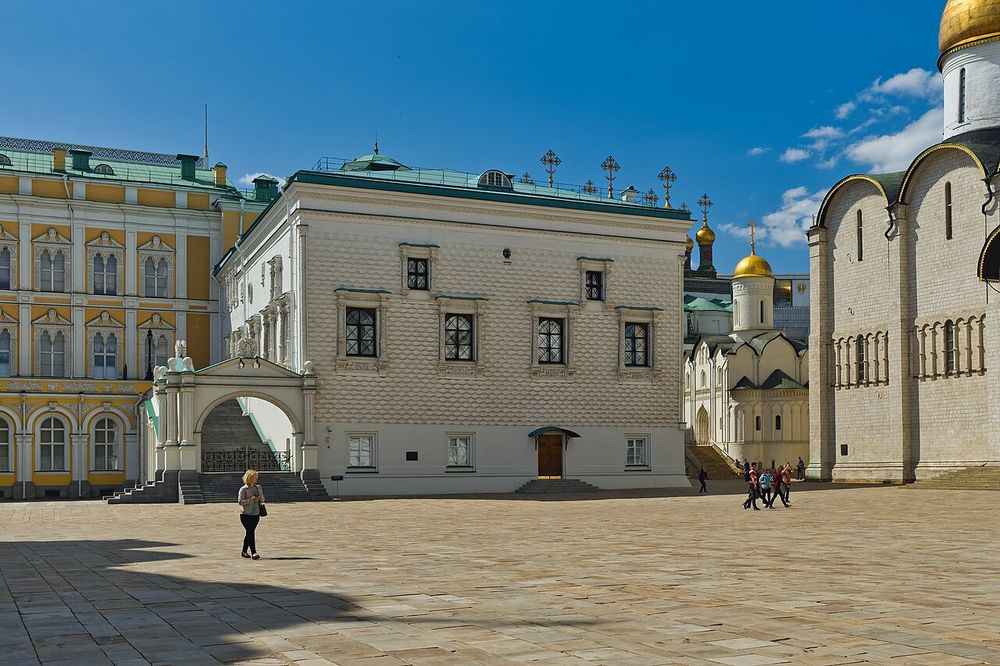
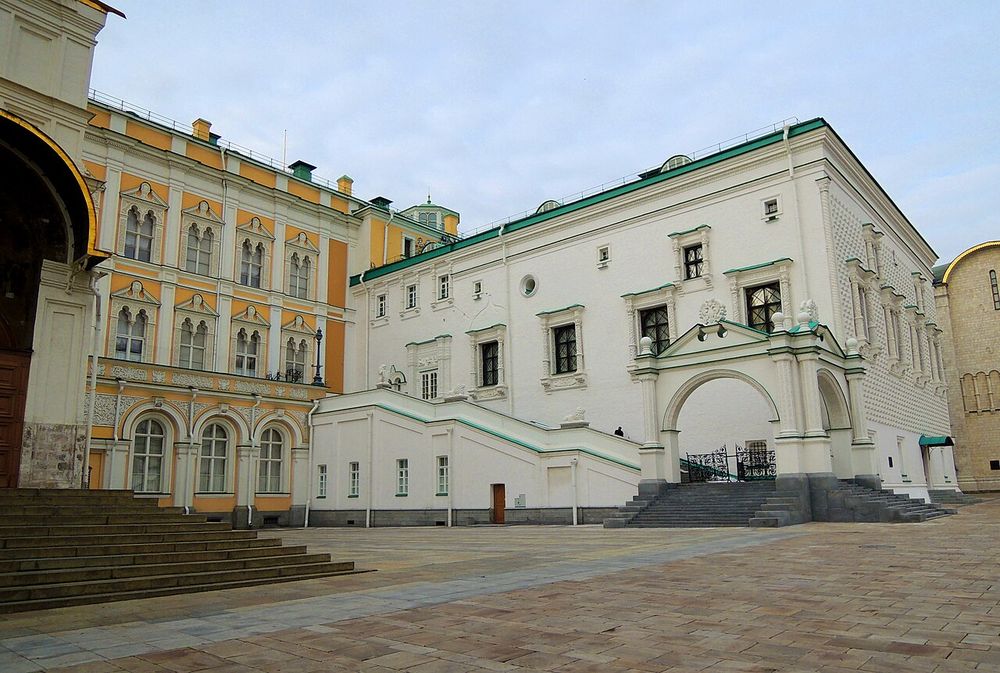
The Palace of FacetsAlexxx1979, CC BY-SA 4.0
The stone palace faced with diamond-cut blocks was built by Italians in 1487–91 for receiving ambassadors. It is the oldest secular building in Moscow. It is seen only from outside.
7. The Armoury, and the same years in China
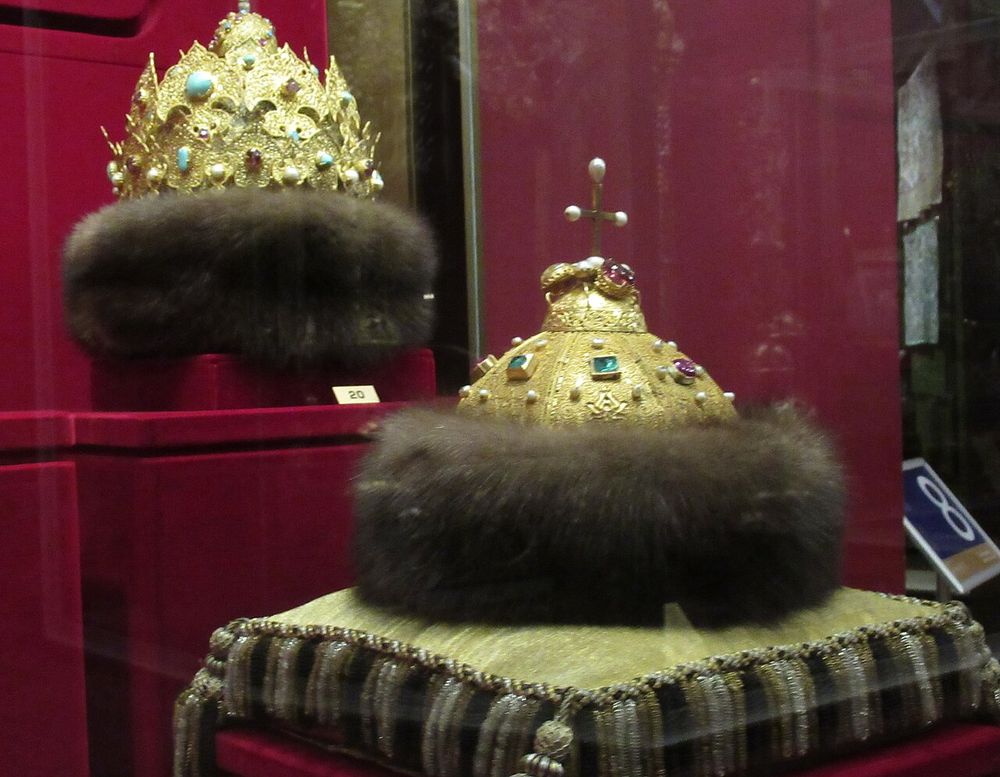
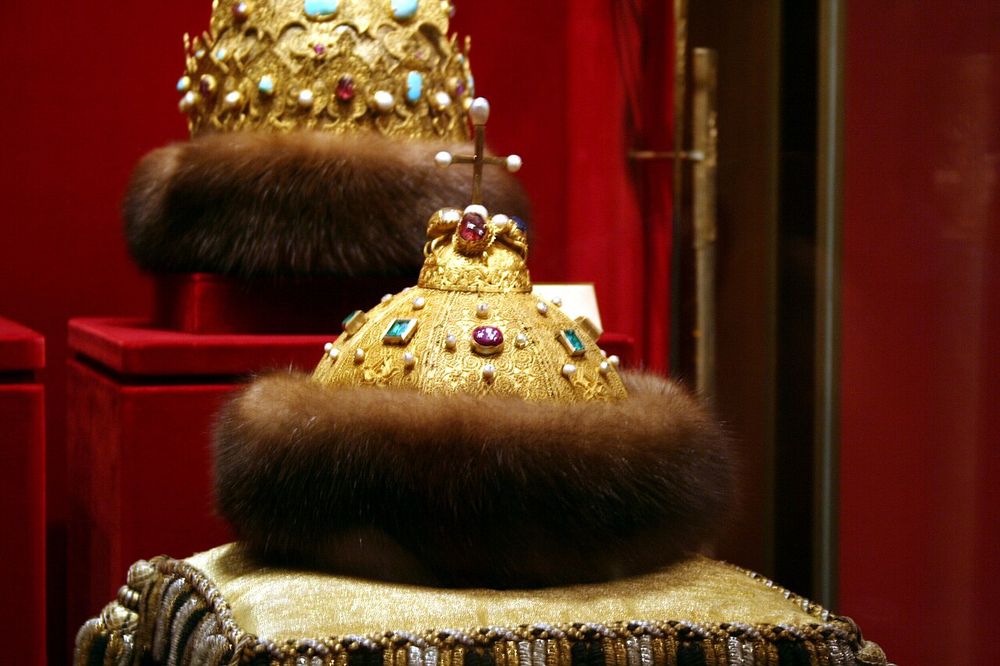
The Cap of Monomakh in the ArmouryShakko, CC BY-SA 4.0
The Armoury is the treasury of the tsars: crowns, thrones, gowns, carriages, ten Fabergé eggs. The oldest crown, the Cap of Monomakh, gold filigree trimmed with sable, was probably made in Central Asia under the Mongols, in the late 1200s or early 1300s.
Crowns in the ArmouryRamón from Llanera, España, CC BY-SA 2.0
The walls were built in 1485–1495, in the Chenghua and Hongzhi years of the Ming (1464–1505), while the Great Wall at Badaling was being rebuilt in brick and stone. The Russian embassy of Fyodor Baikov reached Beijing in 1656, early in the Qing (1644–1912), and failed because the envoy would not kowtow.
Meanwhile in the world
Year
Here
Elsewhere
1147
Moscow is first named in a chronicle
The Second Crusade
1485–1495
The red brick walls
Columbus crosses the Atlantic, 1492
1547
Ivan IV crowned first tsar
Henry VIII dies
1735
The Tsar Bell is cast
The Treaty of Vienna
1812
Napoleon in the Kremlin
The United States declares war on Britain
1950
The Sino-Soviet treaty is signed here
The Korean War begins
1991
The Soviet flag comes down
The World Wide Web goes public
One line to remember: a bell that never rang, a cannon that never fired, and walls built by Italians.
Then and now
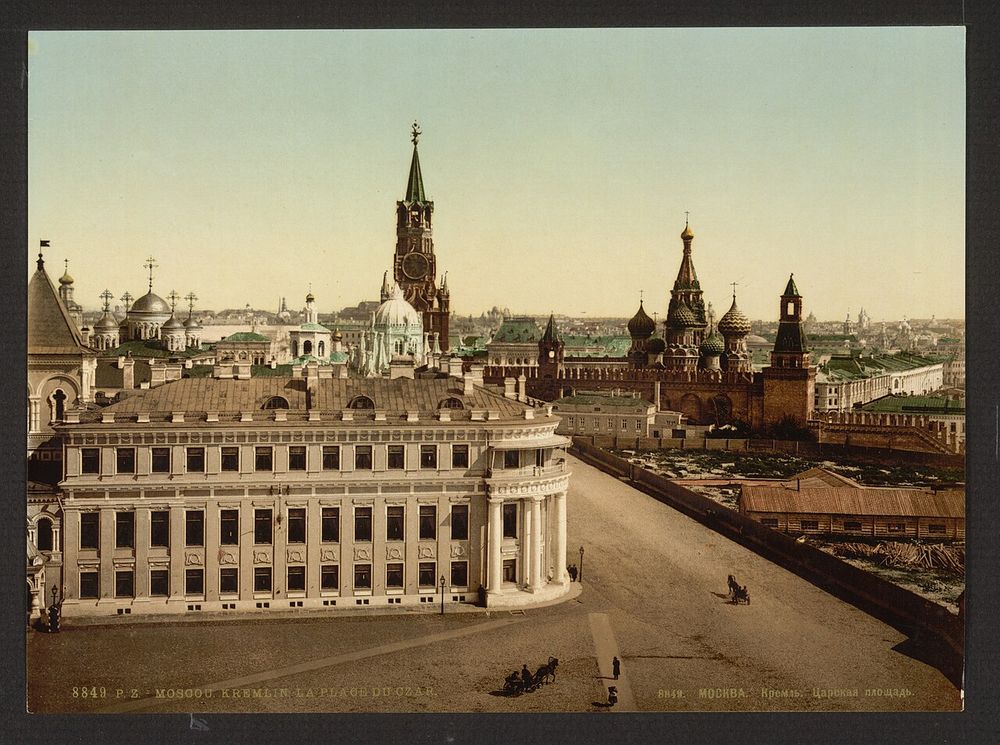
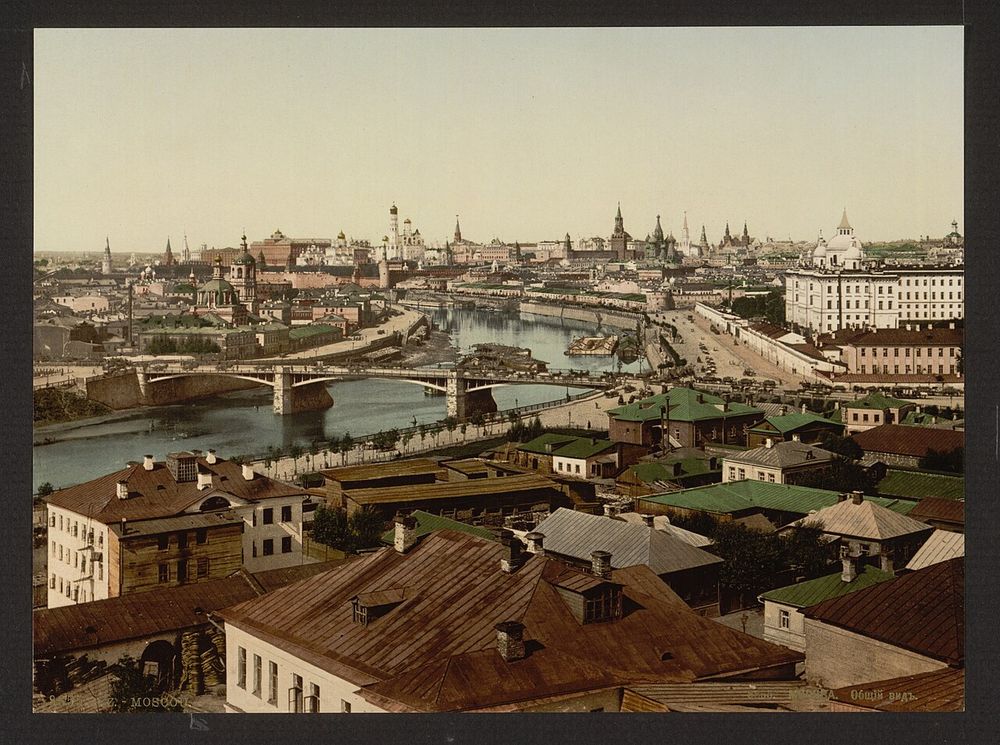
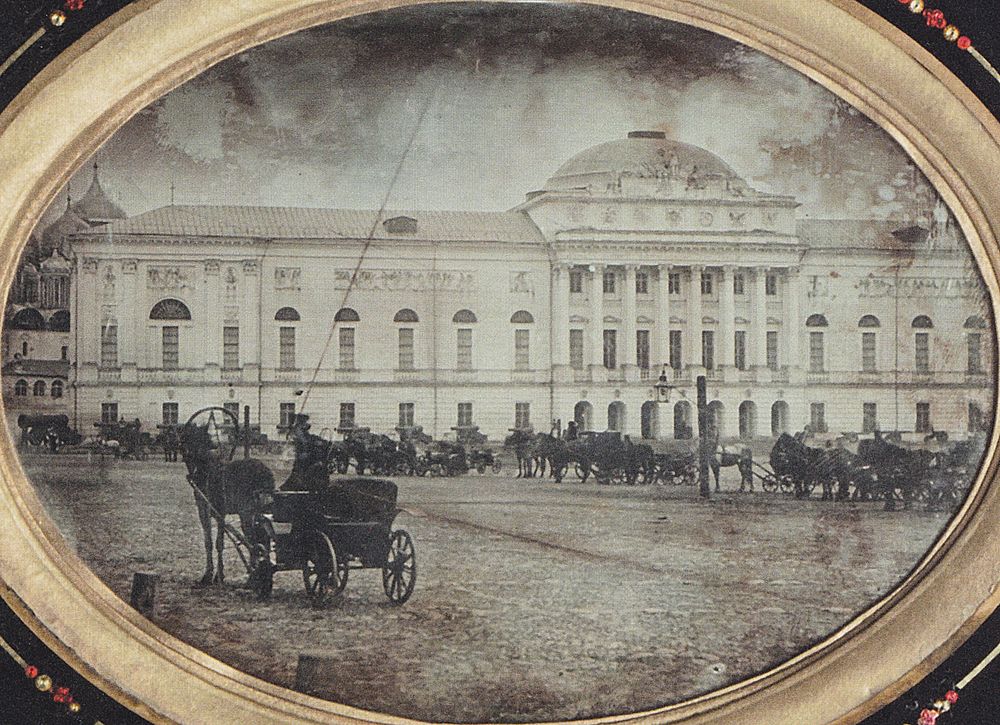
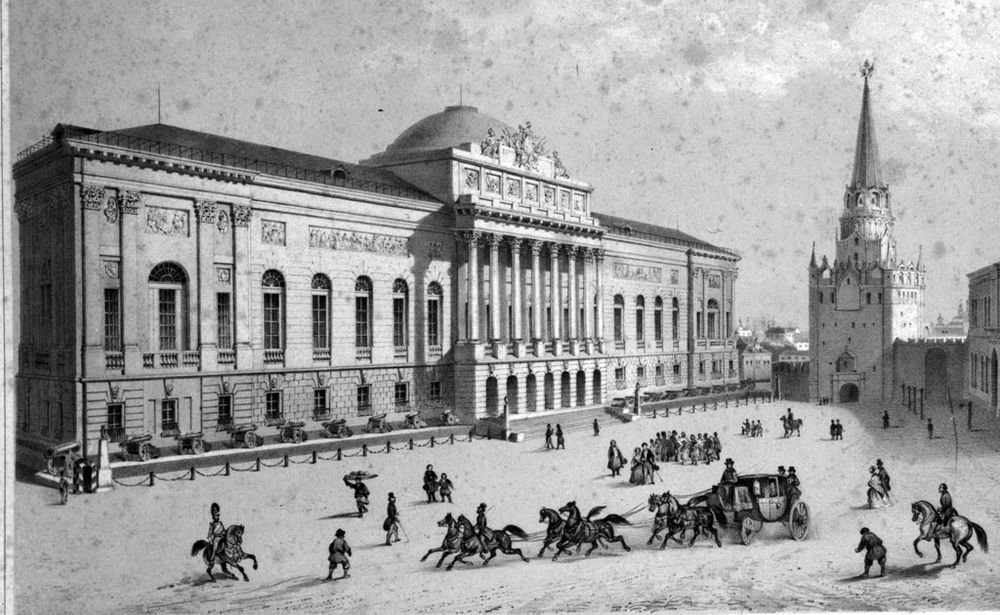
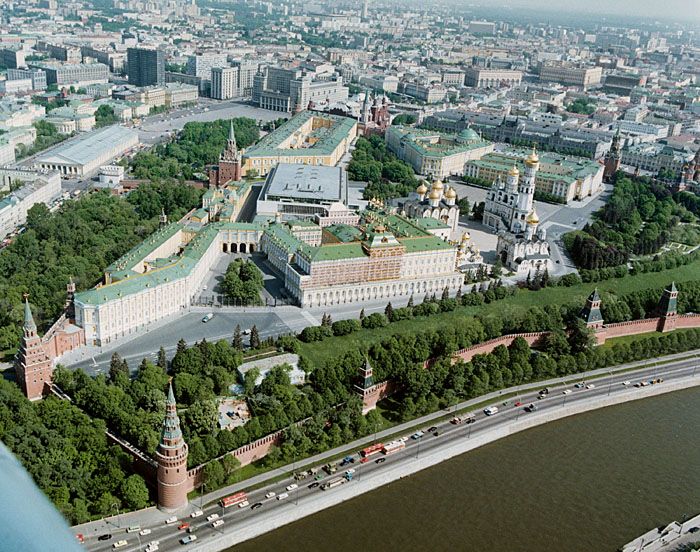
The Kremlin from the Bolshoy Kamenny Bridge, summer 2026Юрий Д.К., CC BY 4.0, Wikimedia CommonsThe Kremlin and the bridge late in the evening, 2015Andrey Korzun, CC BY-SA 4.0, Wikimedia CommonsThe Grand Kremlin Palace above the riverЮрий Д.К., CC BY 4.0, Wikimedia CommonsThe Kremlin from Sofiyskaya Embankment, 2025Юрий Д.К., CC BY 4.0, Wikimedia CommonsThe Moskva and the Kremlin at dusk, 2016Diego Delso, CC BY-SA 4.0, Wikimedia CommonsCathedral SquarePedro Szekely, CC BY-SA 2.0, Wikimedia CommonsThe Annunciation, the Archangel and the bell towerЮрий Д.К., CC BY 4.0, Wikimedia CommonsThe Archangel Cathedral and Ivan the Great, 2025Юрий Д.К., CC BY 4.0, Wikimedia CommonsThe Annunciation Cathedral, 2026Юрий Д.К., CC BY 4.0, Wikimedia CommonsThe golden domes of the AnnunciationPetar Milošević, CC BY-SA 4.0, Wikimedia CommonsInside the Assumption Cathedral, 2020Shakko, CC BY-SA 4.0, Wikimedia CommonsWall paintings in the Assumption CathedralShakko, CC BY-SA 4.0, Wikimedia CommonsThe altar of the Assumption Cathedralshakko, CC BY-SA 4.0, Wikimedia CommonsThe Ivan the Great Bell Tower at sunset, 2026Юрий Д.К., CC BY 4.0, Wikimedia CommonsThe bell tower and its domesDmitry Ivanov., CC BY-SA 4.0, Wikimedia CommonsThe Taynitskaya Tower and the cathedrals, 2025Юрий Д.К., CC BY 4.0, Wikimedia CommonsThe Tsar Bell and its broken pieceLSDSL, CC BY-SA 3.0, Wikimedia CommonsThe Tsar Bell, 2010W. Bulach, CC BY-SA 4.0, Wikimedia CommonsThe Tsar Cannon, 2019Suicasmo, CC BY-SA 4.0, Wikimedia CommonsThe Tsar Cannon and its iron ballsSchlurcher, CC BY 4.0, Wikimedia CommonsThe Borovitskaya Tower, 2026Юрий Д.К., CC BY 4.0, Wikimedia CommonsA tower of the Kremlin wall, 2012A.Savin, CC BY-SA 3.0, Wikimedia CommonsThe Palace of FacetsAlexxx1979, CC BY-SA 4.0, Wikimedia CommonsThe Palace of Facets and the Red Staircaseshakko, CC BY-SA 3.0, Wikimedia CommonsThe Cap of Monomakh in the ArmouryShakko, CC BY-SA 4.0, Wikimedia CommonsCrowns in the ArmouryRamón from Llanera, España, CC BY-SA 2.0, Wikimedia CommonsThe Kremlin on a photochrom print, about 1900Photochrom Print Collection, Public domain, Wikimedia CommonsMoscow from the Kremlin, about 1900Photochrom Print Collection, Public domain, Wikimedia CommonsThe old Armoury building, a daguerreotype of the 1840sUnknown authorUnknown author, Public domain, Wikimedia CommonsThe old Armoury, an engraving of 1850Кювилье, Public domain, Wikimedia CommonsThe Kremlin from the air, 1987Георгий Надеждин / ITAR-TASS, CC BY 4.0, Wikimedia Commons
Local legends
These are stories people tell about this place. They are legends, not history, and each one says where it comes from.
LegendThe library of Ivan the Terrible
Sophia Palaiologina is said to have brought the lost books of Byzantium to Moscow, and Ivan the Terrible to have hidden them in a vault under the Kremlin. Searchers have dug for it for three hundred years.
Source: Moscow tradition since the sixteenth century; nothing has been found
LegendNapoleon's mistake
Napoleon is said to have waited in the Kremlin for the keys of Moscow to be brought to him, as other capitals had done. No one came.
Source: French memoirs of 1812, retold by Tolstoy in War and Peace
Later, people who live here will be able to add the stories they grew up with, and say which of these they have heard.
Not certain, and where accounts conflict
Where was the Cap of Monomakh made?
Russian tradition said it was sent by the Byzantine emperor Constantine Monomachos. Historians now date it to the late 1200s or early 1300s and think it was made by craftsmen of the Golden Horde or Central Asia.
Prices given in late 2025: Armoury 1,400 roubles, Cathedral Square 1,100. Under 7 free; ages 7 to 16 reduced.
Cathedral Square: 9:30 to 18:00 from 15 May to 30 September, 10:00 to 17:00 the rest of the year. Armoury sessions at 10:00, 12:00, 14:30 and 16:30. Closed every Thursday.
The Ivan the Great Bell Tower is closed in 2026.
Last checked 2026-11-12. The Moscow Kremlin Museums' own site (kreml.ru), and figures the State Hermitage gave for Kremlin prices in late 2025.
Booking from abroad
Official page in English Tickets are sold on the museums' own site, kreml.ru, which has English and Chinese pages, and at the ticket office in the Alexander Garden. The museums say they work with no online ticket platform; tickets from other sites may be refused. Foreign bank cards may not work on the site.
Ticket window on site The ticket office in the Alexander Garden opens 9:00 to 17:00 in summer and 9:30 to 16:30 in winter, closed on Thursdays. Vouchers bought online must be exchanged there at least 45 minutes before an Armoury session.
Checked 2026-11-12
Where to start
Metro to Aleksandrovsky Sad, Borovitskaya or Biblioteka imeni Lenina. The entrance is the Kutafya Tower in the Alexander Garden.
In the Alexander Garden, the guard at the Tomb of the Unknown Soldier changes on the hour.
For the best view of the walls and domes, cross the Bolshoy Kamenny Bridge or walk along the Sofiyskaya Embankment across the river.
Before you go
Visas: most foreigners need a Russian visa, many can apply online. Chinese citizens with ordinary passports may visit visa-free for up to 30 days until 31 December 2027.
Money: cards issued abroad generally do not work in Russia. Bring cash.
Large bags are not allowed in and there is no cloakroom inside; leave them at the cloakroom by the Kutafya Tower.
Many governments advise against travel to Russia. Read your own government's advice.
Customs and manners
Stay on the paths. Guards whistle at anyone who steps on the lawns or toward the government buildings.
Photography is allowed outside but not inside the cathedrals.
In the cathedrals women may cover their heads and men remove their hats.
Do not photograph the guards up close or the government buildings' entrances.
Opening hours are given in the local time of the place.
Look for these
On the walls, find the swallowtail battlements. Where else have you seen them?
Count the golden domes of the Annunciation Cathedral.
Find the broken piece of the Tsar Bell.
On the Tsar Cannon, find the tsar riding a horse.
Find the flag on the Senate dome. Is the president at work? (When he is, the presidential standard flies.)
I am here
Stand at the site, sign in, press the button, and collect its stamp. Your browser will ask to use your location. It is sent to us once to confirm that you are at the site; we keep how far you were from it, not the spot where you stood.
Your stamps are saved to your account, so they follow you to any device. Checking from a browser cannot rule out every false location; stricter checks arrive with the app.
Messages
Share your photos
Photos here show the place, not people. Each one is credited to the visitor who took it and appears after our team has looked at it. A photo with you in it belongs under “I am here”.