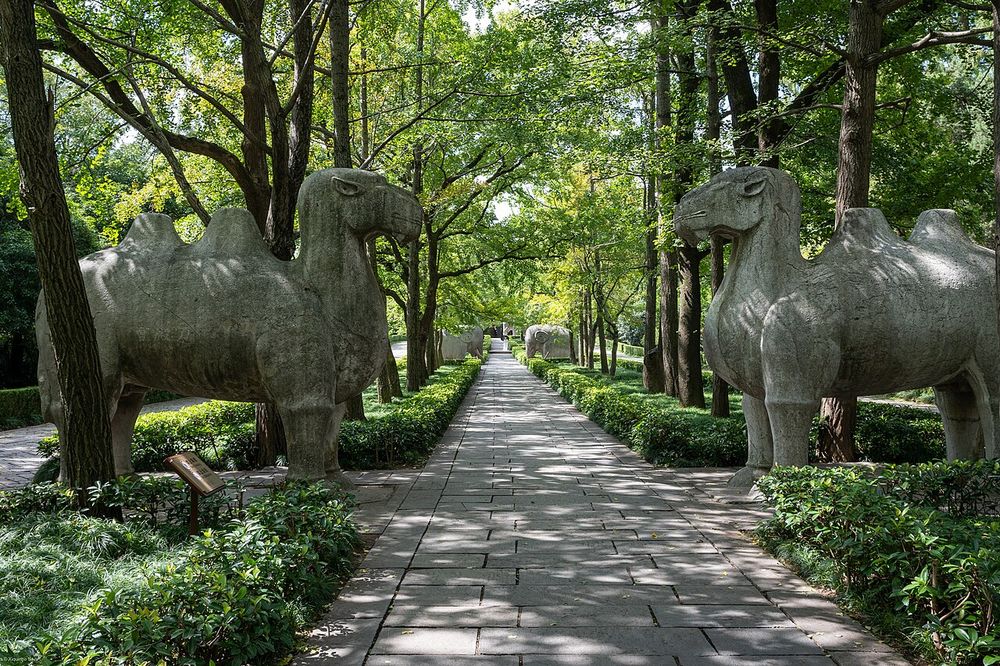
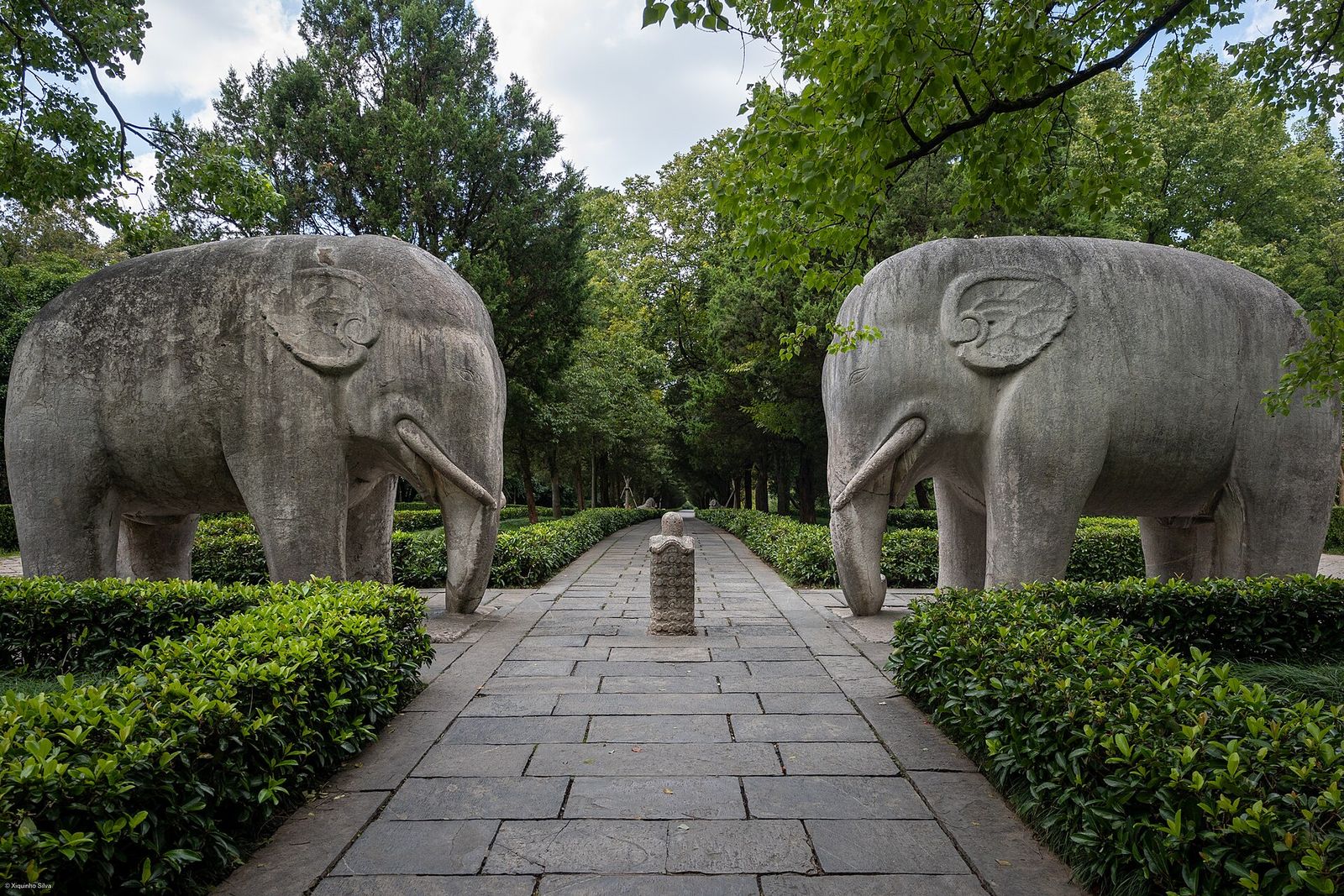
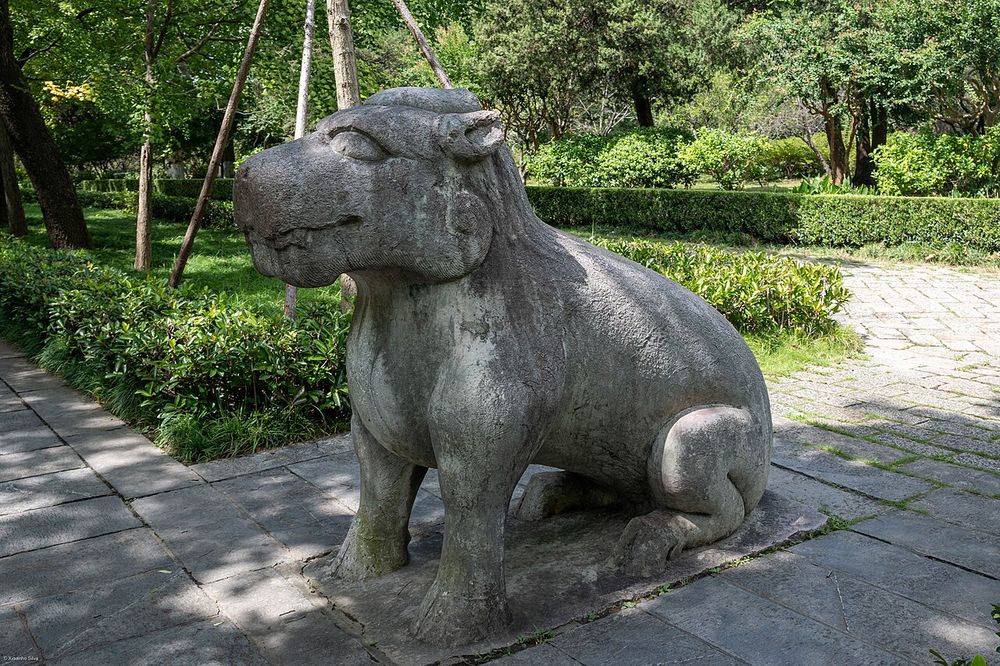
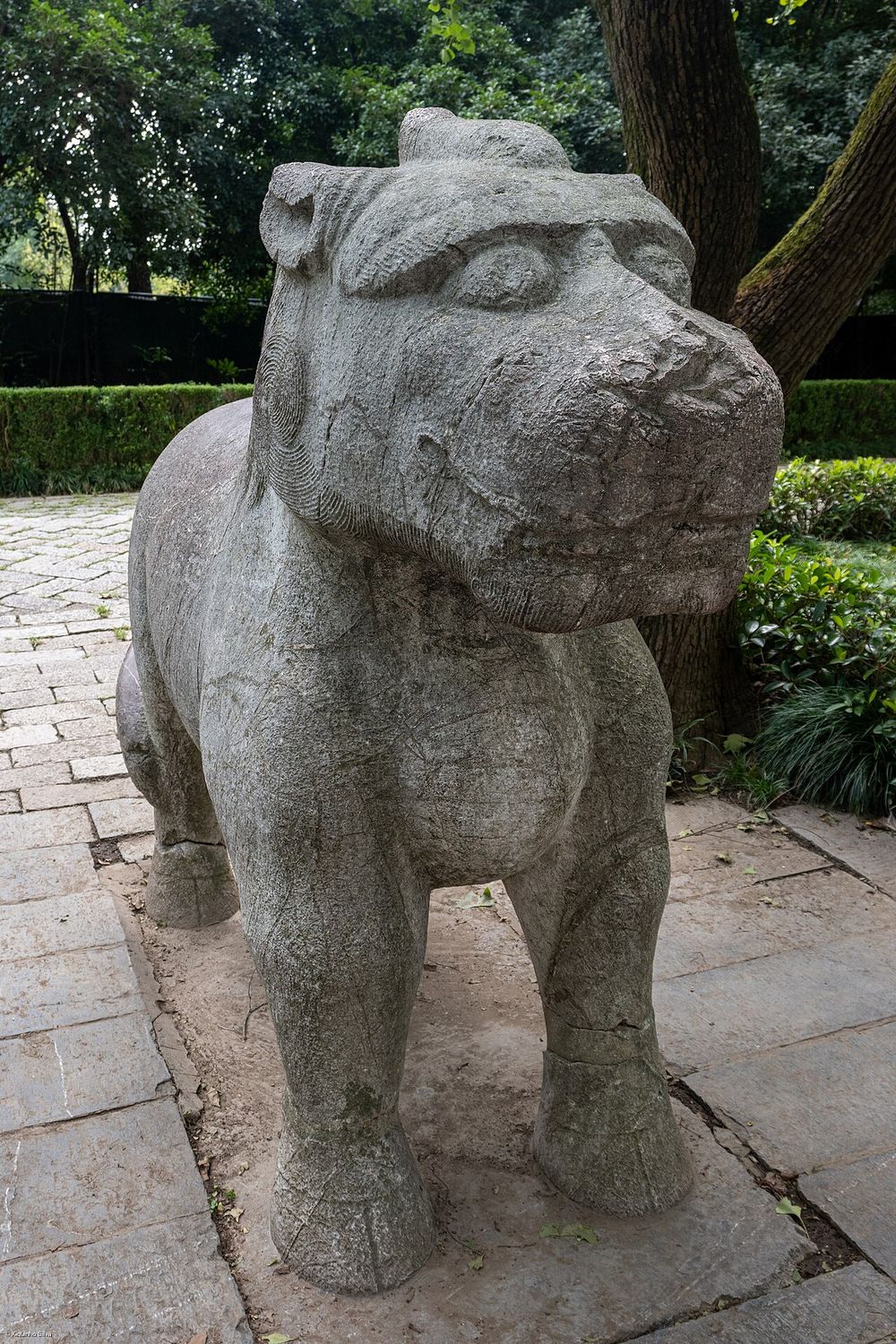
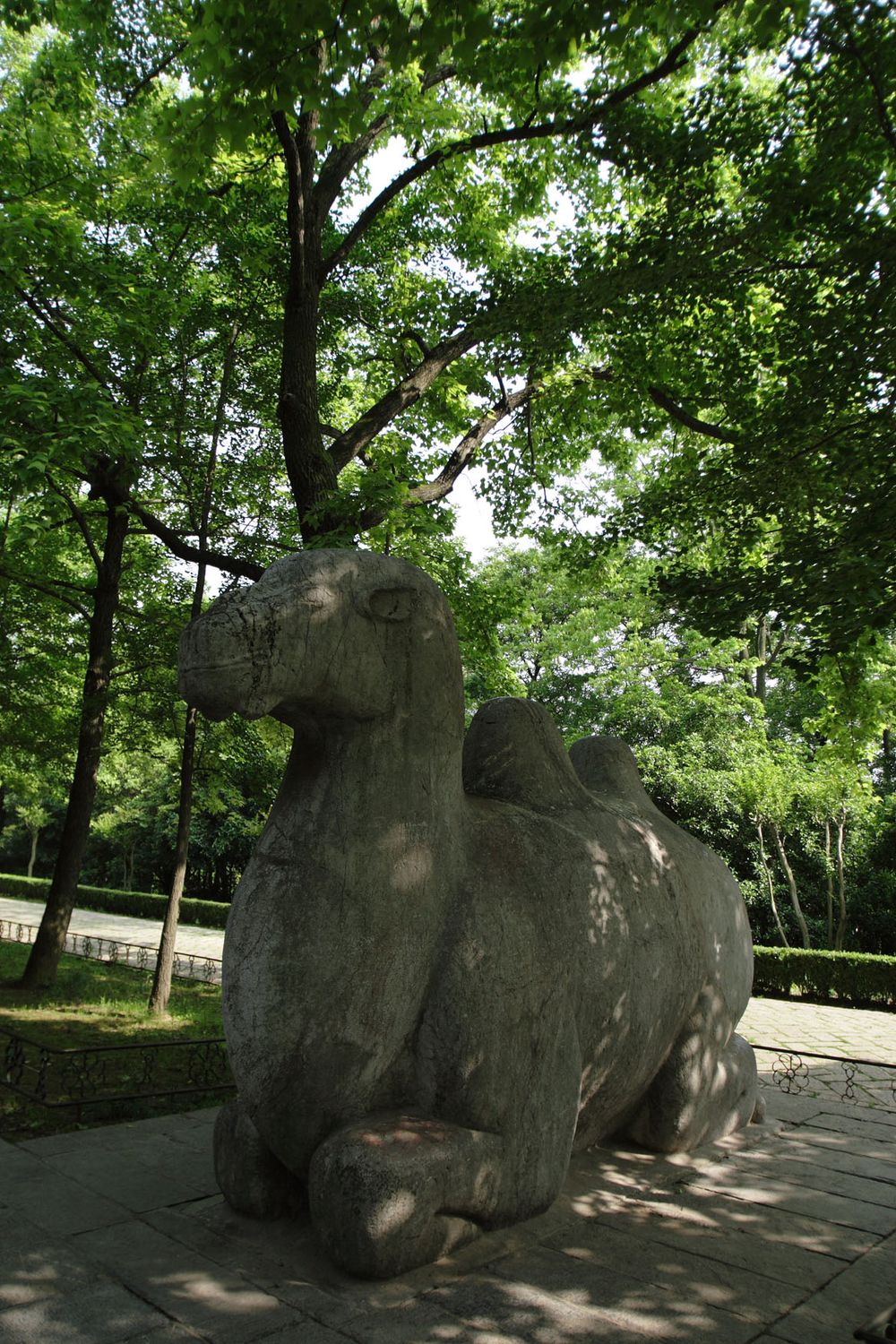
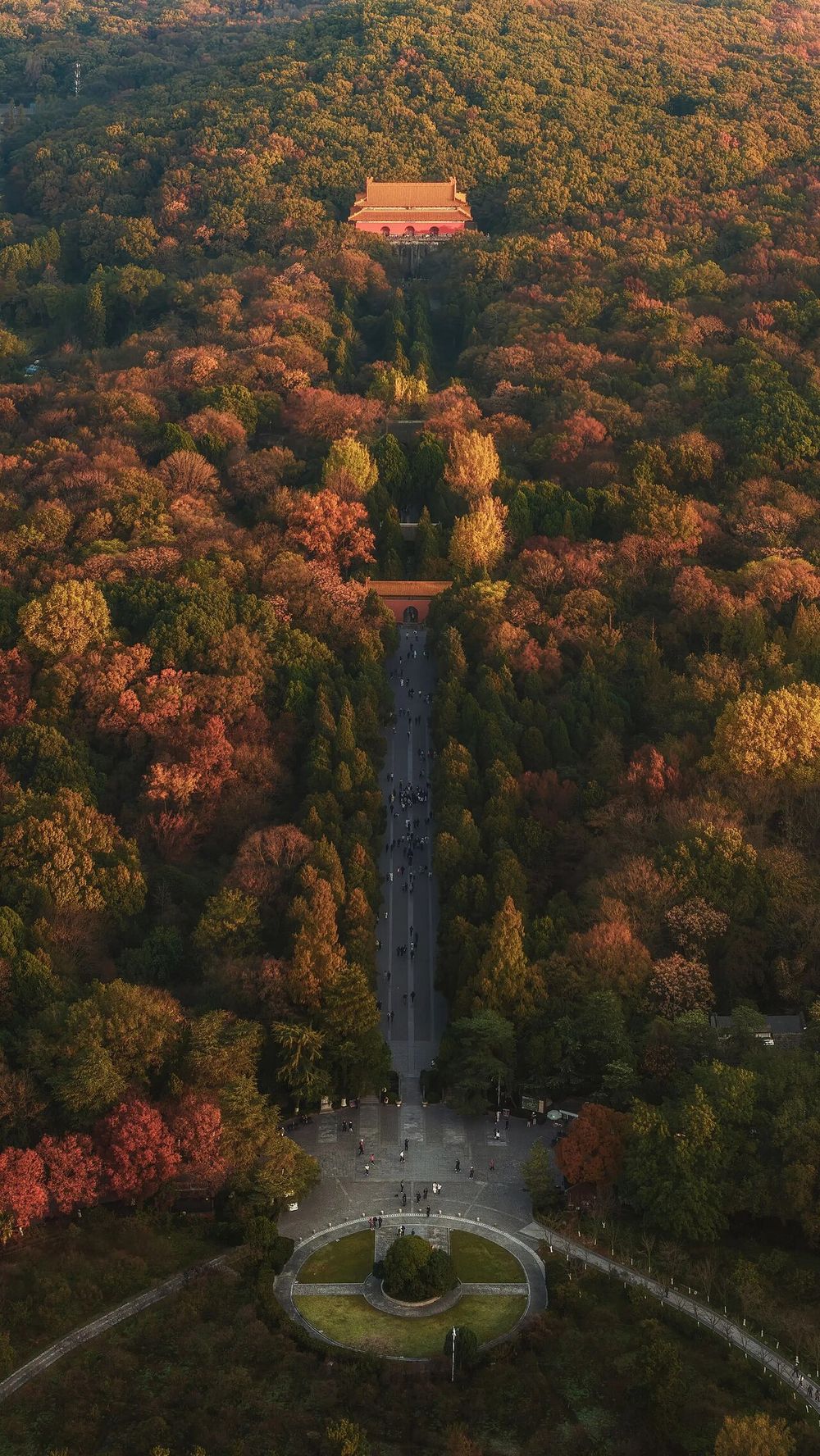
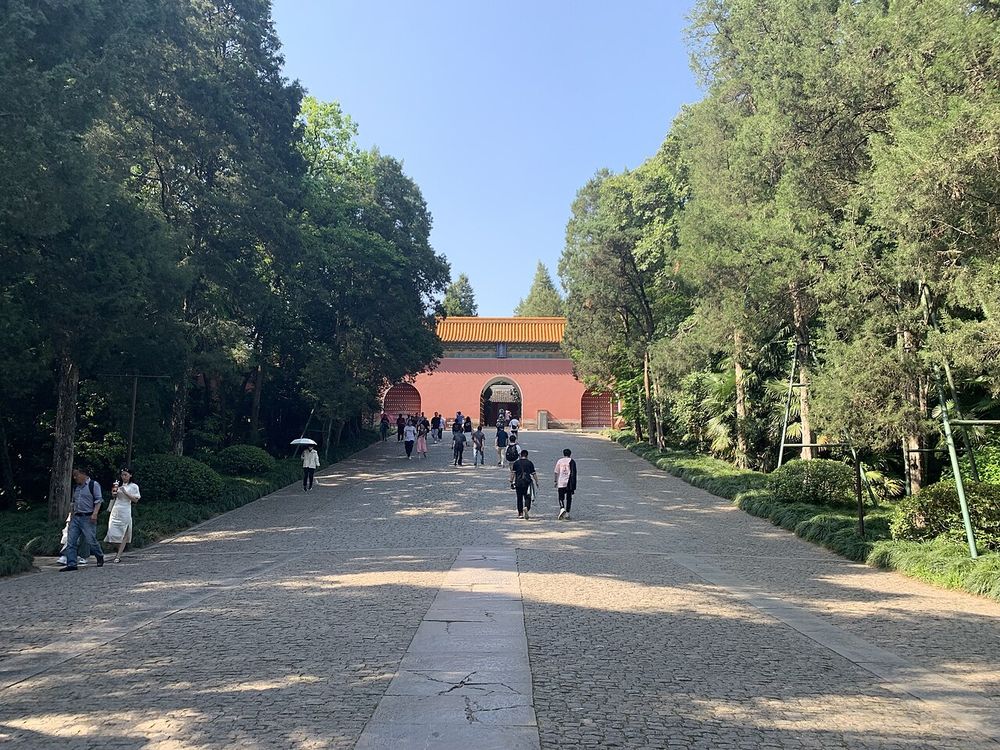
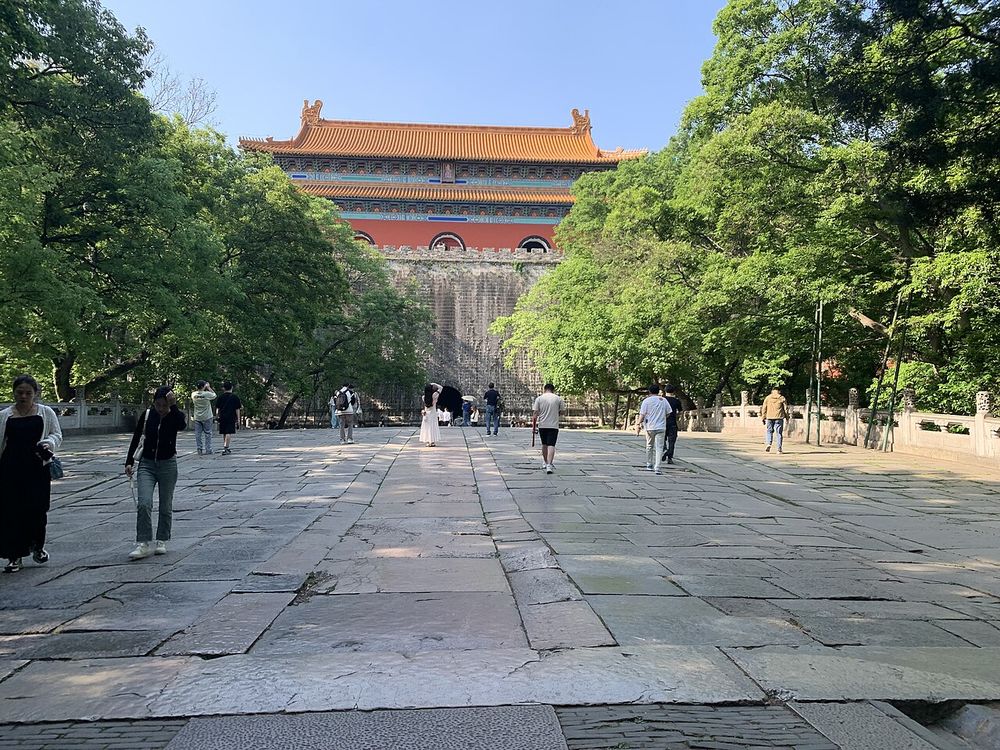
The tomb of Zhu Yuanzhang, a peasant orphan who became the first emperor of the Ming, and of his wife Empress Ma. Built from 1381 to 1413 on Purple Mountain, it set the pattern for every imperial tomb of the next five centuries, and its winding Sacred Way, lined with stone elephants, camels and lions under ginkgo and maple, is one of the loveliest walks in Nanjing.
Photo: xiquinhosilva, CC BY 2.0, Wikimedia Commons
The story
Zhu Yuanzhang was born in 1328 to a poor family in Anhui; orphaned by famine, he became a monk, then a rebel, and in 1368 founded the Ming dynasty (1368–1644) with its capital at Nanjing. In 1381 he began his tomb on the southern slope of Purple Mountain, and the next year buried Empress Ma, his wife of many years, there. He joined her in 1398.
Breaking with older tombs laid out in straight lines, the Xiaoling follows the hills: its Sacred Way curves round a smaller hill where, the story goes, the emperor let the old king Sun Quan lie undisturbed. The plan of gate, stele hall, sacrificial hall, square tower and round mound became the model for the Ming tombs near Beijing and the tombs of the Qing (1644–1912). In 2003 it was added to the World Heritage list of Ming and Qing imperial tombs.
What is here
One ticket covers the Sacred Way and the tomb precinct; Meihua Hill is inside the same area. A 100-yuan combined ticket adds Linggu Temple, Meiling Palace and the Music Stage.
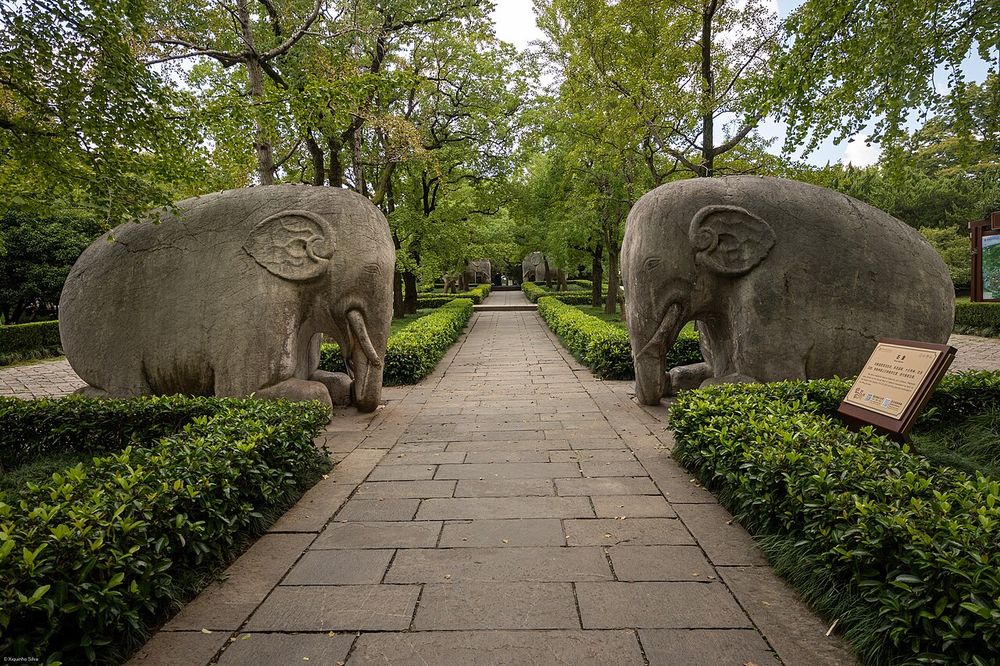
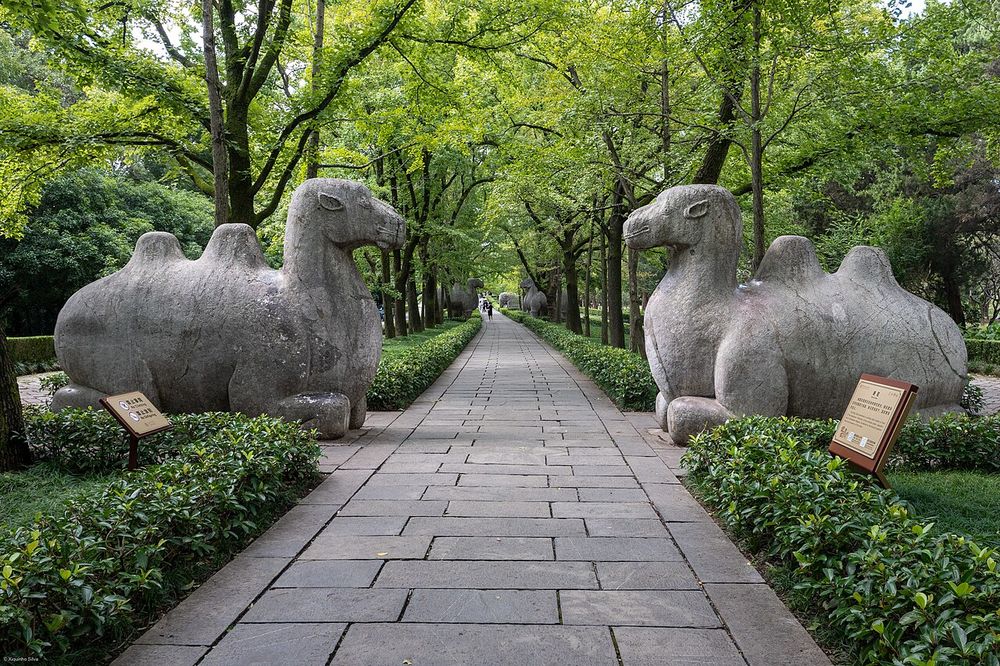
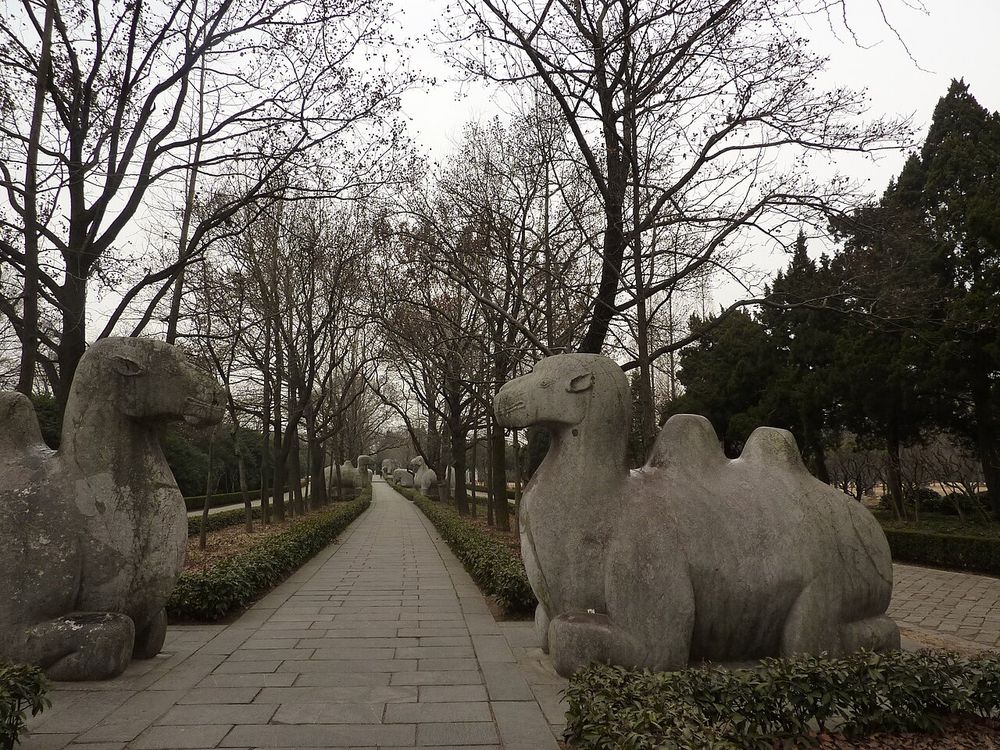
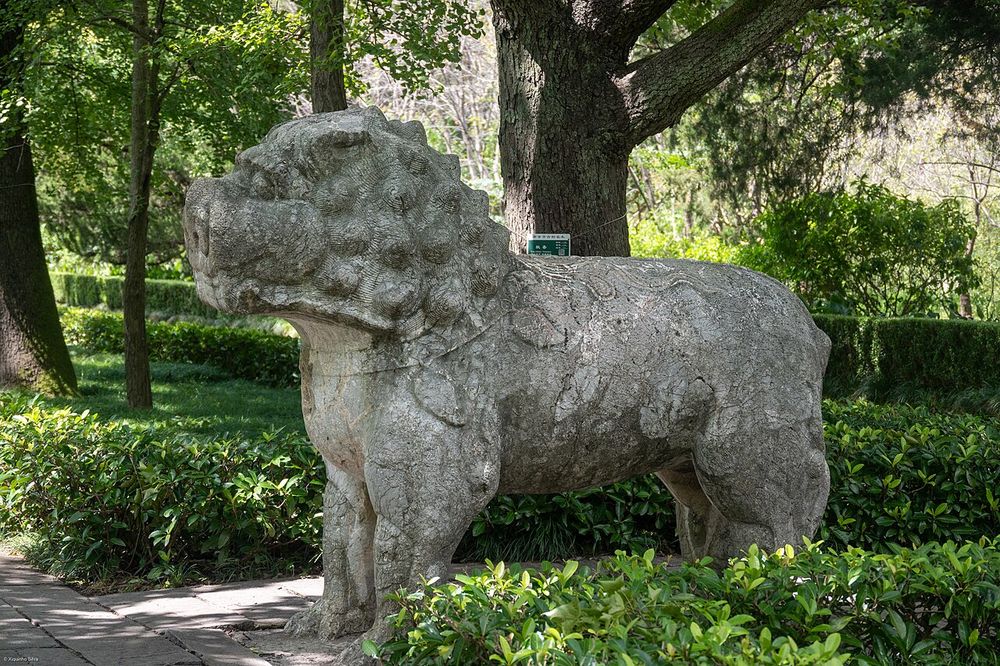
Six kinds of stone animals stand in pairs along the first stretch of the Sacred Way: lions, the horned xiezhi that knows right from wrong, camels, elephants, qilin and horses. Each kind appears twice, once crouching and once standing, as if keeping watch by day and night. They have stood here for over six hundred years.
Come in late autumn, when the ginkgo and maple turn the road gold and red, or very early in the morning, when it is free and quiet and joggers pass between the elephants.
Camels on the Sacred Way, 2024xiquinhosilva, CC BY 2.0
Things people often get wrong
"The tomb has been opened." The Treasure Mound has never been excavated; surveys show the burial chamber is intact.
"All Ming emperors are buried here." Only the founder; most of his successors lie in the Ming Tombs near Beijing.
People who stood here
We searched Chinese sources first for this list, then English ones.
Zhu Yuanzhang (the Hongwu Emperor, 1328–1398)He chose the site, began the tomb in 1381 and was buried here in 1398.
Empress Ma (1332–1382)His wife and adviser from the rebel years, buried here first; the tomb's name, "filial", honours her virtue.
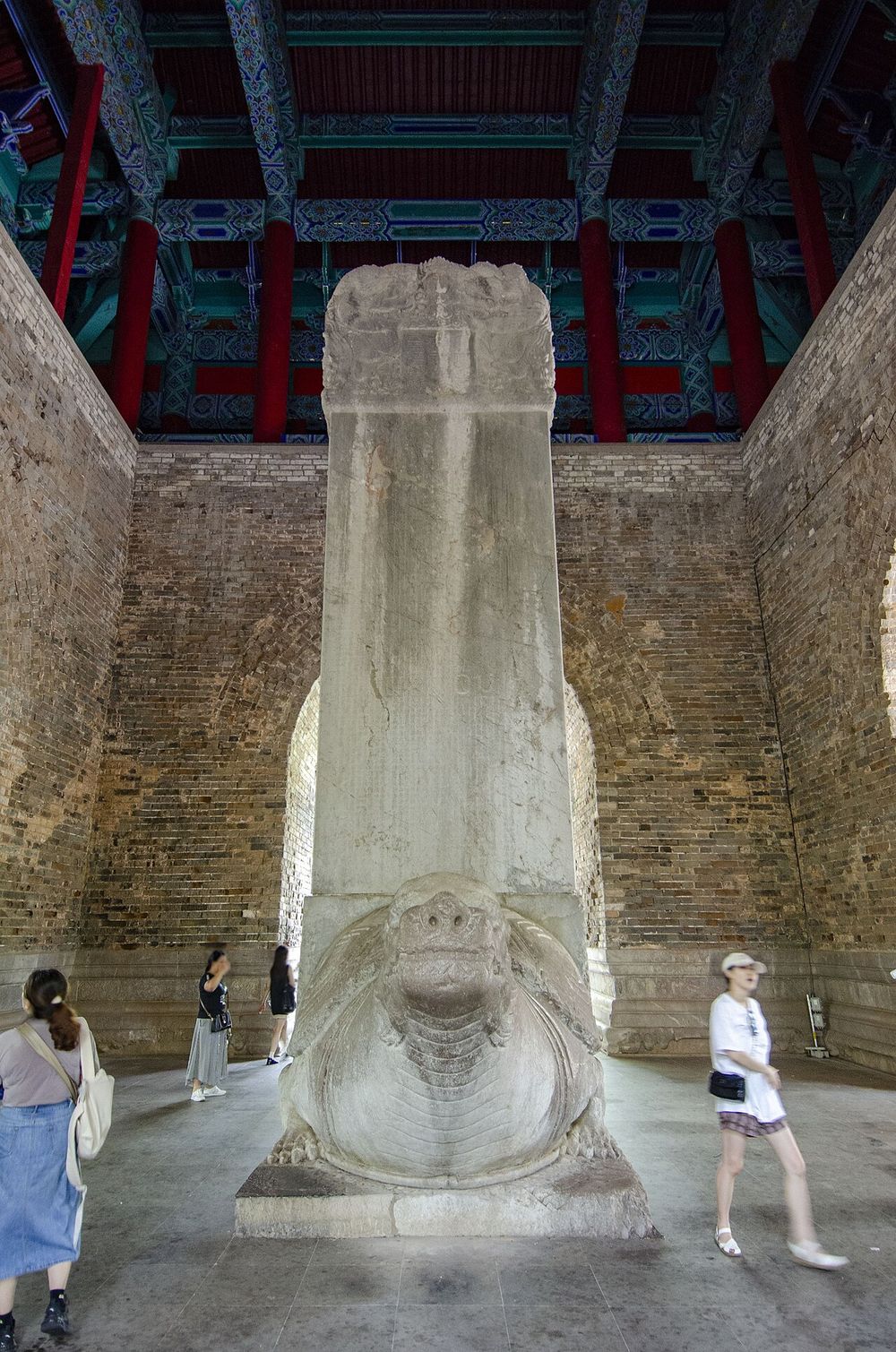
The Yongle Emperor (1360–1424)His son, who moved the capital to Beijing, set up the great stele of "Divine Merit and Sage Virtue" here in 1413.
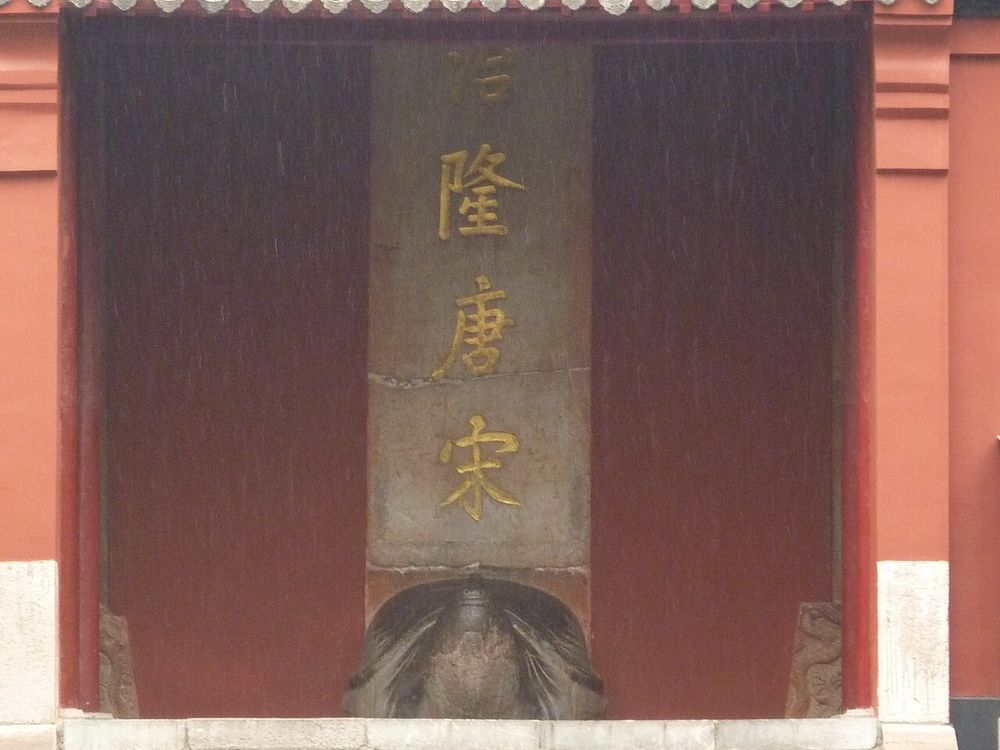
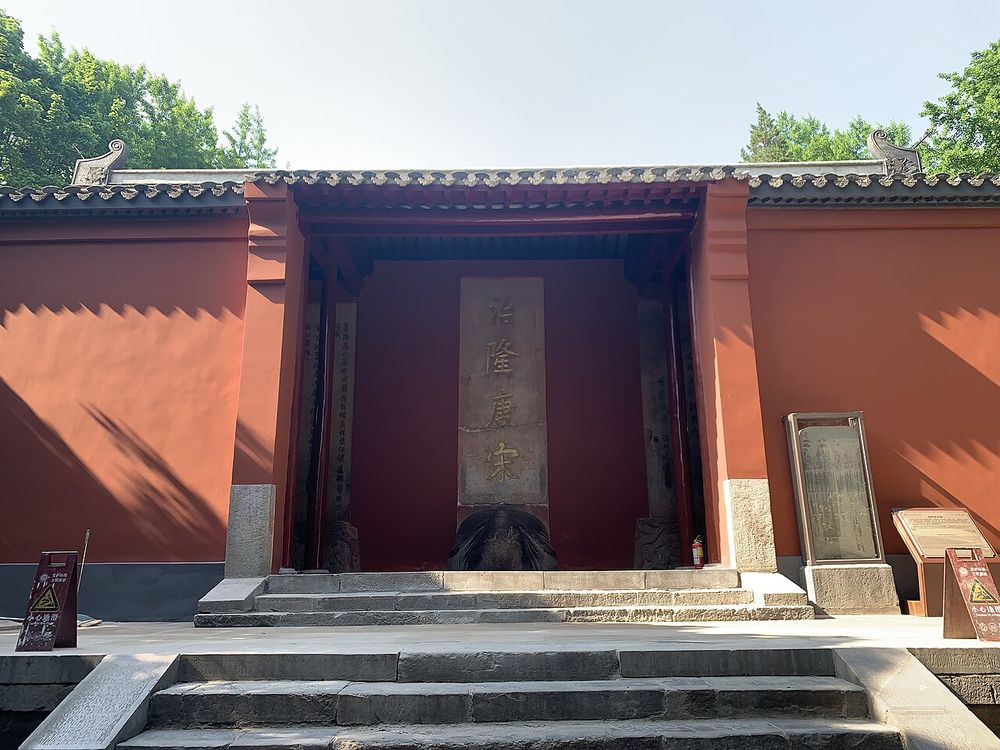
The Kangxi Emperor (1654–1722)The Manchu emperor came to pay respects on his southern tours and in 1699 left the inscription "His rule surpassed the Tang (618–907) and Song".
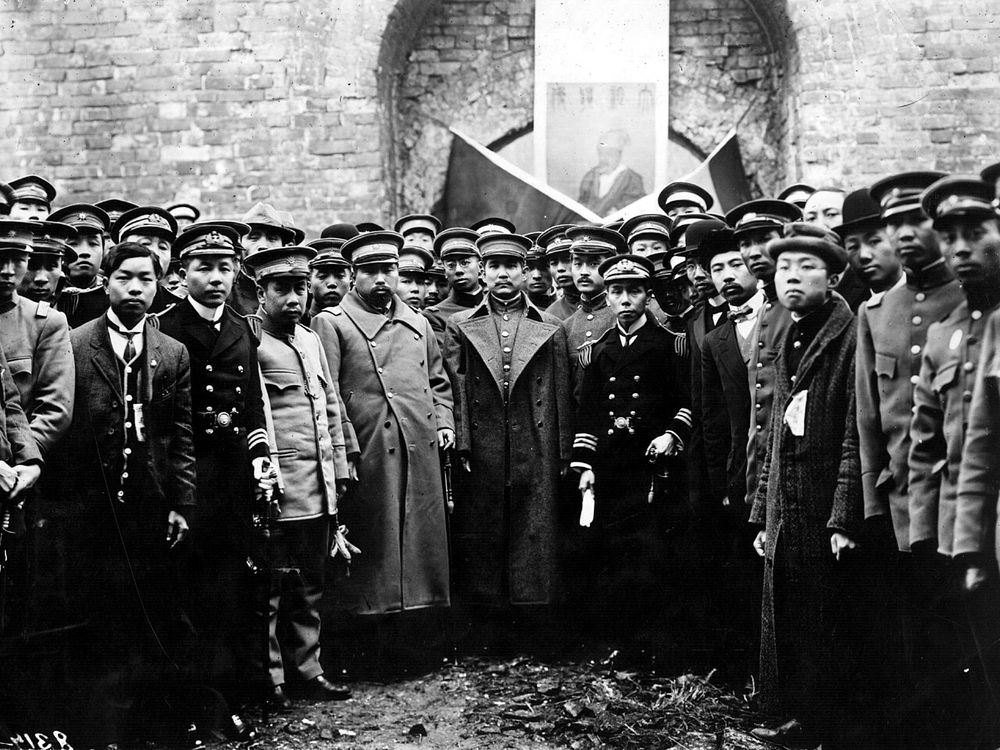
Sun Yat-sen (revolutionary, 1866–1925)In February 1912, after the Qing emperor abdicated, he led the officials of the new republic here to report the restoration of Chinese rule to the Ming founder.
Go deeper: along the Sacred Way to the Treasure Mound, six stops7 stops · about 1 min to read
Enter by Gate 5 for the whole ceremonial route, or Gate 3 near the metro for the Stone Elephant Road; allow three hours.
1. The Sifangcheng stele pavilion
The Sifangcheng pavilion, 2011User:Vmenkov, CC BY-SA 3.0
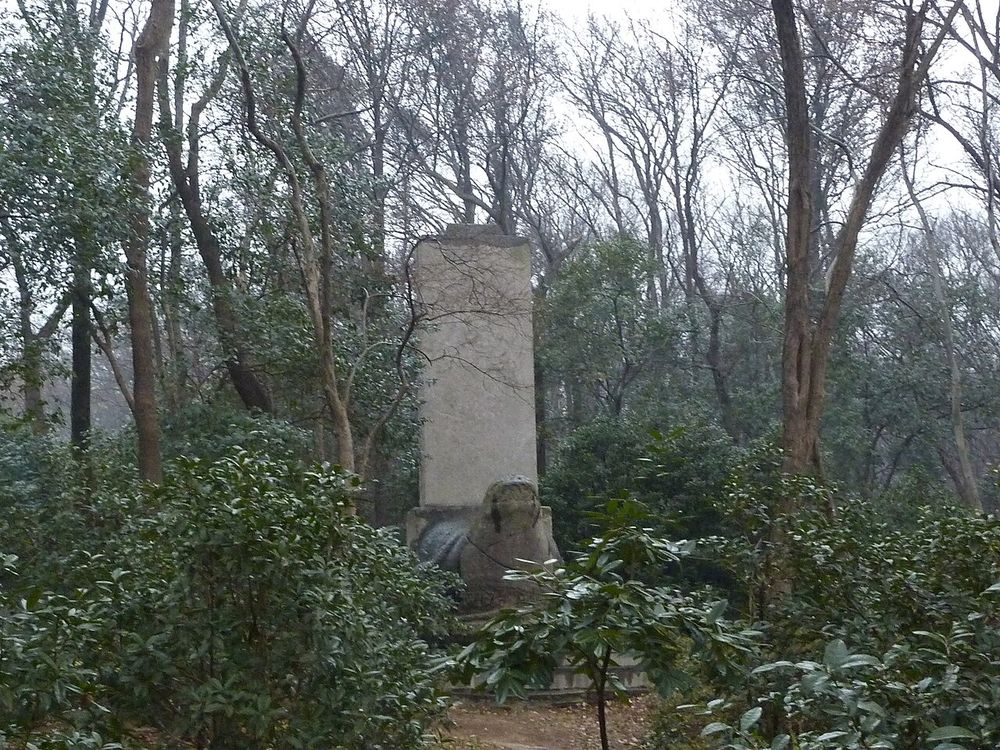
A roofless square pavilion holding the stele of 1413 on a great tortoise; the stele records the founder's deeds.
The stele of Divine Merit and Sage Virtue, 2024Saigyouji-Noriko, CC BY-SA 4.0
2. The Stone Elephant Road
A pair of camels under trees, 2024xiquinhosilva, CC BY 2.0
Twelve pairs of stone animals on a curving road.
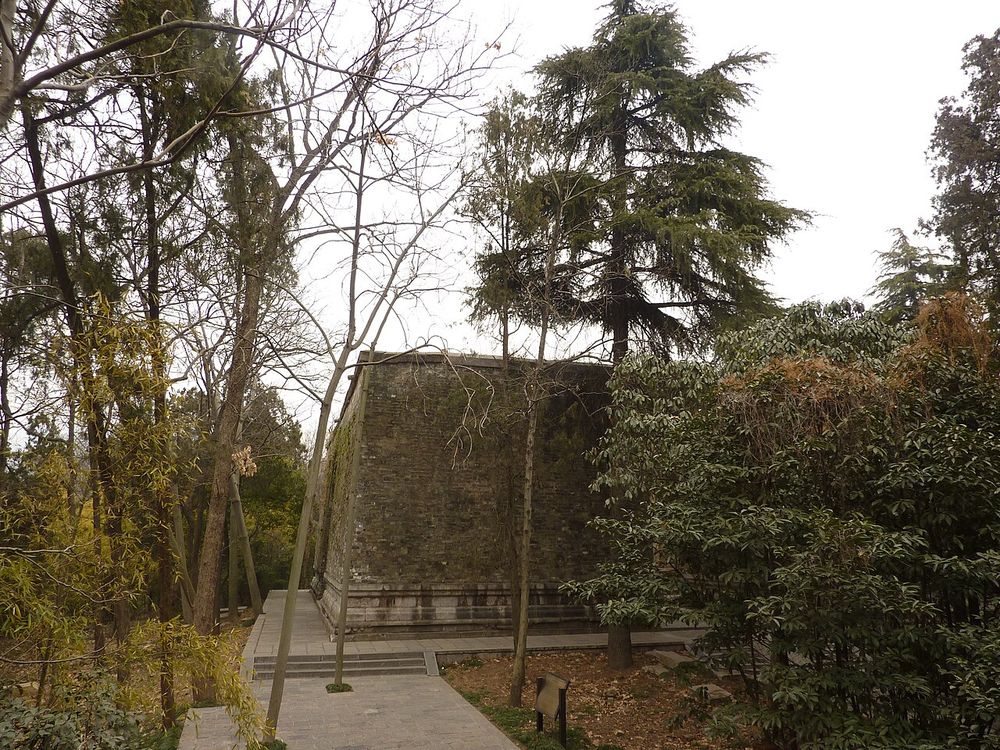
Camels in winter, 2011User:Vmenkov, CC BY-SA 3.0
3. The Wengzhong Road
A stone lion, 2024xiquinhosilva, CC BY 2.0
A pair of pillars and four pairs of stone officials, military and civil, before the road turns north to the gates.
4. The Wenwu Gate and the Stele Hall
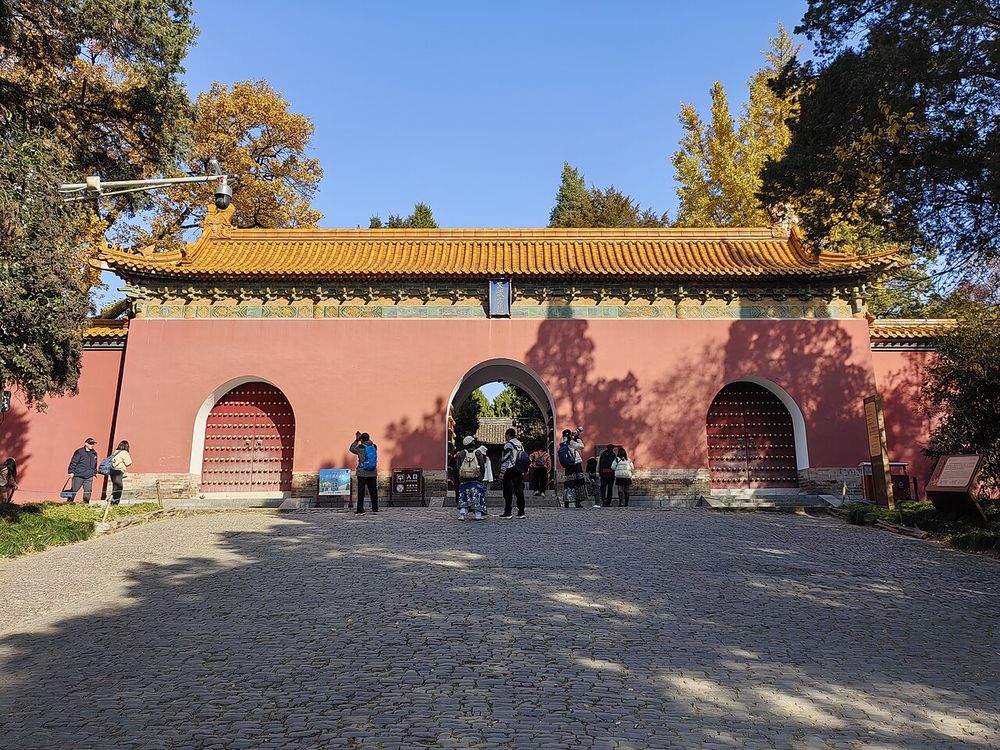
The Wenwu Gate, 2023Yumeto, CC BY-SA 4.0
The main gate of the tomb precinct, and behind it the stele hall with Kangxi's inscription.
Kangxi's stele "His rule surpassed the Tang and Song", 2011User:Vmenkov, CC BY-SA 3.0
5. The Square Tower
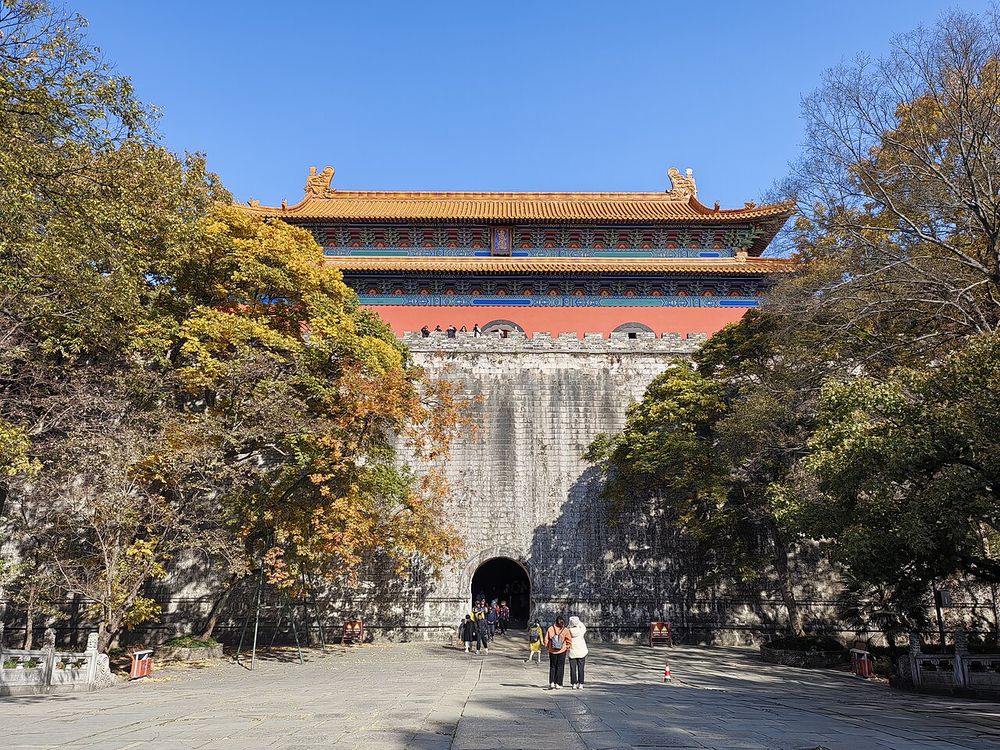
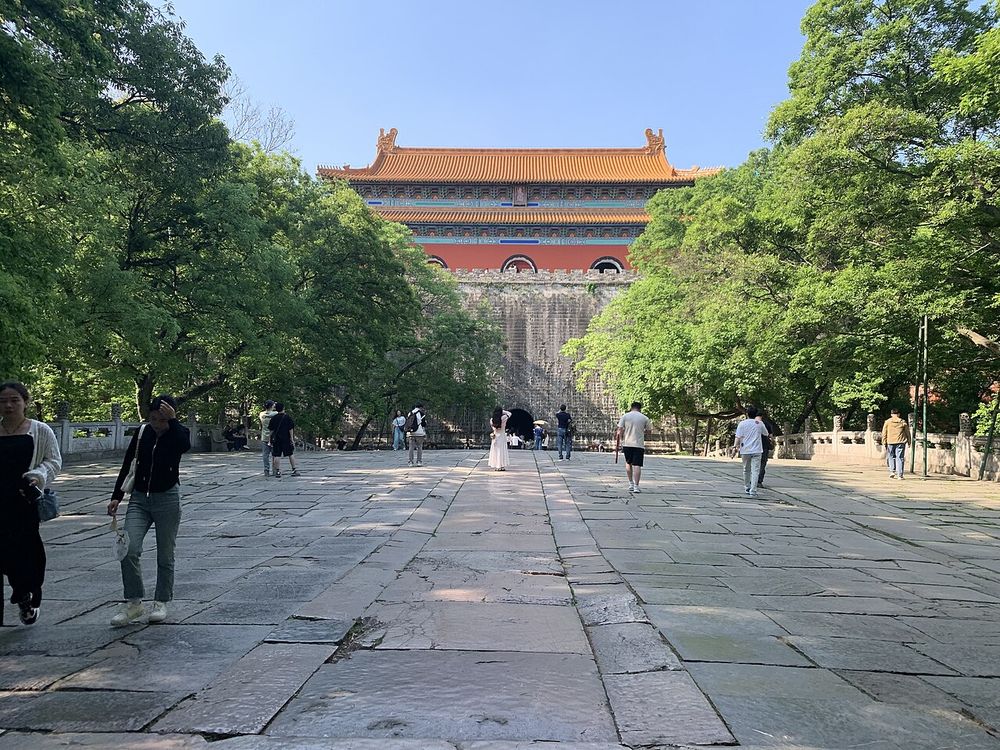
The Square Tower in autumn, 2023Yumeto, CC BY-SA 4.0
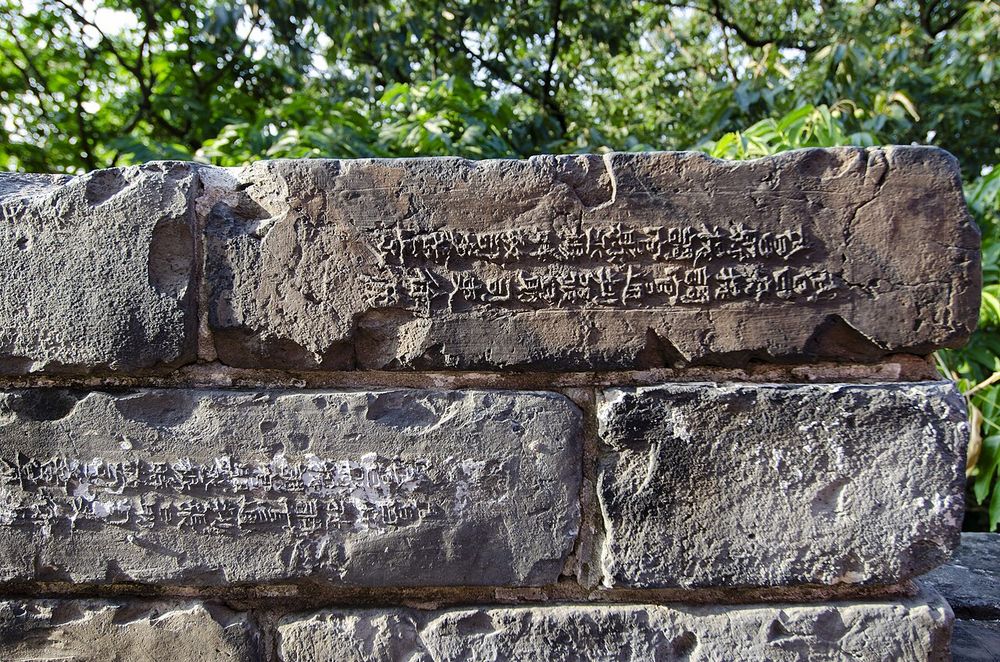
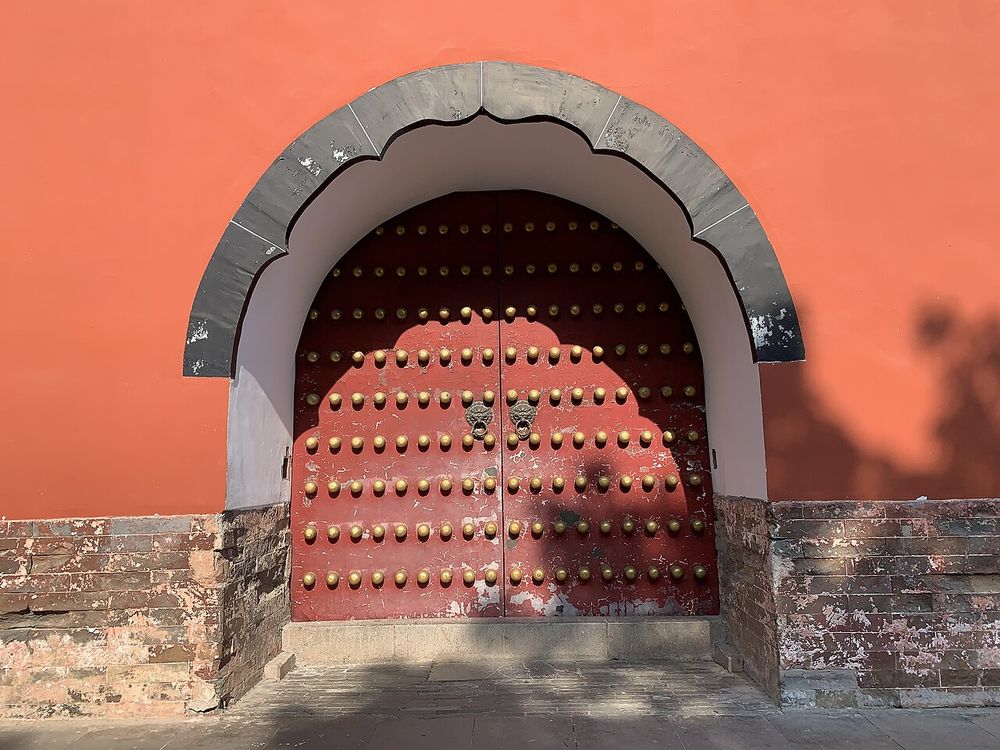
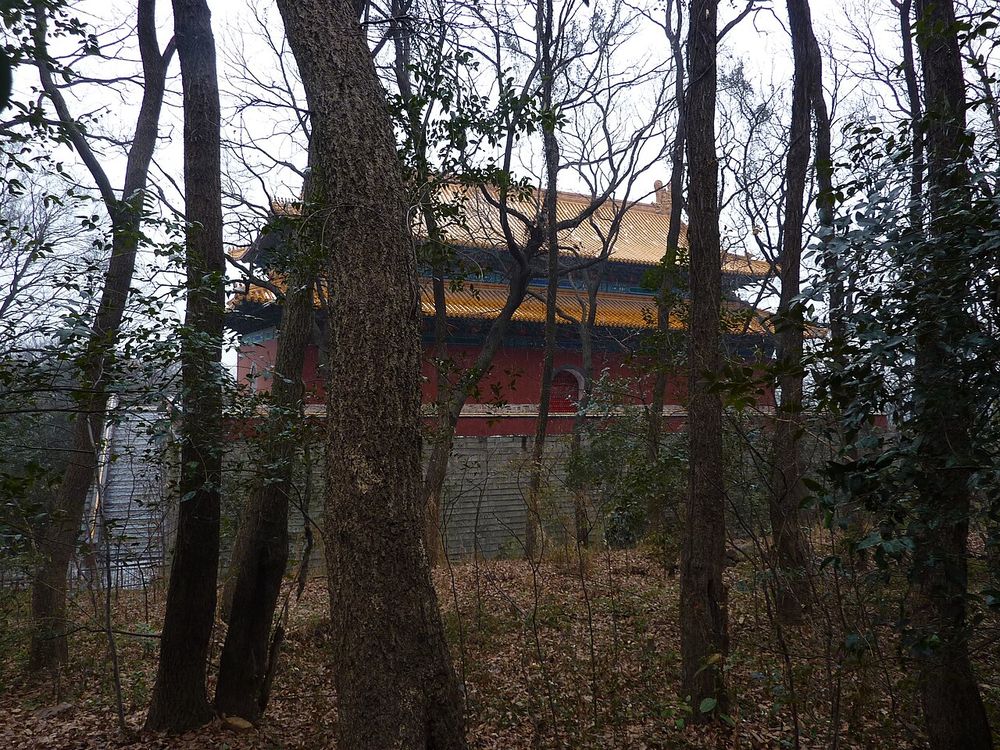
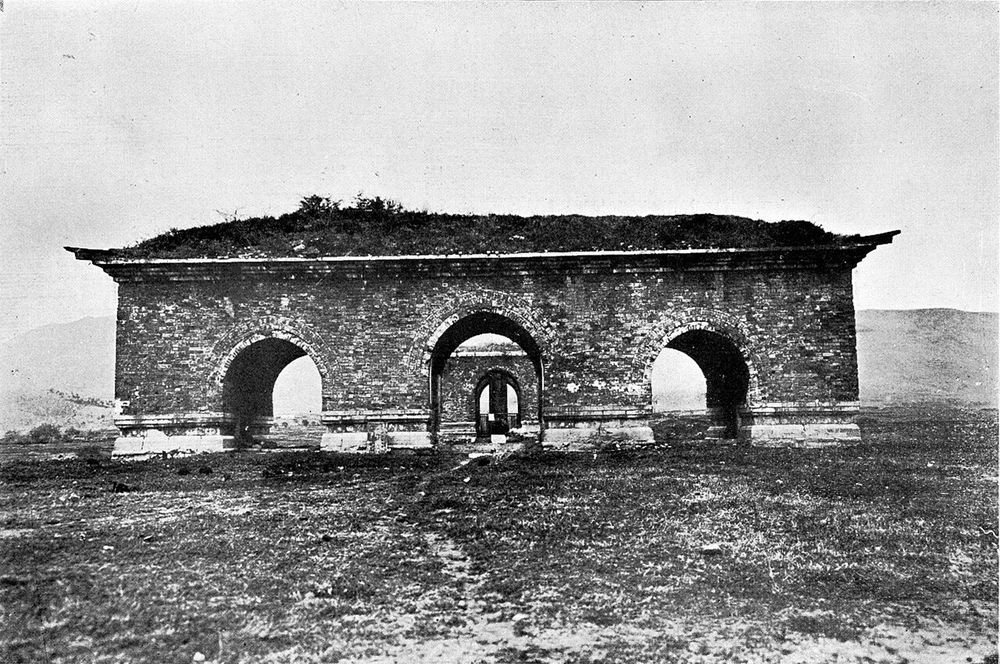
A massive brick platform with a tunnel through it, crowned by a tower; its bricks are stamped with the names of the towns and makers who fired them.
Stamped bricks of the tower, 2024Saigyouji-Noriko, CC BY-SA 4.0
6. The Treasure Mound
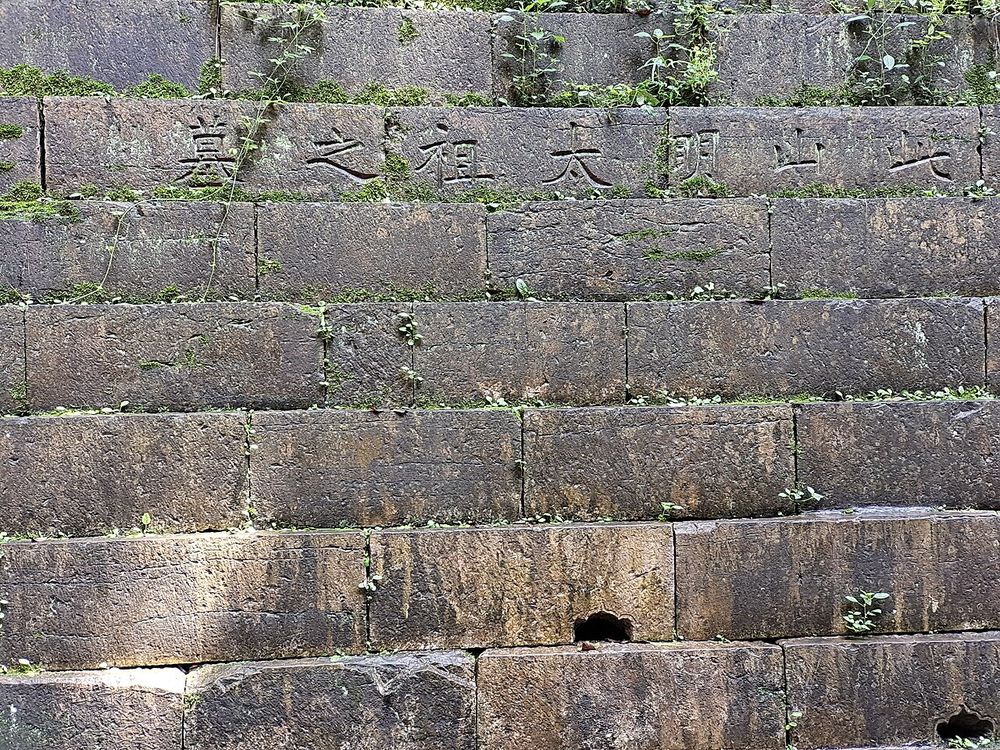
"This hill is the tomb of the Ming founder", 2021CL4-LCLC, CC BY-SA 4.0
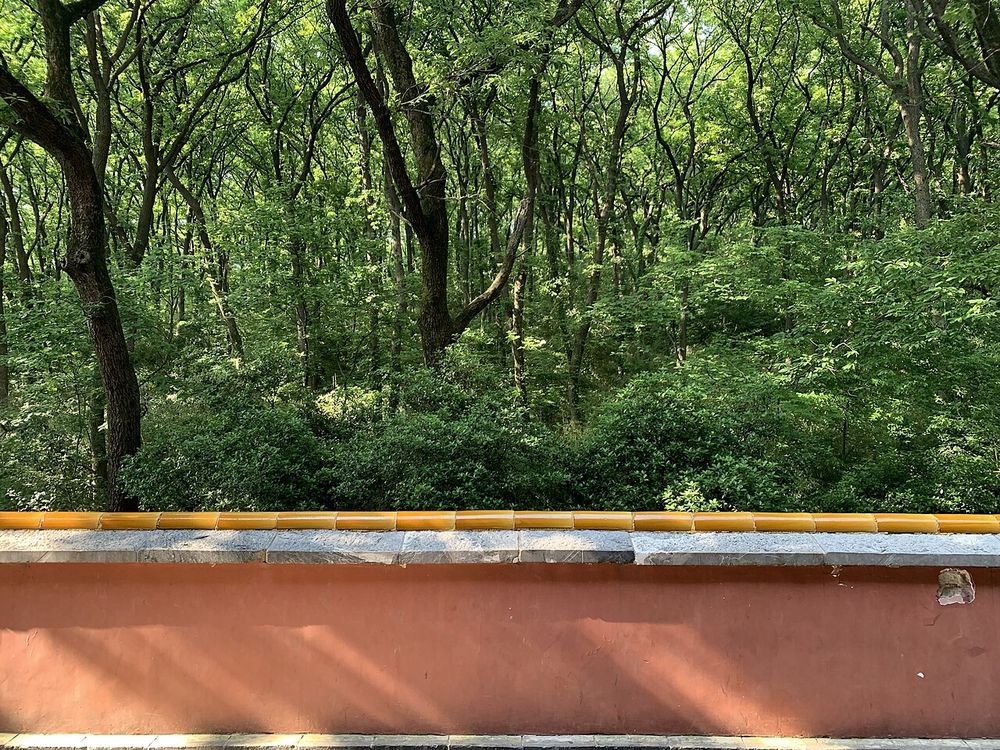
A round hill about 400 metres across, walled in brick, under which the emperor and empress lie; a stone at its foot reads "This hill is the tomb of the Ming founder".
The tomb and the same years elsewhere
Work on the tomb began in 1381, the year of the Peasants' Revolt in England.
Meanwhile in the world
Year
Here
Elsewhere
1381
Work on the tomb begins
The Peasants' Revolt shakes England
1398
The Hongwu Emperor is buried here
Timur sacks Delhi
1413
The stele of Divine Merit is set up
Henry V becomes king of England
1699
Kangxi leaves his inscription
The Treaty of Karlowitz ends the Great Turkish War
2003
Added to the World Heritage list of Ming and Qing tombs
Concorde makes its last commercial flight
One line to remember: the first Ming emperor's tomb, where stone elephants have kept watch for six hundred years.
The Sacred Way, the gates and the mound
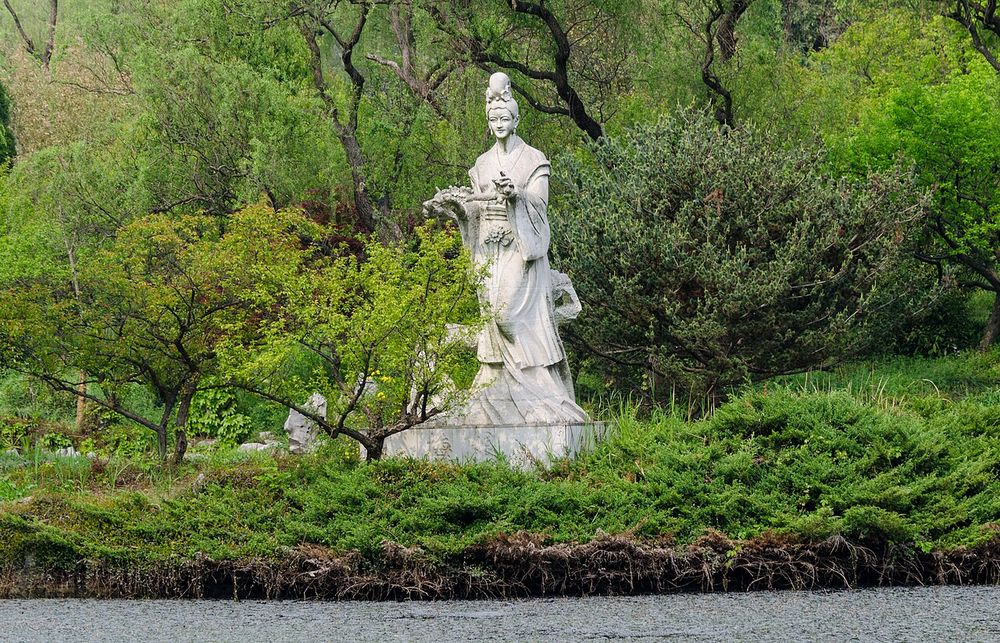
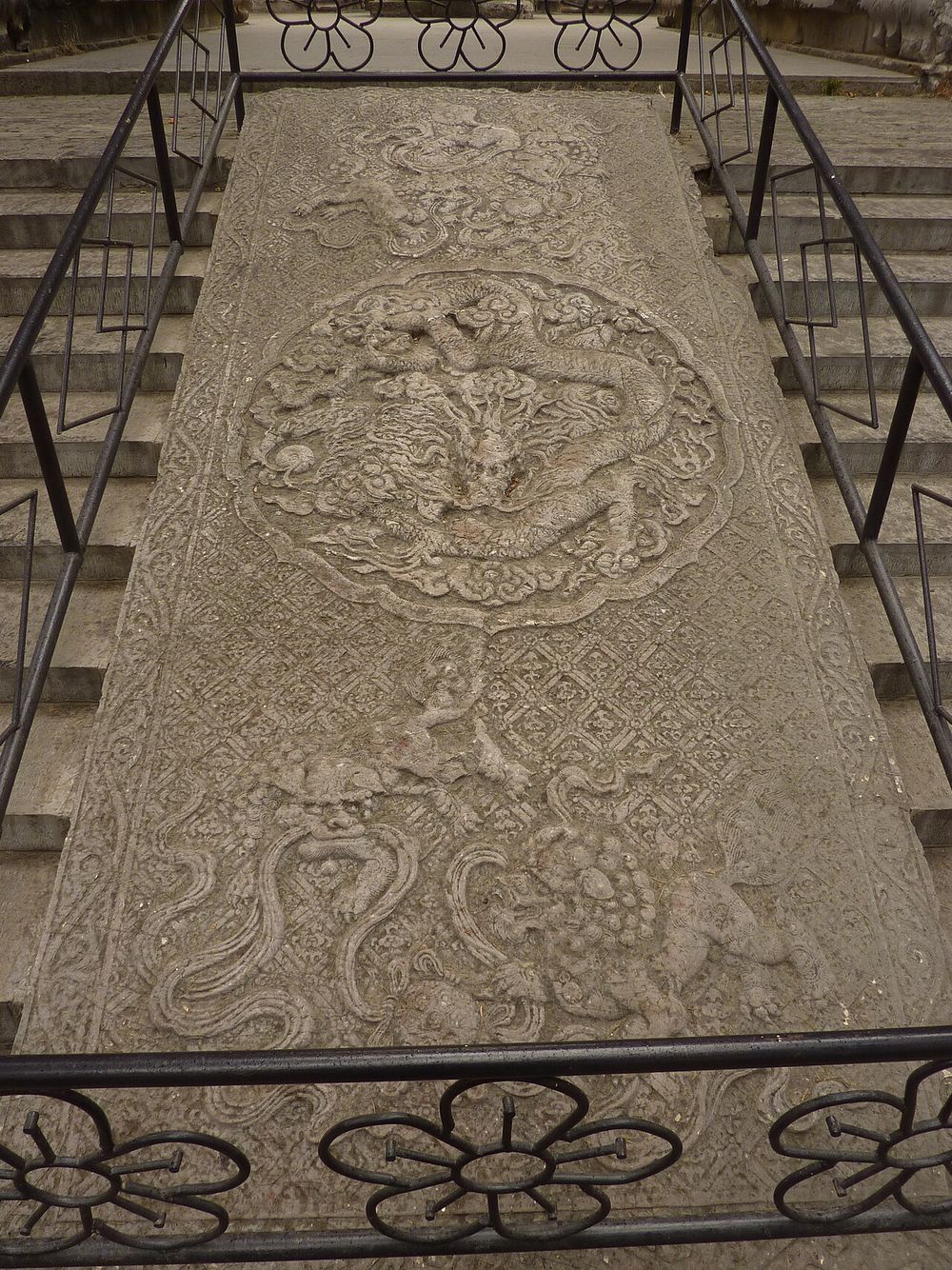
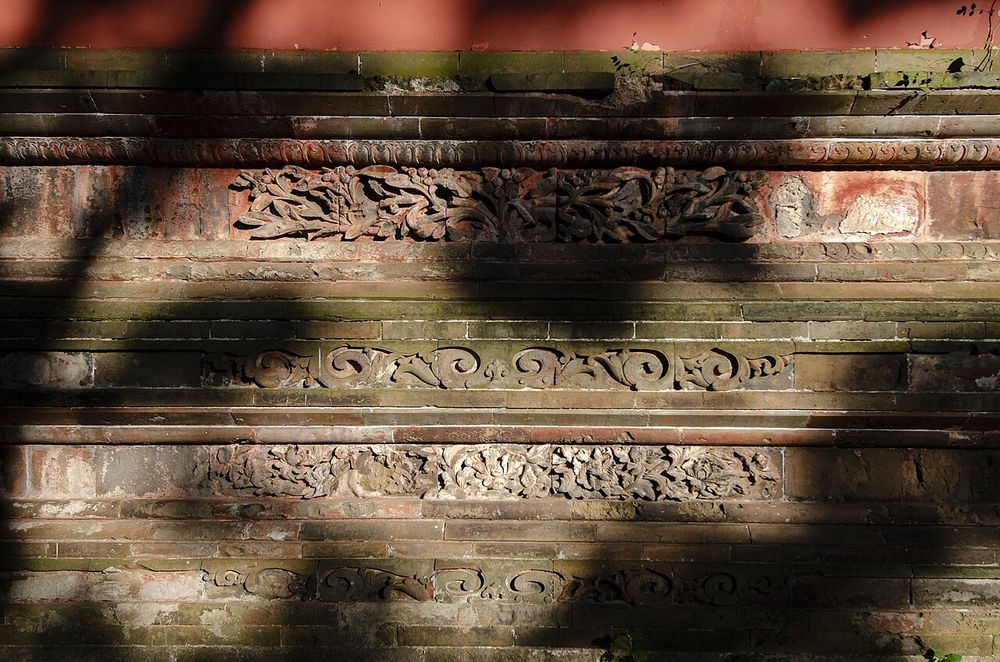
Stone elephants on the Sacred Way, 2024xiquinhosilva, CC BY 2.0, Wikimedia CommonsA pair of elephants, 2024xiquinhosilva, CC BY 2.0, Wikimedia CommonsCamels on the Sacred Way, 2024xiquinhosilva, CC BY 2.0, Wikimedia CommonsA stone lion, 2024xiquinhosilva, CC BY 2.0, Wikimedia CommonsA stone beast, 2024xiquinhosilva, CC BY 2.0, Wikimedia CommonsA pair of camels under trees, 2024xiquinhosilva, CC BY 2.0, Wikimedia CommonsA seated xiezhi, 2024xiquinhosilva, CC BY 2.0, Wikimedia CommonsCamels in winter, 2011User:Vmenkov, CC BY-SA 3.0, Wikimedia CommonsA kneeling camel, 2006Farm, CC BY-SA 3.0, Wikimedia CommonsThe Sacred Way in autumn from the airJackeylove333, CC BY 4.0, Wikimedia CommonsA white statue in the gardens, 2012xiquinhosilva, CC BY 2.0, Wikimedia CommonsThe first view of Sifangcheng, 2011User:Vmenkov, CC BY-SA 3.0, Wikimedia CommonsThe Sifangcheng pavilion, 2011User:Vmenkov, CC BY-SA 3.0, Wikimedia CommonsA dragon relief at Sifangcheng, 2011User:Vmenkov, CC BY-SA 3.0, Wikimedia CommonsThe stele of Divine Merit and Sage Virtue, 2024Saigyouji-Noriko, CC BY-SA 4.0, Wikimedia CommonsThe Wenwu Gate, 2023Yumeto, CC BY-SA 4.0, Wikimedia CommonsThe gate and the avenue, 2024Chainwit., CC BY 4.0, Wikimedia CommonsThe stele hall, 2024Chainwit., CC BY 4.0, Wikimedia CommonsKangxi's stele "His rule surpassed the Tang and Song", 2011User:Vmenkov, CC BY-SA 3.0, Wikimedia CommonsThe Square Tower in autumn, 2023Yumeto, CC BY-SA 4.0, Wikimedia CommonsThe Square Tower from the avenue, 2024Chainwit., CC BY 4.0, Wikimedia CommonsThe red gate of the tunnel, 2024Chainwit., CC BY 4.0, Wikimedia CommonsThe approach to the tower, 2024Chainwit., CC BY 4.0, Wikimedia CommonsStamped bricks of the tower, 2024Saigyouji-Noriko, CC BY-SA 4.0, Wikimedia CommonsCarving on a screen wall, 2024Saigyouji-Noriko, CC BY-SA 4.0, Wikimedia CommonsThe tower seen from the north, 2011User:Vmenkov, CC BY-SA 3.0, Wikimedia CommonsThe wall of the Treasure Mound, 2024Chainwit., CC BY 4.0, Wikimedia Commons"This hill is the tomb of the Ming founder", 2021CL4-LCLC, CC BY-SA 4.0, Wikimedia CommonsWater and trees by Meihua Hill, 2019西安兵马俑, CC BY-SA 4.0, Wikimedia CommonsPlum blossom on Meihua Hill, 2019西安兵马俑, CC BY-SA 4.0, Wikimedia CommonsA tortoise with a blank stele nearby, 2011User:Vmenkov, CC BY-SA 3.0, Wikimedia CommonsSun Yat-sen and officials of the new republic at the tomb, February 1912Unknown authorUnknown author, Public domain, Wikimedia CommonsSifangcheng without its roof, early 20th century杉江房造, Public domain, Wikimedia Commons
Local legends
These are stories people tell about this place. They are legends, not history, and each one says where it comes from.
LegendSun Quan keeps the gate
When the builders wanted to remove the tomb of Sun Quan, the 3rd-century king of Wu, which stood in the way of the Sacred Way, Zhu Yuanzhang said: "Sun Quan was a hero too. Leave him to guard my gate." So the road bends round his hill.
Source: A Nanjing story told by guides
Later, people who live here will be able to add the stories they grew up with, and say which of these they have heard.
Not certain, and where accounts conflict
Thirteen city gates for the funeral?
A story says that at the emperor's funeral, coffins left all thirteen gates of Nanjing at once so no one would know which was real. There is no early record of it, and the mound has never been opened to check.
Visiting
Tickets and hours
70 yuan, half price for students and seniors; open 6:30 to 18:30 from March to November, 7:00 to 17:30 from December to February.
The 100-yuan combined ticket adds Linggu Temple, Meiling Palace and the Music Stage.
Last checked 2026-11-12. Price, combined ticket and hours from 2026 guides (Wander in China, Zhihu/SMZDM summaries of visitor guides).
Booking without WeChat
Official page in English Book with your real name on the Zhongshan Scenic Area's official WeChat mini-program, or on Meituan, Ctrip or Douyin.
Note Visitors who come through the gates before opening time in the early morning walk the Sacred Way free; the tomb precinct itself opens later.
Checked 2026-11-12
Where to start
Metro line 2 to Muxuyuan, exit 1, then walk to Gate 3 for the Stone Elephant Road.
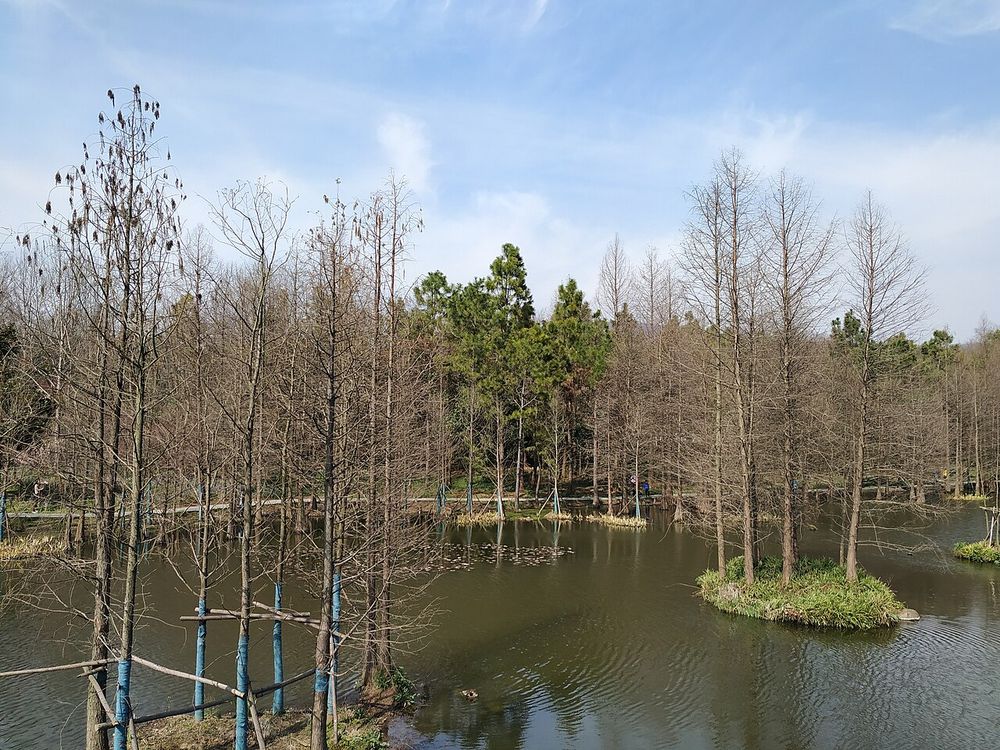
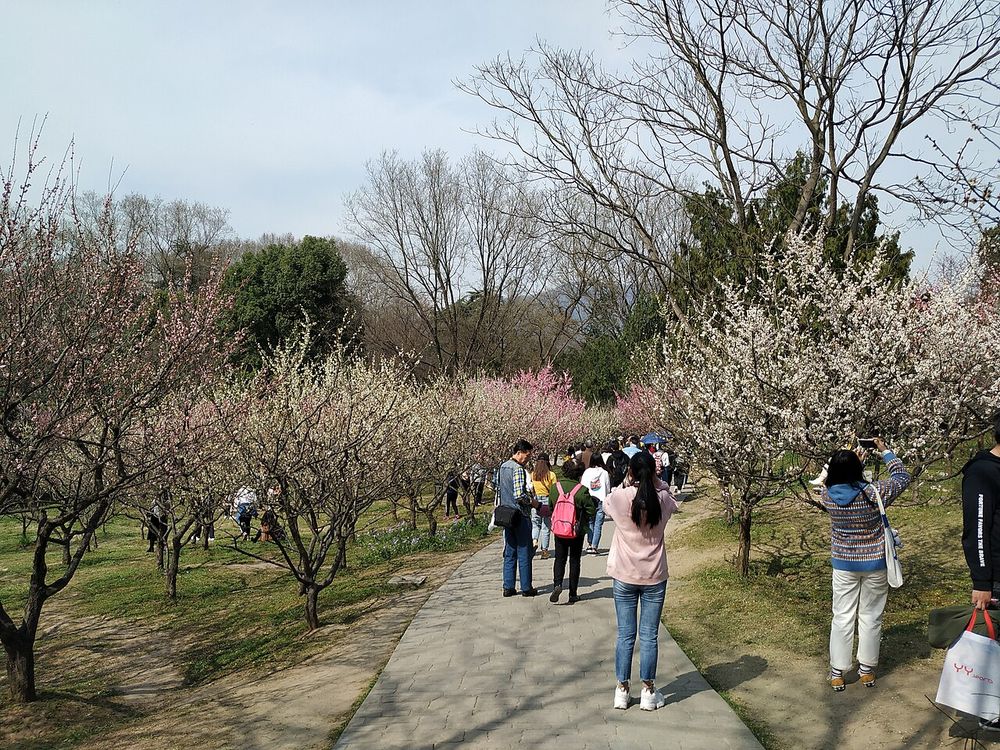
Late November for autumn colour; late February and March for plum blossom on Meihua Hill.
Before you go
The area is large; wear good shoes, or use the sightseeing bus.
Bring insect repellent in summer.
Customs and manners
Do not climb on the stone animals for photos.
Keep to the paths on the Treasure Mound.
Opening hours are given in the local time of the place. Prices are in the local currency. The figure after ≈ is approximate, at exchange rates checked on 9 November 2026, in .
Look for these
On the Stone Elephant Road, find the kneeling elephants and the standing ones.
On the Square Tower, read the name of a town on a brick.
Find where the Sacred Way bends round Sun Quan's hill.
I am here
Stand at the site, sign in, press the button, and collect its stamp. Your browser will ask to use your location. It is sent to us once to confirm that you are at the site; we keep how far you were from it, not the spot where you stood.
Your stamps are saved to your account, so they follow you to any device. Checking from a browser cannot rule out every false location; stricter checks arrive with the app.
Messages
Share your photos
Photos here show the place, not people. Each one is credited to the visitor who took it and appears after our team has looked at it. A photo with you in it belongs under “I am here”.