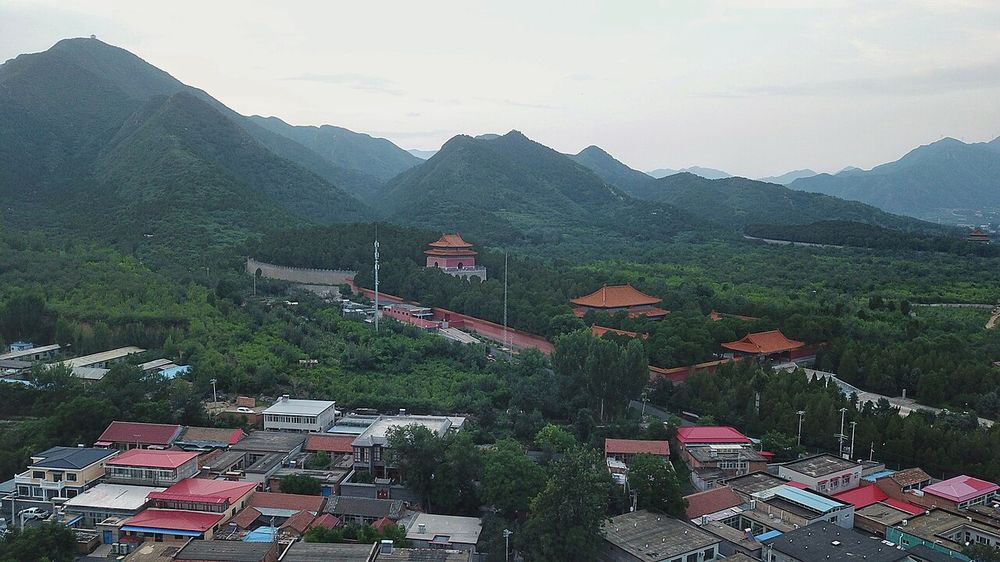
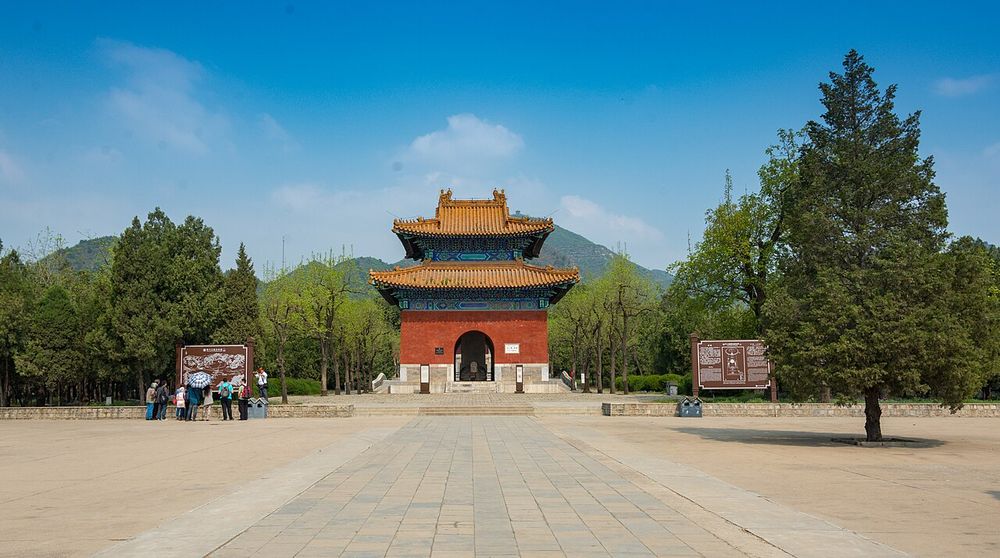
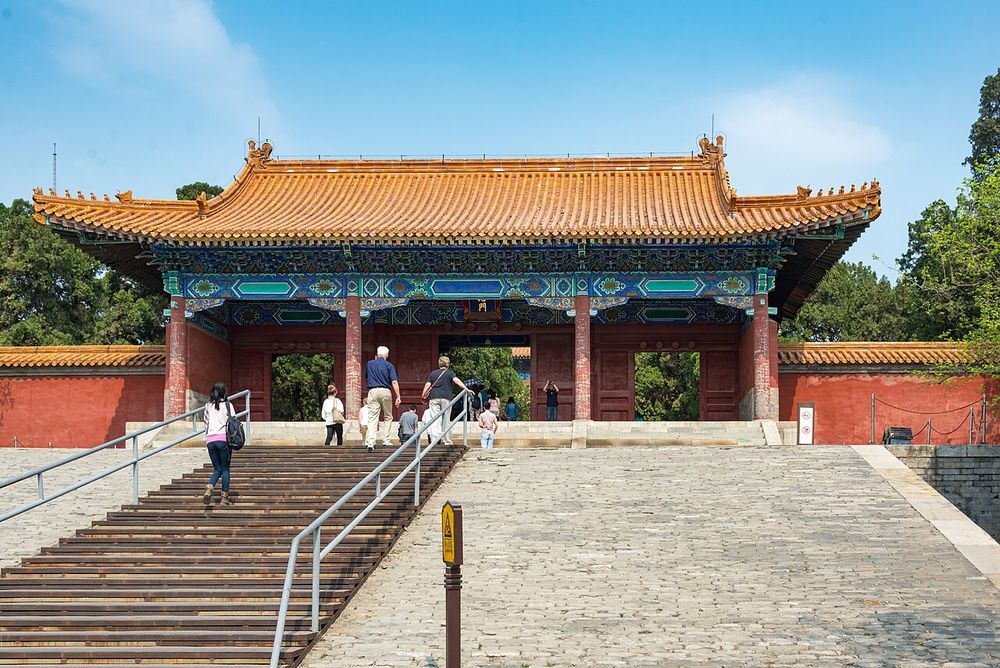
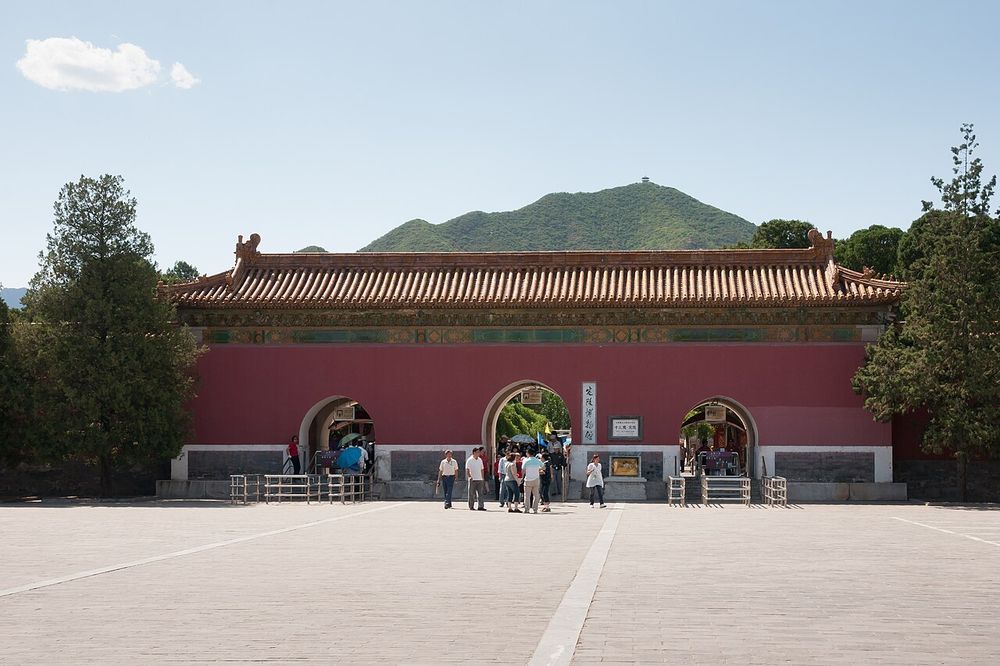
Thirteen emperors of the Ming lie in a valley north of Beijing, each in his own walled tomb under a wooded hill, all reached by one avenue of stone animals and officials. Here you can stand in the largest wooden hall of the Ming and go down into the only imperial tomb that was ever opened.
Photo: Anagoria, CC BY 3.0, Wikimedia Commons
The story
In 1409 the Yongle emperor, who had moved the Ming capital to Beijing, chose a valley under the Tianshou mountains for his tomb. Over the next 235 years twelve more emperors of the Ming dynasty (1368–1644) were buried round it, each tomb set against its own hill, until the last emperor, who hanged himself as rebels took Beijing in 1644, was laid here in a borrowed grave. Together they hold thirteen emperors, twenty-three empresses and many concubines.
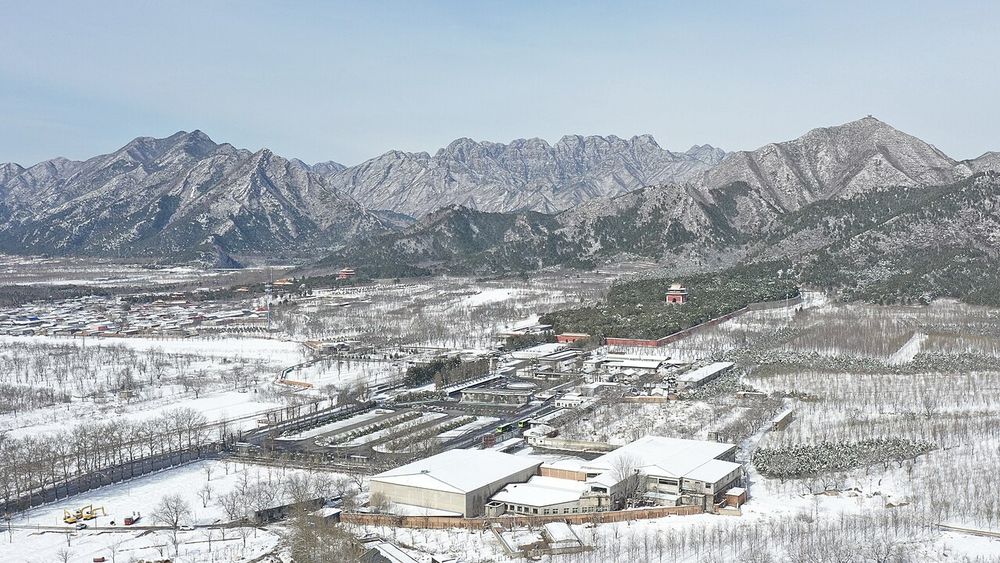
The site is huge, about 120 square kilometres, and only four parts are open: the Spirit Way, the great hall of Changling, the opened tomb of Dingling and the restored Zhaoling. Between them run village roads, orchards and the reservoir; plan for buses or a taxi.
What is here
Four places are open, each with its own ticket; a combined ticket covers all four. They are several kilometres apart.
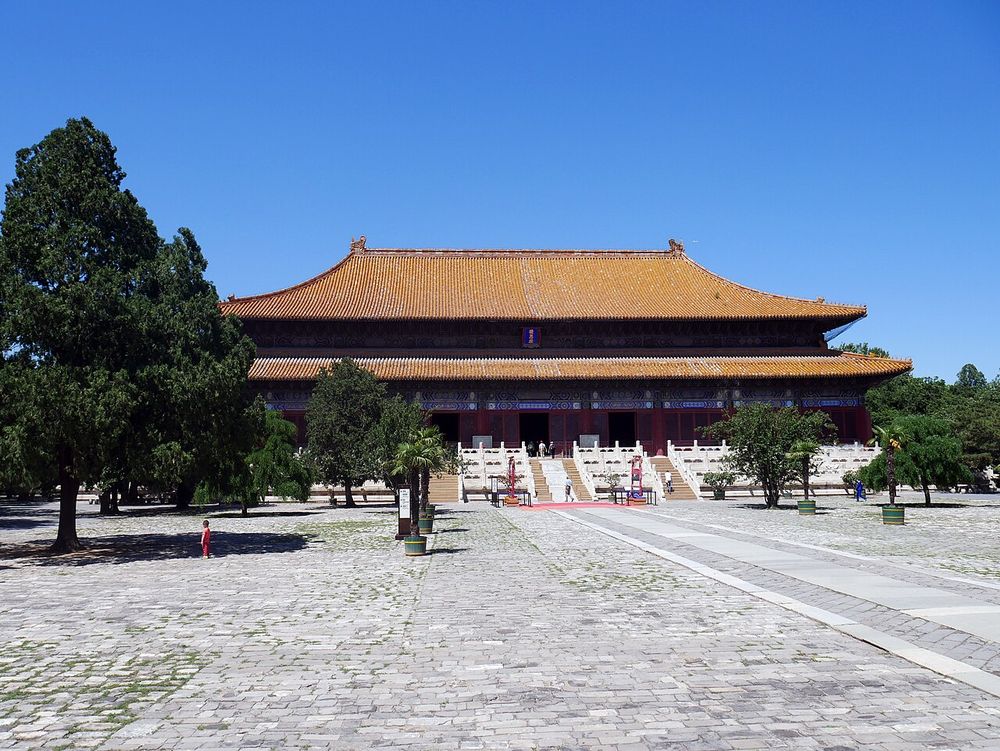
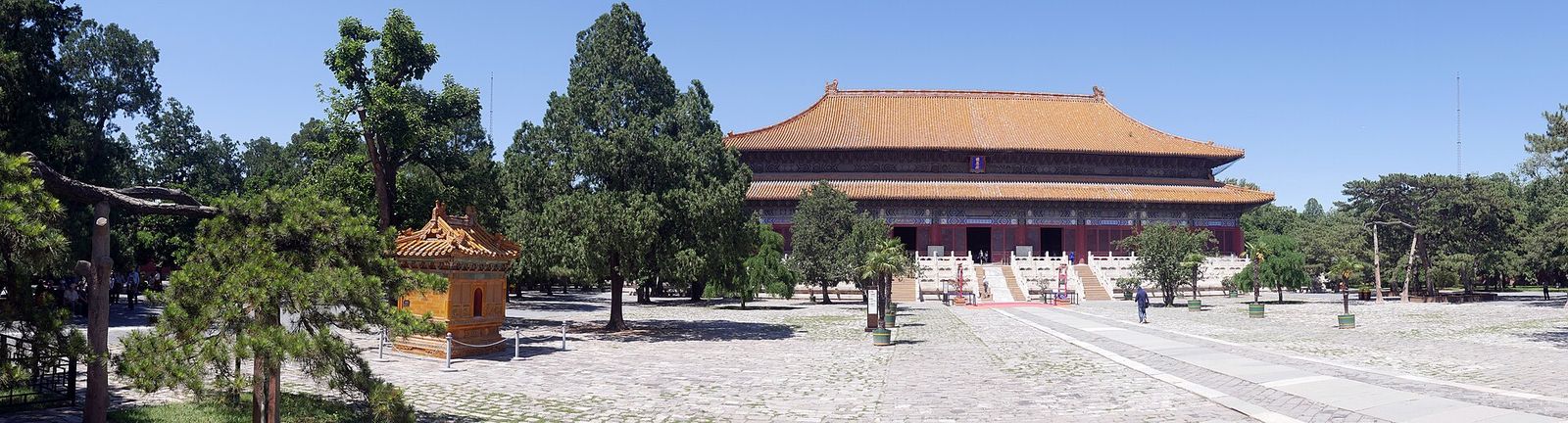
The great hall from its courtyard, 2016Anagoria, CC BY 3.0
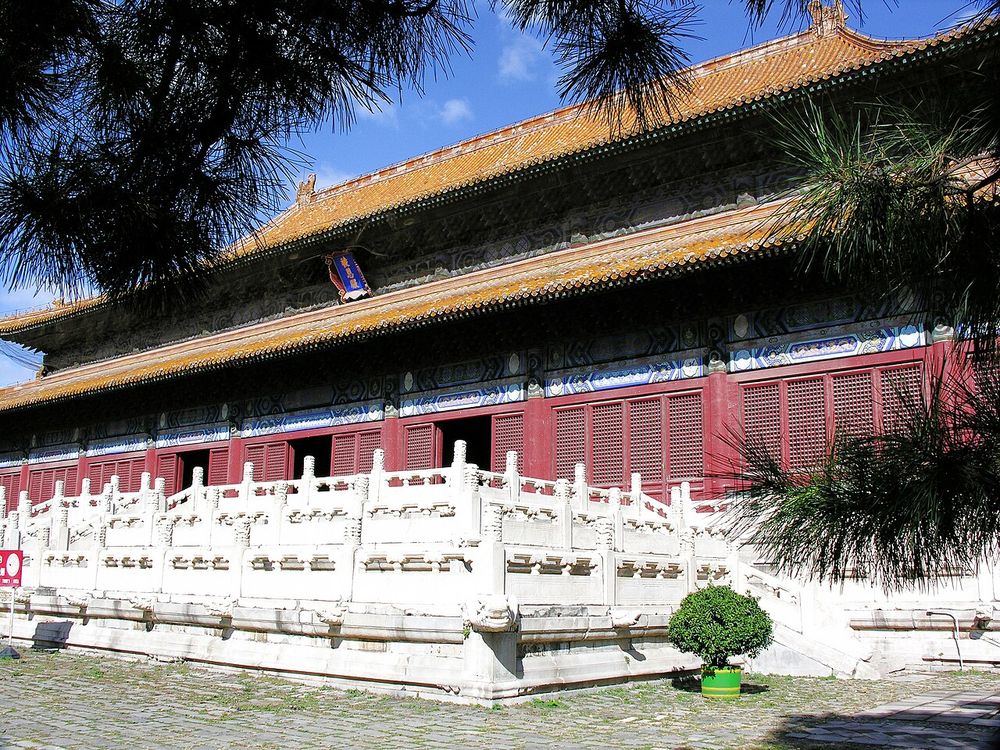
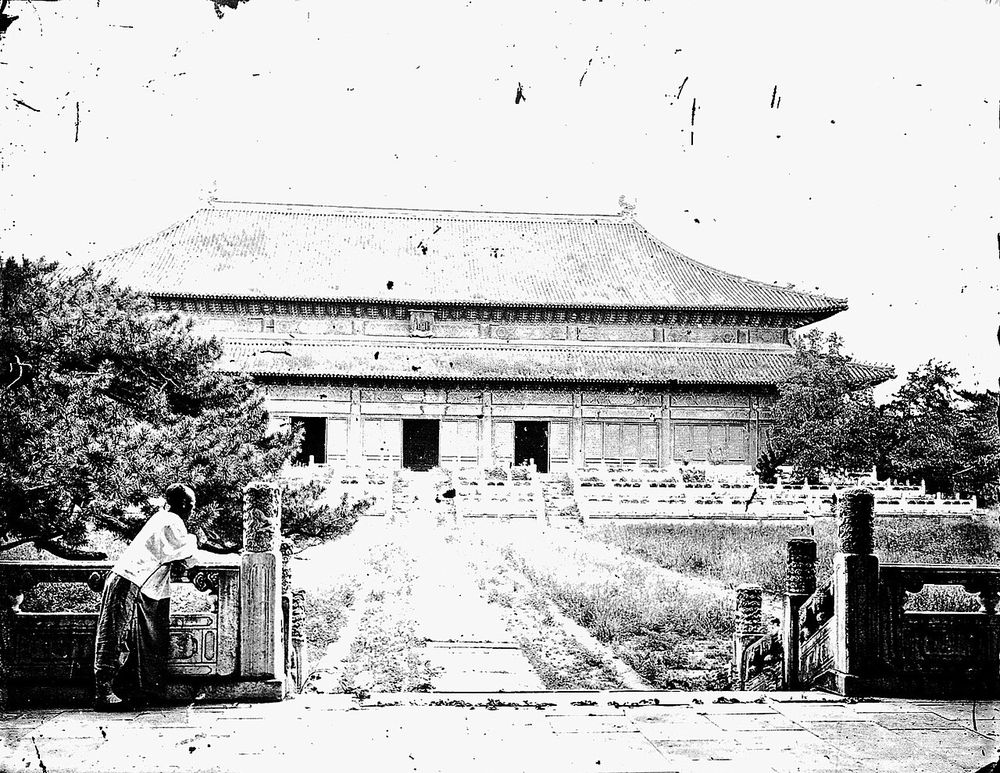
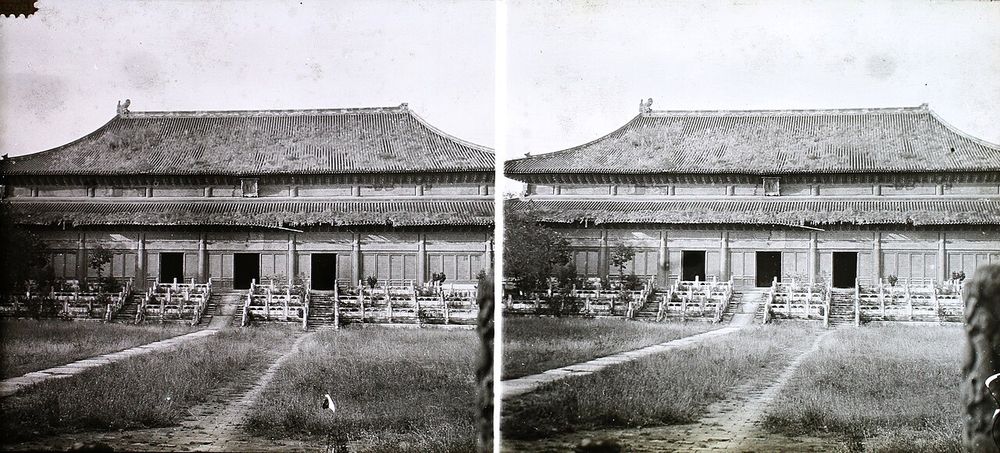
This hall of 1427, where sacrifices were offered to the Yongle emperor, is held up by sixty columns, each a single trunk of nanmu wood brought from the forests of the southwest; the four in the middle are more than a metre thick. It is one of the largest wooden halls left in China, as large as the Hall of Supreme Harmony in the Forbidden City.
Behind the hall, a tower stands before a round mound of earth more than three hundred metres across. The emperor lies under it, unopened.
Things people often get wrong
"Each tomb lies beside the Spirit Way." The Spirit Way leads to Changling; the other tombs are spread round the valley, several kilometres apart.
"Dingling is full of treasure." Its treasures were taken out in 1958 and are shown in museums; the underground palace you walk through is empty stone halls.
People who stood here
We searched Chinese sources first for this list, then English ones.
The Yongle emperor (1360–1424)He moved the capital to Beijing, built the Forbidden City, sent Zheng He's fleets to the Indian Ocean, and chose this valley; Changling is his tomb.
The Wanli emperor (1563–1620)He built Dingling in 1584–1590, while still in his twenties, and came to inspect it. He reigned 48 years and for decades would not meet his ministers.
Gu Yanwu (scholar, 1613–1682)Loyal to the fallen Ming, he made the journey to the tombs again and again, wrote a survey of the hills and rivers of Changping, and wept at the grave of the last emperor.
The Qianlong emperor (1711–1799)The Manchu emperor had the tombs of the dynasty his family had overthrown repaired in the 1780s, and his inscriptions stand in the stele pavilion.
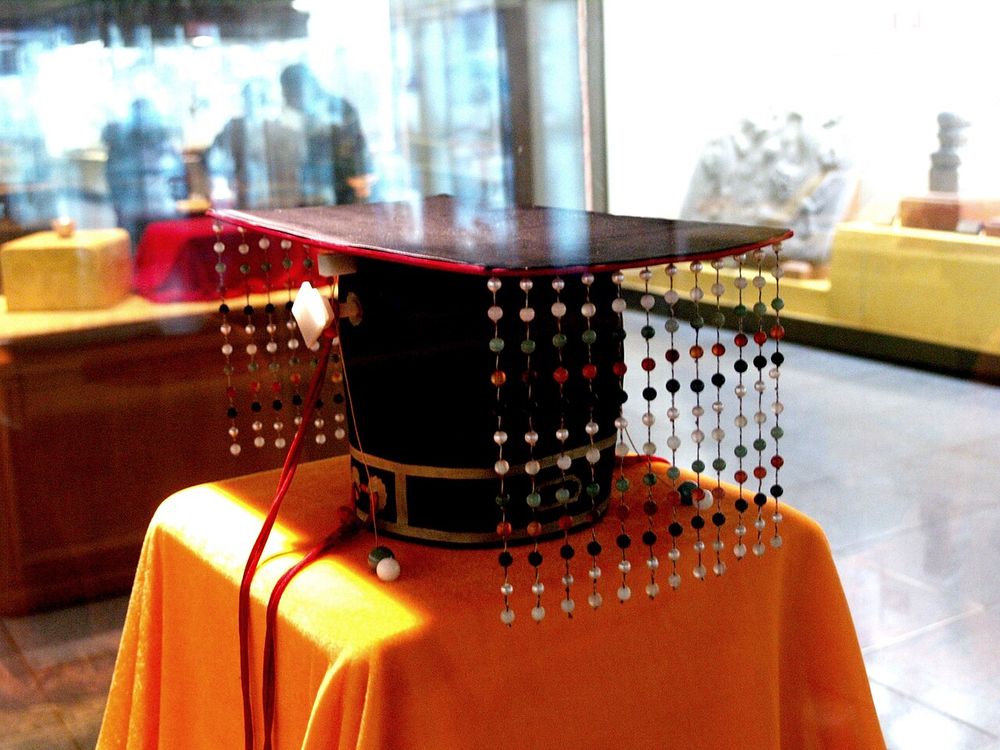
Guo Moruo (writer and historian, 1892–1978) and Wu Han (historian, 1909–1969)In 1955 they pressed for an imperial tomb to be excavated; the archaeologists dug Dingling in 1956–58 as a trial. The opening is still debated, because the silks and the bodies could not be preserved.
Go deeper: four places, from the Spirit Way to the underground palace5 stops · about 1 min to read
A full day with transport between the sites. If you have half a day, see the Spirit Way and Dingling; if you have a car, add Changling and Zhaoling.
1. The Spirit Way
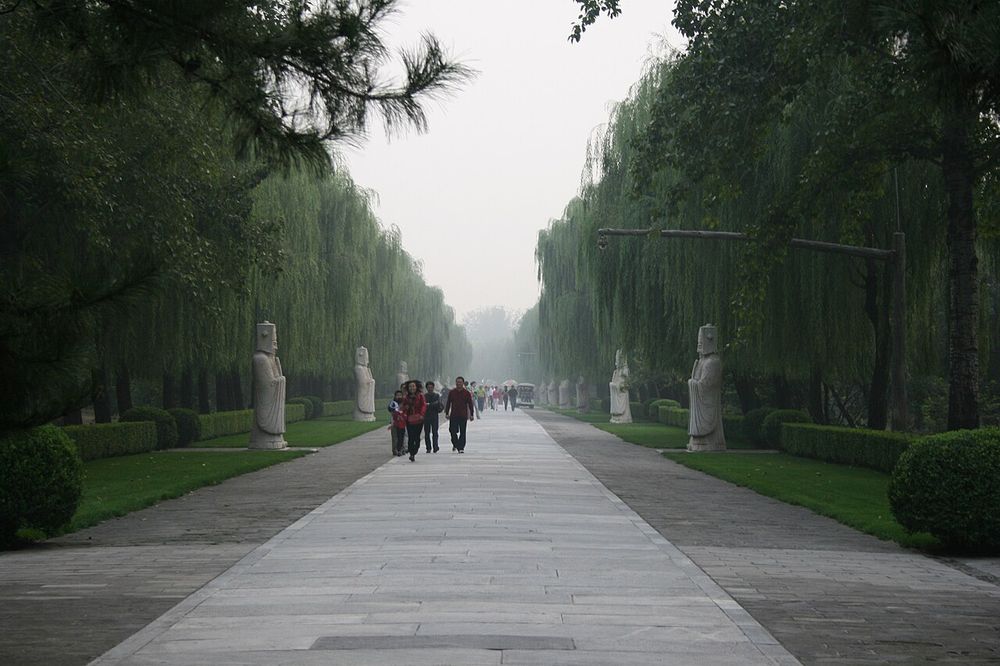
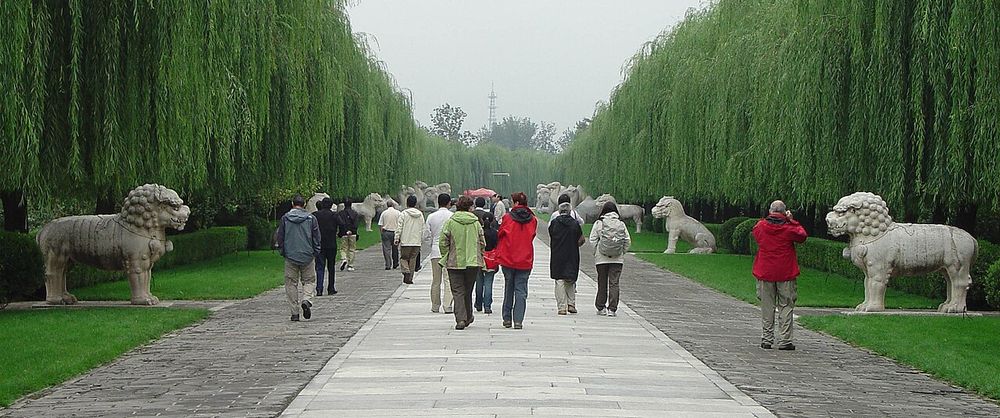
Statues along the Spirit Way, 2008Gary Todd from Xinzheng, China, CC0
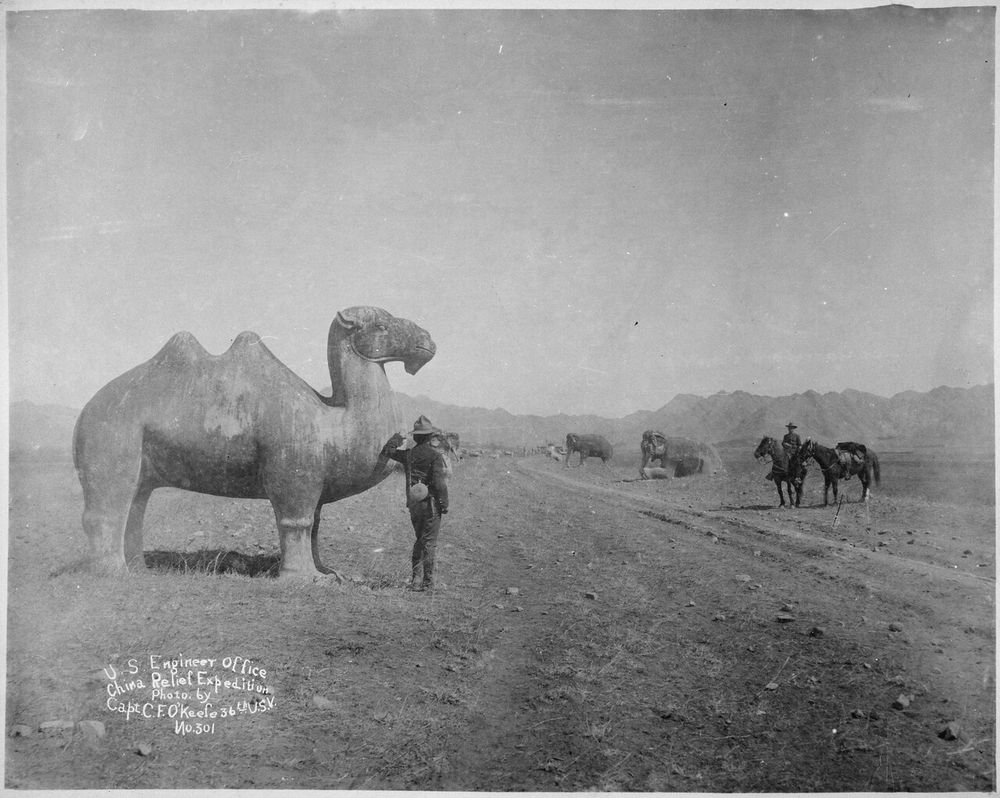
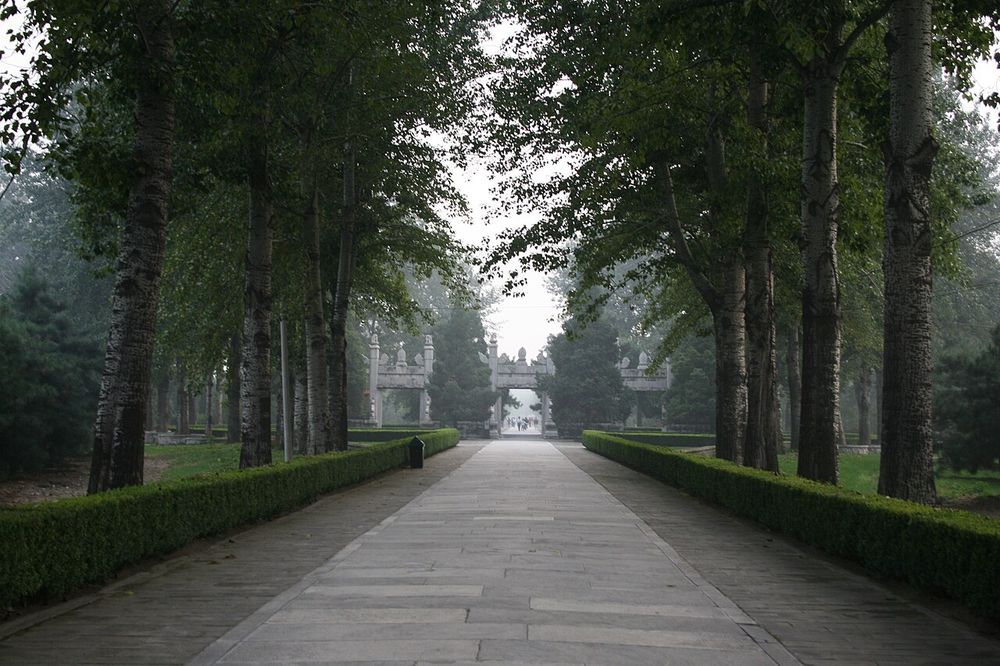
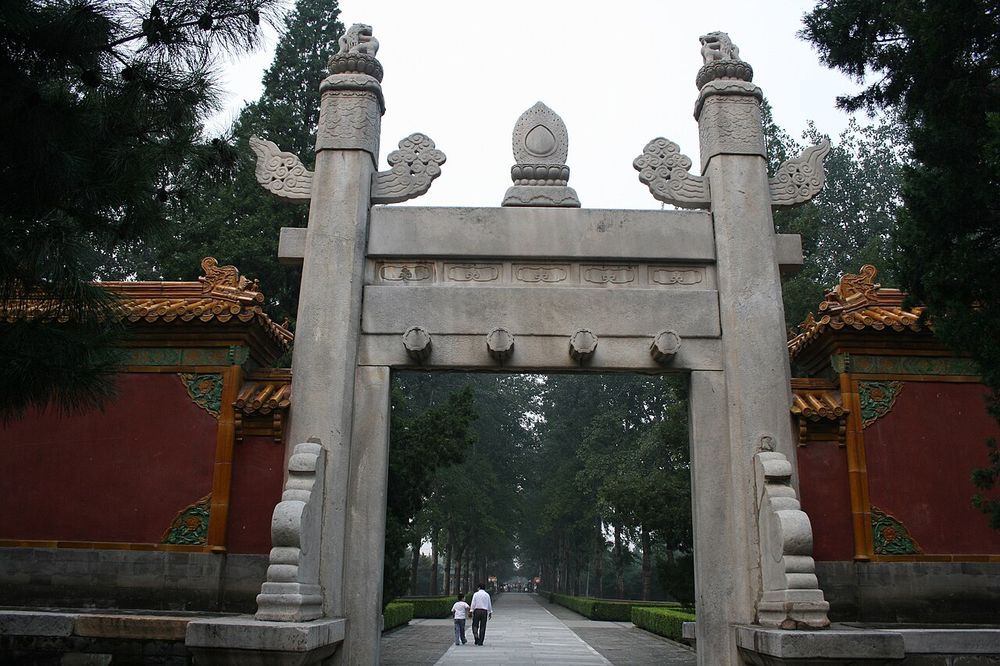
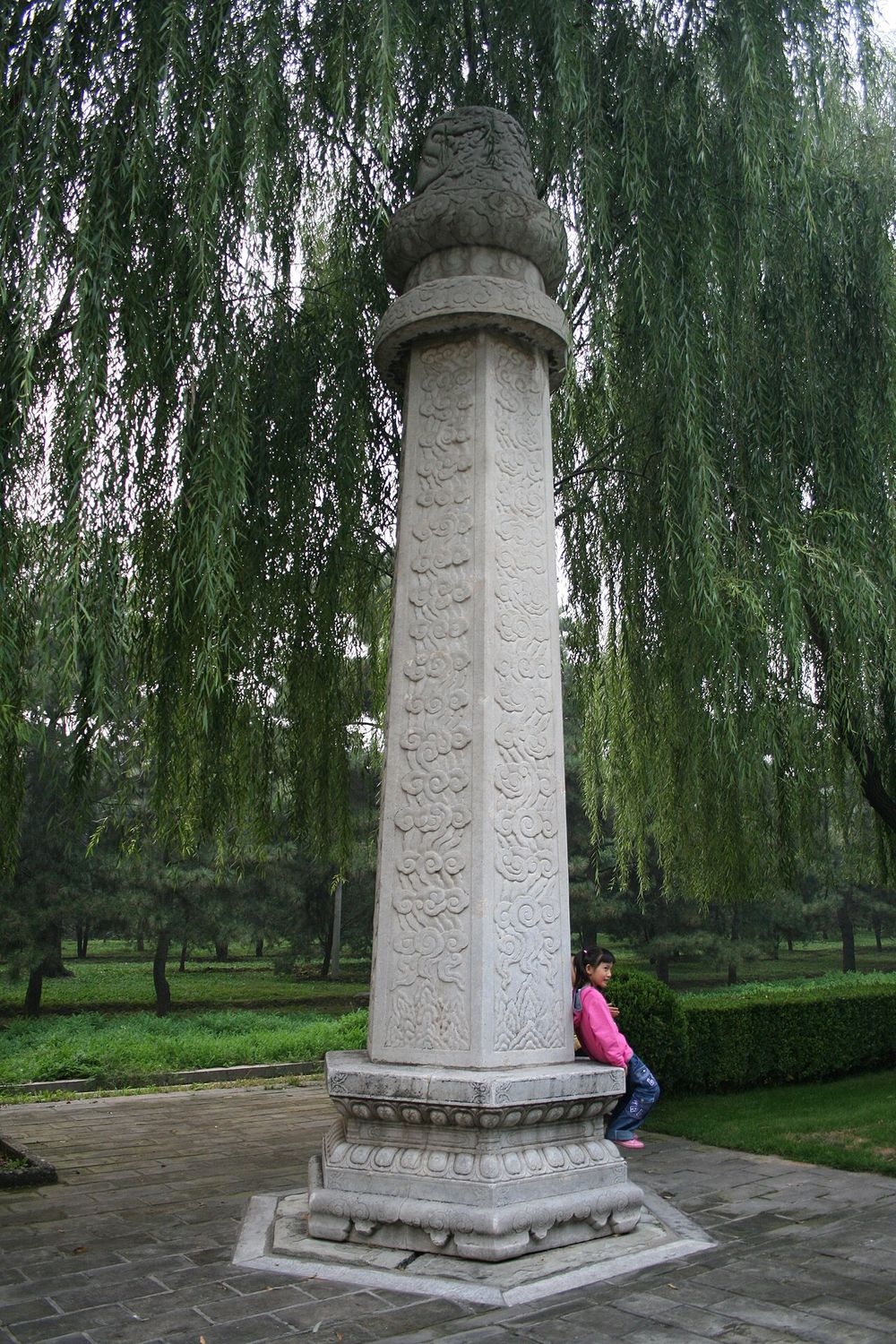
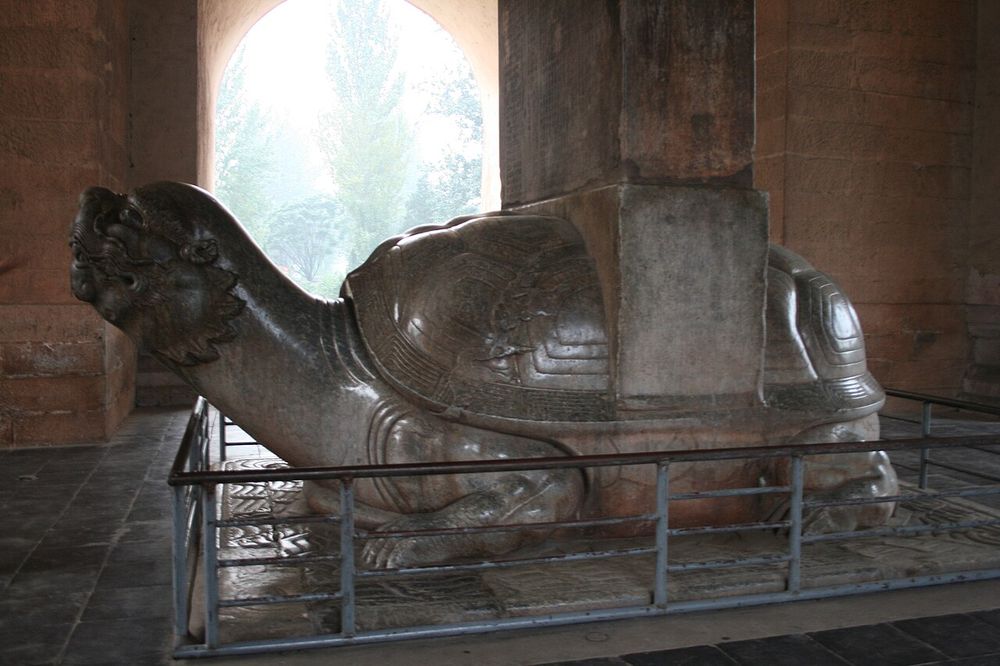
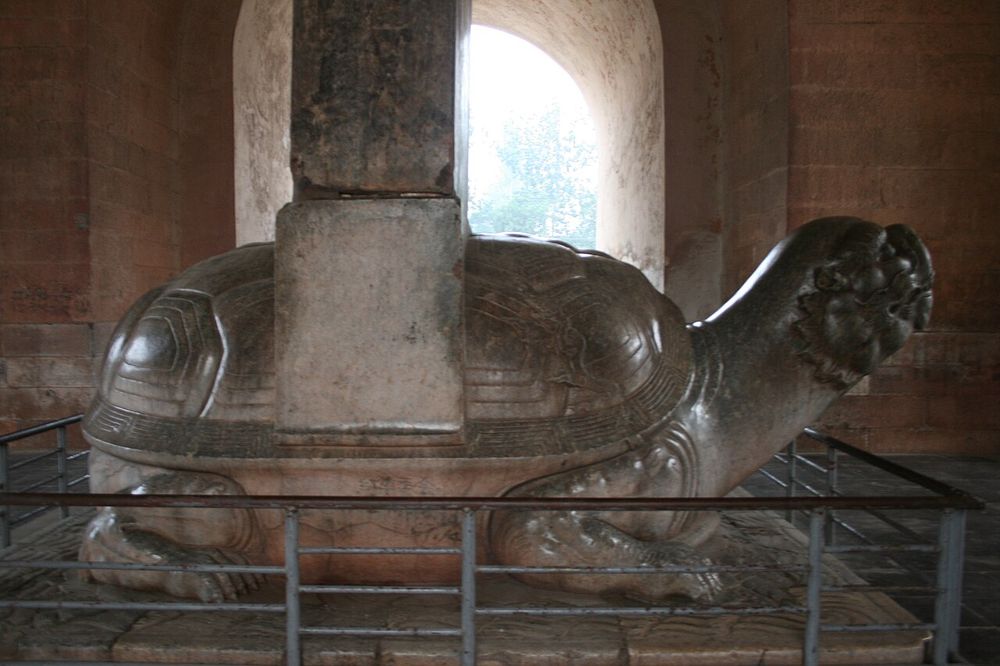
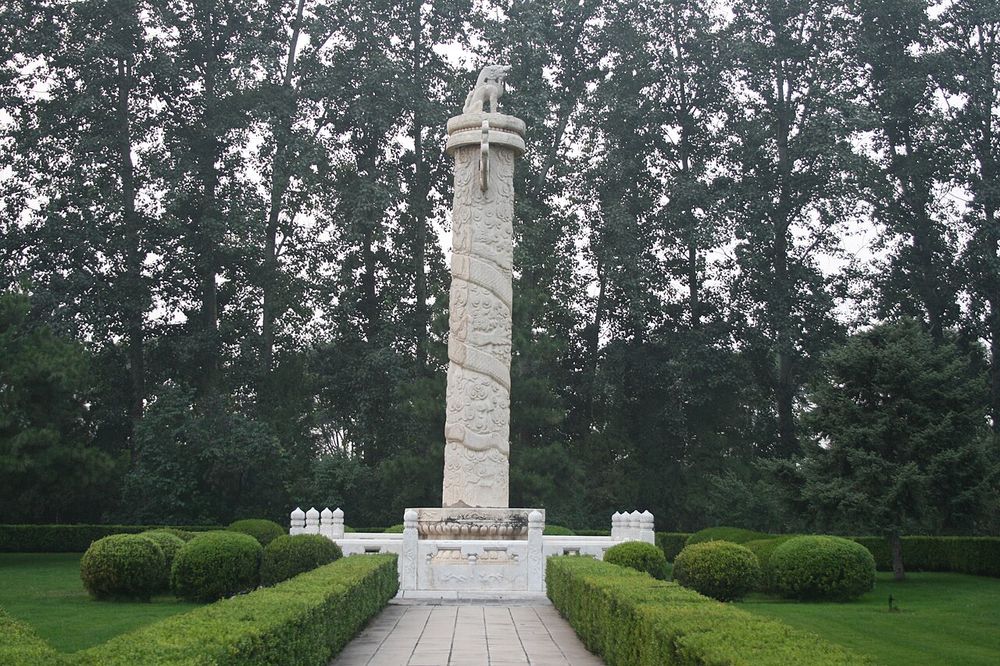
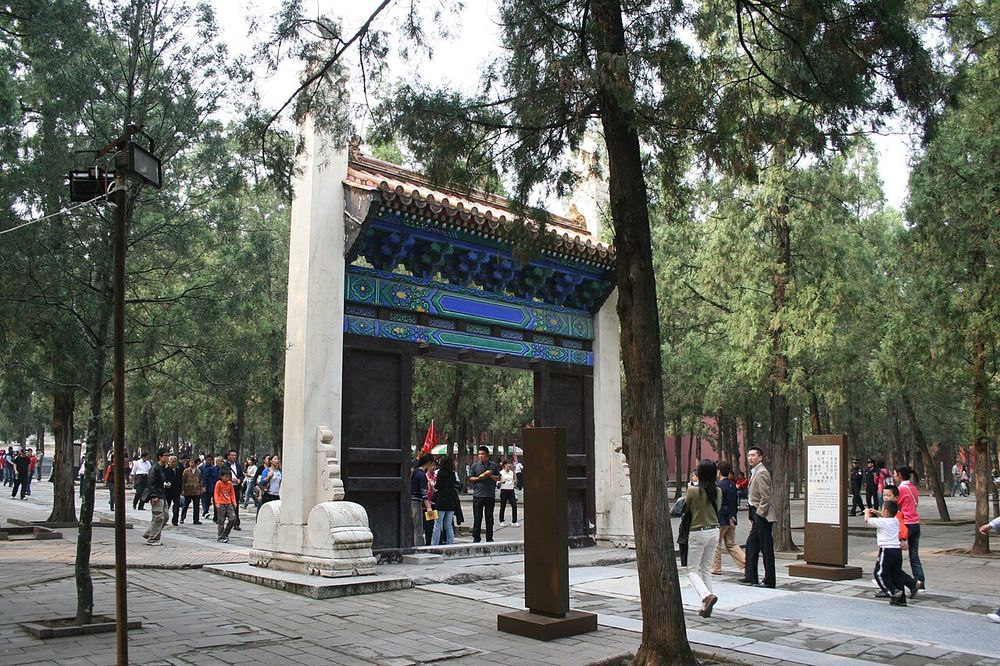
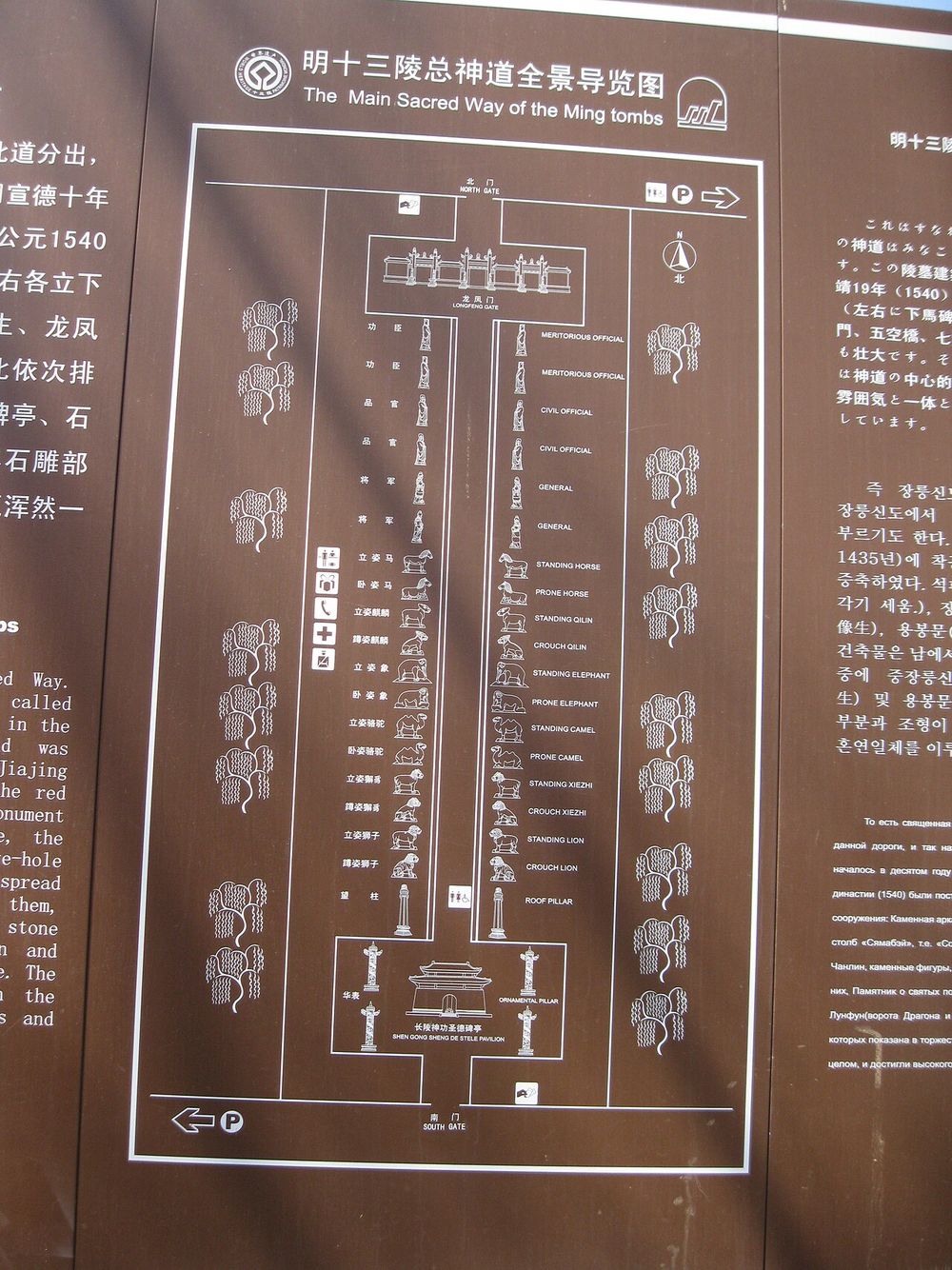
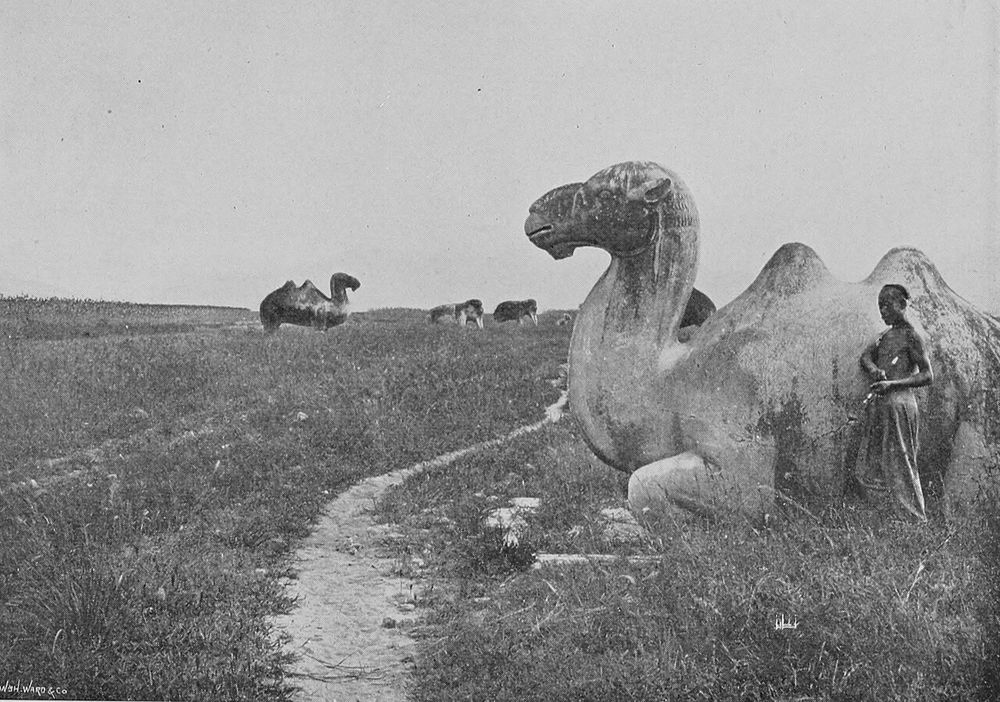
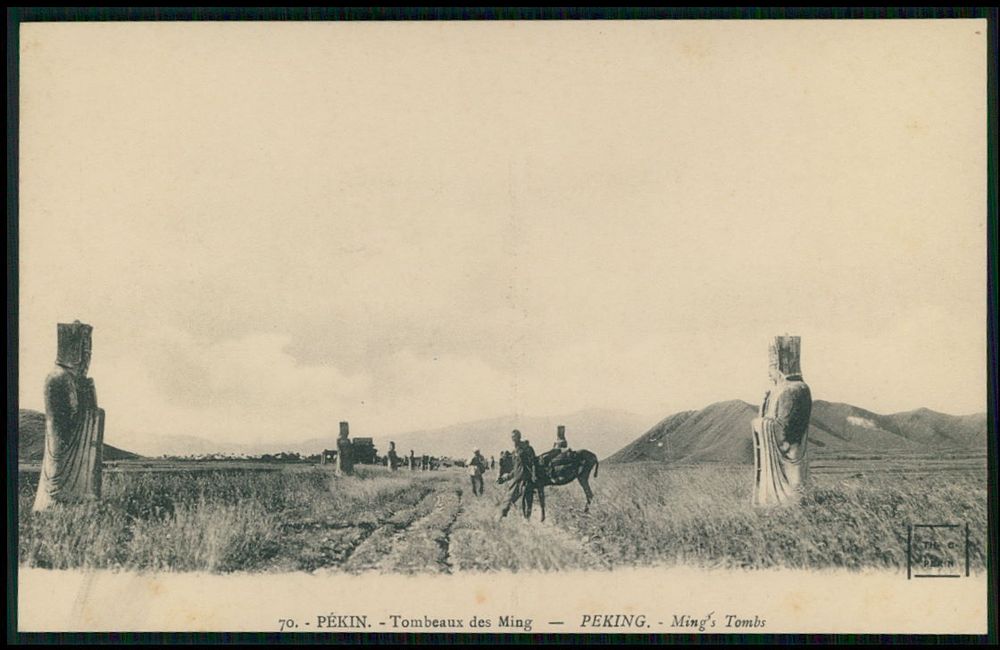
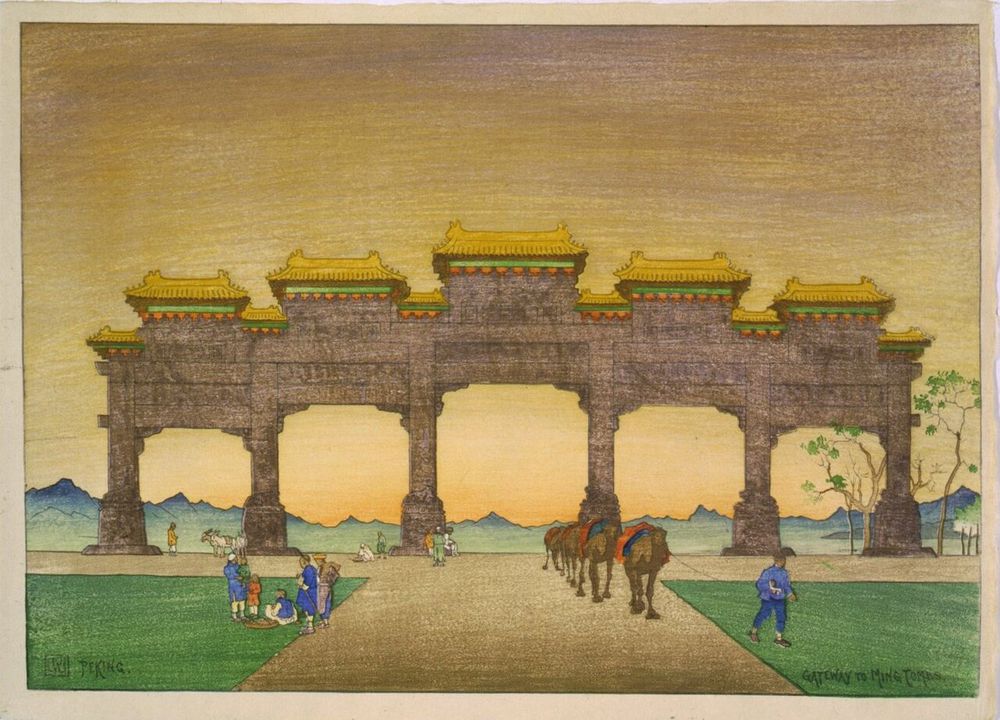
The road begins at a marble archway of 1540 with five openings, the largest stone archway of its kind in China, then passes the Great Red Gate and a pavilion with a tablet on a stone tortoise. Then come the statues of 1435: lions, xiezhi, camels, elephants, qilin and horses, two pairs of each, one pair standing, one kneeling; then generals, ministers and nobles. They line the road for about a kilometre.
The avenue of statues in 1900Unknown authorUnknown author or not provided, Public domain
2. Changling
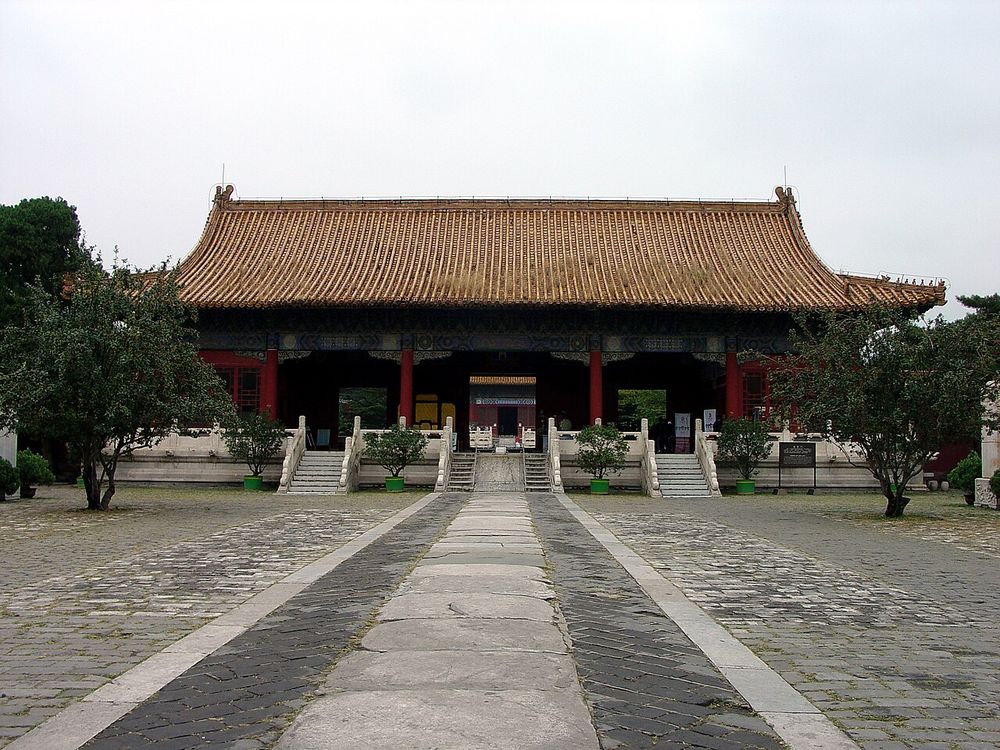
The approach to Changling, 2006G41rn8, CC BY-SA 4.0
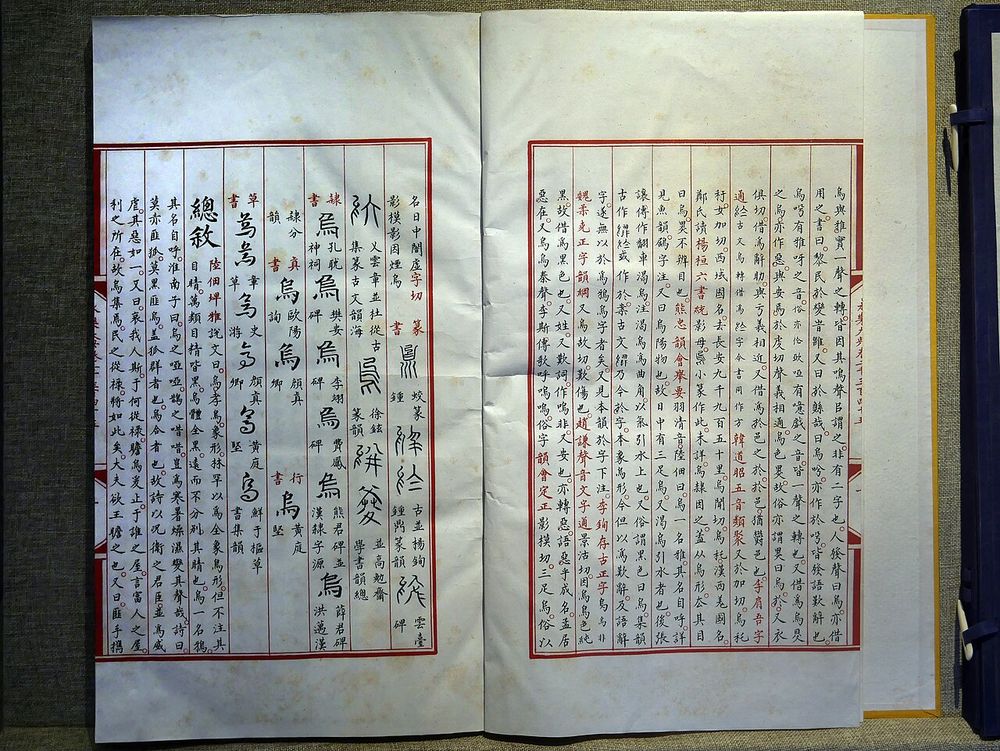
The first and largest tomb. Besides the great hall, look in the side rooms at the copies of the Yongle Encyclopedia, the vast compilation the emperor ordered.
A copy of the Yongle Encyclopedia at Changling, 2016Anagoria, CC BY 3.0
3. Dingling and the underground palace
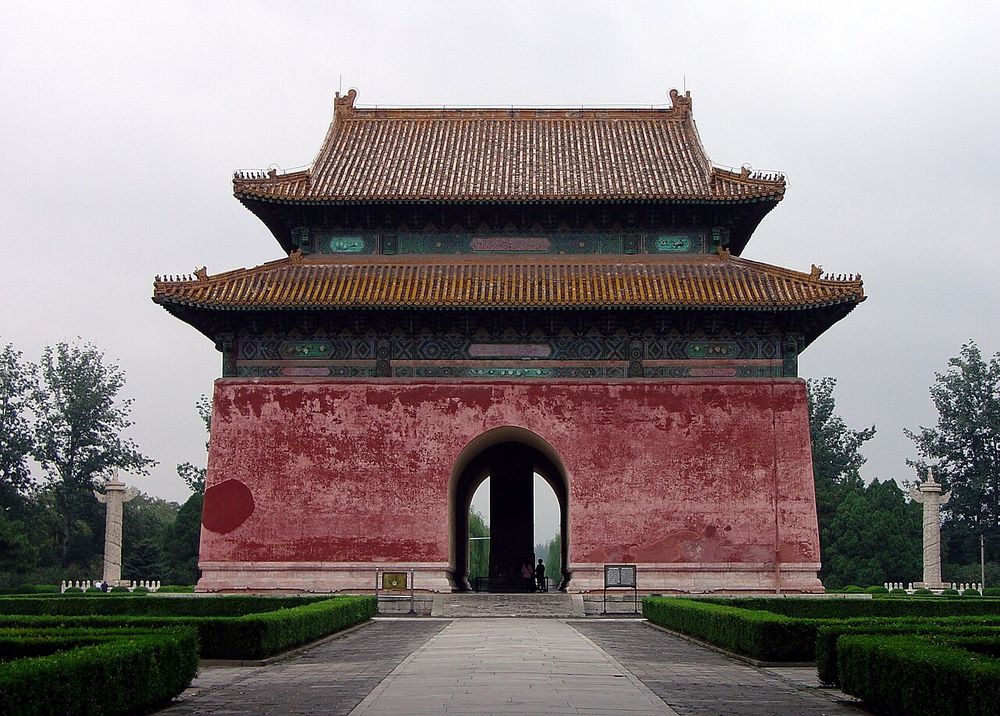
The tower of Dingling, 2015Bairuilong, CC BY-SA 4.0
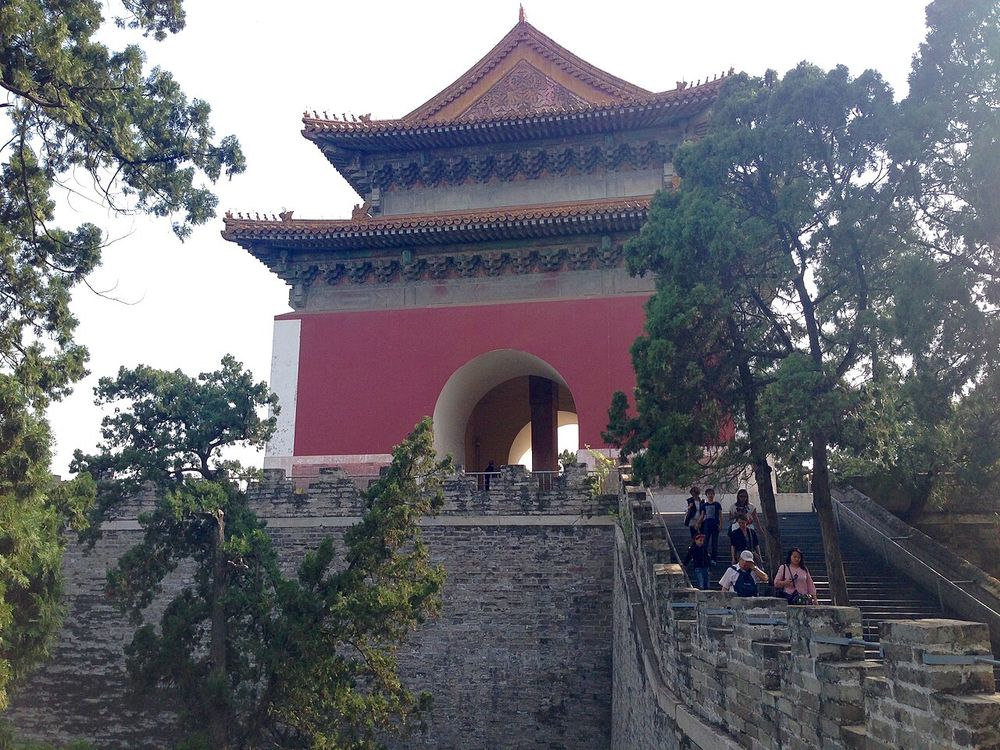
Climb the tower, then go down 27 metres into the tomb: five vaulted stone chambers linked by marble doors, with marble thrones for the emperor and his two empresses. The coffins in the back chamber are copies.
An imperial crown from Dingling (copy), 2010Deadkid dk, CC BY-SA 3.0
4. Zhaoling
The tower of Zhaoling, 2015rheins, CC BY 3.0
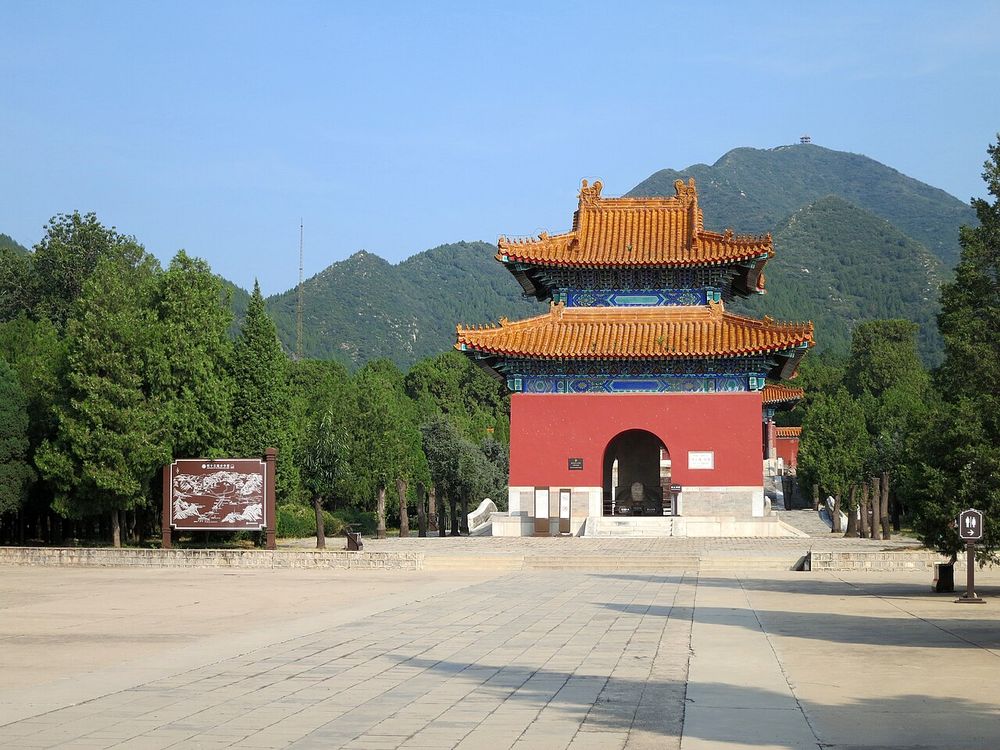
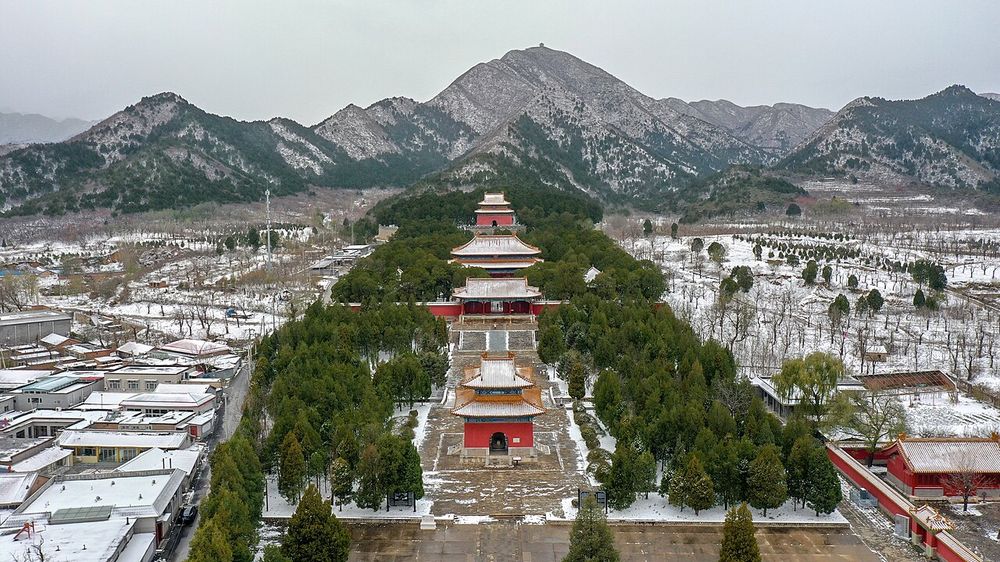
The tomb of the Longqing emperor, father of Wanli, was the first to be fully restored, in the 1980s, and shows what the whole complex looked like: gate, hall, galleries, tower and mound in one walled enclosure. It is the quietest of the four.
The tombs and the same years elsewhere
Changling was begun in 1409; in the same decade Jan Hus was preaching in Prague and the Council of Constance was trying to end the papal schism.
Meanwhile in the world
Year
Here
Elsewhere
1409
Changling is begun
The Council of Pisa tries to end the papal schism
1435
The statues of the Spirit Way are carved
The Medici rule Florence
1584
Dingling is begun
William of Orange is assassinated
1644
The last Ming emperor is buried here
The English Civil War is under way
1956
Dingling is excavated
The Suez crisis
One line to remember: thirteen emperors, one valley, one tomb opened.
Then and now
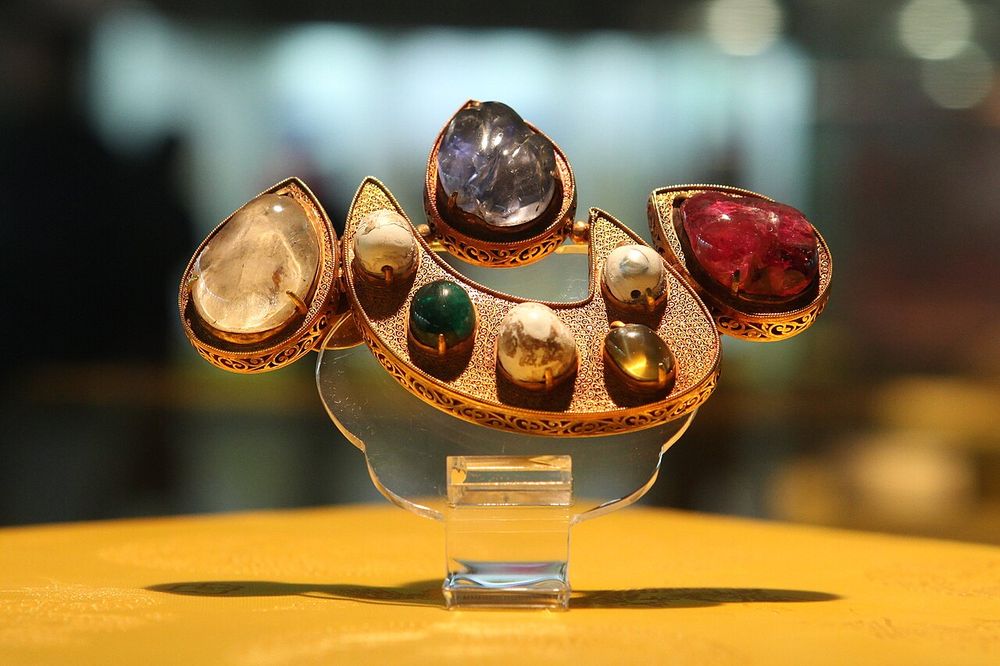
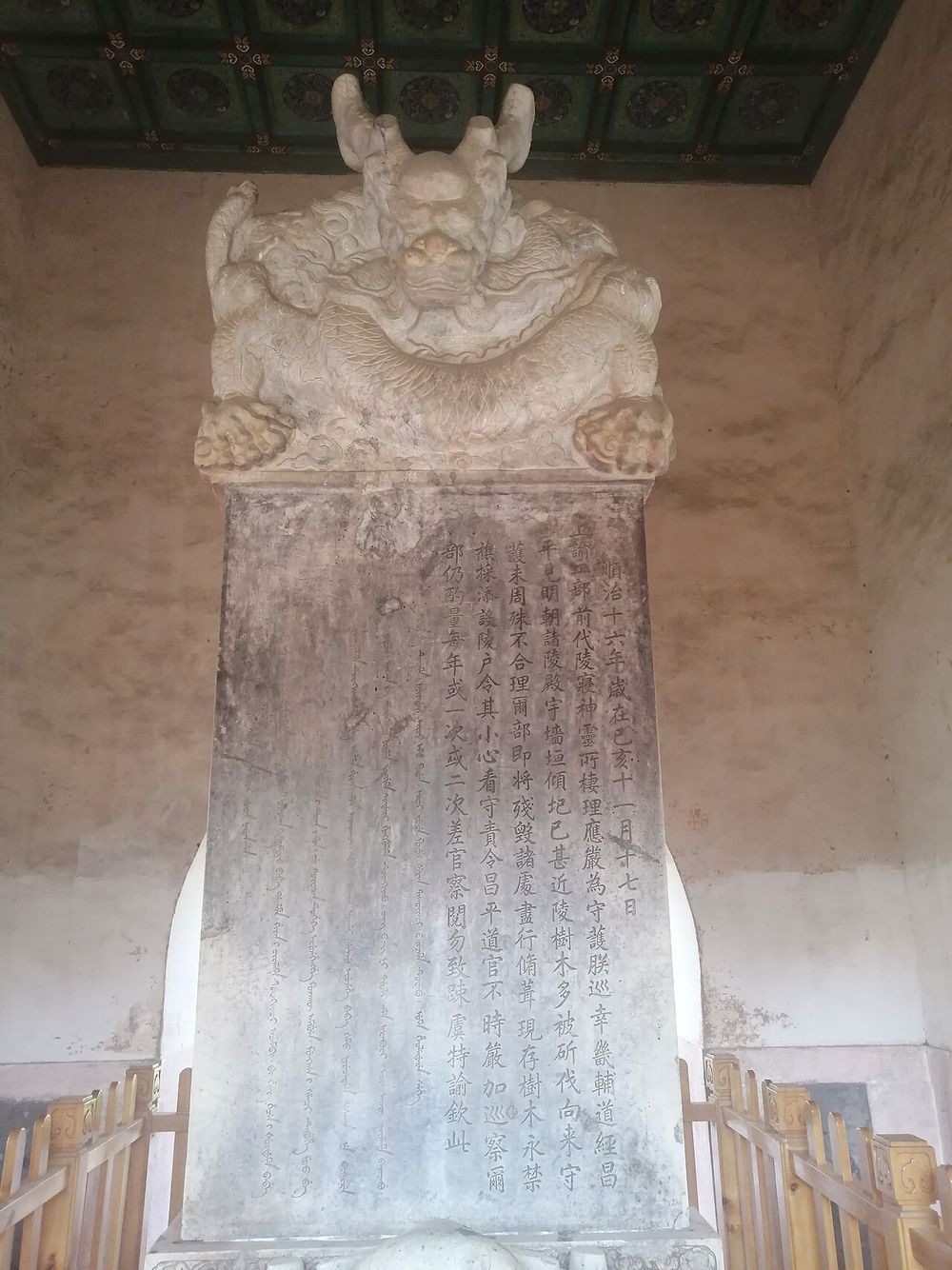
The Hall of Eminent Favour at Changling, 2016Anagoria, CC BY 3.0, Wikimedia CommonsThe great hall from its courtyard, 2016Anagoria, CC BY 3.0, Wikimedia CommonsThe marble terrace of the hallGeorg Denda, CC BY-SA 3.0, Wikimedia CommonsThe approach to Changling, 2006G41rn8, CC BY-SA 4.0, Wikimedia CommonsDingling and Zhaoling after snowCharlie fong, CC BY-SA 4.0, Wikimedia CommonsZhaoling after snow, 2021Charlie fong, CC BY-SA 4.0, Wikimedia CommonsZhaoling under the hills, 2019Charlie fong, CC BY-SA 4.0, Wikimedia CommonsThe tower of Zhaoling, 2015rheins, CC BY 3.0, Wikimedia CommonsThe courtyard of Zhaoling, 2013xiquinhosilva, CC BY 2.0, Wikimedia CommonsA hall of Zhaoling, 2013xiquinhosilva, CC BY 2.0, Wikimedia CommonsThe gate of Dingling, 2009CEphoto, Uwe Aranas, CC BY-SA 3.0, Wikimedia CommonsThe tower of Dingling, 2015Bairuilong, CC BY-SA 4.0, Wikimedia CommonsAn imperial crown from Dingling (copy), 2010Deadkid dk, CC BY-SA 3.0, Wikimedia CommonsJewels from the tombs, 2010Mlogic, CC BY-SA 3.0, Wikimedia CommonsA copy of the Yongle Encyclopedia at Changling, 2016Anagoria, CC BY 3.0, Wikimedia CommonsA stele with the edict of the Shunzhi emperor, Changling, 2021Yumeto, CC BY-SA 4.0, Wikimedia CommonsThe Spirit Way between willows, 2008Gary Todd from Xinzheng, China, CC0, Wikimedia CommonsStatues along the Spirit Way, 2008Gary Todd from Xinzheng, China, CC0, Wikimedia CommonsThe Lingxing Gate at the north end, 2008Gary Todd from Xinzheng, China, CC0, Wikimedia CommonsA huabiao column by the stele pavilion, 2008Gary Todd from Xinzheng, China, CC0, Wikimedia CommonsA stone tortoise carrying a tablet, 2008Gary Todd from Xinzheng, China, CC0, Wikimedia CommonsThe tortoise from the side, 2008Gary Todd from Xinzheng, China, CC0, Wikimedia CommonsA huabiao among trees, 2008Gary Todd from Xinzheng, China, CC0, Wikimedia CommonsA gate on the Spirit Way, 2008Gary Todd from Xinzheng, China, CC0, Wikimedia CommonsThe stele pavilion, 2006G41rn8, CC BY-SA 4.0, Wikimedia CommonsKneeling and standing animals on the Spirit Way, 2006G41rn8, CC BY-SA 4.0, Wikimedia CommonsA plan of the tombs, 2012Ovedc, Public domain, Wikimedia CommonsA camel on the avenue, photographed by John Thomson, about 1871John Thomson, Public domain, Wikimedia CommonsThe avenue of statues in 1900Unknown authorUnknown author or not provided, Public domain, Wikimedia CommonsThe Spirit Way on a postcard, about 1910Unknown authorUnknown author, Public domain, Wikimedia CommonsThe great hall of Changling, 1860sUnknown, CC BY 4.0, Wikimedia CommonsThe Changling hall in an old stereographFOTO:Fortepan — ID 95288: Adományozó/Donor: Magyar Földrajzi Múzeum / Károssy Cs, Public domain, Wikimedia CommonsThe stone archway in a woodblock print by Charles Bartlett, about 1919Charles Bartlett, Public domain, Wikimedia Commons
Local legends
These are stories people tell about this place. They are legends, not history, and each one says where it comes from.
LegendThe emperor who chose by fengshui
The Yongle emperor is said to have sent a fengshui master, Liao Junqing, to search the hills round Beijing, and to have renamed the mountain behind his tomb "Tianshou", Heavenly Longevity.
Source: Ming tradition retold in local histories
Later, people who live here will be able to add the stories they grew up with, and say which of these they have heard.
Not certain, and where accounts conflict
Should Dingling have been opened?
The excavation found silks, crowns and the bodies, but the silks decayed and the bodies were destroyed in 1966. Afterwards the state ruled that imperial tombs would not be excavated except to save them. Opinions on the decision of 1955 still differ.
Visiting
Tickets and hours
April to October: Spirit Way 30 yuan, Changling 45, Dingling 60, Zhaoling 30; a combined ticket costs about 130. Lower prices in winter.
All four open about 8:30 to 17:30.
Last checked 2026-11-12. Prices and hours from Beijing Tourism (visitbeijing.com.cn, 2025) and 2026 ticket listings; the closure notice of the Spirit Way as published on travel sites in 2026.
Booking without WeChat
Official page in English Tickets are sold through the Ming Tombs scenic area's official online channels and at the gates; bring a passport.
International booking platform Trip.com and similar sites sell same-day tickets for each site with a passport.
Ticket window on site Ticket windows are open at each of the four sites.
Note Several museums on the site close on Mondays; check before you go.
Checked 2026-11-12
Where to start
Bus 872 from Deshengmen in Beijing, or the Changping metro line to Ming Tombs station and then a local bus; a taxi or car between the sites saves hours.
The tombs are on the way to the Badaling Great Wall, and many visitors combine the two.
Before you go
Parts of the Spirit Way, including the Great Palace Gate and the stele pavilion, are fenced off for restoration until mid-2027; the statues remain visible.
The underground palace is cold even in summer; bring a layer.
Customs and manners
These are graves. Do not climb on the statues or the mounds.
Coins thrown on the thrones in the underground palace are a popular custom, but the staff ask visitors not to.
Opening hours are given in the local time of the place. Prices are in the local currency. The figure after ≈ is approximate, at exchange rates checked on 9 November 2026, in .
Look for these
On the Spirit Way, find a kneeling elephant and a standing one.
In the great hall at Changling, put your arms round a nanmu column and see how far they reach.
In the underground palace, find the stone door and the stone that locked it from inside.
I am here
Stand at the site, sign in, press the button, and collect its stamp. Your browser will ask to use your location. It is sent to us once to confirm that you are at the site; we keep how far you were from it, not the spot where you stood.
Your stamps are saved to your account, so they follow you to any device. Checking from a browser cannot rule out every false location; stricter checks arrive with the app.
Messages
Share your photos
Photos here show the place, not people. Each one is credited to the visitor who took it and appears after our team has looked at it. A photo with you in it belongs under “I am here”.