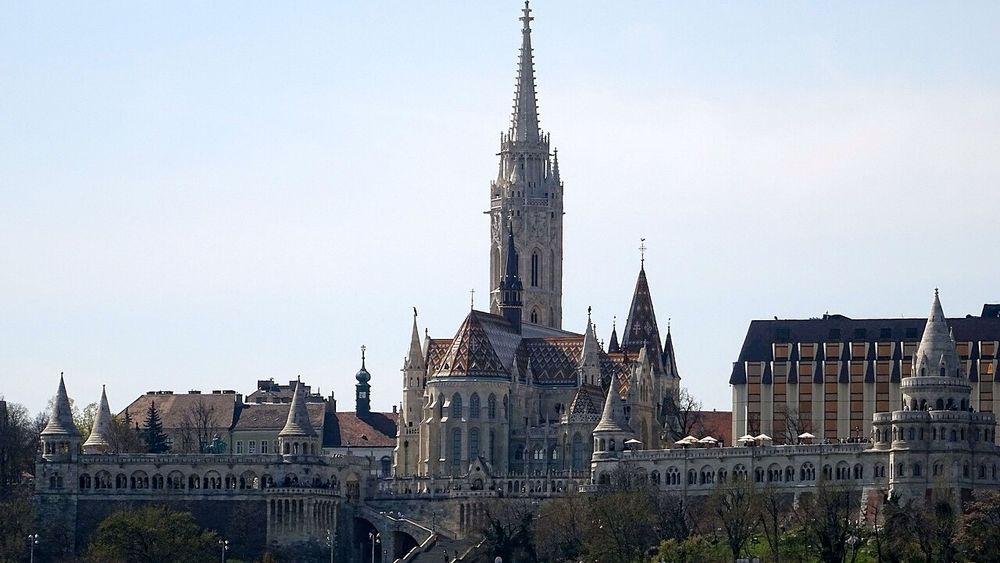
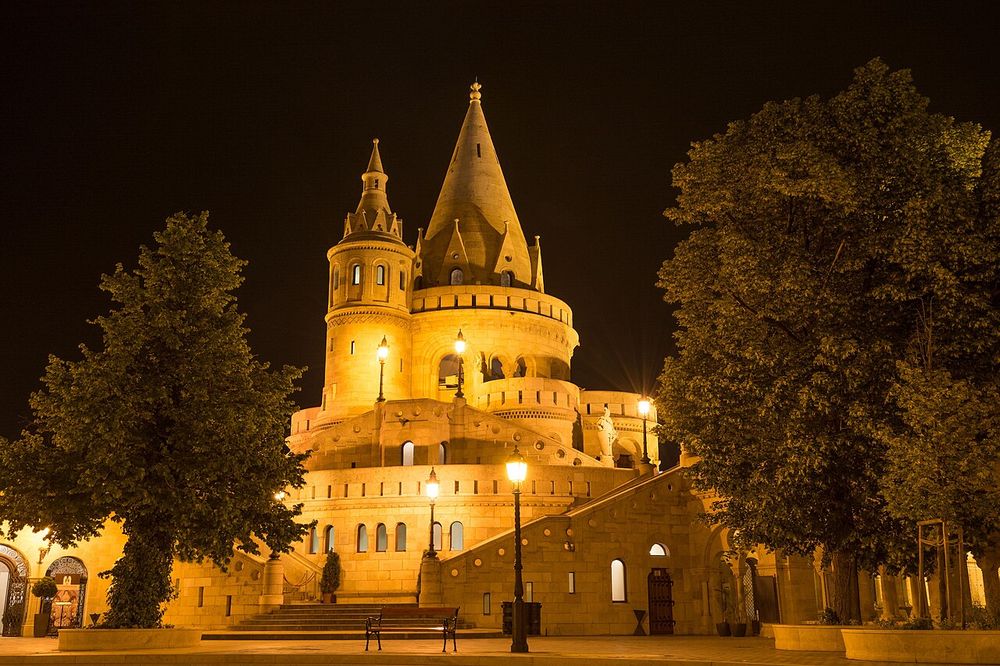
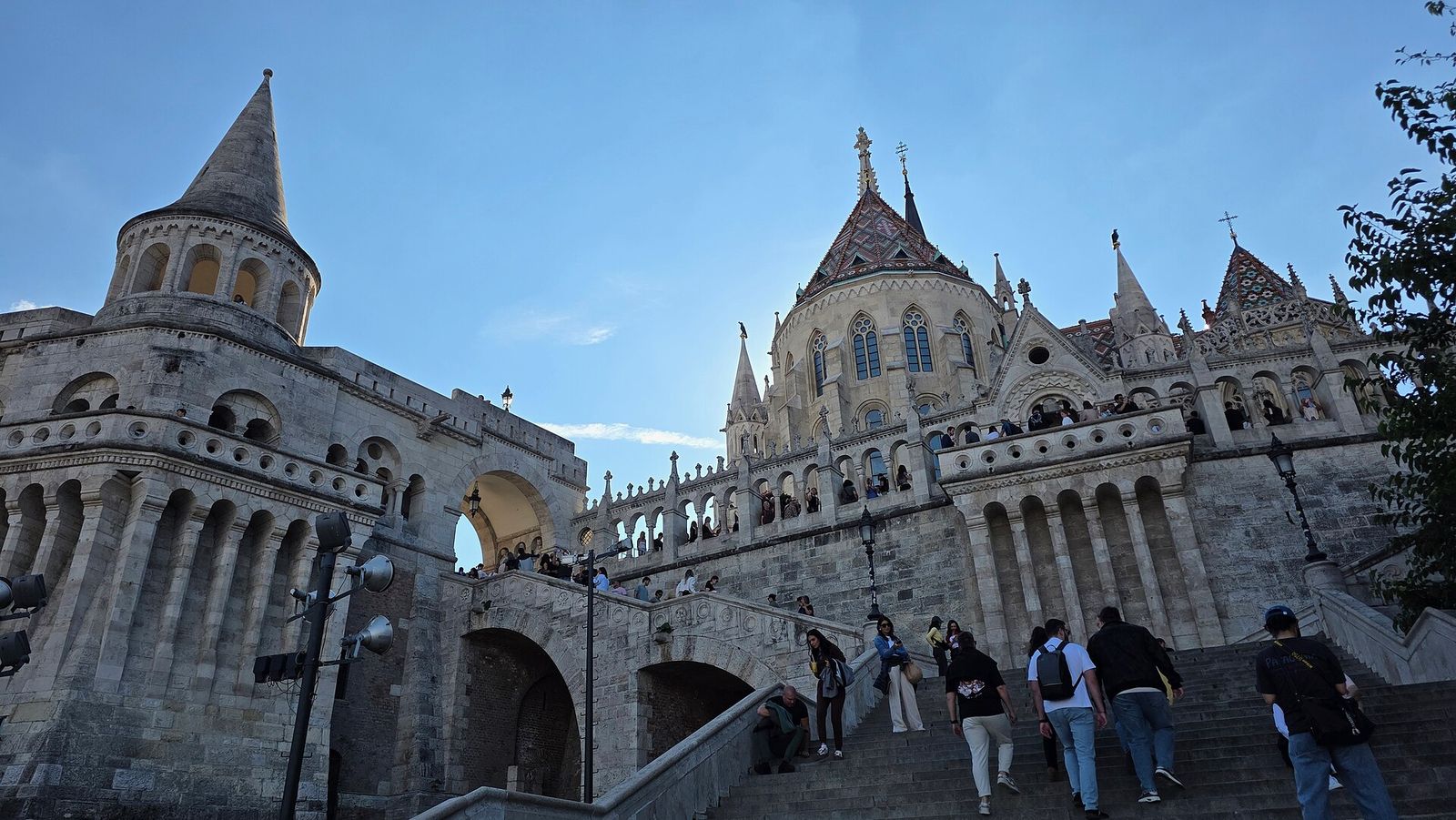
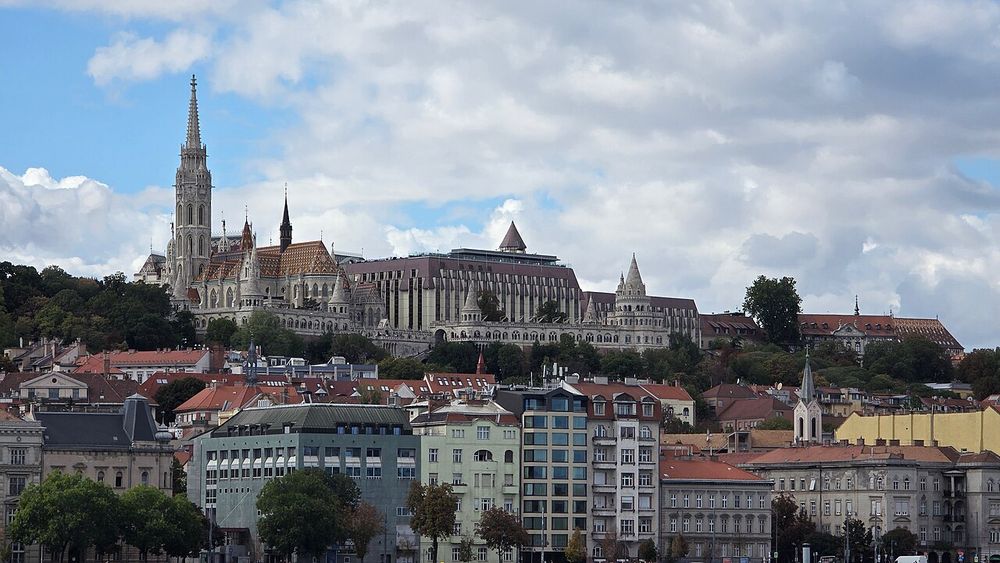
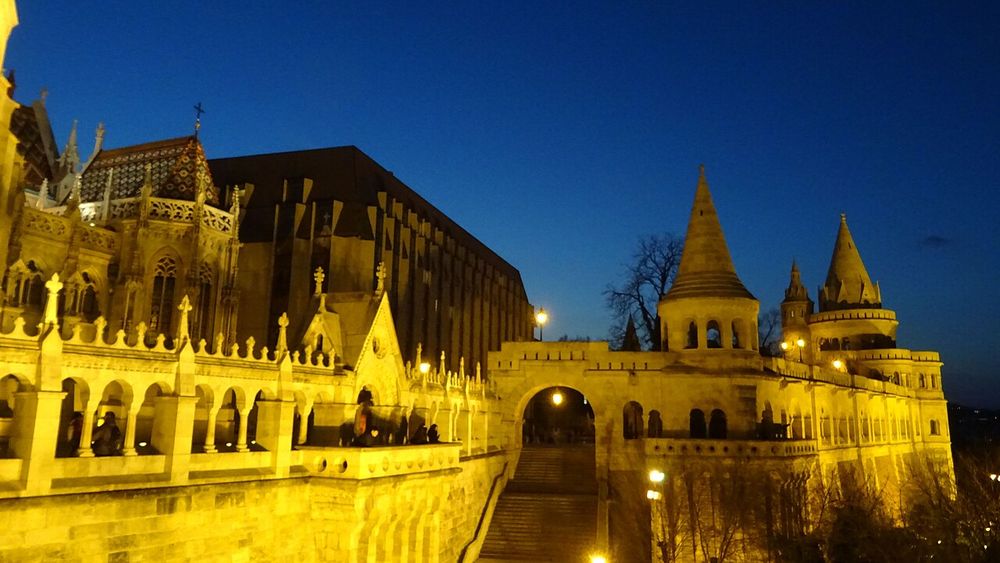
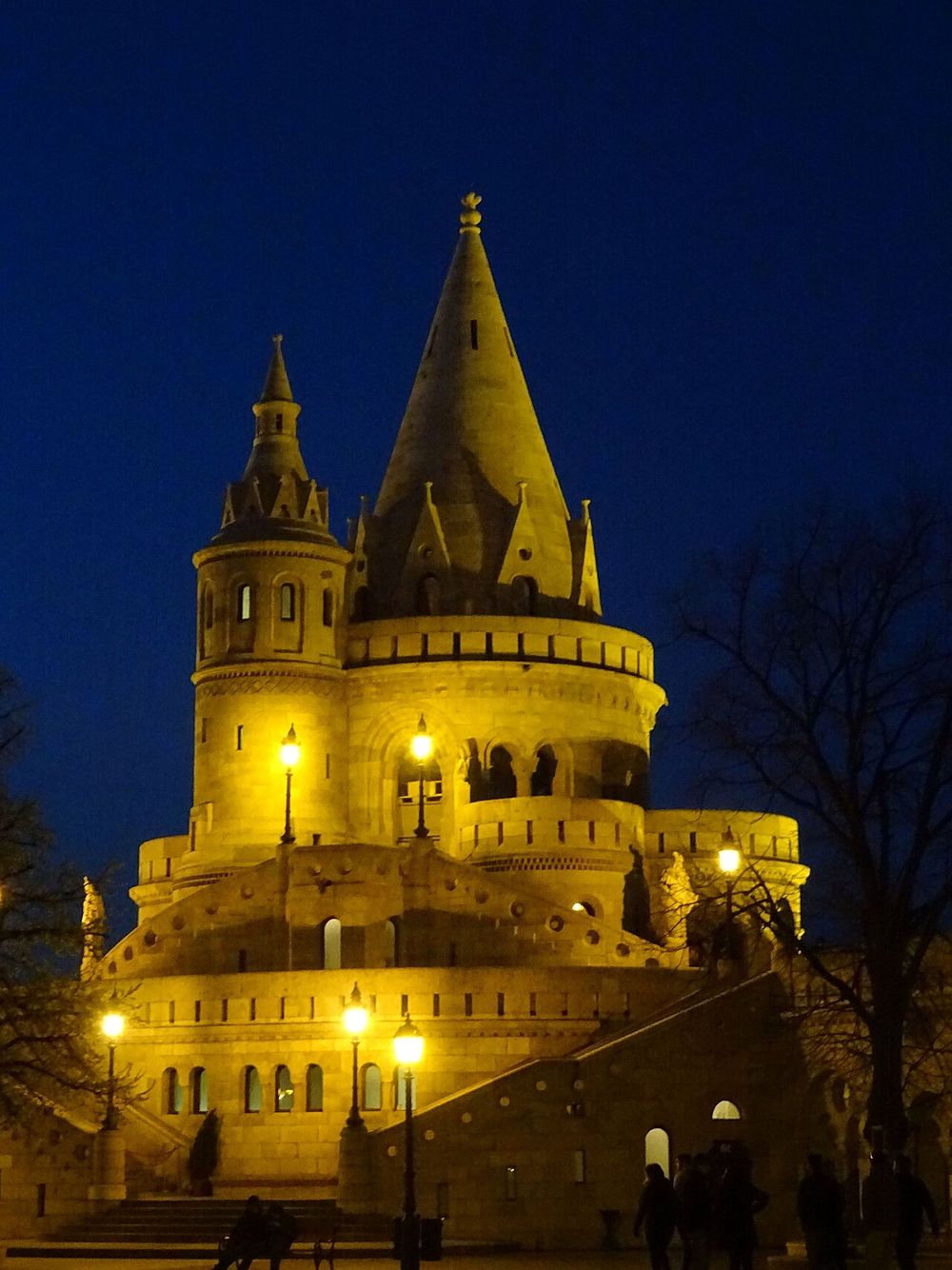
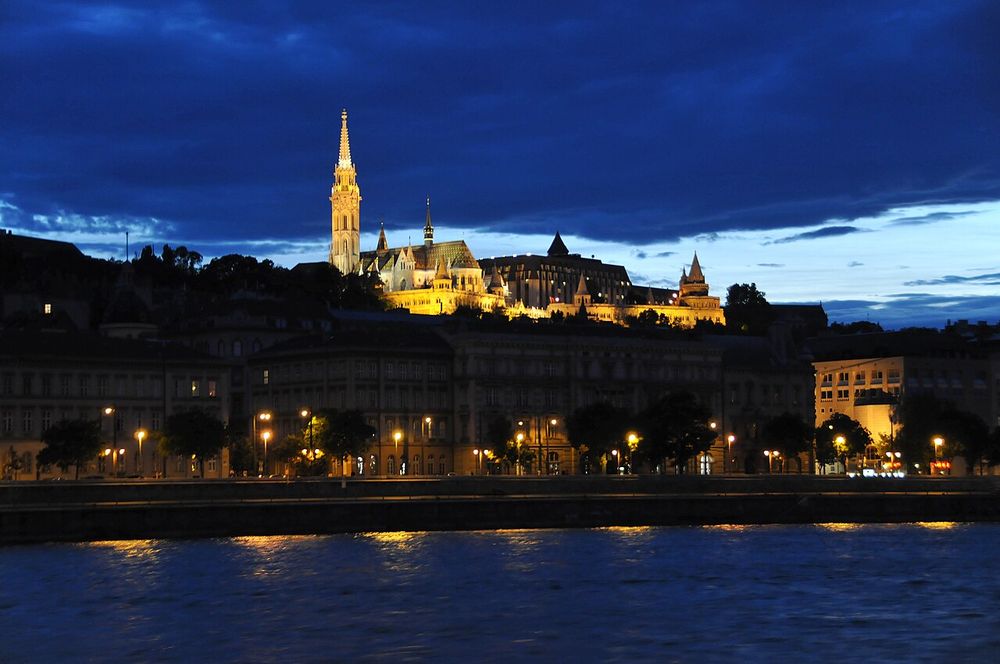
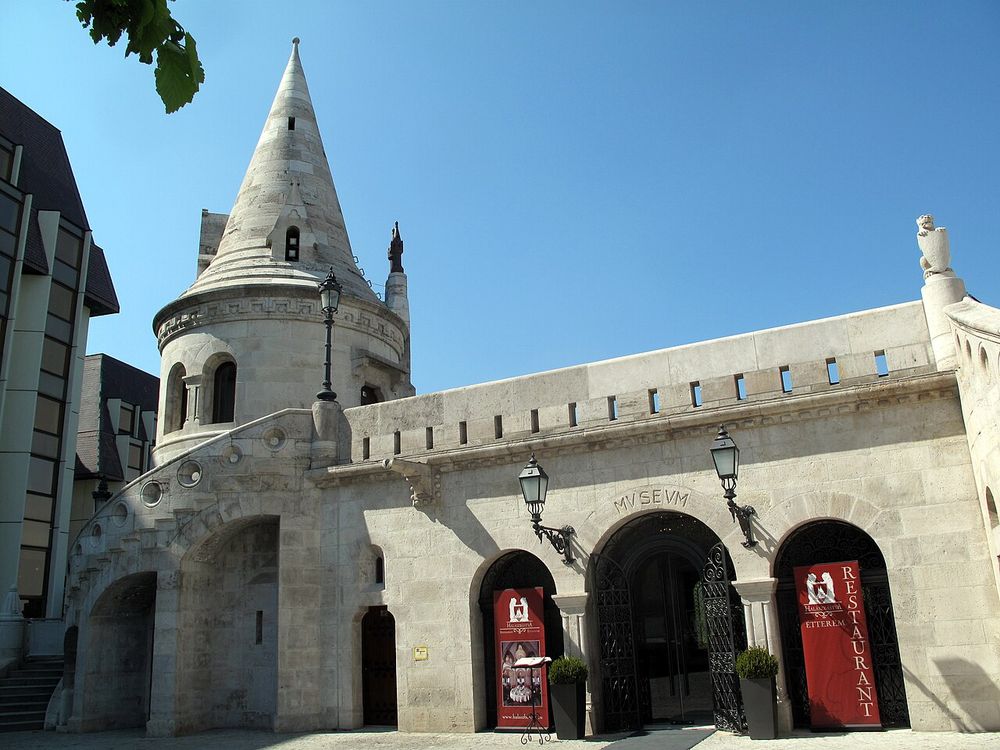
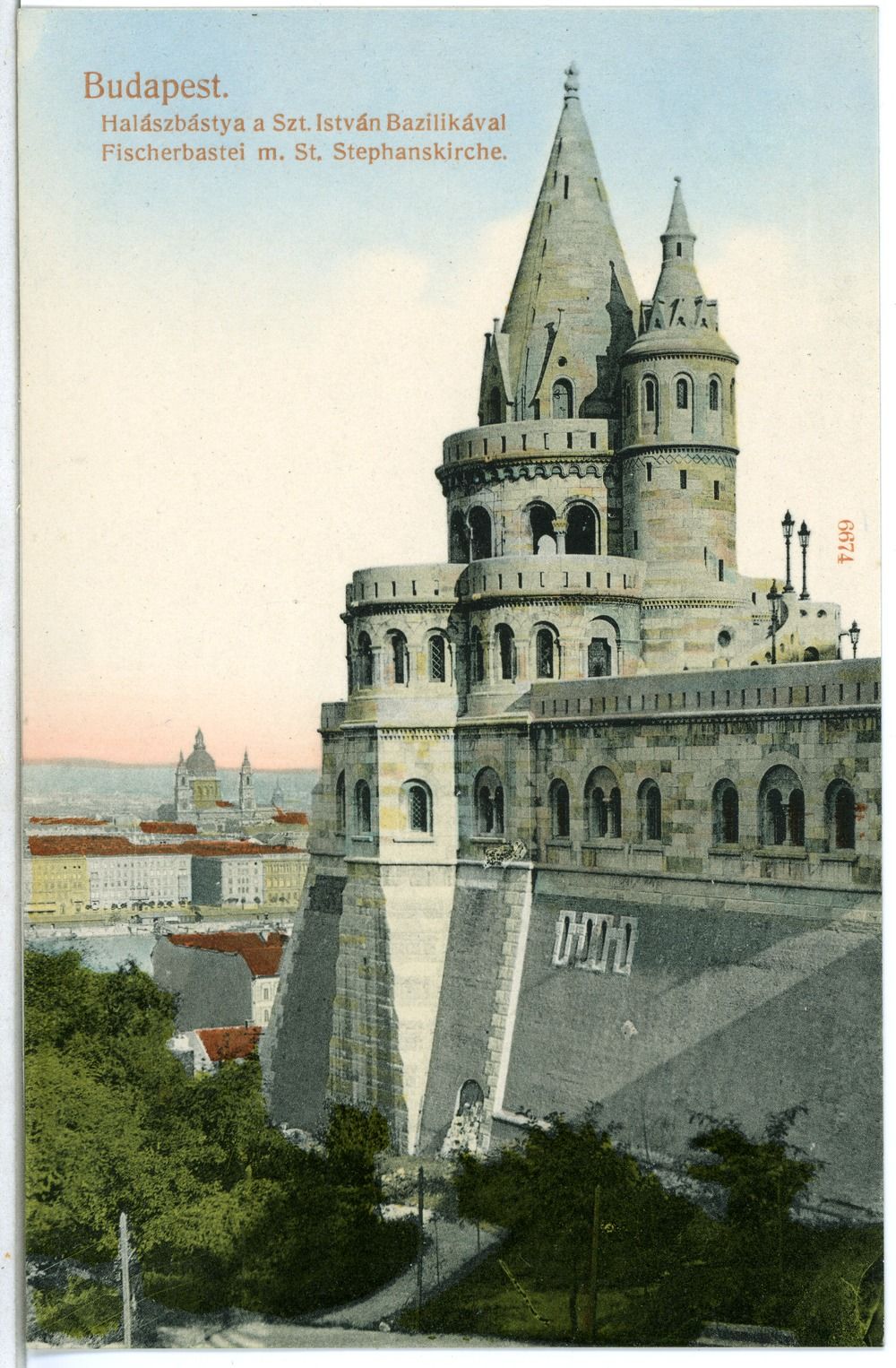
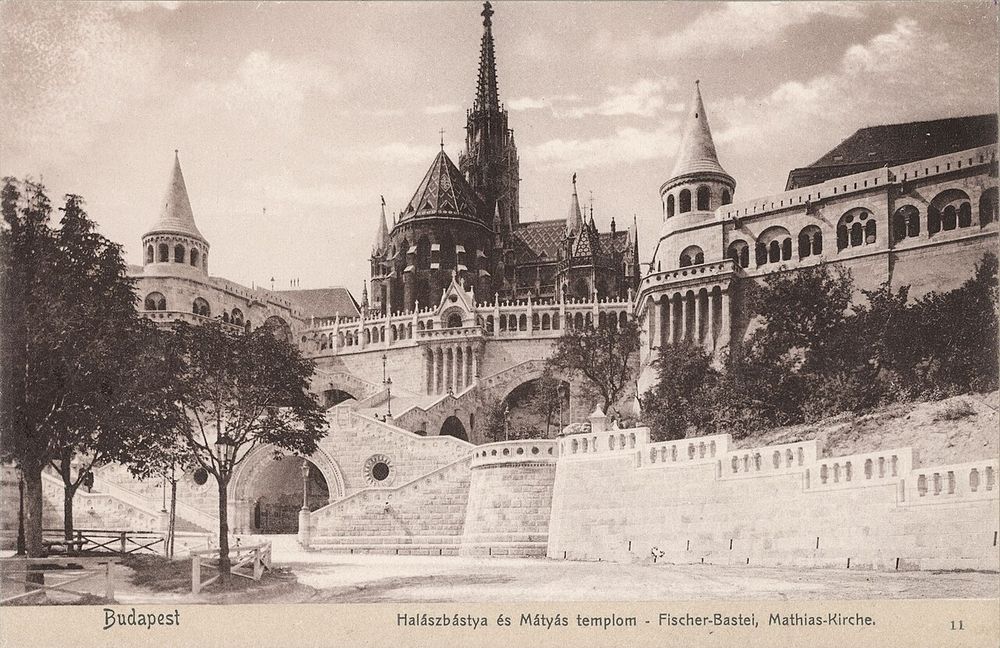
Seven white towers and a terrace on the edge of Castle Hill, built in 1895–1902 to celebrate a thousand years of Hungary. It looks like a medieval fortress and never defended anything. Beside it stands Matthias Church, where the last kings of Hungary were crowned.
Photo: Yair-haklai, CC BY-SA 4.0, Wikimedia Commons
The story
In 1896 Hungary celebrated the thousandth year since the Magyar tribes came over the Carpathians. Budapest built for the party: the first underground railway on the continent, the Parliament, Heroes' Square, and this.
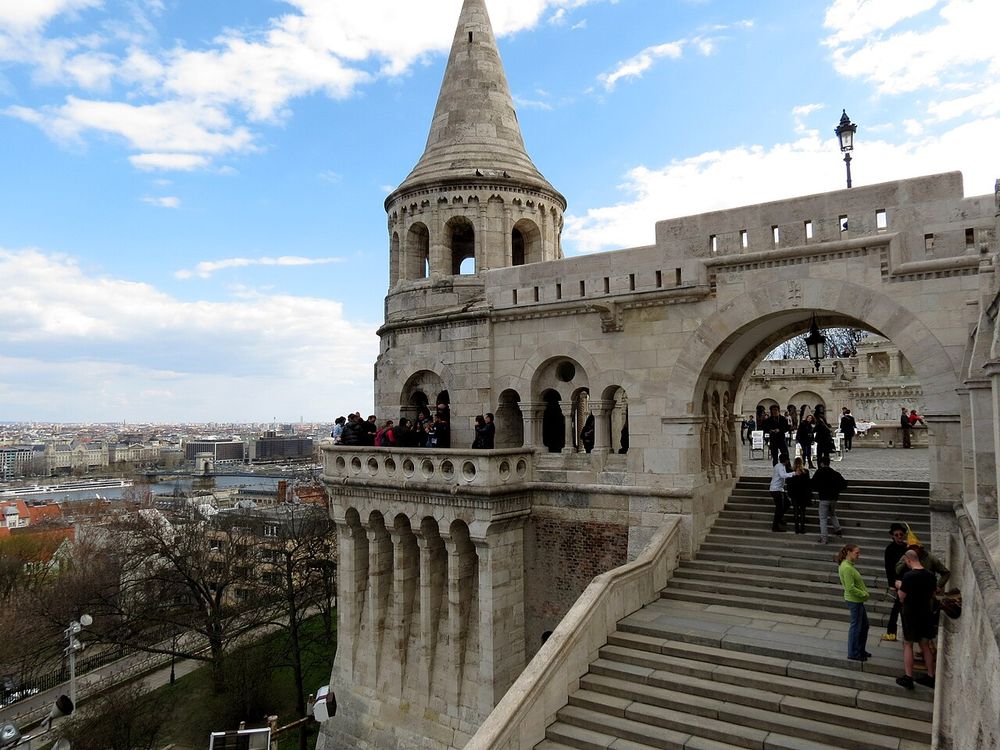
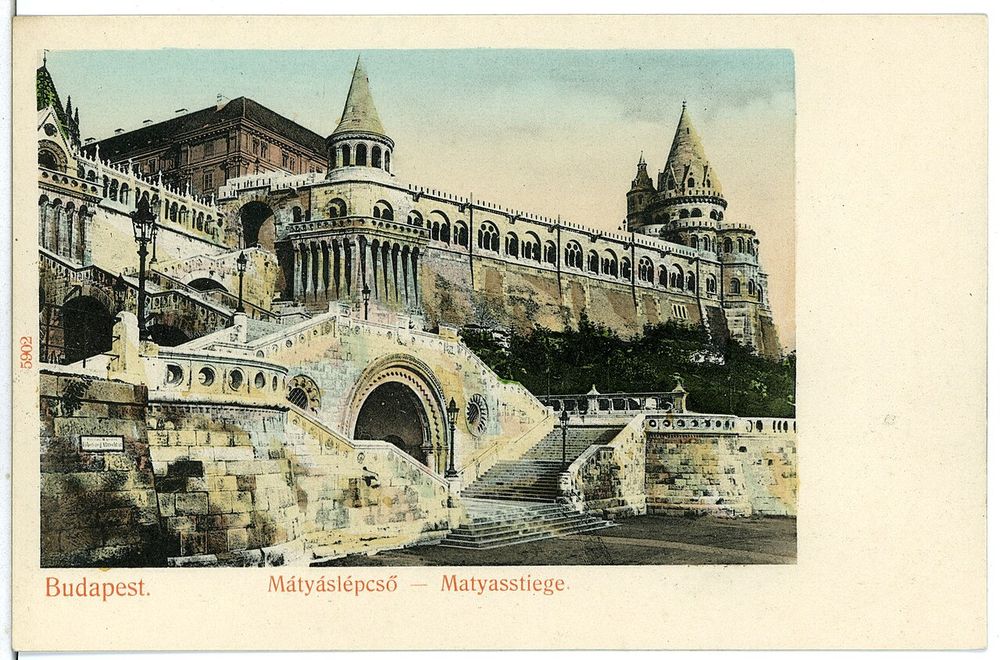
The architect Frigyes Schulek had just restored the church next door. He built the bastion as a frame for it: a lookout terrace in white limestone, with stairs, arcades and seven pointed towers, one for each of the seven Magyar tribes.
The name is older than the building. In the Middle Ages the guild of fishermen, who lived in the Water Town below, had to defend this stretch of the castle wall.
What is here
The lower terraces, the arcades, the stairs and the statue of Stephen are free at all hours. The upper turrets charge a small fee during the day and are free early in the morning and in the evening. Matthias Church has its own ticket.
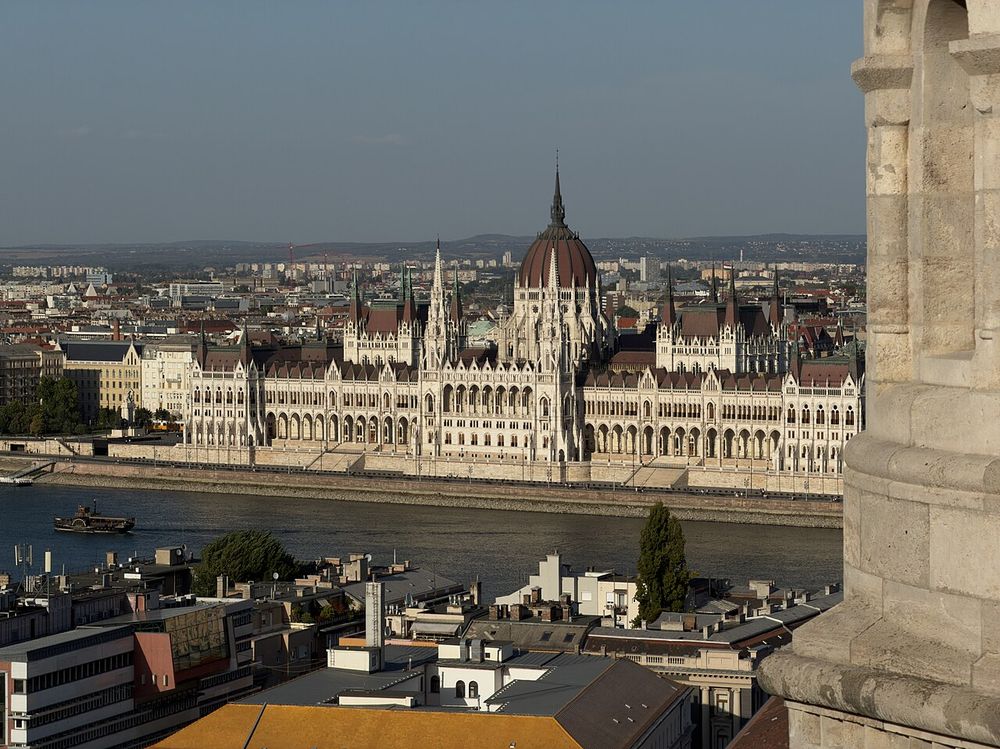
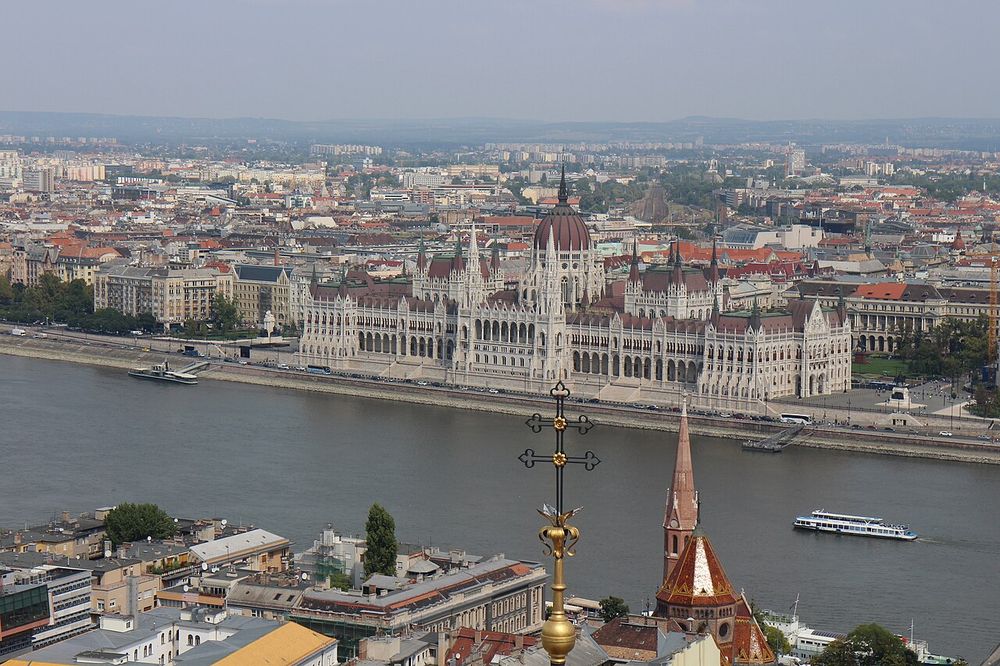
The Parliament from the bastion, 2026Mike is Michi, CC BY-SA 4.0
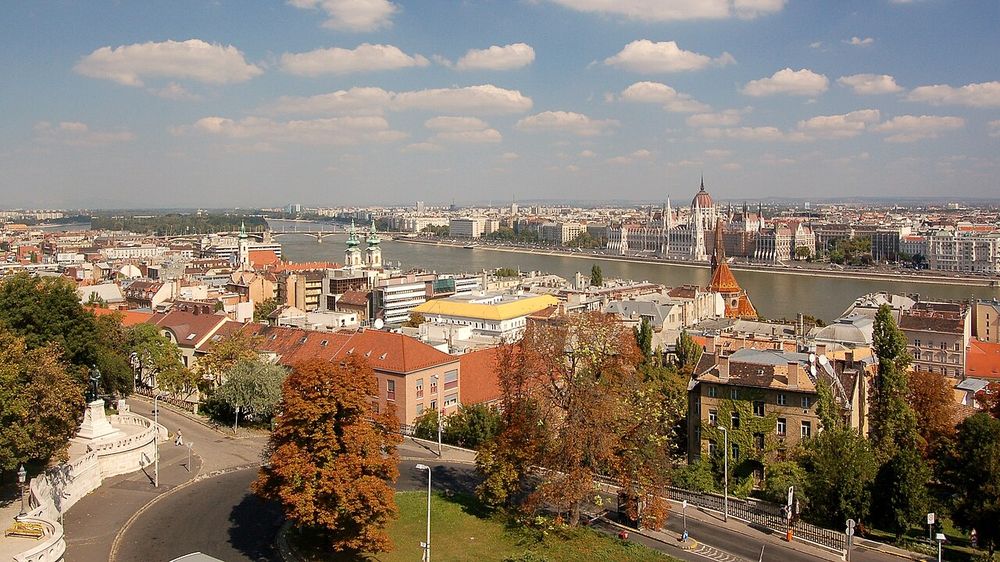
Look across the river. The Parliament fills the far bank. Below you, the Danube, and to the right the Chain Bridge. This is why people come.
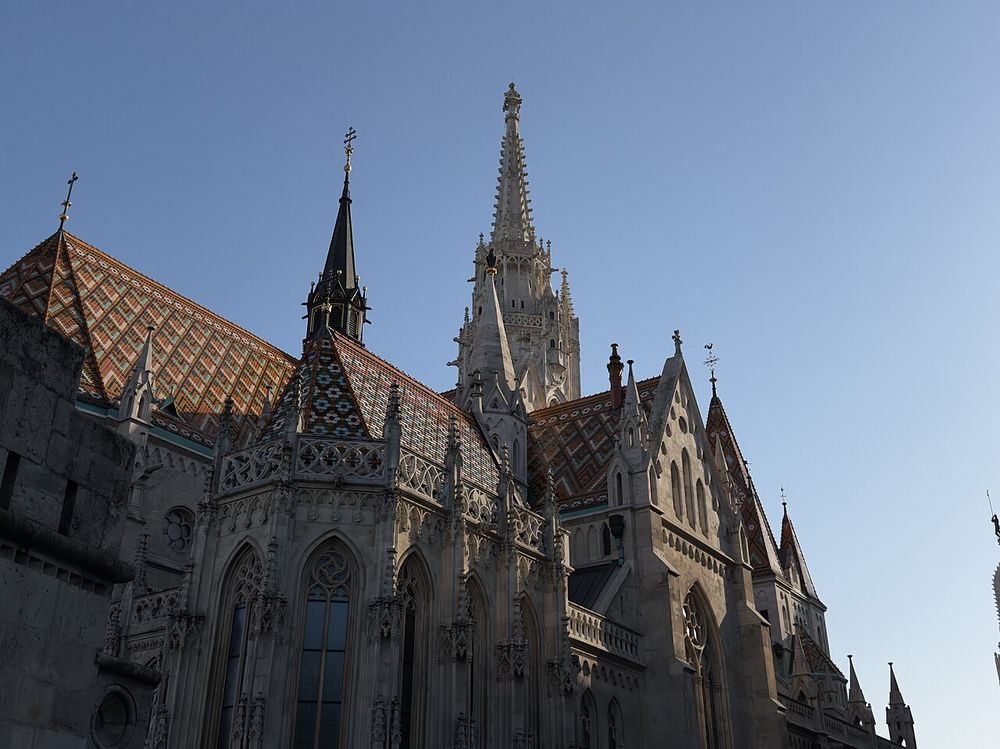
The Zsolnay tiles of Matthias Church, 2026Mike is Michi, CC BY-SA 4.0
Turn round. Matthias Church has a roof of coloured glazed tiles in diamond patterns, made by the Zsolnay works of Pécs. Its tall tower is Gothic, from the 1400s, rebuilt by Schulek.
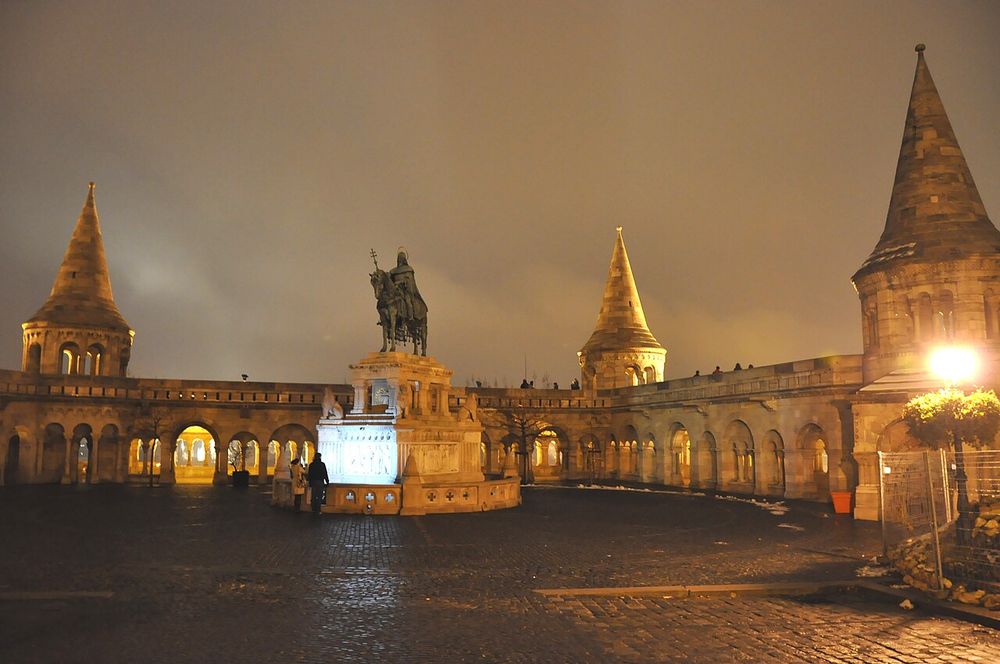
Between the church and the bastion rides King Stephen, the first king of Hungary, crowned in the year 1000. Alajos Stróbl made the statue in 1906.
Things people often get wrong
"It is a medieval fortress." It was finished in 1902 and was always meant as a viewpoint. Its towers are not even tall enough to defend.
"You must pay to go up." The lower terraces and the arcades are free at all hours. Only the upper turrets charge a small fee in the day.
"Matthias Church is named after Saint Matthias." It is the Church of Our Lady. Hungarians call it after King Matthias, who married twice here and added its tower.
People who stood here
We searched Hungarian and English sources for this list.
Frigyes Schulek (Hungarian architect, 1841–1919)He spent twenty years restoring Matthias Church and seven building the bastion.
Franz Joseph and Elisabeth ("Sisi")On 8 June 1867 they were crowned king and queen of Hungary in Matthias Church. The deal behind it, the Compromise, made the Austro-Hungarian monarchy.
Franz Liszt (Hungarian composer)He wrote the Hungarian Coronation Mass for that day, and it was first played in the church at the coronation.
King Matthias CorvinusHe was married here twice, in 1463 and 1476, and gave the church its tower.
Charles IV and Zita, the last king and queen of HungaryThey were crowned here on 30 December 1916, in the middle of the First World War. Two years later the monarchy was gone.
John Hunyadi (Hungarian general, father of Matthias)His statue stands at the foot of the Schulek stairs. His victory at Belgrade in 1456 is remembered at noon in churches across the world.
Go deeper: six stops, from the stairs to the coronation church
Come at sunrise if you can. The terraces face east, and before nine they are almost empty.
1. The Schulek stairs
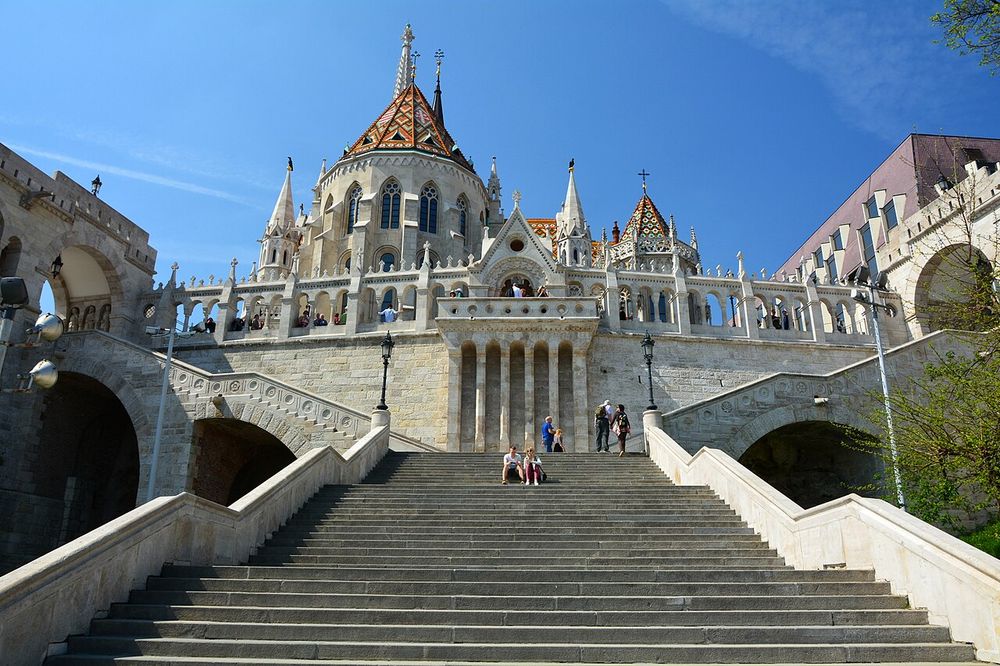
The great stair, 2020Veronika.szappanos, CC BY-SA 4.0
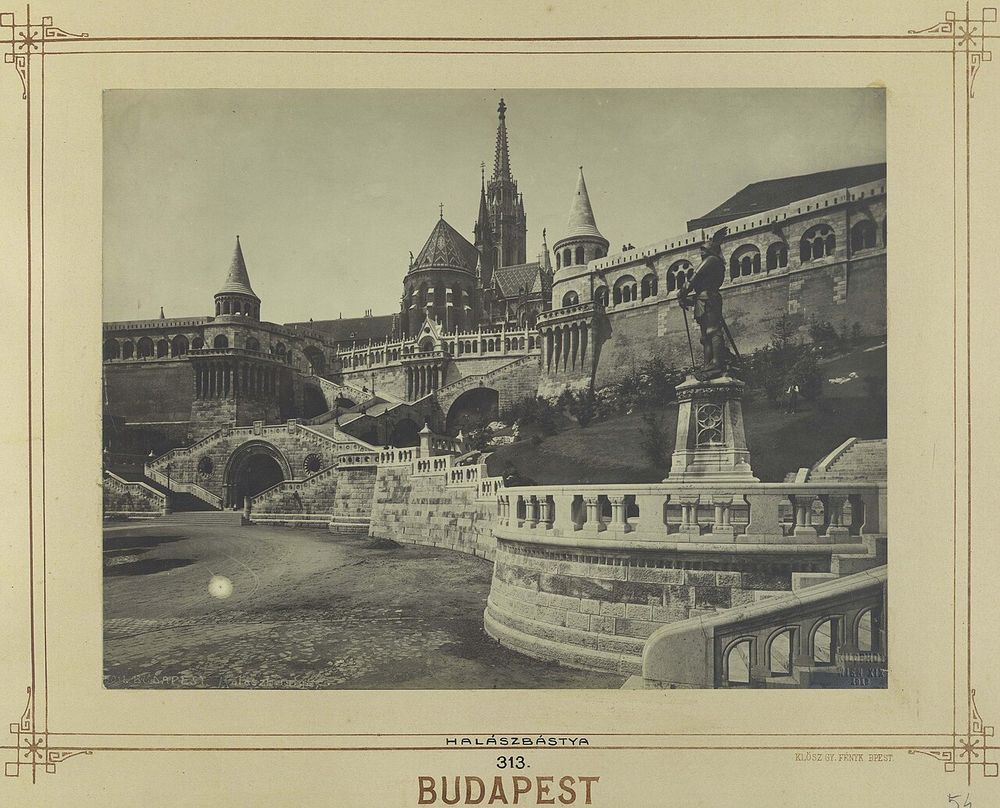
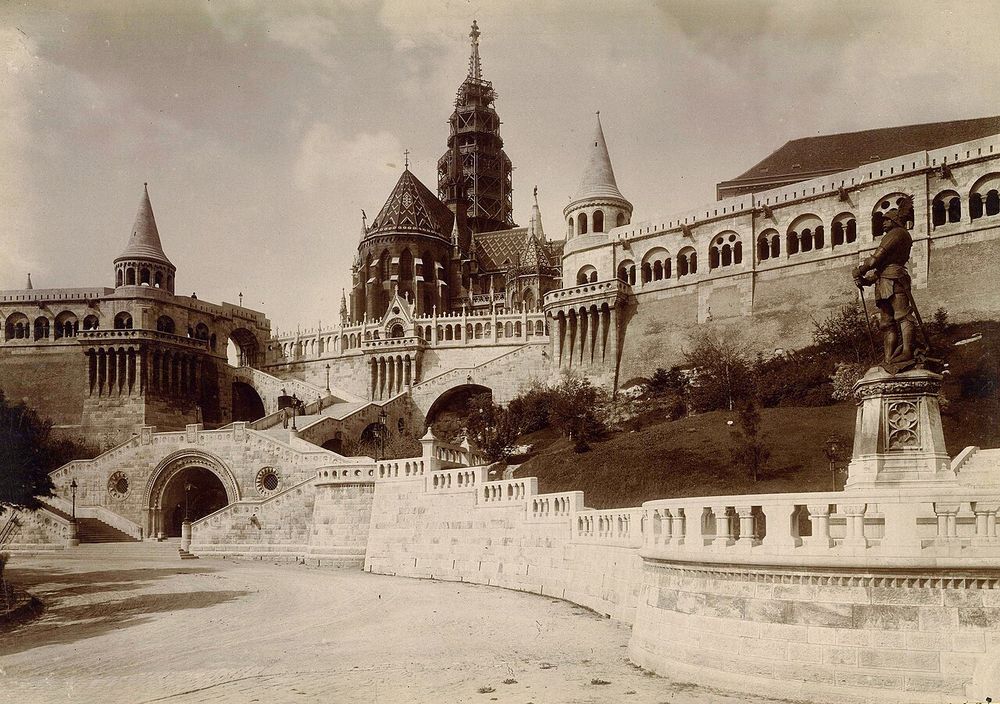
From the Water Town below, a broad stair climbs to the bastion. At its foot John Hunyadi stands in armour. Climbing it you see the bastion grow above you, as Schulek intended: a stage set seen from the river.
The Schulek stairs and Hunyadi, about 1905FOTO:Fortepan — ID 82630: Adományozó/Donor: Budapest Főváros Levéltára. archive , Public domain
2. The lower terraces and the arcades
The arcadeMichiel Stumpel, CC BY 3.0
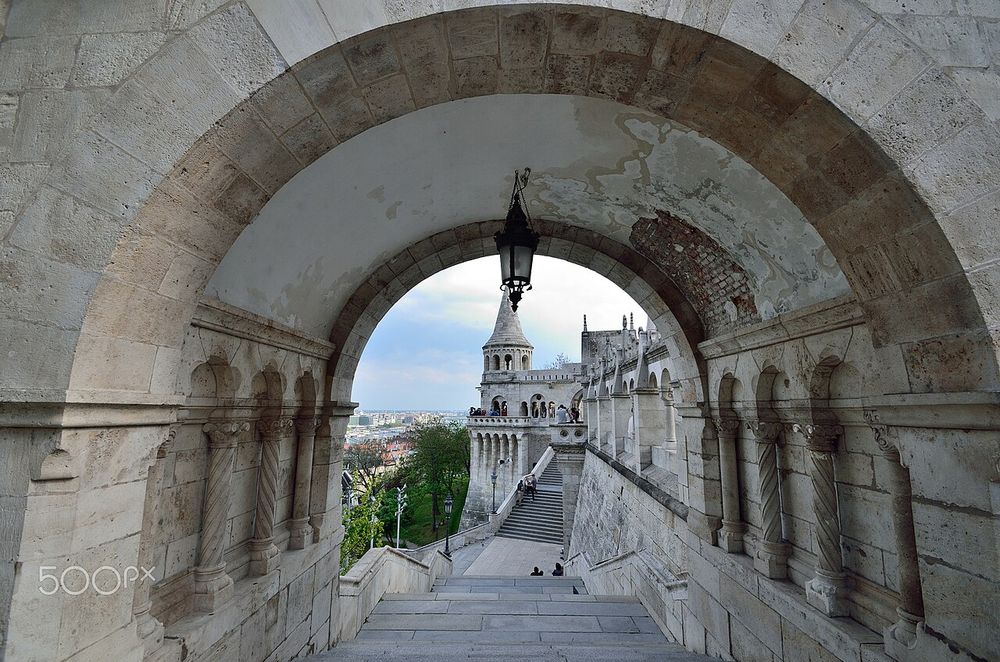
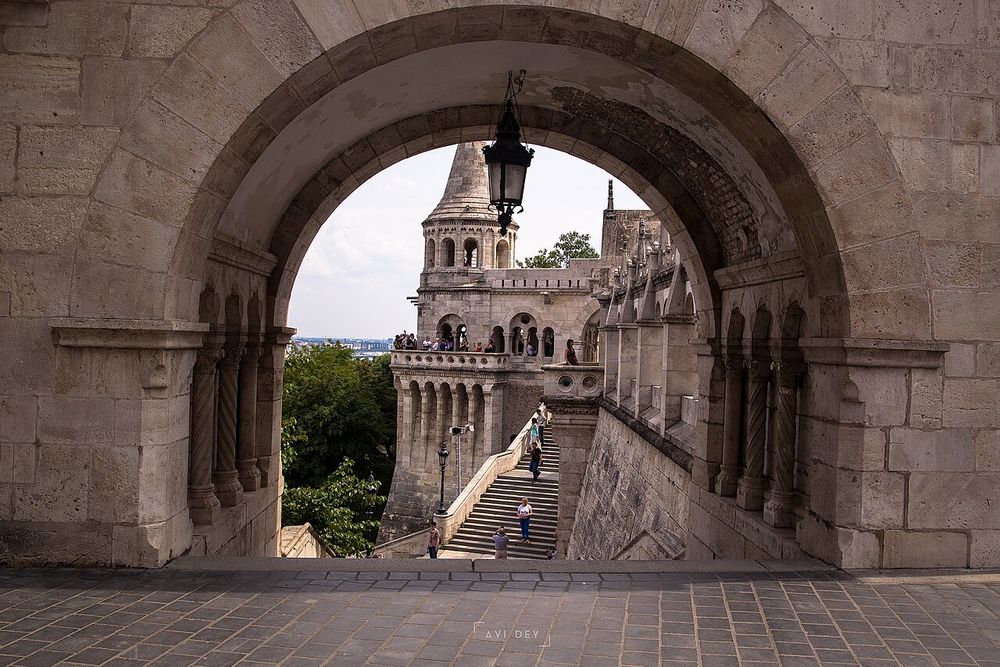
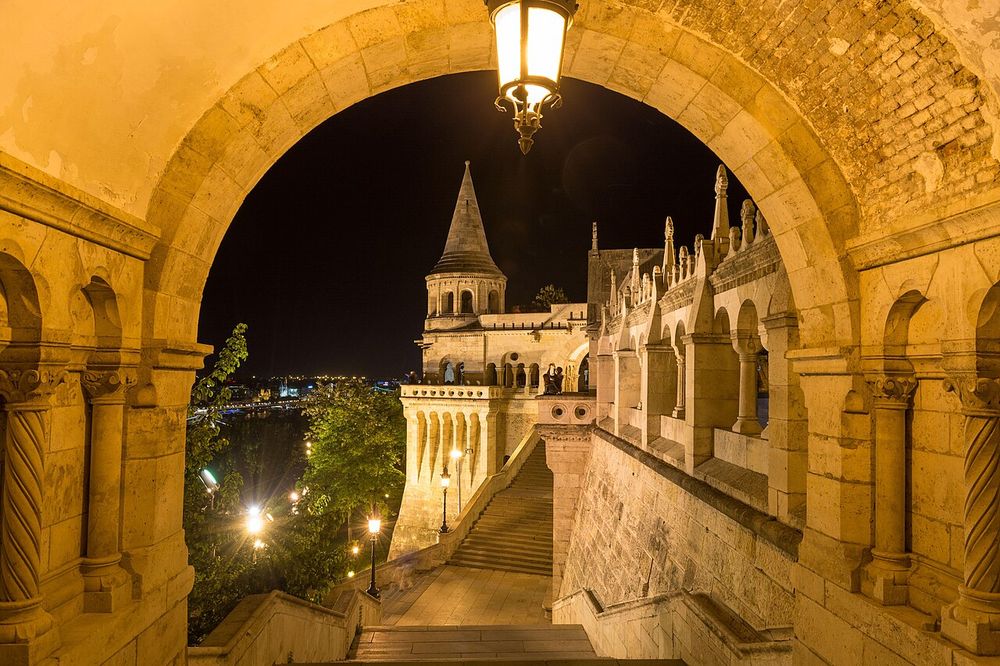
The cloister-like walk runs along the wall with round arches, each framing a piece of Pest. The style mixes Romanesque and Gothic, the styles of the first Hungarian kings, as Schulek imagined them.
Looking through the archesAvi Dey, CC BY 3.0
3. The seven towers
A tower with its tent roof, 2026Mike is Michi, CC BY-SA 4.0
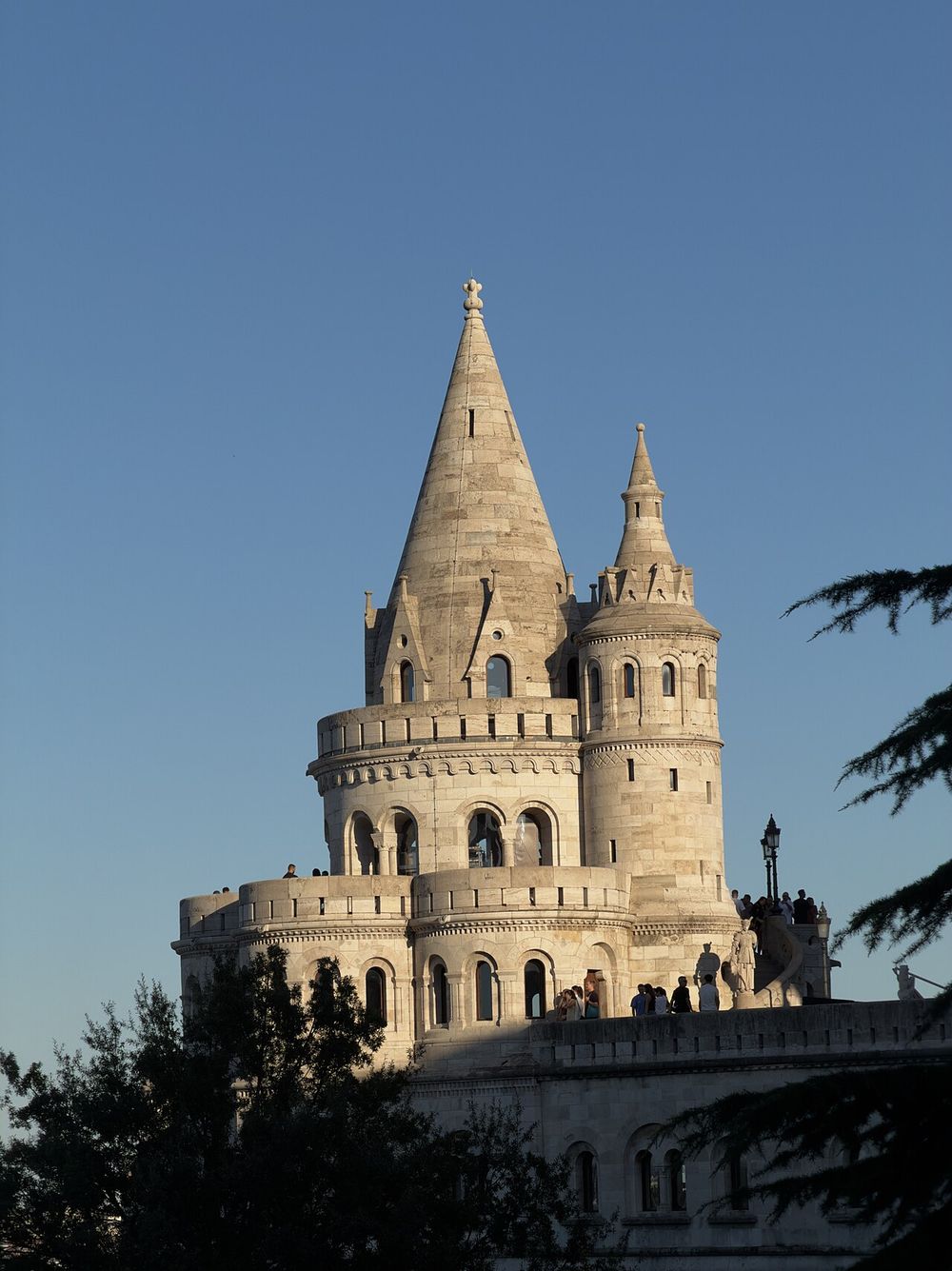
The towers have cone roofs like tents. That is deliberate: they recall the tents of the nomad Magyars who came from the east. The seven tribes were Nyék, Megyer, Kürtgyarmat, Tarján, Jenő, Kér and Keszi.
A tower reflected in the Hilton's glassDennis G. Jarvis, CC BY-SA 2.0
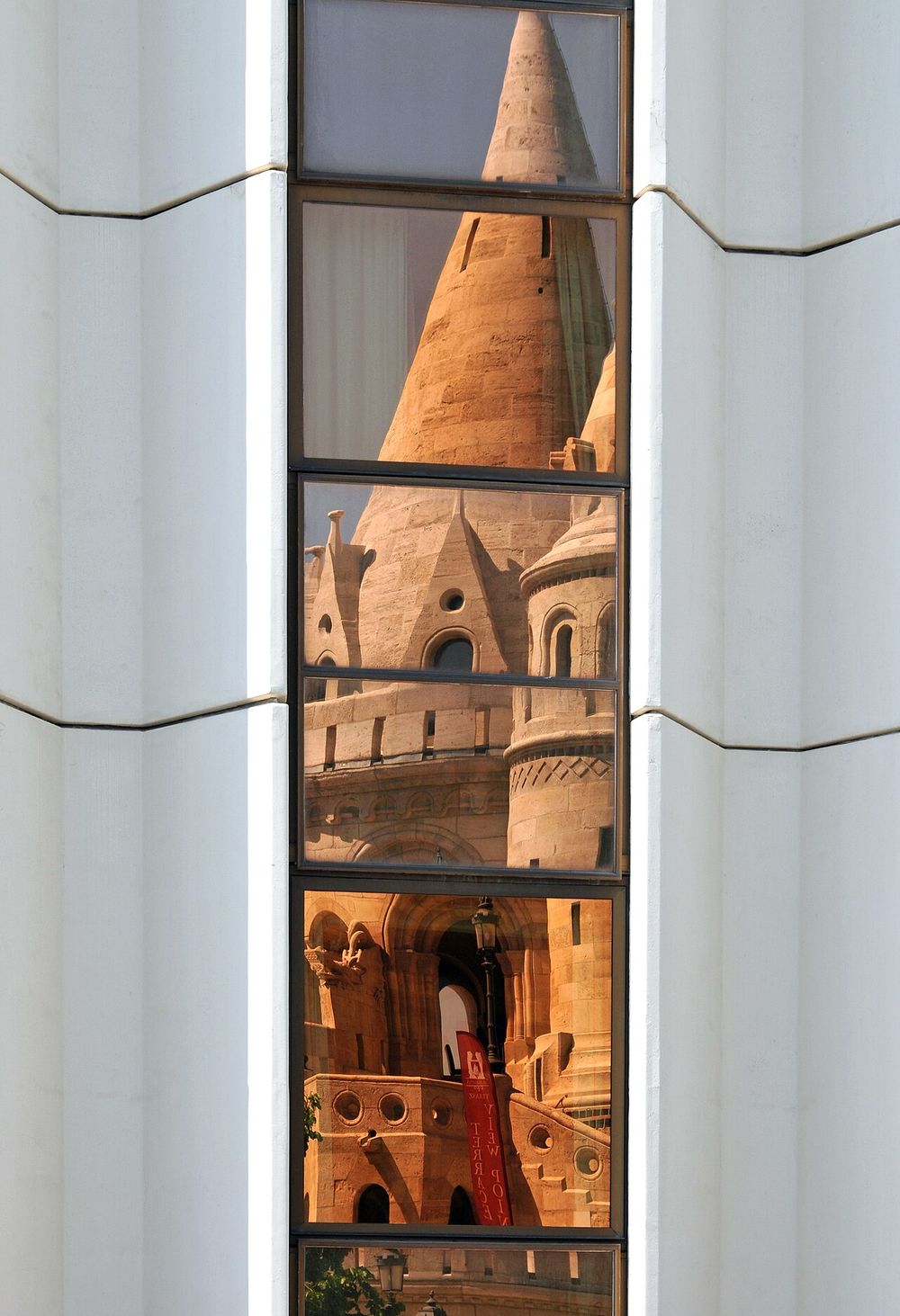
The glass wall of the Hilton hotel, built in 1976 around the ruins of a medieval Dominican church, reflects the towers. Many in Budapest still dislike it.
4. King Stephen
The church tower above the bastionVillageHero from Ulm, Germany, CC BY-SA 2.0
The first king rides with a double cross, the sign of the apostolic kings of Hungary. On the pedestal, reliefs show scenes from his life. Stephen made Hungary a Christian kingdom; his crown is in the Parliament across the river.
5. Matthias Church
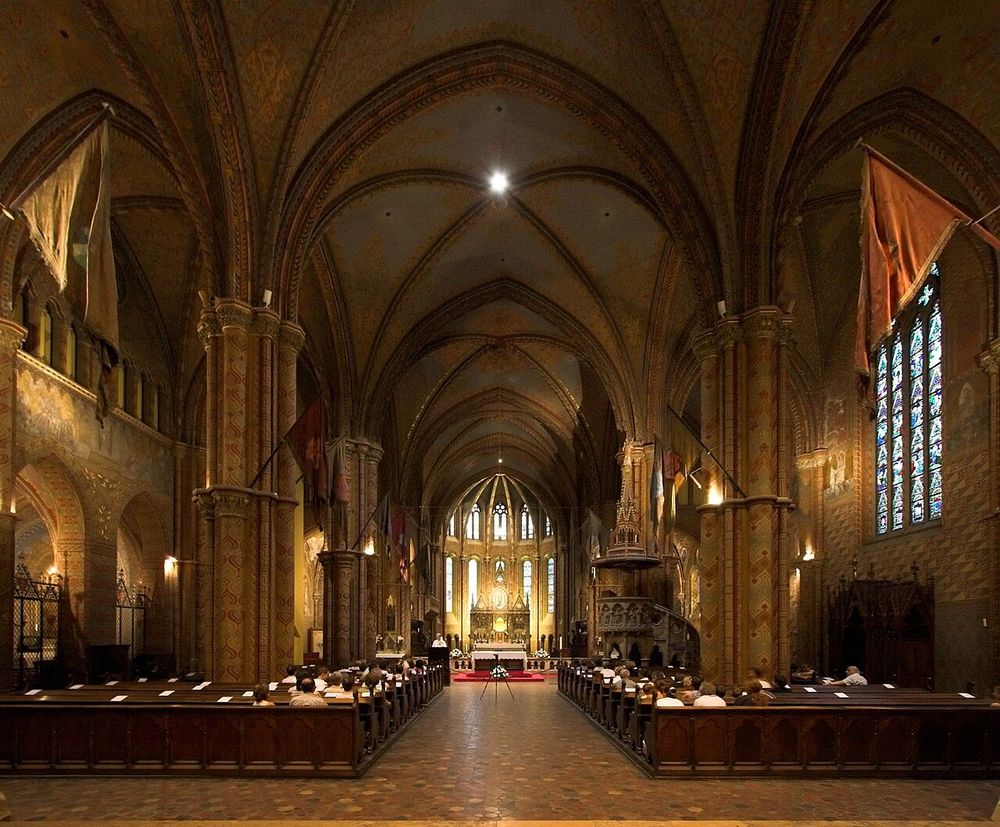
Inside Matthias ChurchTamás Mészöly, CC BY-SA 3.0
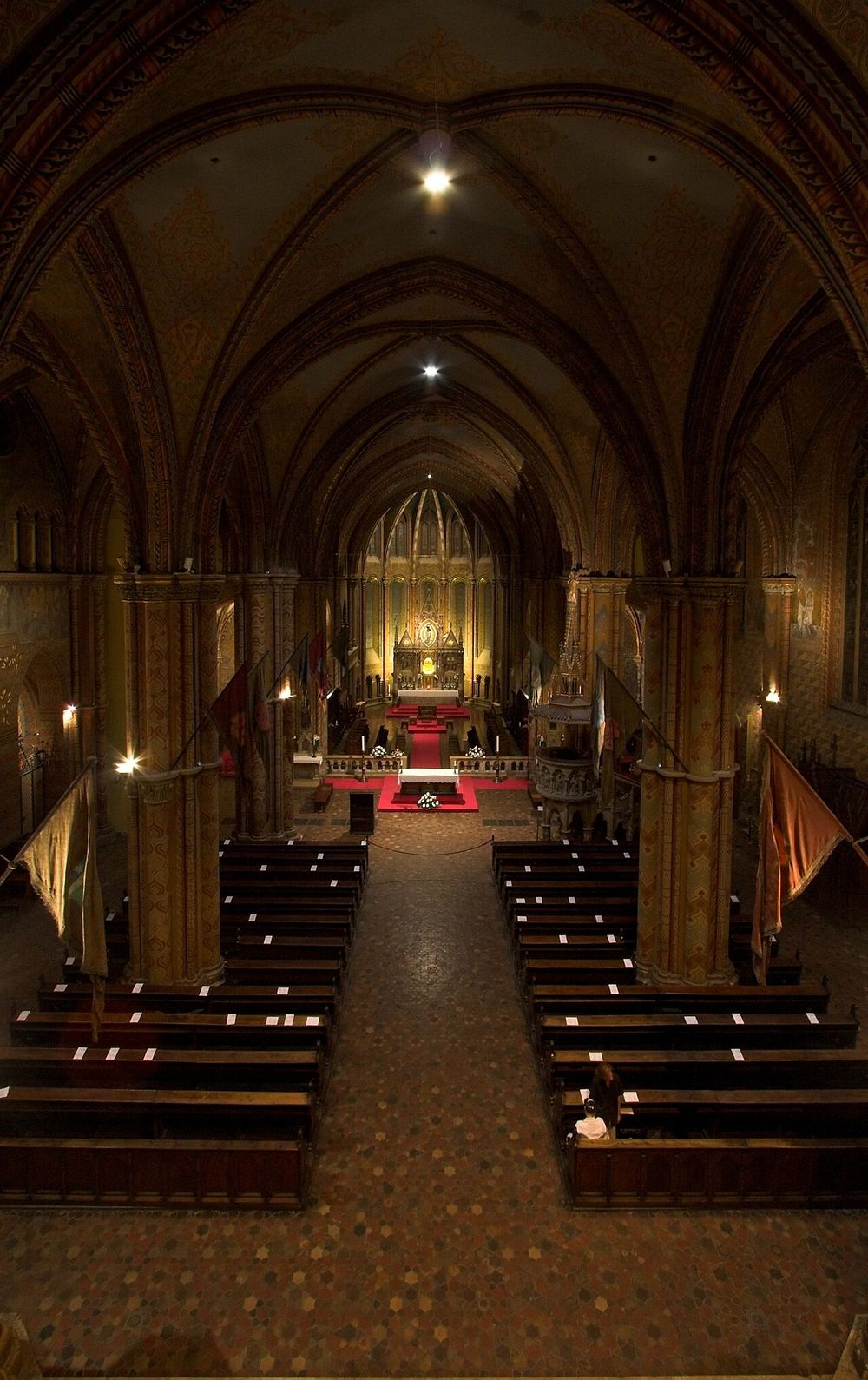
Inside, every surface is painted: walls, pillars and vaults in patterns of red, green and gold. The paintings are of the 1890s, by Károly Lotz and Bertalan Székely, and imagine what a medieval Hungarian church looked like.
The painted naveTamás Mészöly, CC BY-SA 3.0
Under the Ottomans, from 1541 to 1686, the church was the city's chief mosque. Its paintings were whitewashed. In 1686, during the siege, a wall fell and a hidden statue of the Virgin was revealed; the story is in the legends.
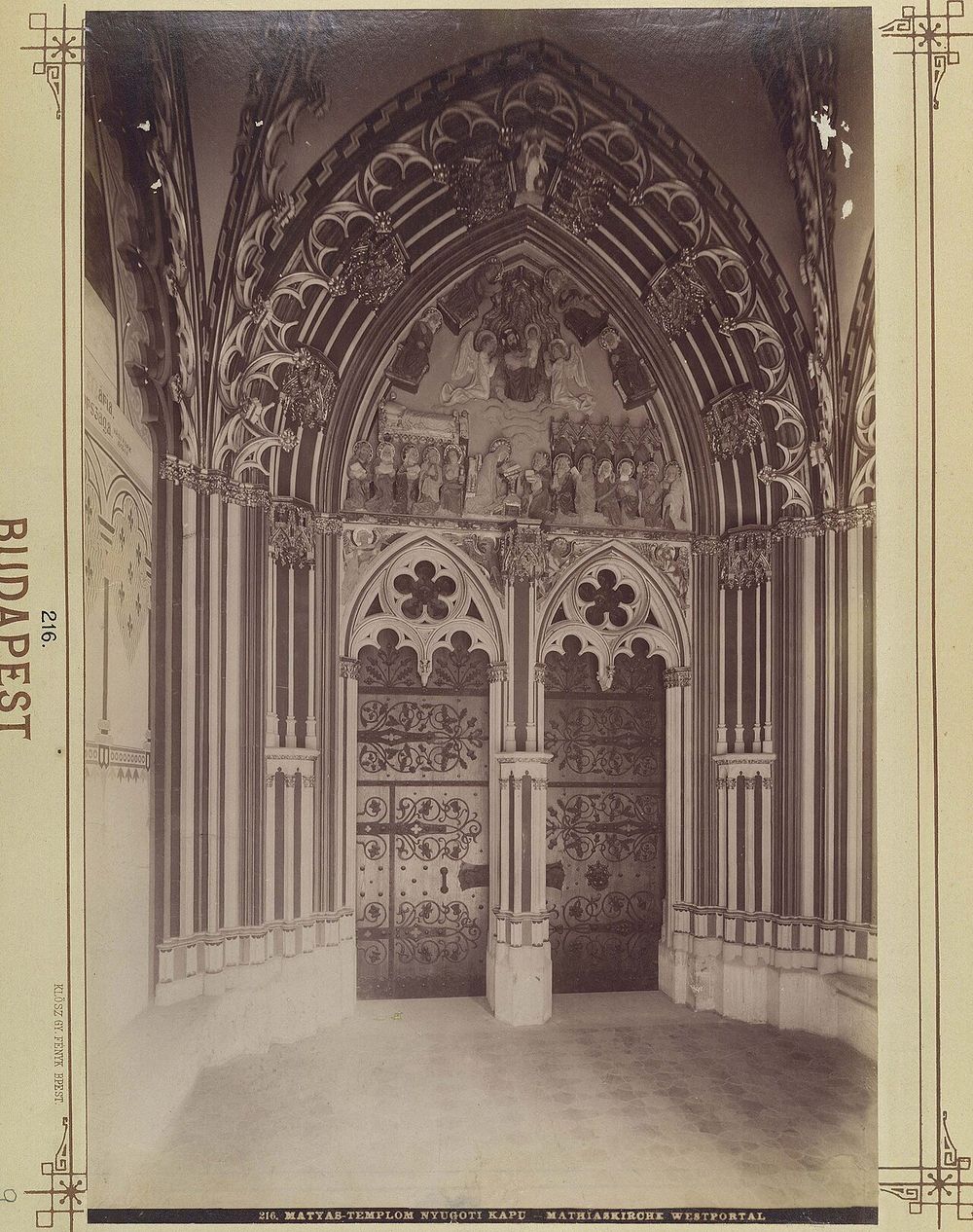
The Mary Gate of Matthias Church, after 1890FOTO:Fortepan — ID 82542: Adományozó/Donor: Budapest Főváros Levéltára. archive , Public domain
6. The view, and the same years in China
The bastion lit at nightNikolai Karaneschev, CC BY 3.0
Stay until the lights come on. The Parliament across the river turns gold, then the bridges, then the bastion behind you.
The bastion was built in the years after the Sino-Japanese War of 1894–95, during the reign of the Qing (1644–1912) emperor Guangxu (1875–1908). When Hungary was celebrating its thousand years in 1896, Li Hongzhang was travelling through Europe to study its railways and factories.
Meanwhile in the world
Year
Here
Elsewhere
1000
Stephen is crowned first king of Hungary
Leif Erikson reaches North America
1456
Hunyadi's victory at Belgrade
Gutenberg's Bible
1541–1686
The church is a mosque
The Ottoman age in central Europe
1867
Franz Joseph and Sisi crowned here
The United States buys Alaska
1896
A thousand years of Hungary
The first modern Olympic Games, Athens
1902
The bastion is finished
The first teddy bear
1916
The last coronation
The Battle of the Somme
One line to remember: a fortress for the view, built a thousand years after the Magyars came.
Then and now
The bastion and Matthias Church, September 2026Yair-haklai, CC BY-SA 4.0, Wikimedia CommonsCastle Hill with the bastion and the church, 2026Yair-haklai, CC BY-SA 4.0, Wikimedia CommonsThe church tower above the bastionVillageHero from Ulm, Germany, CC BY-SA 2.0, Wikimedia CommonsThe terraces after sundownVillageHero from Ulm, Germany, CC BY-SA 2.0, Wikimedia CommonsA tower at nightVillageHero from Ulm, Germany, CC BY-SA 2.0, Wikimedia CommonsThe bastion lit at nightNikolai Karaneschev, CC BY 3.0, Wikimedia CommonsThrough an arch at nightNikolai Karaneschev, CC BY 3.0, Wikimedia CommonsCastle Hill from across the river at duskDennis G. Jarvis, CC BY-SA 2.0, Wikimedia CommonsThe arcadeMichiel Stumpel, CC BY 3.0, Wikimedia CommonsLooking through the archesAvi Dey, CC BY 3.0, Wikimedia CommonsThe great stair, 2020Veronika.szappanos, CC BY-SA 4.0, Wikimedia CommonsA gate and stairsxorge, CC BY-SA 2.0, Wikimedia CommonsA window on the covered stairGlobetrotter19, CC BY-SA 3.0, Wikimedia CommonsA tower with its tent roof, 2026Mike is Michi, CC BY-SA 4.0, Wikimedia CommonsThe north-west towerDezidor, CC BY 3.0, Wikimedia CommonsThe terrace at duskJorge Láscar from Australia, CC BY 2.0, Wikimedia CommonsA tower reflected in the Hilton's glassDennis G. Jarvis, CC BY-SA 2.0, Wikimedia CommonsThe Parliament from the bastion, 2026Mike is Michi, CC BY-SA 4.0, Wikimedia CommonsThe view to the Parliament and the river, 2018Suicasmo, CC BY-SA 4.0, Wikimedia CommonsPest and the Danube from the terraceBahnfrend, CC BY-SA 4.0, Wikimedia CommonsThe Zsolnay tiles of Matthias Church, 2026Mike is Michi, CC BY-SA 4.0, Wikimedia CommonsInside Matthias ChurchTamás Mészöly, CC BY-SA 3.0, Wikimedia CommonsThe painted naveTamás Mészöly, CC BY-SA 3.0, Wikimedia CommonsA bronze model of the hilltop for touchEinemnet, CC BY-SA 4.0, Wikimedia CommonsAnother bronze model on the hillGlobetrotter19, CC BY-SA 3.0, Wikimedia CommonsThe bastion on a postcard, 1905Brück & Sohn Kunstverlag Meißen, CC0, Wikimedia CommonsA tower on a postcard, 1905Brück & Sohn Kunstverlag Meißen, CC0, Wikimedia CommonsThe Schulek stairs and Hunyadi, about 1905FOTO:Fortepan — ID 82630: Adományozó/Donor: Budapest Főváros Levéltára. archive , Public domain, Wikimedia CommonsThe bastion and the church, early twentieth centuryUnknown authorUnknown author, Public domain, Wikimedia CommonsThe bastion, an old photographFortepan / Budapest Főváros Levéltára. Levéltári jelzet: HU.BFL.XV.19.d.1.08.121, CC BY-SA 3.0, Wikimedia CommonsThe Mary Gate of Matthias Church, after 1890FOTO:Fortepan — ID 82542: Adományozó/Donor: Budapest Főváros Levéltára. archive , Public domain, Wikimedia Commons
Local legends
These are stories people tell about this place. They are legends, not history, and each one says where it comes from.
LegendThe noon bell
When the Ottomans besieged Belgrade in 1456, Pope Callixtus III ordered church bells rung at noon to call Christians to pray. The news of Hunyadi's victory arrived soon after, and the noon bell became its memorial. Churches across the world still ring it.
Source: The papal bull of 29 June 1456; the link to the victory is how Hungary remembers it
LegendThe Virgin in the wall
Before the Turks took Buda, monks walled up a statue of the Virgin in the church. During the siege of 1686 a cannonball brought the wall down while the Turks were at prayer. The Virgin appeared before them, and the garrison lost heart.
Source: Budapest tradition, told in the church's own guide
Later, people who live here will be able to add the stories they grew up with, and say which of these they have heard.
Not certain, and where accounts conflict
Did the fishermen really defend this wall?
The story comes from records of the town's guilds, which were each given a stretch of wall. Which stretch the fishermen had is not certain.
Checked 2026-11-12 The bastion has no official ticket site; these buttons are for Matthias Church.
Tickets and hours
Lower terraces: free, at all hours.
Upper turrets: about 1,700 forints in the day in 2026, free early in the morning and in the evening.
Matthias Church has its own ticket and closes to visitors during services and weddings.
Last checked 2026-11-12. Budapest guides and Hungarian press of 2025–2026.
Booking from abroad
Official page in English There is no booking for the bastion. Tickets for the upper turrets are bought at the kiosk on the spot. Matthias Church sells tickets on its own site and at its desk.
Ticket window on site Pay by card or forint at the kiosk.
Checked 2026-11-12
Where to start
Bus 16 from Deák tér to Szentháromság tér, or walk up the Schulek stairs from the river at Batthyány tér.
Come before nine, or after dark. In the middle of the day the terraces are packed.
Walk on south along the hill to the royal palace afterwards.
Before you go
The terraces are exposed. In winter the wind off the river is cold.
A café takes over part of the upper terrace in summer. You do not have to buy anything to stand at the wall below.
Customs and manners
Couples come here for wedding photos. Give them a moment.
In the church, keep quiet and cover your shoulders.
Hungarian is not related to its neighbours' languages. "Köszönöm" (KUR-sur-nurm) means thank you.
Opening hours are given in the local time of the place.
Look for these
Count the towers. Are there seven?
On the church roof, find the diamond patterns of coloured tiles.
On King Stephen's statue, find the double cross.
In the glass of the Hilton, find a tower reflected.
At noon, listen for the bell.
I am here
Stand at the site, sign in, press the button, and collect its stamp. Your browser will ask to use your location. It is sent to us once to confirm that you are at the site; we keep how far you were from it, not the spot where you stood.
Your stamps are saved to your account, so they follow you to any device. Checking from a browser cannot rule out every false location; stricter checks arrive with the app.
Messages
Share your photos
Photos here show the place, not people. Each one is credited to the visitor who took it and appears after our team has looked at it. A photo with you in it belongs under “I am here”.